 Movie
Movie Controller

[English] 日本語
 Yorodumi
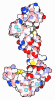
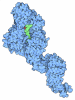
- EMDB-38795: Cryo-EM structure of the [Pyr1]-apelin-13-bound human APLNR-Gi complex -
+ Open data

- Basic information
| Entry |  | |||||||||
|---|---|---|---|---|---|---|---|---|---|---|
| Title | Cryo-EM structure of the [Pyr1]-apelin-13-bound human APLNR-Gi complex | |||||||||
 Map data Map data | ||||||||||
 Sample Sample |
| |||||||||
 Keywords Keywords | APLNR / apelin / Class A GPCR / Structural protein / MEMBRANE PROTEIN | |||||||||
| Function / homology |  Function and homology information Function and homology informationapelin receptor binding / positive regulation of corticotropin-releasing hormone secretion / positive regulation of corticotropin secretion / : / apelin receptor activity / apelin receptor signaling pathway / mechanoreceptor activity / regulation of gap junction assembly / vascular associated smooth muscle cell differentiation / negative regulation of fibroblast growth factor receptor signaling pathway ...apelin receptor binding / positive regulation of corticotropin-releasing hormone secretion / positive regulation of corticotropin secretion / : / apelin receptor activity / apelin receptor signaling pathway / mechanoreceptor activity / regulation of gap junction assembly / vascular associated smooth muscle cell differentiation / negative regulation of fibroblast growth factor receptor signaling pathway / atrioventricular valve development / positive regulation of G protein-coupled receptor internalization / positive regulation of heat generation / regulation of body fluid levels / positive regulation of heart contraction / venous blood vessel development / positive regulation of cardiac muscle hypertrophy in response to stress / endocardial cushion formation / positive regulation of blood vessel endothelial cell proliferation involved in sprouting angiogenesis / drinking behavior / regulation of the force of heart contraction / coronary vasculature development / vasculature development / G protein-coupled peptide receptor activity / negative regulation of systemic arterial blood pressure / adult heart development / positive regulation of vascular endothelial cell proliferation / negative regulation of vasoconstriction / aorta development / negative regulation of cardiac muscle hypertrophy in response to stress / ventricular septum morphogenesis / blood vessel development / heart looping / negative regulation of vascular associated smooth muscle cell proliferation / positive regulation of phosphorylation / vasculogenesis / positive regulation of heart rate / adenylate cyclase inhibitor activity / negative regulation of blood pressure / positive regulation of protein localization to cell cortex / T cell migration / lactation / positive regulation of relaxation of smooth muscle / Adenylate cyclase inhibitory pathway / D2 dopamine receptor binding / gastrulation / adenylate cyclase-inhibiting serotonin receptor signaling pathway / G protein-coupled serotonin receptor binding / cellular response to forskolin / Peptide ligand-binding receptors / positive regulation of release of sequestered calcium ion into cytosol / regulation of mitotic spindle organization / chemokine-mediated signaling pathway / Regulation of insulin secretion / neuropeptide signaling pathway / response to prostaglandin E / hormone activity / positive regulation of cholesterol biosynthetic process / negative regulation of insulin secretion / G protein-coupled receptor binding / positive regulation of miRNA transcription / response to peptide hormone / G protein-coupled receptor activity / adenylate cyclase-modulating G protein-coupled receptor signaling pathway / G-protein beta/gamma-subunit complex binding / centriolar satellite / adenylate cyclase-inhibiting G protein-coupled receptor signaling pathway / positive regulation of angiogenesis / Olfactory Signaling Pathway / Activation of the phototransduction cascade / G protein-coupled acetylcholine receptor signaling pathway / G beta:gamma signalling through PLC beta / Presynaptic function of Kainate receptors / Thromboxane signalling through TP receptor / Activation of G protein gated Potassium channels / Inhibition of voltage gated Ca2+ channels via Gbeta/gamma subunits / G-protein activation / Glucagon signaling in metabolic regulation / G beta:gamma signalling through CDC42 / Prostacyclin signalling through prostacyclin receptor / G beta:gamma signalling through BTK / Synthesis, secretion, and inactivation of Glucagon-like Peptide-1 (GLP-1) / photoreceptor disc membrane / ADP signalling through P2Y purinoceptor 12 / Sensory perception of sweet, bitter, and umami (glutamate) taste / GDP binding / Glucagon-type ligand receptors / Adrenaline,noradrenaline inhibits insulin secretion / Vasopressin regulates renal water homeostasis via Aquaporins / Glucagon-like Peptide-1 (GLP1) regulates insulin secretion / G alpha (z) signalling events / cellular response to catecholamine stimulus / ADP signalling through P2Y purinoceptor 1 / ADORA2B mediated anti-inflammatory cytokines production / G beta:gamma signalling through PI3Kgamma / adenylate cyclase-activating dopamine receptor signaling pathway / Cooperation of PDCL (PhLP1) and TRiC/CCT in G-protein beta folding / GPER1 signaling / cellular response to prostaglandin E stimulus / heterotrimeric G-protein complex Similarity search - Function | |||||||||
| Biological species |  Homo sapiens (human) Homo sapiens (human) | |||||||||
| Method | single particle reconstruction / cryo EM / Resolution: 3.2 Å | |||||||||
 Authors Authors | Wang W / Ji S / Zhang Y | |||||||||
| Funding support |  China, 2 items China, 2 items
| |||||||||
 Citation Citation | Journal: Cell / Year: 2024 Title: Structure-based design of non-hypertrophic apelin receptor modulator. Authors: Wei-Wei Wang / Su-Yu Ji / Wenjia Zhang / Junxia Zhang / Chenxi Cai / Rubi Hu / Shao-Kun Zang / Luwei Miao / Haomang Xu / Li-Nan Chen / Zongkuai Yang / Jia Guo / Jiao Qin / Dan-Dan Shen / ...Authors: Wei-Wei Wang / Su-Yu Ji / Wenjia Zhang / Junxia Zhang / Chenxi Cai / Rubi Hu / Shao-Kun Zang / Luwei Miao / Haomang Xu / Li-Nan Chen / Zongkuai Yang / Jia Guo / Jiao Qin / Dan-Dan Shen / Ping Liang / Yan Zhang / Yan Zhang / Abstract: Apelin is a key hormone in cardiovascular homeostasis that activates the apelin receptor (APLNR), which is regarded as a promising therapeutic target for cardiovascular disease. However, adverse ...Apelin is a key hormone in cardiovascular homeostasis that activates the apelin receptor (APLNR), which is regarded as a promising therapeutic target for cardiovascular disease. However, adverse effects through the β-arrestin pathway limit its pharmacological use. Here, we report cryoelectron microscopy (cryo-EM) structures of APLNR-G complexes bound to three agonists with divergent signaling profiles. Combined with functional assays, we have identified "twin hotspots" in APLNR as key determinants for signaling bias, guiding the rational design of two exclusive G-protein-biased agonists WN353 and WN561. Cryo-EM structures of WN353- and WN561-stimulated APLNR-G protein complexes further confirm that the designed ligands adopt the desired poses. Pathophysiological experiments have provided evidence that WN561 demonstrates superior therapeutic effects against cardiac hypertrophy and reduced adverse effects compared with the established APLNR agonists. In summary, our designed APLNR modulator may facilitate the development of next-generation cardiovascular medications. | |||||||||
| History |
|
- Structure visualization
| Supplemental images |
|---|

- Downloads & links
-EMDB archive
| Map data | emd_38795.map.gz | 17.9 MB | EMDB map data format | |
|---|---|---|---|---|
| Header (meta data) | emd-38795-v30.xmlemd-38795.xml | 22.1 KB 22.1 KB | Display Display | EMDB header |
| FSC (resolution estimation) | emd_38795_fsc.xml | 8.8 KB | Display | FSC data file |
| Images | 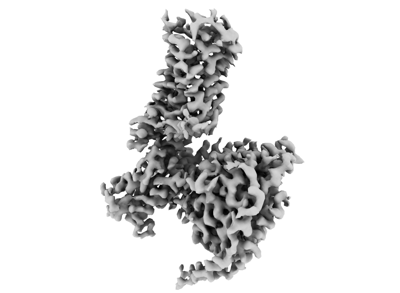 emd_38795.png emd_38795.png | 49.8 KB | ||
| Masks | emd_38795_msk_1.map | 27 MB | Mask map | |
| Filedesc metadata | emd-38795.cif.gz | 7 KB | ||
| Others | emd_38795_half_map_1.map.gzemd_38795_half_map_2.map.gz | 20.7 MB 20.7 MB | ||
| Archive directory |  http://ftp.pdbj.org/pub/emdb/structures/EMD-38795ftp://ftp.pdbj.org/pub/emdb/structures/EMD-38795 http://ftp.pdbj.org/pub/emdb/structures/EMD-38795ftp://ftp.pdbj.org/pub/emdb/structures/EMD-38795 | HTTPS FTP |
-Related structure data
| Related structure data | 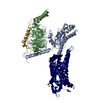 8xzgMC 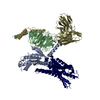 8xzfC 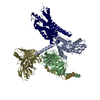 8xzhC  8xziC 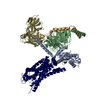 8xzjC M: atomic model generated by this map C: citing same article ( |
|---|---|
| Similar structure data |




-Links
| EMDB pages | EMDB (EBI/PDBe) / EMDataResource |
|---|---|
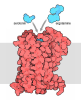
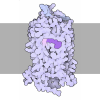
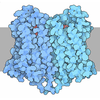
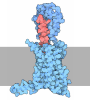
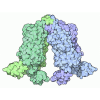
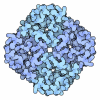
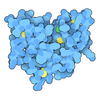
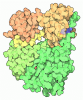
| Related items in Molecule of the Month |

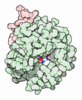
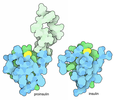
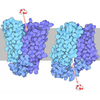
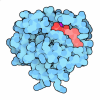
-Map
| File | Download / File: emd_38795.map.gz / Format: CCP4 / Size: 27 MB / Type: IMAGE STORED AS FLOATING POINT NUMBER (4 BYTES) | ||||||||||||||||||||||||||||||||||||
|---|---|---|---|---|---|---|---|---|---|---|---|---|---|---|---|---|---|---|---|---|---|---|---|---|---|---|---|---|---|---|---|---|---|---|---|---|---|
| Projections & slices | Image control
Images are generated by Spider. | ||||||||||||||||||||||||||||||||||||
| Voxel size | X=Y=Z: 1.014 Å | ||||||||||||||||||||||||||||||||||||
| Density |
| ||||||||||||||||||||||||||||||||||||
| Symmetry | Space group: 1 | ||||||||||||||||||||||||||||||||||||
| Details | EMDB XML:
|
 Z (Sec.)
 Y (Row.)
 X (Col.)


-Supplemental data
-Mask #1
| File | emd_38795_msk_1.map | ||||||||||||
|---|---|---|---|---|---|---|---|---|---|---|---|---|---|
| Projections & Slices |
| ||||||||||||
| Density Histograms |


-Half map: #1
| File | emd_38795_half_map_1.map | ||||||||||||
|---|---|---|---|---|---|---|---|---|---|---|---|---|---|
| Projections & Slices |
| ||||||||||||
| Density Histograms |


-Half map: #2
| File | emd_38795_half_map_2.map | ||||||||||||
|---|---|---|---|---|---|---|---|---|---|---|---|---|---|
| Projections & Slices |
| ||||||||||||
| Density Histograms |


- Sample components
-Entire : Cryo-EM structure of the [Pyr1]-apelin-13-bound human APLNR-Gi complex
| Entire | Name: Cryo-EM structure of the [Pyr1]-apelin-13-bound human APLNR-Gi complex |
|---|---|
| Components |
|
-Supramolecule #1: Cryo-EM structure of the [Pyr1]-apelin-13-bound human APLNR-Gi complex
| Supramolecule | Name: Cryo-EM structure of the [Pyr1]-apelin-13-bound human APLNR-Gi complex type: complex / ID: 1 / Parent: 0 / Macromolecule list: all |
|---|---|
| Source (natural) | Organism: Homo sapiens (human) |
-Macromolecule #1: Guanine nucleotide-binding protein G(i) subunit alpha-1
| Macromolecule | Name: Guanine nucleotide-binding protein G(i) subunit alpha-1 type: protein_or_peptide / ID: 1 / Number of copies: 1 / Enantiomer: LEVO |
|---|---|
| Source (natural) | Organism: Homo sapiens (human) |
| Molecular weight | Theoretical: 40.414047 KDa |
| Recombinant expression | Organism:   Spodoptera frugiperda (fall armyworm) Spodoptera frugiperda (fall armyworm) |
| Sequence | String: MGCTLSAEDK AAVERSKMID RNLREDGEKA AREVKLLLLG AGESGKNTIV KQMKIIHEAG YSEEECKQYK AVVYSNTIQS IIAIIRAMG RLKIDFGDSA RADDARQLFV LAGAAEEGFM TAELAGVIKR LWKDSGVQAC FNRSREYQLN DSAAYYLNDL D RIAQPNYI ...String: MGCTLSAEDK AAVERSKMID RNLREDGEKA AREVKLLLLG AGESGKNTIV KQMKIIHEAG YSEEECKQYK AVVYSNTIQS IIAIIRAMG RLKIDFGDSA RADDARQLFV LAGAAEEGFM TAELAGVIKR LWKDSGVQAC FNRSREYQLN DSAAYYLNDL D RIAQPNYI PTQQDVLRTR VKTTGIVETH FTFKDLHFKM FDVGAQRSER KKWIHCFEGV TAIIFCVALS DYDLVLAEDE EM NRMHASM KLFDSICNNK WFTDTSIILF LNKKDLFEEK IKKSPLTICY PEYAGSNTYE EAAAYIQCQF EDLNKRKDTK EIY THFTCS TDTKNVQFVF DAVTDVIIKN NLKDCGLF UniProtKB: Guanine nucleotide-binding protein G(i) subunit alpha-1 |
-Macromolecule #2: Guanine nucleotide-binding protein G(I)/G(S)/G(T) subunit beta-1
| Macromolecule | Name: Guanine nucleotide-binding protein G(I)/G(S)/G(T) subunit beta-1 type: protein_or_peptide / ID: 2 / Number of copies: 1 / Enantiomer: LEVO |
|---|---|
| Source (natural) | Organism: Homo sapiens (human) |
| Molecular weight | Theoretical: 37.285734 KDa |
| Recombinant expression | Organism: Spodoptera frugiperda (fall armyworm) |
| Sequence | String: SELDQLRQEA EQLKNQIRDA RKACADATLS QITNNIDPVG RIQMRTRRTL RGHLAKIYAM HWGTDSRLLV SASQDGKLII WDSYTTNKV HAIPLRSSWV MTCAYAPSGN YVACGGLDNI CSIYNLKTRE GNVRVSRELA GHTGYLSCCR FLDDNQIVTS S GDTTCALW ...String: SELDQLRQEA EQLKNQIRDA RKACADATLS QITNNIDPVG RIQMRTRRTL RGHLAKIYAM HWGTDSRLLV SASQDGKLII WDSYTTNKV HAIPLRSSWV MTCAYAPSGN YVACGGLDNI CSIYNLKTRE GNVRVSRELA GHTGYLSCCR FLDDNQIVTS S GDTTCALW DIETGQQTTT FTGHTGDVMS LSLAPDTRLF VSGACDASAK LWDVREGMCR QTFTGHESDI NAICFFPNGN AF ATGSDDA TCRLFDLRAD QELMTYSHDN IICGITSVSF SKSGRLLLAG YDDFNCNVWD ALKADRAGVL AGHDNRVSCL GVT DDGMAV ATGSWDSFLK IWN UniProtKB: Guanine nucleotide-binding protein G(I)/G(S)/G(T) subunit beta-1 |
-Macromolecule #3: Guanine nucleotide-binding protein G(I)/G(S)/G(O) subunit gamma-2
| Macromolecule | Name: Guanine nucleotide-binding protein G(I)/G(S)/G(O) subunit gamma-2 type: protein_or_peptide / ID: 3 / Number of copies: 1 / Enantiomer: LEVO |
|---|---|
| Source (natural) | Organism: Homo sapiens (human) |
| Molecular weight | Theoretical: 7.861143 KDa |
| Recombinant expression | Organism: Spodoptera frugiperda (fall armyworm) |
| Sequence | String: MASNNTASIA QARKLVEQLK MEANIDRIKV SKAAADLMAY CEAHAKEDPL LTPVPASENP FREKKFFCAI L UniProtKB: Guanine nucleotide-binding protein G(I)/G(S)/G(O) subunit gamma-2 |
-Macromolecule #4: Apelin-13
| Macromolecule | Name: Apelin-13 / type: protein_or_peptide / ID: 4 / Number of copies: 1 / Enantiomer: LEVO |
|---|---|
| Source (natural) | Organism: Homo sapiens (human) |
| Molecular weight | Theoretical: 1.53783 KDa |
| Recombinant expression | Organism: Homo sapiens (human) |
| Sequence | String: (PCA)RPRLSHKGP MPF UniProtKB: Apelin |
-Macromolecule #5: Apelin receptor
| Macromolecule | Name: Apelin receptor / type: protein_or_peptide / ID: 5 / Number of copies: 1 / Enantiomer: LEVO |
|---|---|
| Source (natural) | Organism: Homo sapiens (human) |
| Molecular weight | Theoretical: 42.696301 KDa |
| Recombinant expression | Organism: Spodoptera frugiperda (fall armyworm) |
| Sequence | String: MEEGGDFDNY YGADNQSECE YTDWKSSGAL IPAIYMLVFL LGTTGNGLVL WTVFRSSREK RRSADIFIAS LAVADLTFVV TLPLWATYT YRDYDWPFGT FFCKLSSYLI FVNMYASVFC LTGLSFDRYL AIVRPVANAR LRLRVSGAVA TAVLWVLAAL L AMPVMVLR ...String: MEEGGDFDNY YGADNQSECE YTDWKSSGAL IPAIYMLVFL LGTTGNGLVL WTVFRSSREK RRSADIFIAS LAVADLTFVV TLPLWATYT YRDYDWPFGT FFCKLSSYLI FVNMYASVFC LTGLSFDRYL AIVRPVANAR LRLRVSGAVA TAVLWVLAAL L AMPVMVLR TTGDLENTTK VQCYMDYSMV ATVSSEWAWE VGLGVSSTTV GFVVPFTIML TCYFFIAQTI AGHFRKERIE GL RKRRRLL SIIVVLVVTF ALCWMPYHLV KTLYMLGSLL HWPCDFDLFL MNIFPYCTCI SYVNSCLNPF LYAFFDPRFR QAC TSMLCC GQSRCAGTSH SSSGEKSASY SSGHSQGPGP NMGKGGEQMH EKSIPYSQET LVVD UniProtKB: Apelin receptor |
-Experimental details
-Structure determination
| Method | cryo EM |
|---|---|
 Processing Processing | single particle reconstruction |
| Aggregation state | particle |
-Sample preparation
| Concentration | 15 mg/mL |
|---|---|
| Buffer | pH: 7.5 |
| Grid | Model: Quantifoil R1.2/1.3 / Material: GOLD / Mesh: 300 |
| Vitrification | Cryogen name: ETHANE |
- Electron microscopy
| Microscope | FEI TITAN KRIOS |
|---|---|
| Image recording | Film or detector model: GATAN K2 SUMMIT (4k x 4k) / Average electron dose: 62.4 e/Å2 |
| Electron beam | Acceleration voltage: 300 kV / Electron source:  FIELD EMISSION GUN FIELD EMISSION GUN |
| Electron optics | Illumination mode: FLOOD BEAM / Imaging mode: BRIGHT FIELD / Cs: 2.7 mm / Nominal defocus max: 2.5 µm / Nominal defocus min: 1.0 µm |
| Experimental equipment |  Model: Titan Krios / Image courtesy: FEI Company |

