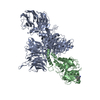
Movie
Movie Controller


+ Open data

- Basic information
| Entry | Database: PDB / ID: 9xzg | |||||||||||||||||||||||||||
|---|---|---|---|---|---|---|---|---|---|---|---|---|---|---|---|---|---|---|---|---|---|---|---|---|---|---|---|---|
| Title | Cryo-EM structure of ALK in complex with CRBN/DDB1 and TRI-611 | |||||||||||||||||||||||||||
 Components Components |
| |||||||||||||||||||||||||||
 Keywords Keywords | LIGASE / DNA Binding Protein-Transferase Complex / DNA BINDING PROTEIN / Ternary Complex / Molecular Glue | |||||||||||||||||||||||||||
| Function / homology |  Function and homology information Function and homology informationASP-3026-resistant ALK mutants / NVP-TAE684-resistant ALK mutants / alectinib-resistant ALK mutants / brigatinib-resistant ALK mutants / ceritinib-resistant ALK mutants / crizotinib-resistant ALK mutants / lorlatinib-resistant ALK mutants / MDK and PTN in ALK signaling / receptor signaling protein tyrosine kinase activator activity / negative regulation of monoatomic ion transmembrane transport ...ASP-3026-resistant ALK mutants / NVP-TAE684-resistant ALK mutants / alectinib-resistant ALK mutants / brigatinib-resistant ALK mutants / ceritinib-resistant ALK mutants / crizotinib-resistant ALK mutants / lorlatinib-resistant ALK mutants / MDK and PTN in ALK signaling / receptor signaling protein tyrosine kinase activator activity / negative regulation of monoatomic ion transmembrane transport / ALK mutants bind TKIs / phosphorylation / positive regulation of dendrite development / peptidyl-tyrosine autophosphorylation / regulation of neuron differentiation / Signaling by ALK / energy homeostasis / locomotory exploration behavior / Cul4A-RING E3 ubiquitin ligase complex / neuron development / limb development / negative regulation of lipid catabolic process / positive regulation of Wnt signaling pathway / negative regulation of protein-containing complex assembly / transmembrane receptor protein tyrosine kinase activity / cell surface receptor protein tyrosine kinase signaling pathway / positive regulation of protein-containing complex assembly / receptor protein-tyrosine kinase / Signaling by ALK fusions and activated point mutants / regulation of cell population proliferation / protein autophosphorylation / heparin binding / protein tyrosine kinase activity / Potential therapeutics for SARS / proteasome-mediated ubiquitin-dependent protein catabolic process / regulation of apoptotic process / transmembrane transporter binding / signaling receptor complex / protein ubiquitination / perinuclear region of cytoplasm / signal transduction / protein-containing complex / extracellular exosome / ATP binding / membrane / metal ion binding / identical protein binding / nucleus / plasma membrane / cytosol / cytoplasm Similarity search - Function | |||||||||||||||||||||||||||
| Biological species |  Homo sapiens (human) Homo sapiens (human) | |||||||||||||||||||||||||||
| Method | ELECTRON MICROSCOPY / single particle reconstruction / cryo EM / Resolution: 2.7 Å | |||||||||||||||||||||||||||
 Authors Authors | Bart, A.G. / Kamadurai, H.B. | |||||||||||||||||||||||||||
| Funding support | 1items
| |||||||||||||||||||||||||||
 Citation Citation | Journal: To Be Published Title: Cryo-EM structure of ALK in complex with CRBN/DDB1 and TRI-611 Authors: Bart, A.G. / Kamadurai, H.B. | |||||||||||||||||||||||||||
| History |
|
- Structure visualization
| Structure viewer | Molecule: MolmilJmol/JSmol |
|---|
- Downloads & links
-Download
| PDBx/mmCIF format | 9xzg.cif.gz | 123.6 KB | Display | PDBx/mmCIF format |
|---|---|---|---|---|
| PDB format | pdb9xzg.ent.gz | Display | PDB format | |
| PDBx/mmJSON format | 9xzg.json.gz | Tree view | PDBx/mmJSON format | |
| Others |  Other downloads Other downloads |
-Validation report
| Arichive directory | https://data.pdbj.org/pub/pdb/validation_reports/xz/9xzgftp://data.pdbj.org/pub/pdb/validation_reports/xz/9xzg | HTTPS FTP |
|---|
-Related structure data
| Related structure data |  72353MC M: map data used to model this data C: citing same article ( |
|---|---|
| Similar structure data |


-Links
 PDBj
PDBj

- Assembly
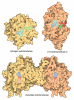
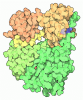
| Deposited unit | 
|
|---|---|
| 1 |
|
-Components
| #1: Protein | Mass: 50690.754 Da / Num. of mol.: 1 Source method: isolated from a genetically manipulated source Source: (gene. exp.) Homo sapiens (human) / Gene: CRBN, AD-006 / Production host:   Spodoptera frugiperda (fall armyworm) / References: UniProt: Q96SW2 Spodoptera frugiperda (fall armyworm) / References: UniProt: Q96SW2 |
|---|---|
| #2: Protein | Mass: 36134.422 Da / Num. of mol.: 1 Source method: isolated from a genetically manipulated source Source: (gene. exp.) Homo sapiens (human) / Gene: ALK / Production host: Spodoptera frugiperda (fall armyworm)References: UniProt: Q9UM73, receptor protein-tyrosine kinase |
| #3: Chemical | ChemComp-ZN /   Mass: 65.409 Da / Num. of mol.: 1 / Source method: obtained synthetically / Formula: Zn Mass: 65.409 Da / Num. of mol.: 1 / Source method: obtained synthetically / Formula: Zn |
| #4: Chemical | ChemComp-A1CRM / ( Mass: 404.376 Da / Num. of mol.: 1 / Source method: obtained synthetically / Formula: C21H16N4O5 / Feature type: SUBJECT OF INVESTIGATION |
| Has ligand of interest | Y |
| Has protein modification | N |
-Experimental details
-Experiment
| Experiment | Method: ELECTRON MICROSCOPY |
|---|---|
| EM experiment | Aggregation state: PARTICLE / 3D reconstruction method: single particle reconstruction |
- Sample preparation
| Component | Name: Ternary complex of ALK with CRBN/DDB1 and TRI-611 / Type: COMPLEX / Entity ID: #1-#2 / Source: RECOMBINANT |
|---|---|
| Source (natural) | Organism: Homo sapiens (human) |
| Source (recombinant) | Organism: Spodoptera frugiperda (fall armyworm) |
| Buffer solution | pH: 7 |
| Specimen | Embedding applied: NO / Shadowing applied: NO / Staining applied: NO / Vitrification applied: YES |
| Vitrification | Instrument: FEI VITROBOT MARK IV / Cryogen name: ETHANE |
- Electron microscopy imaging
| Experimental equipment |  Model: Titan Krios / Image courtesy: FEI Company |
|---|---|
| Microscopy | Model: TFS KRIOS |
| Electron gun | Electron source:  FIELD EMISSION GUN / Accelerating voltage: 300 kV / Illumination mode: FLOOD BEAM FIELD EMISSION GUN / Accelerating voltage: 300 kV / Illumination mode: FLOOD BEAM |
| Electron lens | Mode: BRIGHT FIELD / Nominal defocus max: 2500 nm / Nominal defocus min: 500 nm |
| Image recording | Electron dose: 45 e/Å2 / Film or detector model: GATAN K3 BIOQUANTUM (6k x 4k) |
- Processing
| EM software |
| ||||||||||||||||
|---|---|---|---|---|---|---|---|---|---|---|---|---|---|---|---|---|---|
| CTF correction | Type: PHASE FLIPPING AND AMPLITUDE CORRECTION | ||||||||||||||||
| 3D reconstruction | Resolution: 2.7 Å / Resolution method: FSC 0.143 CUT-OFF / Num. of particles: 345494 / Symmetry type: POINT | ||||||||||||||||
| Atomic model building | PDB-ID: 8d7v Accession code: 8d7v / Source name: PDB / Type: experimental model |