 Movie
Movie Controller


+ Open data

- Basic information
| Entry | Database: PDB / ID: 9xtd | |||||||||||||||||||||||||||||||||
|---|---|---|---|---|---|---|---|---|---|---|---|---|---|---|---|---|---|---|---|---|---|---|---|---|---|---|---|---|---|---|---|---|---|---|
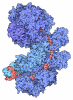
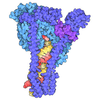
| Title | E.coli delta lepA 30S ribosomal subunit class B, body domain | |||||||||||||||||||||||||||||||||
 Components Components |
| |||||||||||||||||||||||||||||||||
 Keywords Keywords | RIBOSOME / 30S subunit maturation / LepA / cryo-EM / ribosome assembly | |||||||||||||||||||||||||||||||||
| Function / homology |  Function and homology information Function and homology informationornithine decarboxylase inhibitor activity / misfolded RNA binding / Group I intron splicing / RNA folding / four-way junction DNA binding / regulation of mRNA stability / negative regulation of translational initiation / mRNA regulatory element binding translation repressor activity / positive regulation of RNA splicing / transcription antitermination ...ornithine decarboxylase inhibitor activity / misfolded RNA binding / Group I intron splicing / RNA folding / four-way junction DNA binding / regulation of mRNA stability / negative regulation of translational initiation / mRNA regulatory element binding translation repressor activity / positive regulation of RNA splicing / transcription antitermination / DNA endonuclease activity / DNA-templated transcription termination / maintenance of translational fidelity / mRNA 5'-UTR binding / regulation of translation / ribosomal small subunit assembly / ribosome biogenesis / ribosomal small subunit biogenesis / small ribosomal subunit / small ribosomal subunit rRNA binding / cytosolic small ribosomal subunit / cytoplasmic translation / tRNA binding / rRNA binding / structural constituent of ribosome / ribosome / translation / response to antibiotic / hydrolase activity / zinc ion binding / cytosol / cytoplasm Similarity search - Function | |||||||||||||||||||||||||||||||||
| Biological species |   Escherichia coli (E. coli) Escherichia coli (E. coli) | |||||||||||||||||||||||||||||||||
| Method | ELECTRON MICROSCOPY / single particle reconstruction / cryo EM / Resolution: 2.26 Å | |||||||||||||||||||||||||||||||||
 Authors Authors | Kravchenko, O.V. / Maksimova, E.M. / Baymukhametov, T.N. / Stolboushkina, E.A. | |||||||||||||||||||||||||||||||||
| Funding support |  Russian Federation, 1items Russian Federation, 1items
| |||||||||||||||||||||||||||||||||
 Citation Citation | Journal: Int J Mol Sci / Year: 2026 Title: The Conserved GTPase LepA May Contribute to the Final Proper Stabilization of the 3' Domain of the 30S Subunit During Ribosome Assembly. Authors: Olesya Kravchenko / Elena Maksimova / Timur Baymukhametov / Irina Eliseeva / Elena Stolboushkina / Abstract: The function of the highly conserved GTPase LepA, a homolog of elongation factor EF-G, remains unknown in translation. However, there is biochemical data that it implicates in the 30S ribosomal ...The function of the highly conserved GTPase LepA, a homolog of elongation factor EF-G, remains unknown in translation. However, there is biochemical data that it implicates in the 30S ribosomal subunit biogenesis. Here, using cryo-electron microscopy, we characterized 30S subunits isolated from an strain with a deleted gene. The cryo-EM maps for ∆ 30S particles were divided into classes corresponding to consecutive assembly intermediates: from particles characterized by unformed helices h44/h45 of the central decoding center (CDR) and highly flexible head, through intermediates with a distorted CDR and a partial stabilization of the head, to near-mature 30S subunits with correctly docked h44 in the CDR, accessible 3' end of 16S rRNA for translation but significant flexibility in head domain. Cryo-EM analysis of Δ 30S intermediates revealed that they predominantly proceed to nearly mature functional state and exhibit suboptimal flexibility in the head domain. This finding suggests that LepA likely contributes to the final proper stabilization of the 3' domain of the 30S subunit during ribosome assembly. | |||||||||||||||||||||||||||||||||
| History |
|
- Structure visualization
| Structure viewer | Molecule: MolmilJmol/JSmol |
|---|
- Downloads & links
-Download
| PDBx/mmCIF format | 9xtd.cif.gz | 875.4 KB | Display | PDBx/mmCIF format |
|---|---|---|---|---|
| PDB format | pdb9xtd.ent.gz | 655.3 KB | Display | PDB format |
| PDBx/mmJSON format | 9xtd.json.gz | Tree view | PDBx/mmJSON format | |
| Others |  Other downloads Other downloads |
-Validation report
| Arichive directory | https://data.pdbj.org/pub/pdb/validation_reports/xt/9xtdftp://data.pdbj.org/pub/pdb/validation_reports/xt/9xtd | HTTPS FTP |
|---|
-Related structure data
| Related structure data |  67202MC  9xtcC  9xteC M: map data used to model this data C: citing same article ( |
|---|---|
| Similar structure data |


-Links
 PDBj
PDBj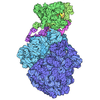
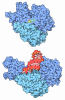
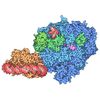
- Assembly
| Deposited unit | 
|
|---|---|
| 1 |
|
-Components
-Small ribosomal subunit protein ... , 11 types, 11 molecules DEFHKLOQRTB
| #2: Protein | Mass: 23383.002 Da / Num. of mol.: 1 / Source method: isolated from a natural source / Source: (natural) Escherichia coli (E. coli) / References: UniProt: P0A7V8 |
|---|---|
| #3: Protein | Mass: 16532.088 Da / Num. of mol.: 1 / Source method: isolated from a natural source / Source: (natural) Escherichia coli (E. coli) / References: UniProt: P0A7W3 |
| #4: Protein | Mass: 12326.251 Da / Num. of mol.: 1 / Source method: isolated from a natural source / Source: (natural) Escherichia coli (E. coli) / References: UniProt: P02358 |
| #5: Protein | Mass: 14015.361 Da / Num. of mol.: 1 / Source method: isolated from a natural source / Source: (natural) Escherichia coli (E. coli) / References: UniProt: P0A7W7 |
| #6: Protein | Mass: 12487.200 Da / Num. of mol.: 1 / Source method: isolated from a natural source / Source: (natural) Escherichia coli (E. coli) / References: UniProt: P0A7R9 |
| #7: Protein | Mass: 13683.053 Da / Num. of mol.: 1 / Source method: isolated from a natural source Details: D2T-(3R)-3-(methylsulfanyl)-L-aspartic acid post-translational modification in the protein Source: (natural) Escherichia coli (E. coli) / References: UniProt: P0A7S3 |
| #8: Protein | Mass: 10159.621 Da / Num. of mol.: 1 / Source method: isolated from a natural source / Source: (natural) Escherichia coli (E. coli) / References: UniProt: P0ADZ4 |
| #10: Protein | Mass: 9263.946 Da / Num. of mol.: 1 / Source method: isolated from a natural source / Source: (natural) Escherichia coli (E. coli) / References: UniProt: P0AG63 |
| #11: Protein | Mass: 6466.477 Da / Num. of mol.: 1 / Source method: isolated from a natural source / Source: (natural) Escherichia coli (E. coli) / References: UniProt: P0A7T7 |
| #12: Protein | Mass: 9577.268 Da / Num. of mol.: 1 / Source method: isolated from a natural source / Source: (natural) Escherichia coli (E. coli) / References: UniProt: P0A7U7 |
| #13: Protein | Mass: 24971.764 Da / Num. of mol.: 1 / Source method: isolated from a natural source / Source: (natural) Escherichia coli (E. coli) / References: UniProt: P0A7V0 |
-RNA chain / Protein , 2 types, 2 molecules AP
| #1: RNA chain | Mass: 499775.156 Da / Num. of mol.: 1 / Source method: isolated from a natural source Details: Post-transcriptional modifications: PSU - PSEUDOURIDINE-5'-MONOPHOSPHATE; G7M - N7-METHYL-GUANOSINE-5'-MONOPHOSPHATE; 2MG - 2N-METHYLGUANOSINE-5'-MONOPHOSPHATE; MA6 - 6N-DIMETHYLADENOSINE-5'-MONOPHOSHATE Source: (natural) Escherichia coli (E. coli) / References: GenBank: 2970342069 |
|---|---|
| #9: Protein | Mass: 9207.572 Da / Num. of mol.: 1 / Source method: isolated from a natural source / Source: (natural) Escherichia coli (E. coli) / References: UniProt: P0A7T3 |
-Non-polymers , 2 types, 1908 molecules 

| #14: Chemical | ChemComp-MG /  Mass: 24.305 Da / Num. of mol.: 39 / Source method: obtained synthetically / Formula: Mg / Feature type: SUBJECT OF INVESTIGATION Mass: 24.305 Da / Num. of mol.: 39 / Source method: obtained synthetically / Formula: Mg / Feature type: SUBJECT OF INVESTIGATION#15: Water | ChemComp-HOH / | Mass: 18.015 Da / Num. of mol.: 1869 / Source method: isolated from a natural source / Formula: H2O |
|---|
-Details
| Has ligand of interest | Y |
|---|---|
| Has protein modification | Y |
-Experimental details
-Experiment
| Experiment | Method: ELECTRON MICROSCOPY |
|---|---|
| EM experiment | Aggregation state: PARTICLE / 3D reconstruction method: single particle reconstruction |
- Sample preparation
| Component | Name: E.coli delta lepA 30S ribosomal subunit class B, body domain Type: RIBOSOME / Entity ID: #1-#13 / Source: NATURAL |
|---|---|
| Source (natural) | Organism: Escherichia coli (E. coli) |
| Buffer solution | pH: 7.5 |
| Specimen | Embedding applied: NO / Shadowing applied: NO / Staining applied: NO / Vitrification applied: YES |
| Vitrification | Cryogen name: ETHANE |
- Electron microscopy imaging
| Experimental equipment |  Model: Titan Krios / Image courtesy: FEI Company |
|---|---|
| Microscopy | Model: TFS KRIOS |
| Electron gun | Electron source:  FIELD EMISSION GUN / Accelerating voltage: 300 kV / Illumination mode: FLOOD BEAM FIELD EMISSION GUN / Accelerating voltage: 300 kV / Illumination mode: FLOOD BEAM |
| Electron lens | Mode: BRIGHT FIELD / Nominal defocus max: 1600 nm / Nominal defocus min: 600 nm |
| Image recording | Electron dose: 72 e/Å2 / Film or detector model: GATAN K3 BIOCONTINUUM (6k x 4k) |
- Processing
| EM software |
| ||||||||||||||||
|---|---|---|---|---|---|---|---|---|---|---|---|---|---|---|---|---|---|
| CTF correction | Type: NONE | ||||||||||||||||
| 3D reconstruction | Resolution: 2.26 Å / Resolution method: FSC 0.143 CUT-OFF / Num. of particles: 269839 / Symmetry type: POINT |
