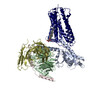
Movie
Movie Controller


+ Open data

- Basic information
| Entry | Database: PDB / ID: 9xhi | ||||||||||||||||||||||||||||||||||||
|---|---|---|---|---|---|---|---|---|---|---|---|---|---|---|---|---|---|---|---|---|---|---|---|---|---|---|---|---|---|---|---|---|---|---|---|---|---|
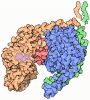
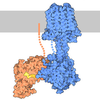
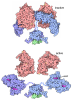
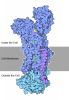
| Title | Structure of the CCL21-CCR7-Gi-scFv16 complex | ||||||||||||||||||||||||||||||||||||
 Components Components |
| ||||||||||||||||||||||||||||||||||||
 Keywords Keywords | MEMBRANE PROTEIN / chemokine / chemokine receptor / GPCR | ||||||||||||||||||||||||||||||||||||
| Function / homology |  Function and homology information Function and homology informationmesangial cell-matrix adhesion / dendritic cell dendrite assembly / negative regulation of dendritic cell dendrite assembly / positive regulation of hypersensitivity / chemokine (C-C motif) ligand 19 binding / chemokine (C-C motif) ligand 21 binding / C-C motif chemokine 19 receptor activity / C-C motif chemokine 21 receptor activity / : / regulation of dendritic cell dendrite assembly ...mesangial cell-matrix adhesion / dendritic cell dendrite assembly / negative regulation of dendritic cell dendrite assembly / positive regulation of hypersensitivity / chemokine (C-C motif) ligand 19 binding / chemokine (C-C motif) ligand 21 binding / C-C motif chemokine 19 receptor activity / C-C motif chemokine 21 receptor activity / : / regulation of dendritic cell dendrite assembly / myeloid dendritic cell chemotaxis / CCL19-activated CCR7 signaling pathway / CCL21-activated CCR7 signaling pathway / CCR7 chemokine receptor binding / positive regulation of immunological synapse formation / positive regulation of T cell costimulation / positive regulation of humoral immune response / mature conventional dendritic cell differentiation / chemokine (C-C motif) ligand 21 signaling pathway / lymphocyte migration into lymph node / positive regulation of dendritic cell antigen processing and presentation / positive regulation of myeloid dendritic cell chemotaxis / establishment of T cell polarity / Adenylate cyclase inhibitory pathway / negative regulation of leukocyte tethering or rolling / negative thymic T cell selection / positive regulation of dendritic cell chemotaxis / regulation of interleukin-1 beta production / immunological synapse formation / chemokine receptor binding / positive regulation of phospholipase C/protein kinase C signal transduction / positive regulation of T cell chemotaxis / CCR chemokine receptor binding / regulation of type II interferon production / positive regulation of glycoprotein biosynthetic process / negative regulation of interleukin-12 production / positive regulation of pseudopodium assembly / negative regulation of dendritic cell apoptotic process / positive regulation of chemotaxis / ruffle organization / cellular response to chemokine / positive regulation of T cell receptor signaling pathway / eosinophil chemotaxis / C-C chemokine receptor activity / positive regulation of cell adhesion mediated by integrin / positive regulation of actin filament polymerization / positive regulation of filopodium assembly / regulation of Cdc42 protein signal transduction / chemokine activity / positive regulation of neutrophil chemotaxis / Chemokine receptors bind chemokines / positive regulation of cell motility / ADP signalling through P2Y purinoceptor 12 / Adrenaline,noradrenaline inhibits insulin secretion / response to nitric oxide / dendritic cell chemotaxis / Extra-nuclear estrogen signaling / positive regulation of cell-matrix adhesion / G alpha (i) signalling events / cellular response to cytokine stimulus / T cell costimulation / positive regulation of T cell migration / cell maturation / positive regulation of interleukin-12 production / positive regulation of Rac protein signal transduction / release of sequestered calcium ion into cytosol / positive regulation of protein localization to cell cortex / positive regulation of cell adhesion / G protein-coupled serotonin receptor binding / cellular response to forskolin / regulation of mitotic spindle organization / calcium-mediated signaling / chemokine-mediated signaling pathway / cell chemotaxis / positive regulation of receptor-mediated endocytosis / positive regulation of JNK cascade / G protein-coupled receptor binding / G protein-coupled receptor activity / G-protein beta/gamma-subunit complex binding / adenylate cyclase-modulating G protein-coupled receptor signaling pathway / Olfactory Signaling Pathway / Activation of the phototransduction cascade / G protein-coupled acetylcholine receptor signaling pathway / G beta:gamma signalling through PLC beta / Presynaptic function of Kainate receptors / Thromboxane signalling through TP receptor / Activation of G protein gated Potassium channels / Inhibition of voltage gated Ca2+ channels via Gbeta/gamma subunits / G-protein activation / Glucagon signaling in metabolic regulation / G beta:gamma signalling through CDC42 / Prostacyclin signalling through prostacyclin receptor / Synthesis, secretion, and inactivation of Glucagon-like Peptide-1 (GLP-1) / GDP binding / G beta:gamma signalling through BTK / photoreceptor disc membrane / ADP signalling through P2Y purinoceptor 12 / Glucagon-type ligand receptors / Sensory perception of sweet, bitter, and umami (glutamate) taste / Adrenaline,noradrenaline inhibits insulin secretion Similarity search - Function | ||||||||||||||||||||||||||||||||||||
| Biological species |  Homo sapiens (human) Homo sapiens (human)  Mus musculus (house mouse) Mus musculus (house mouse) | ||||||||||||||||||||||||||||||||||||
| Method | ELECTRON MICROSCOPY / single particle reconstruction / cryo EM / Resolution: 3.2 Å | ||||||||||||||||||||||||||||||||||||
 Authors Authors | Tsutsumi, N. / Nishikawa, K. / Fujiyoshi, Y. | ||||||||||||||||||||||||||||||||||||
| Funding support |  Japan, 3items Japan, 3items
| ||||||||||||||||||||||||||||||||||||
 Citation Citation | Journal: Proc Natl Acad Sci U S A / Year: 2026 Title: Structural insights into biased signaling at chemokine receptor CCR7. Authors: Kotaro Tanaka / Kouki Nishikawa / Yuki Shiimura / Yoshinori Fujiyoshi / Naotaka Tsutsumi / Abstract: CC chemokine receptor 7 (CCR7), which orchestrates adaptive immunity, exhibits a phenomenon known as biased agonism. CCL19 induces robust G-protein signaling and β-arrestin recruitment, leading to ...CC chemokine receptor 7 (CCR7), which orchestrates adaptive immunity, exhibits a phenomenon known as biased agonism. CCL19 induces robust G-protein signaling and β-arrestin recruitment, leading to transient signaling. In contrast, CCL21 preferentially activates G-protein pathways with minimal arrestin engagement, resulting in sustained signaling and differential functional outcomes. Here, we present the cryo-EM structures of the human CCR7-G complex with either CCL19 or CCL21. The structures reveal that while both engage a conserved orthosteric pocket, they adopt markedly distinct binding poses. Notably, the compact 30s loop of CCL21 inserts deeply into the receptor's extracellular vestibule, whereas the corresponding loop of CCL19 rests atop extracellular loop 2. Molecular dynamics simulations further reveal that these distinct binding modes induce differential intracellular dynamics, linked to the rotameric state of Y83 at the intracellular end of transmembrane helix 1. We demonstrate that CCL19 stabilizes a flexible conformational ensemble with a highly dynamic helix 8, creating a lateral opening favorable for GPCR kinase engagement. Conversely, CCL21 restricts this flexibility, locking the receptor in a state that precludes kinase interaction while maintaining G-protein coupling. Corroborated by functional data, these findings provide key insights into the structural basis of biased agonism at CCR7 and establish a foundation for rational design of pathway-selective immunomodulators. | ||||||||||||||||||||||||||||||||||||
| History |
|
- Structure visualization
| Structure viewer | Molecule: MolmilJmol/JSmol |
|---|
- Downloads & links
-Download
| PDBx/mmCIF format | 9xhi.cif.gz | 270.9 KB | Display | PDBx/mmCIF format |
|---|---|---|---|---|
| PDB format | pdb9xhi.ent.gz | 199.9 KB | Display | PDB format |
| PDBx/mmJSON format | 9xhi.json.gz | Tree view | PDBx/mmJSON format | |
| Others |  Other downloads Other downloads |
-Validation report
| Arichive directory | https://data.pdbj.org/pub/pdb/validation_reports/xh/9xhiftp://data.pdbj.org/pub/pdb/validation_reports/xh/9xhi | HTTPS FTP |
|---|
-Related structure data
| Related structure data |  66875MC  9xhhC M: map data used to model this data C: citing same article ( |
|---|---|
| Similar structure data |

-Links
 PDBj
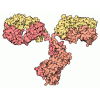
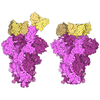
PDBj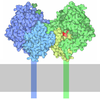

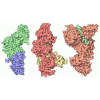
- Assembly
| Deposited unit | 
|
|---|---|
| 1 |
|
-Components
-Protein , 2 types, 2 molecules LR
| #1: Protein | Mass: 13652.765 Da / Num. of mol.: 1 Source method: isolated from a genetically manipulated source Details: CCL21 with a C-terminal linker to an expression/purification tag and the 3C protease scar Source: (gene. exp.) Homo sapiens (human) / Gene: CCL21, SCYA21, UNQ784/PRO1600 / Production host: Homo sapiens (human) / References: UniProt: O00585 |
|---|---|
| #2: Protein | Mass: 61585.000 Da / Num. of mol.: 1 Source method: isolated from a genetically manipulated source Details: CCR7 with a C-terminal LgBit-His tag. CLR is a bound small molecule, not a part of the polypeptide.,CCR7 with a C-terminal LgBit-His tag. CLR is a bound small molecule, not a part of the polypeptide. Source: (gene. exp.) Homo sapiens (human) / Gene: CCR7, CMKBR7, EBI1, EVI1 / Production host: Homo sapiens (human) / References: UniProt: P32248, UniProt: A0A482LYE4 |
-Guanine nucleotide-binding protein ... , 2 types, 3 molecules ACB
| #3: Protein | Mass: 48640.371 Da / Num. of mol.: 2 Source method: isolated from a genetically manipulated source Details: chimeric protein with molecule 5 Gg2-Galpha(i)1 single chain fusion assigned a different chain ID for residue numbering,chimeric protein with molecule 5 Gg2-Galpha(i)1 single chain fusion ...Details: chimeric protein with molecule 5 Gg2-Galpha(i)1 single chain fusion assigned a different chain ID for residue numbering,chimeric protein with molecule 5 Gg2-Galpha(i)1 single chain fusion assigned a different chain ID for residue numbering Source: (gene. exp.) Homo sapiens (human) / Gene: GNG2, GNAI1 / Production host: Homo sapiens (human)References: UniProt: P59768, UniProt: P63097, Hydrolases; Acting on acid anhydrides; Acting on GTP to facilitate cellular and subcellular movement #4: Protein | | Mass: 40039.648 Da / Num. of mol.: 1 Source method: isolated from a genetically manipulated source Details: Gb1 with a C-terminal HiBit tag. The 3C protease scar and a short linker at the N-terminus. Source: (gene. exp.) Homo sapiens (human) / Gene: GNB1 / Production host: Homo sapiens (human) / References: UniProt: P62873 |
|---|
-Antibody / Non-polymers , 2 types, 2 molecules D
| #5: Antibody | Mass: 27340.482 Da / Num. of mol.: 1 Source method: isolated from a genetically manipulated source Source: (gene. exp.) Mus musculus (house mouse) / Production host:  Trichoplusia ni (cabbage looper) Trichoplusia ni (cabbage looper) |
|---|---|
| #6: Chemical | ChemComp-CLR / 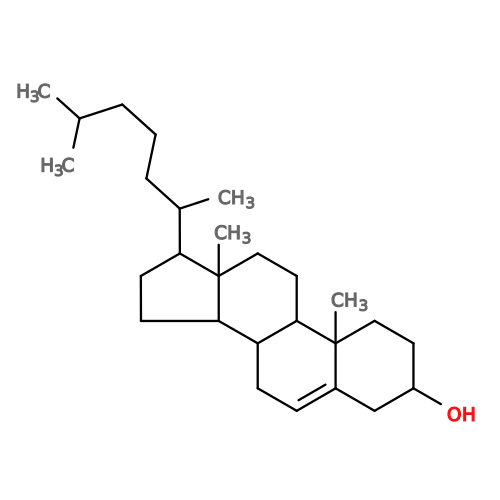 Mass: 386.654 Da / Num. of mol.: 1 / Source method: obtained synthetically / Formula: C27H46O Mass: 386.654 Da / Num. of mol.: 1 / Source method: obtained synthetically / Formula: C27H46O |
-Details
| Has ligand of interest | N |
|---|---|
| Has protein modification | Y |
-Experimental details
-Experiment
| Experiment | Method: ELECTRON MICROSCOPY |
|---|---|
| EM experiment | Aggregation state: PARTICLE / 3D reconstruction method: single particle reconstruction |
- Sample preparation
| Component |
| ||||||||||||||||||||||||||||||
|---|---|---|---|---|---|---|---|---|---|---|---|---|---|---|---|---|---|---|---|---|---|---|---|---|---|---|---|---|---|---|---|
| Molecular weight |
| ||||||||||||||||||||||||||||||
| Source (natural) |
| ||||||||||||||||||||||||||||||
| Source (recombinant) |
| ||||||||||||||||||||||||||||||
| Buffer solution | pH: 7.2 | ||||||||||||||||||||||||||||||
| Buffer component |
| ||||||||||||||||||||||||||||||
| Specimen | Conc.: 4.5 mg/ml / Embedding applied: NO / Shadowing applied: NO / Staining applied: NO / Vitrification applied: YES | ||||||||||||||||||||||||||||||
| Specimen support | Grid material: GOLD / Grid mesh size: 300 divisions/in. / Grid type: Quantifoil R1.2/1.3 | ||||||||||||||||||||||||||||||
| Vitrification | Instrument: FEI VITROBOT MARK IV / Cryogen name: ETHANE / Humidity: 100 % / Chamber temperature: 277 K |
- Electron microscopy imaging
| Microscopy | Model: JEOL CRYO ARM 300 Details: The microscope model is the JEOL's "JEM-Z320FHC", a custom-built model of JEOL CRYO ARM 300. |
|---|---|
| Electron gun | Electron source:  FIELD EMISSION GUN / Accelerating voltage: 300 kV / Illumination mode: FLOOD BEAM FIELD EMISSION GUN / Accelerating voltage: 300 kV / Illumination mode: FLOOD BEAM |
| Electron lens | Mode: BRIGHT FIELD / Calibrated magnification: 63291 X / Nominal defocus max: 1800 nm / Nominal defocus min: 1000 nm / Cs: 3.4 mm |
| Specimen holder | Cryogen: NITROGEN |
| Image recording | Electron dose: 50 e/Å2 / Film or detector model: GATAN K3 (6k x 4k) / Num. of grids imaged: 2 / Num. of real images: 5968 |
| EM imaging optics | Energyfilter name: In-column Omega Filter / Energyfilter slit width: 20 eV |
- Processing
| EM software |
| ||||||||||||||||||||||||||||||||||||||||
|---|---|---|---|---|---|---|---|---|---|---|---|---|---|---|---|---|---|---|---|---|---|---|---|---|---|---|---|---|---|---|---|---|---|---|---|---|---|---|---|---|---|
| CTF correction | Details: CryoSPARC patch CTF estimation and global/local CTF refinements Type: PHASE FLIPPING AND AMPLITUDE CORRECTION | ||||||||||||||||||||||||||||||||||||||||
| Particle selection | Num. of particles selected: 1537777 / Details: initial particles that appeared to be protein | ||||||||||||||||||||||||||||||||||||||||
| Symmetry | Point symmetry: C1 (asymmetric) | ||||||||||||||||||||||||||||||||||||||||
| 3D reconstruction | Resolution: 3.2 Å / Resolution method: FSC 0.143 CUT-OFF / Num. of particles: 195011 / Algorithm: FOURIER SPACE / Symmetry type: POINT | ||||||||||||||||||||||||||||||||||||||||
| Atomic model building | B value: 60 / Protocol: FLEXIBLE FIT / Space: REAL | ||||||||||||||||||||||||||||||||||||||||
| Atomic model building | 3D fitting-ID: 1
| ||||||||||||||||||||||||||||||||||||||||
| Refinement | Highest resolution: 3.2 Å Stereochemistry target values: REAL-SPACE (WEIGHTED MAP SUM AT ATOM CENTERS) | ||||||||||||||||||||||||||||||||||||||||
| Refine LS restraints |
|