 Movie
Movie Controller

[English] 日本語
 Yorodumi
- PDB-9vos: Cryo-EM Structure of GPR158 in Complex with RGS7-Gbeta5 and Nanob... -
+ Open data

- Basic information
| Entry | Database: PDB / ID: 9vos | |||||||||||||||||||||
|---|---|---|---|---|---|---|---|---|---|---|---|---|---|---|---|---|---|---|---|---|---|---|
| Title | Cryo-EM Structure of GPR158 in Complex with RGS7-Gbeta5 and Nanobody Nb20 | |||||||||||||||||||||
 Components Components |
| |||||||||||||||||||||
 Keywords Keywords | MEMBRANE PROTEIN/IMMUNE SYSTEM / GPCR / orphan receptor / nanobody / RGS proteins / signalling receptor / MEMBRANE PROTEIN / MEMBRANE PROTEIN-IMMUNE SYSTEM complex | |||||||||||||||||||||
| Function / homology |  Function and homology information Function and homology informationlight adaption / dark adaptation / G protein-coupled glycine receptor activity / dendrite terminus / Inactivation, recovery and regulation of the phototransduction cascade / G beta:gamma signalling through PLC beta / Presynaptic function of Kainate receptors / Prostacyclin signalling through prostacyclin receptor / G alpha (z) signalling events / Glucagon-type ligand receptors ...light adaption / dark adaptation / G protein-coupled glycine receptor activity / dendrite terminus / Inactivation, recovery and regulation of the phototransduction cascade / G beta:gamma signalling through PLC beta / Presynaptic function of Kainate receptors / Prostacyclin signalling through prostacyclin receptor / G alpha (z) signalling events / Glucagon-type ligand receptors / G beta:gamma signalling through PI3Kgamma / G beta:gamma signalling through CDC42 / Adrenaline,noradrenaline inhibits insulin secretion / ADP signalling through P2Y purinoceptor 12 / Cooperation of PDCL (PhLP1) and TRiC/CCT in G-protein beta folding / Thromboxane signalling through TP receptor / G beta:gamma signalling through BTK / Thrombin signalling through proteinase activated receptors (PARs) / Activation of G protein gated Potassium channels / Inhibition of voltage gated Ca2+ channels via Gbeta/gamma subunits / G alpha (s) signalling events / Ca2+ pathway / G-protein activation / Extra-nuclear estrogen signaling / G-protein gamma-subunit binding / G alpha (12/13) signalling events / G alpha (q) signalling events / Vasopressin regulates renal water homeostasis via Aquaporins / GPER1 signaling / Glucagon-like Peptide-1 (GLP1) regulates insulin secretion / positive regulation of neurotransmitter secretion / ADP signalling through P2Y purinoceptor 1 / High laminar flow shear stress activates signaling by PIEZO1 and PECAM1:CDH5:KDR in endothelial cells / G alpha (i) signalling events / cell tip / G protein-coupled dopamine receptor signaling pathway / GTPase activating protein binding / negative regulation of G protein-coupled receptor signaling pathway / regulation of synapse organization / parallel fiber to Purkinje cell synapse / regulation of postsynaptic membrane potential / positive regulation of GTPase activity / G-protein alpha-subunit binding / photoreceptor outer segment / photoreceptor inner segment / GTPase activator activity / protein localization to plasma membrane / regulation of G protein-coupled receptor signaling pathway / brain development / myelin sheath / postsynaptic density membrane / cognition / enzyme activator activity / transmembrane signaling receptor activity / presynapse / Cooperation of PDCL (PhLP1) and TRiC/CCT in G-protein beta folding / heterotrimeric G-protein complex / G-protein beta-subunit binding / protein-folding chaperone binding / signaling receptor complex adaptor activity / cell body / presynaptic membrane / G alpha (i) signalling events / postsynaptic membrane / intracellular signal transduction / neuron projection / G protein-coupled receptor signaling pathway / GTPase activity / dendrite / synapse / glutamatergic synapse / protein-containing complex / nucleus / plasma membrane / cytosol / cytoplasm Similarity search - Function | |||||||||||||||||||||
| Biological species |  Homo sapiens (human) Homo sapiens (human)  Mus musculus (house mouse) Mus musculus (house mouse) Lama glama (llama) Lama glama (llama) | |||||||||||||||||||||
| Method | ELECTRON MICROSCOPY / single particle reconstruction / cryo EM / Resolution: 4.3 Å | |||||||||||||||||||||
 Authors Authors | Laboute, T. / Zucca, S. / Sial, M. / Sharma, M. / Brunori, G. / Singh, S. / Singh, A. / Martemyanov, K. | |||||||||||||||||||||
| Funding support |  United States, United States,  India, 4items India, 4items
| |||||||||||||||||||||
 Citation Citation | Journal: Nat Commun / Year: 2026 Title: Targeting mGlyR with nanobodies for depression. Authors: Thibaut Laboute / Stefano Zucca / Omar K Sial / Mansi Sharma / Gloria Brunori / Shikha Singh / K V Nageswar / Haiyong Peng / Christoph Rader / Jérôme Aj Becker / Julie Le Merrer / Appu K ...Authors: Thibaut Laboute / Stefano Zucca / Omar K Sial / Mansi Sharma / Gloria Brunori / Shikha Singh / K V Nageswar / Haiyong Peng / Christoph Rader / Jérôme Aj Becker / Julie Le Merrer / Appu K Singh / Kirill A Martemyanov /  Abstract: Development of therapies for neuropsychiatric conditions is one of the greatest challenges of modern medicine. Common limitations of traditional small molecule drugs include poor efficacy, off-target ...Development of therapies for neuropsychiatric conditions is one of the greatest challenges of modern medicine. Common limitations of traditional small molecule drugs include poor efficacy, off-target side effects and difficult druggability of many targets. In this study, we report a different approach deploying small engineered single domain antibodies, known as nanobodies, for the treatment of depression, a prevalent neuropsychiatric condition. We develop highly selective nanobodies for a recently discovered glycine receptor mGlyR crucially linked to pathophysiology of depression. Using a mouse model of stress-induced depression, we show that non-invasive intranasal delivery of nanobody produces rapid and lasting anti-depressant effect. We solve an atomic structure of mGlyR bound to nanobody and use a variety of cell-based approaches to reveal the mechanism of mGlyR modulation and its impact on neural circuitry. These findings support development of biologics for the treatment of intractable brain disorders. | |||||||||||||||||||||
| History |
|
- Structure visualization
| Structure viewer | Molecule: MolmilJmol/JSmol |
|---|
- Downloads & links
-Download
| PDBx/mmCIF format | 9vos.cif.gz | 374.6 KB | Display | PDBx/mmCIF format |
|---|---|---|---|---|
| PDB format | pdb9vos.ent.gz | 296.7 KB | Display | PDB format |
| PDBx/mmJSON format | 9vos.json.gz | Tree view | PDBx/mmJSON format | |
| Others |  Other downloads Other downloads |
-Validation report
| Arichive directory | https://data.pdbj.org/pub/pdb/validation_reports/vo/9vosftp://data.pdbj.org/pub/pdb/validation_reports/vo/9vos | HTTPS FTP |
|---|
-Related structure data
| Related structure data |  65226MC 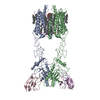 9vorC M: map data used to model this data C: citing same article ( |
|---|---|
| Similar structure data |

-Links
 PDBj
PDBj

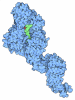
- Assembly
| Deposited unit | 
|
|---|---|
| 1 |
|
-Components
-Protein , 3 types, 4 molecules BACD
| #1: Protein | Mass: 88251.633 Da / Num. of mol.: 2 Source method: isolated from a genetically manipulated source Source: (gene. exp.) Homo sapiens (human) / Gene: GPR158, KIAA1136 / Cell line (production host): HEK293 / Production host: Homo sapiens (human) / References: UniProt: Q5T848#2: Protein | | Mass: 54761.859 Da / Num. of mol.: 1 Source method: isolated from a genetically manipulated source Source: (gene. exp.) Homo sapiens (human) / Gene: RGS7 / Cell line (production host): HEK293 / Production host: Homo sapiens (human) / References: UniProt: P49802#3: Protein | | Mass: 38778.602 Da / Num. of mol.: 1 Source method: isolated from a genetically manipulated source Source: (gene. exp.) Mus musculus (house mouse) / Gene: Gnb5 / Cell line (production host): HEK293 / Production host: Homo sapiens (human) / References: UniProt: P62881 |
|---|
-Antibody , 1 types, 2 molecules HI
| #4: Antibody | Mass: 16722.469 Da / Num. of mol.: 2 Source method: isolated from a genetically manipulated source Source: (gene. exp.) Lama glama (llama)Production host:   Escherichia coli 'BL21-Gold(DE3)pLysS AG' (bacteria) Escherichia coli 'BL21-Gold(DE3)pLysS AG' (bacteria) |
|---|
-Non-polymers , 3 types, 24 molecules 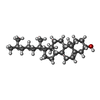
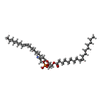
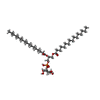
| #5: Chemical | ChemComp-CLR / 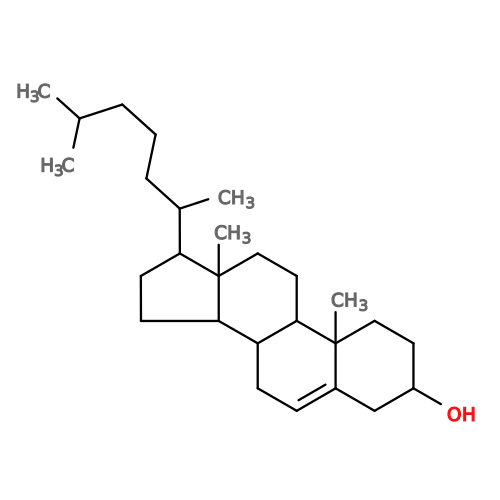 Mass: 386.654 Da / Num. of mol.: 22 / Source method: obtained synthetically / Formula: C27H46O Mass: 386.654 Da / Num. of mol.: 22 / Source method: obtained synthetically / Formula: C27H46O#6: Chemical | ChemComp-PEE / | 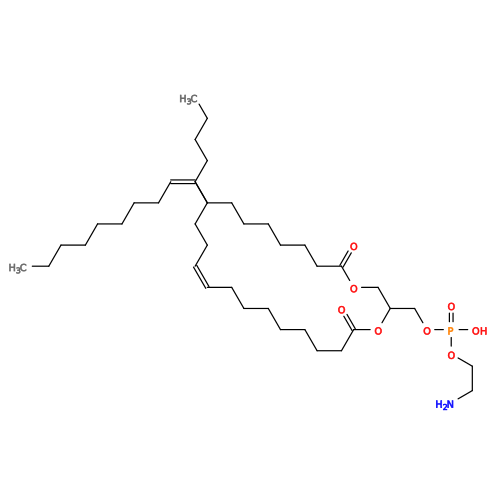 Mass: 744.034 Da / Num. of mol.: 1 / Source method: obtained synthetically / Formula: C41H78NO8P / Feature type: SUBJECT OF INVESTIGATION / Comment: DOPE, phospholipid*YM Mass: 744.034 Da / Num. of mol.: 1 / Source method: obtained synthetically / Formula: C41H78NO8P / Feature type: SUBJECT OF INVESTIGATION / Comment: DOPE, phospholipid*YM#7: Chemical | ChemComp-PII / |  Mass: 825.059 Da / Num. of mol.: 1 / Source method: obtained synthetically / Formula: C42H81O13P / Feature type: SUBJECT OF INVESTIGATION Mass: 825.059 Da / Num. of mol.: 1 / Source method: obtained synthetically / Formula: C42H81O13P / Feature type: SUBJECT OF INVESTIGATION |
|---|
-Details
| Has ligand of interest | Y |
|---|---|
| Has protein modification | Y |
-Experimental details
-Experiment
| Experiment | Method: ELECTRON MICROSCOPY |
|---|---|
| EM experiment | Aggregation state: PARTICLE / 3D reconstruction method: single particle reconstruction |
- Sample preparation
| Component |
| ||||||||||||||||||||||||||||||
|---|---|---|---|---|---|---|---|---|---|---|---|---|---|---|---|---|---|---|---|---|---|---|---|---|---|---|---|---|---|---|---|
| Source (natural) |
| ||||||||||||||||||||||||||||||
| Source (recombinant) |
| ||||||||||||||||||||||||||||||
| Buffer solution | pH: 8 | ||||||||||||||||||||||||||||||
| Specimen | Conc.: 0.8 mg/ml / Embedding applied: NO / Shadowing applied: NO / Staining applied: NO / Vitrification applied: YES | ||||||||||||||||||||||||||||||
| Specimen support | Grid material: GOLD / Grid mesh size: 200 divisions/in. / Grid type: C-flat-1.2/1.3 | ||||||||||||||||||||||||||||||
| Vitrification | Instrument: FEI VITROBOT MARK IV / Cryogen name: ETHANE / Humidity: 100 % / Chamber temperature: 277 K |
- Electron microscopy imaging
| Experimental equipment |  Model: Titan Krios / Image courtesy: FEI Company |
|---|---|
| Microscopy | Model: TFS KRIOS |
| Electron gun | Electron source:  FIELD EMISSION GUN / Accelerating voltage: 300 kV / Illumination mode: SPOT SCAN FIELD EMISSION GUN / Accelerating voltage: 300 kV / Illumination mode: SPOT SCAN |
| Electron lens | Mode: OTHER / Nominal defocus max: 2000 nm / Nominal defocus min: 1200 nm |
| Image recording | Electron dose: 48 e/Å2 / Film or detector model: GATAN K3 BIOQUANTUM (6k x 4k) / Num. of grids imaged: 4 / Num. of real images: 40 |
- Processing
| EM software |
| |||||||||
|---|---|---|---|---|---|---|---|---|---|---|
| CTF correction | Type: PHASE FLIPPING AND AMPLITUDE CORRECTION | |||||||||
| 3D reconstruction | Resolution: 4.3 Å / Resolution method: FSC 0.143 CUT-OFF / Num. of particles: 91859 / Symmetry type: POINT | |||||||||
| Atomic model building | Protocol: AB INITIO MODEL |
