 Movie
Movie Controller

[English] 日本語
 Yorodumi
- PDB-9tq7: Neuraminidase NA isolated from the H1N1 strain A/Victoria/2570/20... -
+ Open data

- Basic information
| Entry | Database: PDB / ID: 9tq7 | ||||||||||||||||||||||||||||||
|---|---|---|---|---|---|---|---|---|---|---|---|---|---|---|---|---|---|---|---|---|---|---|---|---|---|---|---|---|---|---|---|
| Title | Neuraminidase NA isolated from the H1N1 strain A/Victoria/2570/2019 propagated in eggs | ||||||||||||||||||||||||||||||
 Components Components | Neuraminidase | ||||||||||||||||||||||||||||||
 Keywords Keywords | HYDROLASE / glycosidase / influenza virus / viral release | ||||||||||||||||||||||||||||||
| Biological species |   Influenza A virus Influenza A virus | ||||||||||||||||||||||||||||||
| Method | ELECTRON MICROSCOPY / single particle reconstruction / cryo EM / Resolution: 3.58 Å | ||||||||||||||||||||||||||||||
 Authors Authors | Borowska, A. / Kang, H. / Slotboom, D.J. / Daniels, R. | ||||||||||||||||||||||||||||||
| Funding support |  Netherlands, 1items Netherlands, 1items
| ||||||||||||||||||||||||||||||
 Citation Citation | Journal: J Biol Chem / Year: 2026 Title: INAAC: An affinity chromatography strategy enabling characterization and quantification of influenza neuraminidase antigens in vaccines. Authors: Hyeog Kang / Anna M Borowska / Tapan Kanai / Jin Gao / Hai Yu / Xi Chen / Jason Gorman / Dirk-Jan Slotboom / Robert Daniels /  Abstract: Seasonal influenza vaccines are commonly produced using viruses containing hemagglutinin (HA) and neuraminidase (NA) antigens from recommended strains. However, NA amounts are not monitored due to ...Seasonal influenza vaccines are commonly produced using viruses containing hemagglutinin (HA) and neuraminidase (NA) antigens from recommended strains. However, NA amounts are not monitored due to lack of strategies for isolating NA reference antigens from viruses, limiting the ability to evaluate any contributions from NA for more than 50 years. Here, we developed an influenza neuraminidase active-site affinity chromatography (INAAC) strategy that uses an active-site binding antibody to isolate functional NAs from influenza A and B vaccine strains. INAAC recovered 20 to 60% of detergent-solubilized NA activity from vaccine viruses and recombinant sources, with CaCl elution proving most effective. ELISA results with the isolated NA from the H1N1 strain and recombinant full-length N1 showed that a commercial vaccine contains functional N1 and H1 at a ratio of ∼1:10. Structure determination of the isolated N1 by cryo-electron microscopy confirmed the native tetrameric conformation and provided insight into the stalk conformation of a virus-derived NA. Finally, comparative analyses of NAs isolated from recent egg-propagated vaccine strains (H1N1, H3N2, and type B) revealed a unique proteolytic susceptibility of type B NA and strain-specific differences in sialic acid affinities and catalytic rates. These results demonstrate that INAAC supports multiple applications from NA structural analysis to producing NA vaccine antigens and reference standards, addressing longstanding challenges for incorporating NA into influenza vaccine development and quality control. | ||||||||||||||||||||||||||||||
| History |
|
- Structure visualization
| Structure viewer | Molecule:  MolmilJmol/JSmol MolmilJmol/JSmol |
|---|
- Downloads & links
-Download
| PDBx/mmCIF format | 9tq7.cif.gz | 276.7 KB | Display | PDBx/mmCIF format |
|---|---|---|---|---|
| PDB format | pdb9tq7.ent.gz | 222.4 KB | Display | PDB format |
| PDBx/mmJSON format | 9tq7.json.gz | Tree view | PDBx/mmJSON format | |
| Others |  Other downloads Other downloads |
-Validation report
| Arichive directory | https://data.pdbj.org/pub/pdb/validation_reports/tq/9tq7ftp://data.pdbj.org/pub/pdb/validation_reports/tq/9tq7 | HTTPS FTP |
|---|
-Related structure data


-Links
 PDBj
PDBj- Assembly
| Deposited unit | 
|
|---|---|
| 1 |
|
-Components
| #1: Protein | Mass: 51660.902 Da / Num. of mol.: 4 / Source method: isolated from a natural source / Source: (natural) Influenza A virus (A/(H1N1)) / References: exo-alpha-sialidase#2: Sugar | ChemComp-NAG /  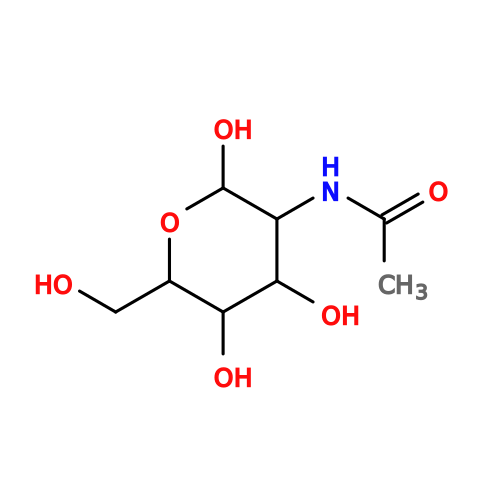 Type: D-saccharide, beta linking / Mass: 221.208 Da / Num. of mol.: 12 / Source method: obtained synthetically / Formula: C8H15NO6 / Feature type: SUBJECT OF INVESTIGATION Type: D-saccharide, beta linking / Mass: 221.208 Da / Num. of mol.: 12 / Source method: obtained synthetically / Formula: C8H15NO6 / Feature type: SUBJECT OF INVESTIGATION#3: Chemical | ChemComp-CA /  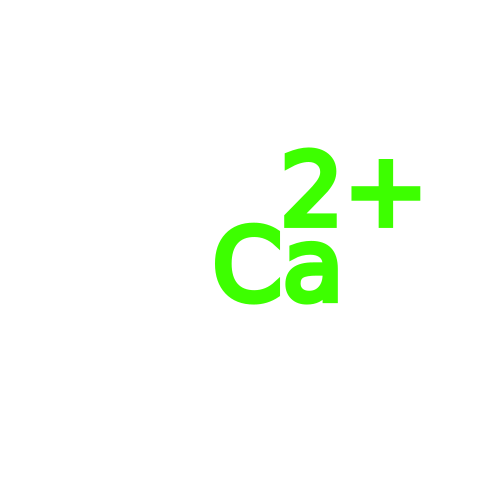 Mass: 40.078 Da / Num. of mol.: 8 / Source method: obtained synthetically / Formula: Ca / Feature type: SUBJECT OF INVESTIGATION Mass: 40.078 Da / Num. of mol.: 8 / Source method: obtained synthetically / Formula: Ca / Feature type: SUBJECT OF INVESTIGATIONHas ligand of interest | Y | Has protein modification | Y | |
|---|
-Experimental details
-Experiment
| Experiment | Method: ELECTRON MICROSCOPY |
|---|---|
| EM experiment | Aggregation state: PARTICLE / 3D reconstruction method: single particle reconstruction |
- Sample preparation
| Component | Name: Neuraminidase NA isolated from the H1N1 strain A/Victoria/2570/2019 propagated in eggs Type: COMPLEX / Entity ID: #1 / Source: NATURAL |
|---|---|
| Molecular weight | Value: 0.2142 MDa / Experimental value: NO |
| Source (natural) | Organism: Influenza A virus (A/(H1N1)) |
| Buffer solution | pH: 7 Details: 20 mM HEPES pH 7, 150 mM NaCl, 1 mM CaCl2, 0.0001% HDM |
| Specimen | Conc.: 0.9 mg/ml / Embedding applied: NO / Shadowing applied: NO / Staining applied: NO / Vitrification applied: YES |
| Specimen support | Details: 5 mA / Grid material: GOLD / Grid mesh size: 300 divisions/in. / Grid type: Quantifoil R1.2/1.3 |
| Vitrification | Instrument: FEI VITROBOT MARK IV / Cryogen name: ETHANE-PROPANE / Humidity: 100 % / Chamber temperature: 288 K |
- Electron microscopy imaging
| Experimental equipment | 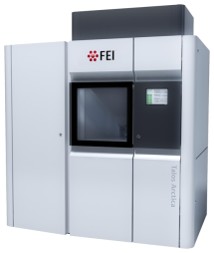 Model: Talos Arctica / Image courtesy: FEI Company |
|---|---|
| Microscopy | Model: FEI TALOS ARCTICA |
| Electron gun | Electron source:  FIELD EMISSION GUN / Accelerating voltage: 200 kV / Illumination mode: FLOOD BEAM FIELD EMISSION GUN / Accelerating voltage: 200 kV / Illumination mode: FLOOD BEAM |
| Electron lens | Mode: BRIGHT FIELD / Nominal magnification: 130000 X / Calibrated magnification: 48924 X / Nominal defocus max: 1900 nm / Nominal defocus min: 500 nm / Cs: 2.7 mm / C2 aperture diameter: 50 µm / Alignment procedure: COMA FREE |
| Specimen holder | Cryogen: NITROGEN / Specimen holder model: FEI TITAN KRIOS AUTOGRID HOLDER |
| Image recording | Electron dose: 57.3 e/Å2 / Detector mode: COUNTING / Film or detector model: GATAN K2 SUMMIT (4k x 4k) / Num. of grids imaged: 1 / Num. of real images: 2282 |
| EM imaging optics | Energyfilter name: GIF Bioquantum / Energyfilter slit width: 20 eV |
| Image scans | Movie frames/image: 60 / Used frames/image: 1-60 |
- Processing
| EM software |
| ||||||||||||||||||||||||||||||||||||
|---|---|---|---|---|---|---|---|---|---|---|---|---|---|---|---|---|---|---|---|---|---|---|---|---|---|---|---|---|---|---|---|---|---|---|---|---|---|
| CTF correction | Type: PHASE FLIPPING AND AMPLITUDE CORRECTION | ||||||||||||||||||||||||||||||||||||
| Particle selection | Num. of particles selected: 456795 | ||||||||||||||||||||||||||||||||||||
| Symmetry | Point symmetry: C4 (4 fold cyclic) | ||||||||||||||||||||||||||||||||||||
| 3D reconstruction | Resolution: 3.58 Å / Resolution method: FSC 0.143 CUT-OFF / Num. of particles: 204391 / Algorithm: BACK PROJECTION / Symmetry type: POINT | ||||||||||||||||||||||||||||||||||||
| Atomic model building | Protocol: FLEXIBLE FIT / Space: REAL | ||||||||||||||||||||||||||||||||||||
| Atomic model building | PDB-ID: 3NSS Pdb chain-ID: A / Accession code: 3NSS / Source name: PDB / Type: experimental model | ||||||||||||||||||||||||||||||||||||
| Refinement | Highest resolution: 3.58 Å Stereochemistry target values: REAL-SPACE (WEIGHTED MAP SUM AT ATOM CENTERS) | ||||||||||||||||||||||||||||||||||||
| Refine LS restraints |
|

