 Movie
Movie Controller


+ Open data

- Basic information
| Entry | Database: PDB / ID: 9t3s | ||||||||||||||||||||||||||||||
|---|---|---|---|---|---|---|---|---|---|---|---|---|---|---|---|---|---|---|---|---|---|---|---|---|---|---|---|---|---|---|---|
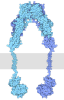
| Title | Structure of human HER2 in complex with EPS226 Fab | ||||||||||||||||||||||||||||||
 Components Components |
| ||||||||||||||||||||||||||||||
 Keywords Keywords | ANTITUMOR PROTEIN / Antibody Fab / Complex / cancer / extracellular domain. | ||||||||||||||||||||||||||||||
| Function / homology |  Function and homology information Function and homology informationERBB3:ERBB2 complex / ERBB2-ERBB4 signaling pathway / GRB7 events in ERBB2 signaling / RNA polymerase I core binding / semaphorin receptor complex / Developmental Lineage of Mammary Stem Cells / ErbB-3 class receptor binding / Sema4D induced cell migration and growth-cone collapse / regulation of microtubule-based process / PLCG1 events in ERBB2 signaling ...ERBB3:ERBB2 complex / ERBB2-ERBB4 signaling pathway / GRB7 events in ERBB2 signaling / RNA polymerase I core binding / semaphorin receptor complex / Developmental Lineage of Mammary Stem Cells / ErbB-3 class receptor binding / Sema4D induced cell migration and growth-cone collapse / regulation of microtubule-based process / PLCG1 events in ERBB2 signaling / ERBB2-EGFR signaling pathway / enzyme-linked receptor protein signaling pathway / ERBB2 Activates PTK6 Signaling / ERBB2-ERBB3 signaling pathway / Drug-mediated inhibition of ERBB2 signaling / Resistance of ERBB2 KD mutants to trastuzumab / Resistance of ERBB2 KD mutants to sapitinib / Resistance of ERBB2 KD mutants to tesevatinib / Resistance of ERBB2 KD mutants to neratinib / Resistance of ERBB2 KD mutants to osimertinib / Resistance of ERBB2 KD mutants to afatinib / Resistance of ERBB2 KD mutants to AEE788 / Resistance of ERBB2 KD mutants to lapatinib / Drug resistance in ERBB2 TMD/JMD mutants / neurotransmitter receptor localization to postsynaptic specialization membrane / positive regulation of MAP kinase activity / positive regulation of Rho protein signal transduction / ERBB2 Regulates Cell Motility / positive regulation of transcription by RNA polymerase I / Developmental Lineage of Mammary Gland Myoepithelial Cells / semaphorin-plexin signaling pathway / PI3K events in ERBB2 signaling / Developmental Lineage of Mammary Gland Luminal Epithelial Cells / regulation of angiogenesis / regulation of ERK1 and ERK2 cascade / positive regulation of protein targeting to membrane / Schwann cell development / coreceptor activity / Signaling by ERBB2 / TFAP2 (AP-2) family regulates transcription of growth factors and their receptors / transmembrane receptor protein tyrosine kinase activity / positive regulation of epithelial cell proliferation / peptidyl-tyrosine phosphorylation / positive regulation of cell adhesion / GRB2 events in ERBB2 signaling / cell surface receptor protein tyrosine kinase signaling pathway / cellular response to epidermal growth factor stimulus / SHC1 events in ERBB2 signaling / basal plasma membrane / Constitutive Signaling by Overexpressed ERBB2 / Downregulation of ERBB2:ERBB3 signaling / wound healing / phosphatidylinositol 3-kinase/protein kinase B signal transduction / neuromuscular junction / positive regulation of translation / myelin sheath / Signaling by ERBB2 TMD/JMD mutants / receptor protein-tyrosine kinase / Signaling by ERBB2 ECD mutants / Signaling by ERBB2 KD Mutants / receptor tyrosine kinase binding / positive regulation of JNK cascade / cellular response to growth factor stimulus / epidermal growth factor receptor signaling pathway / cell population proliferation / ruffle membrane / Downregulation of ERBB2 signaling / Constitutive Signaling by Aberrant PI3K in Cancer / transmembrane signaling receptor activity / neuron differentiation / PIP3 activates AKT signaling / positive regulation of cell growth / PI5P, PP2A and IER3 Regulate PI3K/AKT Signaling / RAF/MAP kinase cascade / protein tyrosine kinase activity / presynaptic membrane / basolateral plasma membrane / early endosome / positive regulation of MAPK cascade / protein phosphorylation / cell surface receptor signaling pathway / signaling receptor complex / postsynaptic membrane / intracellular signal transduction / apical plasma membrane / endosome membrane / protein heterodimerization activity / signaling receptor binding / negative regulation of apoptotic process / perinuclear region of cytoplasm / signal transduction / nucleoplasm / ATP binding / membrane / identical protein binding / nucleus / plasma membrane / cytosol Similarity search - Function | ||||||||||||||||||||||||||||||
| Biological species |  Homo sapiens (human) Homo sapiens (human) | ||||||||||||||||||||||||||||||
| Method | ELECTRON MICROSCOPY / single particle reconstruction / cryo EM / Resolution: 3 Å | ||||||||||||||||||||||||||||||
 Authors Authors | Birtley, J. / Regan, L. / Johnson, R.M. / Soni, K. / Pye, V.E. / Fitzgerald, K. | ||||||||||||||||||||||||||||||
| Funding support |  United Kingdom, 1items United Kingdom, 1items
| ||||||||||||||||||||||||||||||
 Citation Citation | Journal: Sci Rep / Year: 2026 Title: Elucidating the relationship between affinity and potency in the performance of therapeutic IgE. Authors: Francesca Marano / Callum McKenzie / James R Birtley / Sadaf A Hussain / Olivia Macleod / Alexander Goodacre / Shuang Wu / Oliver E Amin / Nikhil Faulkner / John Devlin / Liam Regan / Komal ...Authors: Francesca Marano / Callum McKenzie / James R Birtley / Sadaf A Hussain / Olivia Macleod / Alexander Goodacre / Shuang Wu / Oliver E Amin / Nikhil Faulkner / John Devlin / Liam Regan / Komal Soni / Rachel M Johnson / Valerie E Pye / Tim Wilson / Elizabeth Hardaker / Kevin FitzGerald / Abstract: IgE antibodies exert strong immunostimulatory effects and their anti-tumour effectiveness is currently being assessed in clinical trials. The high affinity of IgE for FcεRI may result in the binding ...IgE antibodies exert strong immunostimulatory effects and their anti-tumour effectiveness is currently being assessed in clinical trials. The high affinity of IgE for FcεRI may result in the binding of exogenously delivered antibody to effector cells prior to antigen engagement, potentially leading to IgE being presented multivalently to cancer cells. With the presumed higher avidity of antigen binding it is unclear whether increasing monovalent affinity of IgE improves anti-tumour functionality. To address this, we affinity-matured an anti-HER2 IgE, generating 12 clones with increased affinity for HER2. These clones were more potent than the parental antibody in inducing mast cell degranulation, with the most potent, EPS 232, achieving enhanced antibody-dependent cytotoxicity and phagocytosis of HER2-expressing cancer cells. EPS 232 delivered superior tumour growth inhibition in vivo, including in models expressing ultra-low levels of HER2, and it promoted greater infiltration of T cells and macrophages into tumours. These findings suggest that for therapeutic IgE, increasing antigen-binding affinity can lead to functional enhancements. | ||||||||||||||||||||||||||||||
| History |
|
- Structure visualization
| Structure viewer | Molecule: MolmilJmol/JSmol |
|---|
- Downloads & links
-Download
| PDBx/mmCIF format | 9t3s.cif.gz | 148.8 KB | Display | PDBx/mmCIF format |
|---|---|---|---|---|
| PDB format | pdb9t3s.ent.gz | 107.9 KB | Display | PDB format |
| PDBx/mmJSON format | 9t3s.json.gz | Tree view | PDBx/mmJSON format | |
| Others |  Other downloads Other downloads |
-Validation report
| Arichive directory | https://data.pdbj.org/pub/pdb/validation_reports/t3/9t3sftp://data.pdbj.org/pub/pdb/validation_reports/t3/9t3s | HTTPS FTP |
|---|
-Related structure data
| Related structure data |  55518MC  9t3rC M: map data used to model this data C: citing same article ( |
|---|---|
| Similar structure data |

-Links
 PDBj
PDBj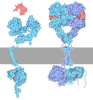
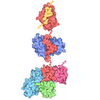
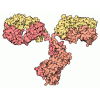
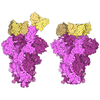
- Assembly
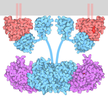
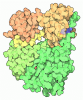
| Deposited unit | 
|
|---|---|
| 1 |
|
-Components
| #1: Antibody | Mass: 28701.863 Da / Num. of mol.: 1 Source method: isolated from a genetically manipulated source Source: (gene. exp.) Homo sapiens (human) / Production host: Homo sapiens (human) |
|---|---|
| #2: Antibody | Mass: 22719.027 Da / Num. of mol.: 1 Source method: isolated from a genetically manipulated source Source: (gene. exp.) Homo sapiens (human) / Production host: Homo sapiens (human) |
| #3: Protein | Mass: 70249.711 Da / Num. of mol.: 1 Source method: isolated from a genetically manipulated source Source: (gene. exp.) Homo sapiens (human) / Gene: ERBB2, HER2, MLN19, NEU, NGL / Production host: Homo sapiens (human)References: UniProt: P04626, receptor protein-tyrosine kinase |
| Has protein modification | Y |
-Experimental details
-Experiment
| Experiment | Method: ELECTRON MICROSCOPY |
|---|---|
| EM experiment | Aggregation state: PARTICLE / 3D reconstruction method: single particle reconstruction |
- Sample preparation
| Component | Name: Human HER2 in complex with EPS232 Fab / Type: COMPLEX / Entity ID: all / Source: RECOMBINANT |
|---|---|
| Source (natural) | Organism: Homo sapiens (human) |
| Source (recombinant) | Organism: Homo sapiens (human) |
| Buffer solution | pH: 7.4 |
| Specimen | Conc.: 0.1 mg/ml / Embedding applied: NO / Shadowing applied: NO / Staining applied: NO / Vitrification applied: YES |
| Vitrification | Instrument: FEI VITROBOT MARK IV / Cryogen name: ETHANE |
- Electron microscopy imaging
| Experimental equipment |  Model: Titan Krios / Image courtesy: FEI Company |
|---|---|
| Microscopy | Model: TFS KRIOS |
| Electron gun | Electron source:  FIELD EMISSION GUN / Accelerating voltage: 300 kV / Illumination mode: FLOOD BEAM FIELD EMISSION GUN / Accelerating voltage: 300 kV / Illumination mode: FLOOD BEAM |
| Electron lens | Mode: BRIGHT FIELD / Nominal defocus max: 1800 nm / Nominal defocus min: 800 nm / Cs: 2.7 mm |
| Specimen holder | Cryogen: NITROGEN / Specimen holder model: FEI TITAN KRIOS AUTOGRID HOLDER |
| Image recording | Average exposure time: 4.39 sec. / Electron dose: 49.32 e/Å2 / Film or detector model: TFS FALCON 4i (4k x 4k) / Num. of grids imaged: 1 / Num. of real images: 10400 |
| EM imaging optics | Energyfilter name: TFS Selectris X / Energyfilter slit width: 10 eV |
- Processing
| EM software |
| ||||||||||||||||||||||||||||||||||||
|---|---|---|---|---|---|---|---|---|---|---|---|---|---|---|---|---|---|---|---|---|---|---|---|---|---|---|---|---|---|---|---|---|---|---|---|---|---|
| CTF correction | Type: PHASE FLIPPING AND AMPLITUDE CORRECTION | ||||||||||||||||||||||||||||||||||||
| Particle selection | Num. of particles selected: 1054132 | ||||||||||||||||||||||||||||||||||||
| 3D reconstruction | Resolution: 3 Å / Resolution method: FSC 0.143 CUT-OFF / Num. of particles: 309941 / Symmetry type: POINT | ||||||||||||||||||||||||||||||||||||
| Atomic model building | B value: 32.367 | ||||||||||||||||||||||||||||||||||||
| Refinement | Highest resolution: 3 Å Stereochemistry target values: REAL-SPACE (WEIGHTED MAP SUM AT ATOM CENTERS) | ||||||||||||||||||||||||||||||||||||
| Refine LS restraints |
|
