 Movie
Movie Controller

[English] 日本語
 Yorodumi
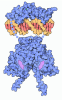
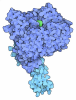
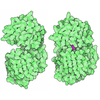
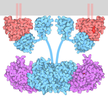
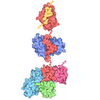
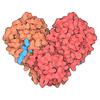
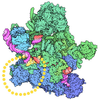
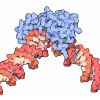
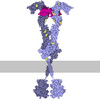
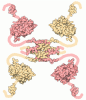
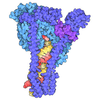
- PDB-9sv3: Local refinement of EloB/EloC/VHL/CV2a/14-3-3zeta/ERa from pose 1 -
+ Open data

- Basic information
| Entry | Database: PDB / ID: 9sv3 | |||||||||||||||||||||||||||
|---|---|---|---|---|---|---|---|---|---|---|---|---|---|---|---|---|---|---|---|---|---|---|---|---|---|---|---|---|
| Title | Local refinement of EloB/EloC/VHL/CV2a/14-3-3zeta/ERa from pose 1 | |||||||||||||||||||||||||||
 Components Components |
| |||||||||||||||||||||||||||
 Keywords Keywords | LIGASE / E3 ligase / von Hippel-Lindau / VHL / 14-3-3 / estrogen receptor alpha / PROTAC / proteolysis targeting chimera / degrader | |||||||||||||||||||||||||||
| Function / homology |  Function and homology information Function and homology informationsynaptic target recognition / Golgi reassembly / NOTCH4 Activation and Transmission of Signal to the Nucleus / respiratory system process / regulation of cellular response to hypoxia / establishment of Golgi localization / tube formation / negative regulation of receptor signaling pathway via JAK-STAT / RHOBTB3 ATPase cycle / regulation of synapse maturation ...synaptic target recognition / Golgi reassembly / NOTCH4 Activation and Transmission of Signal to the Nucleus / respiratory system process / regulation of cellular response to hypoxia / establishment of Golgi localization / tube formation / negative regulation of receptor signaling pathway via JAK-STAT / RHOBTB3 ATPase cycle / regulation of synapse maturation / Rap1 signalling / target-directed miRNA degradation / elongin complex / Replication of the SARS-CoV-1 genome / transcription elongation factor activity / negative regulation of protein localization to nucleus / KSRP (KHSRP) binds and destabilizes mRNA / steroid hormone receptor signaling pathway / VCB complex / Cul5-RING ubiquitin ligase complex / RUNX1 regulates transcription of genes involved in WNT signaling / GP1b-IX-V activation signalling / RUNX1 regulates estrogen receptor mediated transcription / nuclear estrogen receptor activity / ubiquitin-dependent protein catabolic process via the C-end degron rule pathway / SUMOylation of ubiquitinylation proteins / Cul2-RING ubiquitin ligase complex / negative regulation of DNA-templated DNA replication / negative regulation of transcription elongation by RNA polymerase II / Developmental Lineage of Mammary Gland Alveolar Cells / lung development / TFIIB-class transcription factor binding / negative regulation of smooth muscle cell apoptotic process / Regulation of localization of FOXO transcription factors / nuclear receptor-mediated steroid hormone signaling pathway / Pausing and recovery of Tat-mediated HIV elongation / Tat-mediated HIV elongation arrest and recovery / Interleukin-3, Interleukin-5 and GM-CSF signaling / cellular response to estrogen stimulus / Developmental Lineage of Mammary Gland Luminal Epithelial Cells / estrogen response element binding / HIV elongation arrest and recovery / Pausing and recovery of HIV elongation / phosphoserine residue binding / Activation of BAD and translocation to mitochondria / regulation of ERK1 and ERK2 cascade / negative regulation of signal transduction / Mitochondrial unfolded protein response (UPRmt) / Nuclear signaling by ERBB4 / Tat-mediated elongation of the HIV-1 transcript / Formation of HIV-1 elongation complex containing HIV-1 Tat / estrogen receptor signaling pathway / cellular response to glucose starvation / SARS-CoV-2 targets host intracellular signalling and regulatory pathways / cell morphogenesis / Formation of HIV elongation complex in the absence of HIV Tat / RNA polymerase II preinitiation complex assembly / SARS-CoV-1 targets host intracellular signalling and regulatory pathways / RHO GTPases activate PKNs / ubiquitin-like ligase-substrate adaptor activity / Chk1/Chk2(Cds1) mediated inactivation of Cyclin B:Cdk1 complex / RNA Polymerase II Transcription Elongation / positive regulation of nitric-oxide synthase activity / Formation of RNA Pol II elongation complex / steroid binding / stem cell differentiation / ribosome-associated ubiquitin-dependent protein catabolic process / protein localization to chromatin / TFAP2 (AP-2) family regulates transcription of growth factors and their receptors / negative regulation of TORC1 signaling / 14-3-3 protein binding / RNA Polymerase II Pre-transcription Events / Transcriptional and post-translational regulation of MITF-M expression and activity / ESR-mediated signaling / negative regulation of miRNA transcription / negative regulation of innate immune response / negative regulation of autophagy / TBP-class protein binding / nuclear estrogen receptor binding / nitric-oxide synthase regulator activity / transcription corepressor binding / negative regulation of canonical NF-kappaB signal transduction / hippocampal mossy fiber to CA3 synapse / transcription coregulator binding / cellular response to estradiol stimulus / protein serine/threonine kinase binding / TP53 Regulates Metabolic Genes / SUMOylation of intracellular receptors / Translocation of SLC2A4 (GLUT4) to the plasma membrane / positive regulation of cell differentiation / TP53 Regulates Transcription of DNA Repair Genes / regulation of protein stability / transcription initiation at RNA polymerase II promoter / euchromatin / protein sequestering activity / Nuclear Receptor transcription pathway / transcription elongation by RNA polymerase II / Deactivation of the beta-catenin transactivating complex / Negative regulation of NOTCH4 signaling / response to estrogen Similarity search - Function | |||||||||||||||||||||||||||
| Biological species |  Homo sapiens (human) Homo sapiens (human) | |||||||||||||||||||||||||||
| Method | ELECTRON MICROSCOPY / single particle reconstruction / cryo EM / Resolution: 4.3 Å | |||||||||||||||||||||||||||
 Authors Authors | Crowe, C. / Nakasone, M.A. / Harzing, T. / Verhoef, C.J.A. / Cossar, P.J. / Ciulli, A. | |||||||||||||||||||||||||||
| Funding support | European Union,  United Kingdom, 3items United Kingdom, 3items
| |||||||||||||||||||||||||||
 Citation Citation | Journal: Nat Commun / Year: 2026 Title: Induced ubiquitination of the partially disordered estrogen receptor alpha via a 14-3-3 directed molecular glue-PROTAC. Authors: Carlo J A Verhoef / Charlotte Crowe / Mark A Nakasone / Aitana DeLaCuadra-Basté / Tessa Harzing / Naomi A S Span / Gajanan Sathe / Laura C Demmers / Kentaro Iso / Christian Ottmann / Luc ...Authors: Carlo J A Verhoef / Charlotte Crowe / Mark A Nakasone / Aitana DeLaCuadra-Basté / Tessa Harzing / Naomi A S Span / Gajanan Sathe / Laura C Demmers / Kentaro Iso / Christian Ottmann / Luc Brunsveld / Alessio Ciulli / Peter J Cossar /  Abstract: Proteins lacking defined ligandable pockets remain challenging drug targets. Here, we develop a molecular glue-based PROTAC (PROTAC) approach that chemically conjugates a molecular glue stabilizer to ...Proteins lacking defined ligandable pockets remain challenging drug targets. Here, we develop a molecular glue-based PROTAC (PROTAC) approach that chemically conjugates a molecular glue stabilizer to a VHL-recruiting ligand to capture and ubiquitinate the 14-3-3/Estrogen receptor α (ERα) complex. Our designed PROTACs engage a composite interface between 14-3-3 and the disordered F-domain of ERα, promoting cooperative complex formation and targeted ubiquitination. Biophysical characterization revealed distinct linker-dependent cooperativities across the PROTAC series, which influenced both cellular permeability and ubiquitination efficiency. Cryo-EM of the most cooperative PROTAC uncovered de novo VHL-14-3-3ζ contacts, while molecular dynamics simulations rationalize the stabilizing interactions underlying cooperativity. Strikingly, fine-tuning linker design enables selective ubiquitination of distinct complex subunits. These findings establish a structural and mechanistic framework for integrating molecular glue and PROTAC principles, expanding the scope of drug discovery to previously intractable protein complexes. | |||||||||||||||||||||||||||
| History |
|
- Structure visualization
| Structure viewer | Molecule: MolmilJmol/JSmol |
|---|
- Downloads & links
-Download
| PDBx/mmCIF format | 9sv3.cif.gz | 239.2 KB | Display | PDBx/mmCIF format |
|---|---|---|---|---|
| PDB format | pdb9sv3.ent.gz | Display | PDB format | |
| PDBx/mmJSON format | 9sv3.json.gz | Tree view | PDBx/mmJSON format | |
| Others |  Other downloads Other downloads |
-Validation report
| Arichive directory | https://data.pdbj.org/pub/pdb/validation_reports/sv/9sv3ftp://data.pdbj.org/pub/pdb/validation_reports/sv/9sv3 | HTTPS FTP |
|---|
-Related structure data
| Related structure data |  55233MC M: map data used to model this data C: citing same article ( |
|---|---|
| Similar structure data |


-Links
 PDBj
PDBj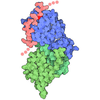

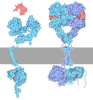
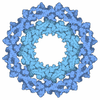
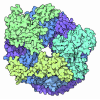
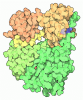
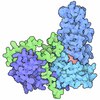
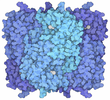
- Assembly
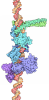
| Deposited unit | 
|
|---|---|
| 1 |
|
-Components
-Protein , 5 types, 7 molecules BCGHIDE
| #1: Protein | Mass: 10974.616 Da / Num. of mol.: 1 Source method: isolated from a genetically manipulated source Source: (gene. exp.) Homo sapiens (human) / Gene: ELOC, TCEB1 / Production host:   Escherichia coli (E. coli) / References: UniProt: Q15369 Escherichia coli (E. coli) / References: UniProt: Q15369 | ||||
|---|---|---|---|---|---|
| #2: Protein | Mass: 11748.406 Da / Num. of mol.: 1 Source method: isolated from a genetically manipulated source Source: (gene. exp.) Homo sapiens (human) / Gene: ELOB, TCEB2 / Production host: Escherichia coli (E. coli) / References: UniProt: Q15370 | ||||
| #3: Protein | Mass: 45511.188 Da / Num. of mol.: 2 Source method: isolated from a genetically manipulated source Source: (gene. exp.) Homo sapiens (human) / Gene: ESR1, ESR, NR3A1 / Production host: Escherichia coli (E. coli) / References: UniProt: P03372#4: Protein | Mass: 28819.236 Da / Num. of mol.: 2 Source method: isolated from a genetically manipulated source Source: (gene. exp.) Homo sapiens (human) / Gene: YWHAZ / Production host: Escherichia coli (E. coli) / References: UniProt: P63104#5: Protein | | Mass: 18702.291 Da / Num. of mol.: 1 Source method: isolated from a genetically manipulated source Source: (gene. exp.) Homo sapiens (human) / Gene: VHL / Production host: Escherichia coli (E. coli) / References: UniProt: P40337 |
-Non-polymers , 1 types, 1 molecules
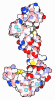
| #6: Chemical | ChemComp-A1JQT / ~{ Mass: 1234.625 Da / Num. of mol.: 1 / Source method: obtained synthetically / Formula: C67H103N5O14S / Feature type: SUBJECT OF INVESTIGATION |
|---|
-Details
| Has ligand of interest | Y |
|---|---|
| Has protein modification | Y |
-Experimental details
-Experiment
| Experiment | Method: ELECTRON MICROSCOPY |
|---|---|
| EM experiment | Aggregation state: PARTICLE / 3D reconstruction method: single particle reconstruction |
- Sample preparation
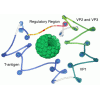
| Component | Name: Quaternary complex of the VCB (VHL-EloC-EloB) E3 ligase von Hippel-Lindau substrate receptor in complex with small molecule CV2a, 14-3-3zeta and the estrogen receptor alpha Type: COMPLEX / Entity ID: #1-#5 / Source: RECOMBINANT | ||||||||||||||||||||
|---|---|---|---|---|---|---|---|---|---|---|---|---|---|---|---|---|---|---|---|---|---|
| Molecular weight | Experimental value: NO | ||||||||||||||||||||
| Source (natural) | Organism: Homo sapiens (human) | ||||||||||||||||||||
| Source (recombinant) | Organism: Escherichia coli (E. coli) | ||||||||||||||||||||
| Buffer solution | pH: 7.5 | ||||||||||||||||||||
| Buffer component |
| ||||||||||||||||||||
| Specimen | Embedding applied: NO / Shadowing applied: NO / Staining applied: NO / Vitrification applied: YES | ||||||||||||||||||||
| Specimen support | Grid material: COPPER / Grid mesh size: 400 divisions/in. / Grid type: Quantifoil R1.2/1.3 | ||||||||||||||||||||
| Vitrification | Instrument: FEI VITROBOT MARK IV / Cryogen name: ETHANE / Humidity: 100 % / Chamber temperature: 277 K |
- Electron microscopy imaging
| Experimental equipment |  Model: Titan Krios / Image courtesy: FEI Company |
|---|---|
| Microscopy | Model: TFS KRIOS |
| Electron gun | Electron source:  FIELD EMISSION GUN / Accelerating voltage: 300 kV / Illumination mode: FLOOD BEAM FIELD EMISSION GUN / Accelerating voltage: 300 kV / Illumination mode: FLOOD BEAM |
| Electron lens | Mode: BRIGHT FIELD / Nominal defocus max: 2700 nm / Nominal defocus min: 1200 nm / Cs: 2.7 mm / C2 aperture diameter: 70 µm |
| Image recording | Electron dose: 33 e/Å2 / Film or detector model: GATAN K3 BIOQUANTUM (6k x 4k) |
- Processing
| EM software |
| ||||||||||||
|---|---|---|---|---|---|---|---|---|---|---|---|---|---|
| CTF correction | Type: PHASE FLIPPING AND AMPLITUDE CORRECTION | ||||||||||||
| Symmetry | Point symmetry: C1 (asymmetric) | ||||||||||||
| 3D reconstruction | Resolution: 4.3 Å / Resolution method: FSC 0.143 CUT-OFF / Num. of particles: 140642 / Symmetry type: POINT |
