 Movie
Movie Controller


+ Open data

- Basic information
| Entry | Database: PDB / ID: 9sju | |||||||||||||||||||||||||||||||||||||||
|---|---|---|---|---|---|---|---|---|---|---|---|---|---|---|---|---|---|---|---|---|---|---|---|---|---|---|---|---|---|---|---|---|---|---|---|---|---|---|---|---|
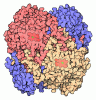
| Title | Cryo-EM structure of Human Apoferritin at pH 7 | |||||||||||||||||||||||||||||||||||||||
 Components Components | Ferritin heavy chain, N-terminally processed | |||||||||||||||||||||||||||||||||||||||
 Keywords Keywords | METAL BINDING PROTEIN / Apoferritin / Ferritin / Metal storage / Low pH | |||||||||||||||||||||||||||||||||||||||
| Function / homology |  Function and homology information Function and homology informationiron ion sequestering activity / ferritin complex / Scavenging by Class A Receptors / Golgi Associated Vesicle Biogenesis / ferroxidase / negative regulation of ferroptosis / ferroxidase activity / autolysosome / negative regulation of fibroblast proliferation / ferric iron binding ...iron ion sequestering activity / ferritin complex / Scavenging by Class A Receptors / Golgi Associated Vesicle Biogenesis / ferroxidase / negative regulation of ferroptosis / ferroxidase activity / autolysosome / negative regulation of fibroblast proliferation / ferric iron binding / autophagosome / iron ion transport / ferrous iron binding / Iron uptake and transport / tertiary granule lumen / ficolin-1-rich granule lumen / intracellular iron ion homeostasis / immune response / iron ion binding / negative regulation of cell population proliferation / Neutrophil degranulation / extracellular exosome / extracellular region / identical protein binding / nucleus / cytosol / cytoplasm Similarity search - Function | |||||||||||||||||||||||||||||||||||||||
| Biological species |  Homo sapiens (human) Homo sapiens (human) | |||||||||||||||||||||||||||||||||||||||
| Method | ELECTRON MICROSCOPY / single particle reconstruction / cryo EM / Resolution: 2.08 Å | |||||||||||||||||||||||||||||||||||||||
 Authors Authors | Skalidis, I. / Semchonok, D.A. / Tueting, C. / Hamdi, F. / Kastritis, P.L. | |||||||||||||||||||||||||||||||||||||||
| Funding support | European Union,  Germany, Germany,  Portugal, 12items Portugal, 12items
| |||||||||||||||||||||||||||||||||||||||
 Citation Citation | Journal: Proc Natl Acad Sci U S A / Year: 2026 Title: Direct evidence of acid-driven protein desolvation. Authors: Farzad Hamdi / Ioannis Skalidis / Inken Kaja Schwerin / Jaydeep Belapure / Dmitry A Semchonok / Fotis L Kyrilis / Christian Tüting / Johannes Müller / Georg Künze / Panagiotis L Kastritis /   Abstract: Water and its ability to modulate the protonation states of biomolecules govern the physical chemistry of life, dictating their metabolic functions. However, how amino acid protonation alters protein ...Water and its ability to modulate the protonation states of biomolecules govern the physical chemistry of life, dictating their metabolic functions. However, how amino acid protonation alters protein hydration and solubility is an open question since Kuntz and Kauzmann proposed p-driven protein desolvation in 1974. Here, in a series of high-resolution cryoelectron microscopy structures of a protein complex at different p values (from p 9.0 to 3.5), we examined thousands of observable hydration sites. Cryoelectron microscopy data, in agreement with constant-p molecular dynamics simulations, show that nearly half of protein-bound waters exchanged with the bulk solvent upon acidification, with ~100 waters lost per p unit per molecule. The loss of waters was most significant around the side chains of glutamate and aspartate residues while specific polar residues, mostly asparagine, anchored persistent waters. A positionally conserved hydration layer was observed across all p conditions, accounting for 40% of resolved waters. Those waters displayed denser packing than less persistent waters, forming a p-independent solvation shell. Acid-induced water exchange also displaced bound iron, providing a mechanistic link between solvation and metal release. Our findings demonstrate the core principles of acid-driven protein desolvation, resolving a 50-y-old biochemical hypothesis. | |||||||||||||||||||||||||||||||||||||||
| History |
|
- Structure visualization
| Structure viewer | Molecule: MolmilJmol/JSmol |
|---|
- Downloads & links
-Download
| PDBx/mmCIF format | 9sju.cif.gz | 824.2 KB | Display | PDBx/mmCIF format |
|---|---|---|---|---|
| PDB format | pdb9sju.ent.gz | 689.2 KB | Display | PDB format |
| PDBx/mmJSON format | 9sju.json.gz | Tree view | PDBx/mmJSON format | |
| Others |  Other downloads Other downloads |
-Validation report
| Arichive directory | https://data.pdbj.org/pub/pdb/validation_reports/sj/9sjuftp://data.pdbj.org/pub/pdb/validation_reports/sj/9sju | HTTPS FTP |
|---|
-Related structure data
| Related structure data |  54954MC  9sjrC  9sjsC  9sjtC  9sjvC M: map data used to model this data C: citing same article ( |
|---|---|
| Similar structure data |


-Links
 PDBj
PDBj
- Assembly
| Deposited unit | 
|
|---|---|
| 1 |
|
-Components
| #1: Protein | Mass: 20176.600 Da / Num. of mol.: 24 Source method: isolated from a genetically manipulated source Source: (gene. exp.) Homo sapiens (human) / Gene: FTH1, FTH, FTHL6, OK/SW-cl.84, PIG15Production host:   Escherichia coli 'BL21-Gold(DE3)pLysS AG' (bacteria) Escherichia coli 'BL21-Gold(DE3)pLysS AG' (bacteria)References: UniProt: P02794 #2: Chemical | ChemComp-FE /  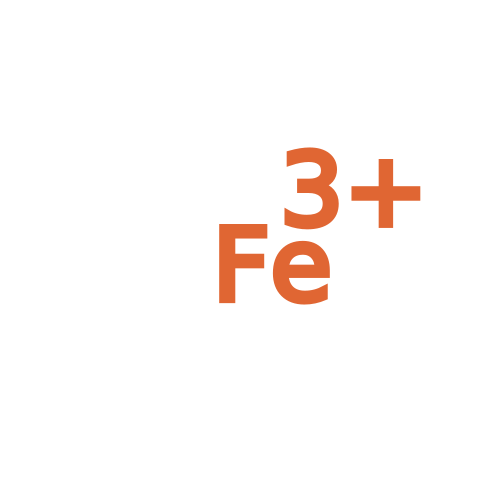 Mass: 55.845 Da / Num. of mol.: 24 / Source method: obtained synthetically / Formula: Fe Mass: 55.845 Da / Num. of mol.: 24 / Source method: obtained synthetically / Formula: Fe#3: Chemical | ChemComp-MG /   Mass: 24.305 Da / Num. of mol.: 24 / Source method: obtained synthetically / Formula: Mg Mass: 24.305 Da / Num. of mol.: 24 / Source method: obtained synthetically / Formula: Mg#4: Water | ChemComp-HOH / |  Mass: 18.015 Da / Num. of mol.: 1296 / Source method: isolated from a natural source / Formula: H2O Mass: 18.015 Da / Num. of mol.: 1296 / Source method: isolated from a natural source / Formula: H2OHas ligand of interest | N | Has protein modification | N | |
|---|
-Experimental details
-Experiment
| Experiment | Method: ELECTRON MICROSCOPY |
|---|---|
| EM experiment | Aggregation state: PARTICLE / 3D reconstruction method: single particle reconstruction |
- Sample preparation
| Component | Name: 24-mer of Human Apoferritin at pH 7 / Type: COMPLEX / Entity ID: #1 / Source: RECOMBINANT |
|---|---|
| Molecular weight | Value: 0.5 MDa / Experimental value: NO |
| Source (natural) | Organism: Homo sapiens (human) |
| Source (recombinant) | Organism: Escherichia coli 'BL21-Gold(DE3)pLysS AG' (bacteria) Plasmid: LF2422 |
| Buffer solution | pH: 7 |
| Specimen | Conc.: 0.2 mg/ml / Embedding applied: NO / Shadowing applied: NO / Staining applied: NO / Vitrification applied: YES |
| Specimen support | Grid material: COPPER / Grid mesh size: 300 divisions/in. / Grid type: Quantifoil R2/1 |
| Vitrification | Instrument: FEI VITROBOT MARK IV / Cryogen name: ETHANE / Humidity: 100 % / Chamber temperature: 277 K |
- Electron microscopy imaging
| Microscopy | Model: TFS GLACIOS |
|---|---|
| Electron gun | Electron source:  FIELD EMISSION GUN / Accelerating voltage: 200 kV / Illumination mode: SPOT SCAN FIELD EMISSION GUN / Accelerating voltage: 200 kV / Illumination mode: SPOT SCAN |
| Electron lens | Mode: BRIGHT FIELD / Nominal defocus max: 2000 nm / Nominal defocus min: 1000 nm / Cs: 2.7 mm / Alignment procedure: COMA FREE |
| Specimen holder | Cryogen: NITROGEN |
| Image recording | Electron dose: 30 e/Å2 / Detector mode: COUNTING / Film or detector model: FEI FALCON III (4k x 4k) / Num. of real images: 1891 |
- Processing
| EM software |
| ||||||||||||||||||||||||||||||||||||||||||||
|---|---|---|---|---|---|---|---|---|---|---|---|---|---|---|---|---|---|---|---|---|---|---|---|---|---|---|---|---|---|---|---|---|---|---|---|---|---|---|---|---|---|---|---|---|---|
| CTF correction | Type: PHASE FLIPPING AND AMPLITUDE CORRECTION | ||||||||||||||||||||||||||||||||||||||||||||
| Particle selection | Num. of particles selected: 529107 | ||||||||||||||||||||||||||||||||||||||||||||
| Symmetry | Point symmetry: O (octahedral) | ||||||||||||||||||||||||||||||||||||||||||||
| 3D reconstruction | Resolution: 2.08 Å / Resolution method: FSC 0.143 CUT-OFF / Num. of particles: 432247 / Algorithm: SIMULTANEOUS ITERATIVE (SIRT) / Symmetry type: POINT | ||||||||||||||||||||||||||||||||||||||||||||
| Atomic model building | Protocol: FLEXIBLE FIT / Space: REAL | ||||||||||||||||||||||||||||||||||||||||||||
| Atomic model building | Details: UniProt ID: P02794 / Source name: Other / Type: experimental model |
