 Movie
Movie Controller


+ Open data

- Basic information
| Entry | Database: PDB / ID: 9rx7 | |||||||||||||||
|---|---|---|---|---|---|---|---|---|---|---|---|---|---|---|---|---|
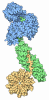
| Title | VPS34-CI bound to NRBF2 MIT domain (residues 1-79) | |||||||||||||||
 Components Components |
| |||||||||||||||
 Keywords Keywords | SIGNALING PROTEIN / Lipid kinase / GTPase / kinase / autophagy | |||||||||||||||
| Function / homology |  Function and homology information Function and homology informationextrinsic component of omegasome membrane / phosphatidylinositol 3-kinase inhibitor activity / extrinsic component of phagophore assembly site membrane / nucleus-vacuole junction / cellular response to aluminum ion / positive regulation of protein lipidation / positive regulation of stress granule assembly / postsynaptic endosome / Toll Like Receptor 9 (TLR9) Cascade / Synthesis of PIPs at the late endosome membrane ...extrinsic component of omegasome membrane / phosphatidylinositol 3-kinase inhibitor activity / extrinsic component of phagophore assembly site membrane / nucleus-vacuole junction / cellular response to aluminum ion / positive regulation of protein lipidation / positive regulation of stress granule assembly / postsynaptic endosome / Toll Like Receptor 9 (TLR9) Cascade / Synthesis of PIPs at the late endosome membrane / phosphatidylinositol 3-kinase complex, class III / cellular response to oxygen-glucose deprivation / Synthesis of PIPs at the early endosome membrane / phosphatidylinositol 3-kinase complex, class III, type II / phosphatidylinositol 3-kinase complex, class III, type I / response to mitochondrial depolarisation / presynaptic endosome / positive regulation of attachment of mitotic spindle microtubules to kinetochore / host-mediated activation of viral genome replication / mitochondria-associated endoplasmic reticulum membrane contact site / engulfment of apoptotic cell / regulation of protein complex stability / negative regulation of lysosome organization / phosphatidylinositol kinase activity / SMAD protein signal transduction / positive regulation of autophagosome assembly / phosphatidylinositol 3-kinase regulator activity / Synthesis of PIPs at the Golgi membrane / cytoplasmic side of mitochondrial outer membrane / early endosome to late endosome transport / phagophore assembly site membrane / receptor catabolic process / response to L-leucine / protein targeting to lysosome / protein targeting to vacuole / late endosome to vacuole transport / endosome organization / Dengue virus modulates apoptosis / pexophagy / positive regulation of natural killer cell mediated cytotoxicity / phagophore assembly site / Translation of Replicase and Assembly of the Replication Transcription Complex / cellular response to nitrogen starvation / negative regulation of programmed cell death / phosphatidylinositol 3-kinase / phosphatidylinositol-3-phosphate biosynthetic process / 1-phosphatidylinositol-3-kinase activity / post-transcriptional regulation of gene expression / response to vitamin E / Macroautophagy / endosome to lysosome transport / p38MAPK cascade / autophagosome membrane docking / response to iron(II) ion / RSV-host interactions / cytoplasmic pattern recognition receptor signaling pathway / phosphatidylinositol phosphate biosynthetic process / negative regulation of protein phosphorylation / phosphatidylinositol-mediated signaling / autolysosome / autophagosome membrane / PI3K Cascade / autophagosome maturation / RHO GTPases Activate NADPH Oxidases / JNK cascade / mitotic metaphase chromosome alignment / axoneme / synaptic vesicle endocytosis / cellular response to glucose starvation / cellular defense response / autophagosome assembly / mitophagy / phosphatidylinositol 3-kinase binding / regulation of macroautophagy / positive regulation of intrinsic apoptotic signaling pathway / phagocytic vesicle / protein-membrane adaptor activity / positive regulation of autophagy / response to endoplasmic reticulum stress / autophagosome / cellular response to epidermal growth factor stimulus / cellular response to copper ion / cellular response to amino acid starvation / cellular response to starvation / regulation of autophagy / macroautophagy / regulation of cytokinesis / phosphatidylinositol 3-kinase/protein kinase B signal transduction / Antigen Presentation: Folding, assembly and peptide loading of class I MHC / trans-Golgi network / circadian rhythm / protein processing / Nuclear Receptor transcription pathway / positive regulation of protein phosphorylation / response to lead ion / GABA-ergic synapse / ISG15 antiviral mechanism / cellular response to hydrogen peroxide / phagocytic vesicle membrane / autophagy Similarity search - Function | |||||||||||||||
| Biological species |  Homo sapiens (human) Homo sapiens (human) | |||||||||||||||
| Method | ELECTRON MICROSCOPY / single particle reconstruction / cryo EM / Resolution: 3.33 Å | |||||||||||||||
 Authors Authors | Spokaite, S. / Ohashi, Y. / Dessus, A.N. / Bourguet, M. / Williams, R.L. | |||||||||||||||
| Funding support |  United Kingdom, 2items United Kingdom, 2items
| |||||||||||||||
 Citation Citation | Journal: To Be Published Title: When VPS34 complexes double down: Two RAB5s for VPS34-CII, two RAB1s for NRBF2-dimerized VPS34-CI Authors: Spokaite, S. / Ohashi, Y. / Dessus, A.N. / Bourguet, M. / Williams, R.L. | |||||||||||||||
| History |
|
- Structure visualization
| Structure viewer | Molecule: MolmilJmol/JSmol |
|---|
- Downloads & links
-Download
| PDBx/mmCIF format | 9rx7.cif.gz | 523.6 KB | Display | PDBx/mmCIF format |
|---|---|---|---|---|
| PDB format | pdb9rx7.ent.gz | 408.8 KB | Display | PDB format |
| PDBx/mmJSON format | 9rx7.json.gz | Tree view | PDBx/mmJSON format | |
| Others |  Other downloads Other downloads |
-Validation report
| Arichive directory | https://data.pdbj.org/pub/pdb/validation_reports/rx/9rx7ftp://data.pdbj.org/pub/pdb/validation_reports/rx/9rx7 | HTTPS FTP |
|---|
-Related structure data
| Related structure data |  54360MC  9rx4C C: citing same article ( M: map data used to model this data |
|---|---|
| Similar structure data |


-Links
 PDBj
PDBj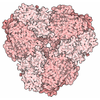
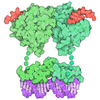
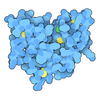
- Assembly
| Deposited unit | 
|
|---|---|
| 1 |
|
-Components
-Protein , 5 types, 6 molecules ABCIDL
| #1: Protein | Mass: 101680.328 Da / Num. of mol.: 1 Source method: isolated from a genetically manipulated source Details: Full length VPS34 / Source: (gene. exp.) Homo sapiens (human) / Gene: PIK3C3, VPS34 / Cell line (production host): Expi293F / Production host: Homo sapiens (human) / References: UniProt: Q8NEB9, phosphatidylinositol 3-kinase | ||||
|---|---|---|---|---|---|
| #2: Protein | Mass: 154659.188 Da / Num. of mol.: 1 Source method: isolated from a genetically manipulated source Details: Full length VPS15 with 13 extra amino acids at the C-terminus, left after TEV cleavage (VPS15-SRPTTASENLYFQ) Source: (gene. exp.) Homo sapiens (human) / Gene: PIK3R4, VPS15 / Cell line (production host): Expi293F / Production host: Homo sapiens (human)References: UniProt: Q99570, non-specific serine/threonine protein kinase | ||||
| #3: Protein | Mass: 51953.102 Da / Num. of mol.: 2 Source method: isolated from a genetically manipulated source Details: Full length BECLIN1 / Source: (gene. exp.) Homo sapiens (human) / Gene: BECN1, GT197 / Cell line (production host): Expi293F / Production host: Homo sapiens (human) / References: UniProt: Q14457#4: Protein | | Mass: 55461.348 Da / Num. of mol.: 1 / Mutation: N256S, insertion T2 Source method: isolated from a genetically manipulated source Details: Full length ATG14L with a N256S mutation and an insertion at T2 Source: (gene. exp.) Homo sapiens (human) / Gene: ATG14, ATG14L, KIAA0831 / Cell line (production host): Expi293F / Production host: Homo sapiens (human) / References: UniProt: Q6ZNE5#5: Protein | | Mass: 12814.479 Da / Num. of mol.: 1 Source method: isolated from a genetically manipulated source Details: NRBF2 MIT domain residues 1-79, with an N-terminal His6 tag followed by a spacer and a TEV protease cleavage site. Source: (gene. exp.) Homo sapiens (human) / Gene: NRBF2, COPR / Production host:   Escherichia coli (E. coli) / Strain (production host): OverExpress(TM) C41(DE3) / References: UniProt: Q96F24 Escherichia coli (E. coli) / Strain (production host): OverExpress(TM) C41(DE3) / References: UniProt: Q96F24 |
-Non-polymers , 4 types, 5 molecules 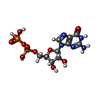


| #6: Chemical | ChemComp-GDP / 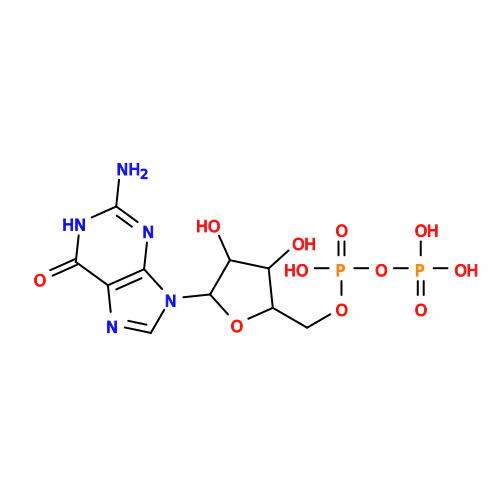 Type: RNA linking / Mass: 443.201 Da / Num. of mol.: 1 / Source method: obtained synthetically / Formula: C10H15N5O11P2 / Feature type: SUBJECT OF INVESTIGATION / Comment: GDP, energy-carrying molecule*YM Type: RNA linking / Mass: 443.201 Da / Num. of mol.: 1 / Source method: obtained synthetically / Formula: C10H15N5O11P2 / Feature type: SUBJECT OF INVESTIGATION / Comment: GDP, energy-carrying molecule*YM |
|---|---|
| #7: Chemical | ChemComp-MG /  Mass: 24.305 Da / Num. of mol.: 1 / Source method: obtained synthetically / Formula: Mg / Feature type: SUBJECT OF INVESTIGATION Mass: 24.305 Da / Num. of mol.: 1 / Source method: obtained synthetically / Formula: Mg / Feature type: SUBJECT OF INVESTIGATION |
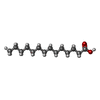
| #8: Chemical | ChemComp-MYR / 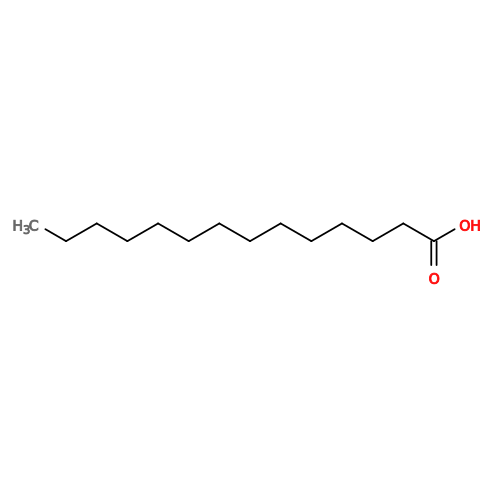 Mass: 228.371 Da / Num. of mol.: 1 / Source method: obtained synthetically / Formula: C14H28O2 / Feature type: SUBJECT OF INVESTIGATION Mass: 228.371 Da / Num. of mol.: 1 / Source method: obtained synthetically / Formula: C14H28O2 / Feature type: SUBJECT OF INVESTIGATION |
| #9: Chemical |  Mass: 65.409 Da / Num. of mol.: 2 / Source method: obtained synthetically / Formula: Zn / Feature type: SUBJECT OF INVESTIGATION Mass: 65.409 Da / Num. of mol.: 2 / Source method: obtained synthetically / Formula: Zn / Feature type: SUBJECT OF INVESTIGATION |
-Details
| Has ligand of interest | Y |
|---|---|
| Has protein modification | Y |
-Experimental details
-Experiment
| Experiment | Method: ELECTRON MICROSCOPY |
|---|---|
| EM experiment | Aggregation state: PARTICLE / 3D reconstruction method: single particle reconstruction |
- Sample preparation
| Component | Name: Human VPS34-CI (VPS34/VPS15/BECLIN1/ATG14L) in complex with NRBF2 MIT domain (residues 1-79) Type: COMPLEX / Entity ID: #5, #4, #3, #1 / Source: RECOMBINANT | ||||||||||||||||||||||||||||||||||||||||
|---|---|---|---|---|---|---|---|---|---|---|---|---|---|---|---|---|---|---|---|---|---|---|---|---|---|---|---|---|---|---|---|---|---|---|---|---|---|---|---|---|---|
| Molecular weight | Value: 0.373 MDa / Experimental value: NO | ||||||||||||||||||||||||||||||||||||||||
| Source (natural) | Organism: Homo sapiens (human) | ||||||||||||||||||||||||||||||||||||||||
| Source (recombinant) | Organism: Homo sapiens (human) | ||||||||||||||||||||||||||||||||||||||||
| Buffer solution | pH: 8 | ||||||||||||||||||||||||||||||||||||||||
| Buffer component |
| ||||||||||||||||||||||||||||||||||||||||
| Specimen | Conc.: 1.5 mg/ml / Embedding applied: NO / Shadowing applied: NO / Staining applied: NO / Vitrification applied: YES Details: Sample was crosslinked with 20 uM BS3 for 20 minutes on ice, then quenched with 100 mM TRIS pH 8.0 prior to vitrification | ||||||||||||||||||||||||||||||||||||||||
| Specimen support | Grid material: GOLD / Grid mesh size: 300 divisions/in. / Grid type: UltrAuFoil R1.2/1.3 | ||||||||||||||||||||||||||||||||||||||||
| Vitrification | Instrument: FEI VITROBOT MARK II / Cryogen name: ETHANE / Humidity: 100 % / Chamber temperature: 287 K Details: 4 uL sample, 0 second wait, 4.5 second blot, blot force +8 |
- Electron microscopy imaging
| Experimental equipment |  Model: Titan Krios / Image courtesy: FEI Company |
|---|---|
| Microscopy | Model: TFS KRIOS |
| Electron gun | Electron source:  FIELD EMISSION GUN / Accelerating voltage: 300 kV / Illumination mode: FLOOD BEAM FIELD EMISSION GUN / Accelerating voltage: 300 kV / Illumination mode: FLOOD BEAM |
| Electron lens | Mode: BRIGHT FIELD / Nominal magnification: 105000 X / Nominal defocus max: 3000 nm / Nominal defocus min: 1400 nm / C2 aperture diameter: 50 µm |
| Specimen holder | Cryogen: NITROGEN / Specimen holder model: FEI TITAN KRIOS AUTOGRID HOLDER |
| Image recording | Electron dose: 50 e/Å2 / Film or detector model: GATAN K3 (6k x 4k) / Num. of grids imaged: 1 / Num. of real images: 8059 |
| EM imaging optics | Energyfilter name: GIF Bioquantum / Energyfilter slit width: 20 eV |
- Processing
| EM software |
| ||||||||||||||||||||||||
|---|---|---|---|---|---|---|---|---|---|---|---|---|---|---|---|---|---|---|---|---|---|---|---|---|---|
| CTF correction | Type: NONE | ||||||||||||||||||||||||
| Particle selection | Num. of particles selected: 168536 / Details: CrYOLO general model used for picking particles | ||||||||||||||||||||||||
| 3D reconstruction | Resolution: 3.33 Å / Resolution method: FSC 0.143 CUT-OFF / Num. of particles: 50167 / Symmetry type: POINT | ||||||||||||||||||||||||
| Atomic model building | Protocol: FLEXIBLE FIT / Space: REAL | ||||||||||||||||||||||||
| Refine LS restraints |
|
