HORIZON-MSCA-2023-DN-01 action (project: TargetRNA, n. 101168667)
Agence Nationale de la Recherche (ANR)
ANR-10-INBS-0005-02
France
Agence Nationale de la Recherche (ANR)
ANR-17-EURE-0003
France
Citation
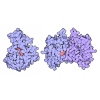
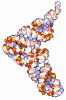
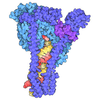
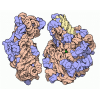
Journal: Proteins / Year: 2026 Title: Functional Relevance of CASP16 Nucleic Acid Predictions as Evaluated by Structure Providers. Authors: Rachael C Kretsch / Reinhard Albrecht / Ebbe S Andersen / Hsuan-Ai Chen / Wah Chiu / Rhiju Das / Jeanine G Gezelle / Marcus D Hartmann / Claudia Höbartner / Yimin Hu / Shekhar Jadhav / ...Authors: Rachael C Kretsch / Reinhard Albrecht / Ebbe S Andersen / Hsuan-Ai Chen / Wah Chiu / Rhiju Das / Jeanine G Gezelle / Marcus D Hartmann / Claudia Höbartner / Yimin Hu / Shekhar Jadhav / Philip E Johnson / Christopher P Jones / Deepak Koirala / Emil L Kristoffersen / Eric Largy / Anna Lewicka / Cameron D Mackereth / Marco Marcia / Michela Nigro / Manju Ojha / Joseph A Piccirilli / Phoebe A Rice / Heewhan Shin / Anna-Lena Steckelberg / Zhaoming Su / Yoshita Srivastava / Liu Wang / Yuan Wu / Jiahao Xie / Nikolaj H Zwergius / John Moult / Andriy Kryshtafovych / Abstract: Accurate biomolecular structure prediction enables the prediction of mutational effects, the speculation of function based on predicted structural homology, the analysis of ligand binding modes, ...Accurate biomolecular structure prediction enables the prediction of mutational effects, the speculation of function based on predicted structural homology, the analysis of ligand binding modes, experimental model building, and many other applications. Such algorithms to predict essential functional and structural features remain out of reach for biomolecular complexes containing nucleic acids. Here, we report a quantitative and qualitative evaluation of nucleic acid structures for the CASP16 blind prediction challenge by 12 of the experimental groups who provided nucleic acid targets. Blind predictions accurately model secondary structure and some aspects of tertiary structure, including reasonable global folds for some complex RNAs; however, predictions often lack accuracy in the regions of highest functional importance. All models have inaccuracies in non-canonical regions where, for example, the nucleic-acid backbone bends, deviating from an A-form helix geometry, or a base forms a non-standard hydrogen bond (not a Watson-Crick base pair). These bends and non-canonical interactions are integral to forming functionally important regions such as RNA enzymatic active sites. Additionally, the modeling of conserved and functional interfaces between nucleic acids and ligands, proteins, or other nucleic acids remains poor. For some targets, the experimental structures may not represent the only structure the biomolecular complex occupies in solution or in its functional life cycle, posing a future challenge for the community.
History
Deposition
Apr 9, 2025
Deposition site: PDBE / Processing site: PDBE
Revision 1.0
Feb 18, 2026
Provider: repository / Type: Initial release
Revision 1.0
Feb 18, 2026
Data content type: EM metadata / Data content type: EM metadata / Provider: repository / Type: Initial release
Revision 1.0
Feb 18, 2026
Data content type: FSC / Data content type: FSC / Provider: repository / Type: Initial release
Revision 1.0
Feb 18, 2026
Data content type: Half map / Part number: 1 / Data content type: Half map / Provider: repository / Type: Initial release
Revision 1.0
Feb 18, 2026
Data content type: Half map / Part number: 2 / Data content type: Half map / Provider: repository / Type: Initial release
Revision 1.0
Feb 18, 2026
Data content type: Image / Data content type: Image / Provider: repository / Type: Initial release
Revision 1.0
Feb 18, 2026
Data content type: Mask / Part number: 1 / Data content type: Mask / Provider: repository / Type: Initial release
Revision 1.0
Feb 18, 2026
Data content type: Primary map / Data content type: Primary map / Provider: repository / Type: Initial release
In the structure databanks used in Yorodumi, some data are registered as the other names, "COVID-19 virus" and "2019-nCoV". Here are the details of the virus and the list of structure data.
Jan 31, 2019. EMDB accession codes are about to change! (news from PDBe EMDB page)
EMDB accession codes are about to change! (news from PDBe EMDB page)
The allocation of 4 digits for EMDB accession codes will soon come to an end. Whilst these codes will remain in use, new EMDB accession codes will include an additional digit and will expand incrementally as the available range of codes is exhausted. The current 4-digit format prefixed with “EMD-” (i.e. EMD-XXXX) will advance to a 5-digit format (i.e. EMD-XXXXX), and so on. It is currently estimated that the 4-digit codes will be depleted around Spring 2019, at which point the 5-digit format will come into force.
The EM Navigator/Yorodumi systems omit the EMD- prefix.
Related info.:Q: What is EMD? / ID/Accession-code notation in Yorodumi/EM Navigator
Yorodumi is a browser for structure data from EMDB, PDB, SASBDB, etc.
This page is also the successor to EM Navigator detail page, and also detail information page/front-end page for Omokage search.
The word "yorodu" (or yorozu) is an old Japanese word meaning "ten thousand". "mi" (miru) is to see.
Related info.:EMDB / PDB / SASBDB / Comparison of 3 databanks / Yorodumi Search / Aug 31, 2016. New EM Navigator & Yorodumi / Yorodumi Papers / Jmol/JSmol / Function and homology information / Changes in new EM Navigator and Yorodumi
 Movie
Movie Controller

 Yorodumi
 Open data
 Basic information
 Components
 Keywords
 Function and homology information
 Oceanobacillus iheyensis (bacteria)
 Authors
 Sweden,
  France, 4items
  Citation


 Structure visualization
 Downloads & links
 Other downloads
 PDBj
PDBj
 Assembly
 Sample preparation
 Electron microscopy imaging
 FIELD EMISSION GUN / Accelerating voltage: 300 kV / Illumination mode: FLOOD BEAM
 Processing