 Movie
Movie Controller

[English] 日本語
 Yorodumi
- PDB-9pvy: Cryo-EM structure of cardiac amyloid fibril from a variant apolip... -
+ Open data

- Basic information
| Entry | Database: PDB / ID: 9pvy | ||||||||||||||||||||||||||||||
|---|---|---|---|---|---|---|---|---|---|---|---|---|---|---|---|---|---|---|---|---|---|---|---|---|---|---|---|---|---|---|---|
| Title | Cryo-EM structure of cardiac amyloid fibril from a variant apolipoprotein A-I L90P amyloidosis patient | ||||||||||||||||||||||||||||||
 Components Components | Apolipoprotein A-I | ||||||||||||||||||||||||||||||
 Keywords Keywords | PROTEIN FIBRIL / Apolipoprotein A-I / AApoAI / L90P / Amyloidosis. | ||||||||||||||||||||||||||||||
| Function / homology |  Function and homology information Function and homology informationDefective ABCA1 causes TGD / high-density lipoprotein particle receptor binding / peptidyl-methionine modification / HDL clearance / spherical high-density lipoprotein particle / negative regulation of response to cytokine stimulus / protein oxidation / vitamin transport / cholesterol import / negative regulation of heterotypic cell-cell adhesion ...Defective ABCA1 causes TGD / high-density lipoprotein particle receptor binding / peptidyl-methionine modification / HDL clearance / spherical high-density lipoprotein particle / negative regulation of response to cytokine stimulus / protein oxidation / vitamin transport / cholesterol import / negative regulation of heterotypic cell-cell adhesion / Scavenging by Class B Receptors / apolipoprotein A-I receptor binding / apolipoprotein receptor binding / negative regulation of cell adhesion molecule production / ABC transporters in lipid homeostasis / negative regulation of cytokine production involved in immune response / HDL assembly / high-density lipoprotein particle binding / phosphatidylcholine biosynthetic process / negative regulation of very-low-density lipoprotein particle remodeling / acylglycerol homeostasis / phosphatidylcholine-sterol O-acyltransferase activator activity / positive regulation of phospholipid efflux / cholesterol transport / Chylomicron remodeling / lipoprotein metabolic process / cellular response to lipoprotein particle stimulus / phospholipid homeostasis / Chylomicron assembly / high-density lipoprotein particle clearance / chylomicron / phospholipid efflux / high-density lipoprotein particle remodeling / reverse cholesterol transport / very-low-density lipoprotein particle / positive regulation of cholesterol metabolic process / high-density lipoprotein particle assembly / low-density lipoprotein particle / chemorepellent activity / high-density lipoprotein particle / cholesterol transfer activity / regulation of Cdc42 protein signal transduction / cholesterol efflux / HDL remodeling / triglyceride homeostasis / negative chemotaxis / Scavenging by Class A Receptors / negative regulation of interleukin-1 beta production / amyloid-beta formation / positive regulation of Rho protein signal transduction / cholesterol binding / cholesterol metabolic process / positive regulation of cholesterol efflux / positive regulation of substrate adhesion-dependent cell spreading / positive regulation of stress fiber assembly / negative regulation of tumor necrosis factor-mediated signaling pathway / Scavenging of heme from plasma / endocytic vesicle / Retinoid metabolism and transport / Dengue virus activates/modulates innate and adaptive immune responses / heat shock protein binding / endocytic vesicle lumen / cholesterol homeostasis / positive regulation of phagocytosis / integrin-mediated signaling pathway / Post-translational protein phosphorylation / Heme signaling / Maturation of DENV proteins / PPARA activates gene expression / negative regulation of inflammatory response / phospholipid binding / Regulation of Insulin-like Growth Factor (IGF) transport and uptake by Insulin-like Growth Factor Binding Proteins (IGFBPs) / Platelet degranulation / amyloid-beta binding / extracellular vesicle / Dengue Virus-Host Interactions / cytoplasmic vesicle / secretory granule lumen / blood microparticle / early endosome / protein stabilization / G protein-coupled receptor signaling pathway / receptor ligand activity / endoplasmic reticulum lumen / Amyloid fiber formation / signaling receptor binding / enzyme binding / protein homodimerization activity / extracellular exosome / extracellular region / identical protein binding / plasma membrane / cytosol Similarity search - Function | ||||||||||||||||||||||||||||||
| Biological species |  Homo sapiens (human) Homo sapiens (human) | ||||||||||||||||||||||||||||||
| Method | ELECTRON MICROSCOPY / helical reconstruction / cryo EM / Resolution: 2.15 Å | ||||||||||||||||||||||||||||||
 Authors Authors | Nguyen, B.A. / Saelices, L. | ||||||||||||||||||||||||||||||
| Funding support |  United States, 3items United States, 3items
| ||||||||||||||||||||||||||||||
 Citation Citation | Journal: Nat Commun / Year: 2026 Title: Cryo-EM reveals structural variability of apolipoprotein A-I amyloid fibrils across organs, mutations, and clinical presentations. Authors: Binh An Nguyen / Maria Del Carmen Fernandez-Ramirez / Parker Bassett / Virender Singh / Preeti Singh / Maja Pękała / Layla Villalon / Yasmin Ahmed / Andrew Lemoff / Bret Evers / Christian ...Authors: Binh An Nguyen / Maria Del Carmen Fernandez-Ramirez / Parker Bassett / Virender Singh / Preeti Singh / Maja Pękała / Layla Villalon / Yasmin Ahmed / Andrew Lemoff / Bret Evers / Christian Lopez / Barbara Kluve-Beckerman / Lorena Saelices /  Abstract: Hereditary apolipoprotein A-I (AApoA‑I) amyloidosis is a rare systemic disease caused by the deposition of amyloid fibrils formed by apolipoprotein A‑I in multiple organs, leading to severe ...Hereditary apolipoprotein A-I (AApoA‑I) amyloidosis is a rare systemic disease caused by the deposition of amyloid fibrils formed by apolipoprotein A‑I in multiple organs, leading to severe clinical outcomes. With no available therapies or diagnostic tools, defining the structure of AApoA‑I fibrils is crucial to understanding disease mechanisms and guiding intervention. Here we use cryo-electron microscopy to analyze AApoA‑I fibrils from the heart, kidney, liver, and spleen of patients carrying G26R, L90P, and R173P mutations. G26R fibrils, regardless of organ, exhibits untwisted morphologies and cannot be resolved structurally. Conversely, L90P and R173P fibrils display a compact diabolo-shaped conformation in all organs analyzed. Their high-resolution maps enable visualization of cis-Proline 66, which may represent a potential conformational switch during fibril formation. Our findings suggest that mutation-driven polymorphism may influence organ tropism and clinical presentation. This work advances our understanding of AApoA‑I fibril assembly and provides insights toward developing targeted clinical tools. | ||||||||||||||||||||||||||||||
| History |
|
- Structure visualization
| Structure viewer | Molecule: MolmilJmol/JSmol |
|---|
- Downloads & links
-Download
| PDBx/mmCIF format | 9pvy.cif.gz | 147.6 KB | Display | PDBx/mmCIF format |
|---|---|---|---|---|
| PDB format | pdb9pvy.ent.gz | 104.3 KB | Display | PDB format |
| PDBx/mmJSON format | 9pvy.json.gz | Tree view | PDBx/mmJSON format | |
| Others |  Other downloads Other downloads |
-Validation report
| Arichive directory | https://data.pdbj.org/pub/pdb/validation_reports/pv/9pvyftp://data.pdbj.org/pub/pdb/validation_reports/pv/9pvy | HTTPS FTP |
|---|
-Related structure data
| Related structure data |  71896MC  9pvzC  9pw3C  9zldC M: map data used to model this data C: citing same article ( |
|---|---|
| Similar structure data |


-Links
 PDBj
PDBj
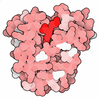
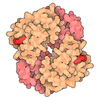
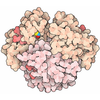

- Assembly
| Deposited unit | 
|
|---|---|
| 1 |
|
-Components
| #1: Protein | Mass: 28120.637 Da / Num. of mol.: 10 / Source method: isolated from a natural source / Source: (natural) Homo sapiens (human) / Organ: HEART / Tissue: heart / References: UniProt: P02647Has protein modification | N | |
|---|
-Experimental details
-Experiment
| Experiment | Method: ELECTRON MICROSCOPY |
|---|---|
| EM experiment | Aggregation state: FILAMENT / 3D reconstruction method: helical reconstruction |
- Sample preparation
| Component | Name: amyloid fibrils of apoliprotein A-I amyloidosis, variant L90P Type: COMPLEX Details: fibrils were extracted from cardiac tissue of a variant apolipoprotein A-I L90P amyloidosis Entity ID: all / Source: NATURAL |
|---|---|
| Molecular weight | Experimental value: NO |
| Source (natural) | Organism: Homo sapiens (human) / Organ: heart / Tissue: heart |
| Buffer solution | pH: 7 / Details: H2O containing 5 mM EDTA |
| Specimen | Embedding applied: NO / Shadowing applied: NO / Staining applied: NO / Vitrification applied: YES |
| Specimen support | Grid material: COPPER / Grid mesh size: 300 divisions/in. / Grid type: Quantifoil R1.2/1.3 |
| Vitrification | Instrument: FEI VITROBOT MARK IV / Cryogen name: ETHANE / Humidity: 100 % / Chamber temperature: 298 K |
- Electron microscopy imaging
| Experimental equipment |  Model: Titan Krios / Image courtesy: FEI Company |
|---|---|
| Microscopy | Model: TFS KRIOS |
| Electron gun | Electron source:  FIELD EMISSION GUN / Accelerating voltage: 300 kV / Illumination mode: FLOOD BEAM FIELD EMISSION GUN / Accelerating voltage: 300 kV / Illumination mode: FLOOD BEAM |
| Electron lens | Mode: BRIGHT FIELD / Nominal defocus max: 2600 nm / Nominal defocus min: 800 nm |
| Image recording | Average exposure time: 5 sec. / Electron dose: 40 e/Å2 / Film or detector model: FEI FALCON IV (4k x 4k) / Num. of grids imaged: 1 / Num. of real images: 12645 |
- Processing
| EM software |
| ||||||||||||||||||||||||||||||||||||
|---|---|---|---|---|---|---|---|---|---|---|---|---|---|---|---|---|---|---|---|---|---|---|---|---|---|---|---|---|---|---|---|---|---|---|---|---|---|
| CTF correction | Details: RELION 4 built in CTFFIND / Type: NONE | ||||||||||||||||||||||||||||||||||||
| Helical symmerty | Angular rotation/subunit: -0.68 ° / Axial rise/subunit: 4.85 Å / Axial symmetry: C1 | ||||||||||||||||||||||||||||||||||||
| 3D reconstruction | Resolution: 2.15 Å / Resolution method: FSC 0.143 CUT-OFF / Num. of particles: 118342 / Num. of class averages: 1 / Symmetry type: HELICAL | ||||||||||||||||||||||||||||||||||||
| Atomic model building | Protocol: OTHER / Space: REAL Details: This is a novel structure. Model was built using the protein primary sequence by COOT | ||||||||||||||||||||||||||||||||||||
| Refinement | Highest resolution: 2.15 Å Stereochemistry target values: REAL-SPACE (WEIGHTED MAP SUM AT ATOM CENTERS) | ||||||||||||||||||||||||||||||||||||
| Refine LS restraints |
|
