 Movie
Movie Controller

[English] 日本語
 Yorodumi
- PDB-9osi: The intact LBD state of GluK2/K5 with alpha-amino-3-hydroxy-5-met... -
+ Open data

- Basic information
| Entry | Database: PDB / ID: 9osi | ||||||||||||||||||||||||||||||
|---|---|---|---|---|---|---|---|---|---|---|---|---|---|---|---|---|---|---|---|---|---|---|---|---|---|---|---|---|---|---|---|
| Title | The intact LBD state of GluK2/K5 with alpha-amino-3-hydroxy-5-methyl-4-isoxazolepropionic acid (AMPA) | ||||||||||||||||||||||||||||||
 Components Components |
| ||||||||||||||||||||||||||||||
 Keywords Keywords | SIGNALING PROTEIN / Kainate receptor / ionotropic glutamate receptor / membrane protein / ligand-gated ion channel | ||||||||||||||||||||||||||||||
| Function / homology |  Function and homology information Function and homology informationregulation of synaptic vesicle fusion to presynaptic active zone membrane / protein retention in ER lumen / establishment of localization in cell / mossy fiber rosette / detection of cold stimulus involved in thermoception / Activation of Na-permeable kainate receptors / regulation of short-term neuronal synaptic plasticity / Activation of Ca-permeable Kainate Receptor / kainate selective glutamate receptor complex / ubiquitin conjugating enzyme binding ...regulation of synaptic vesicle fusion to presynaptic active zone membrane / protein retention in ER lumen / establishment of localization in cell / mossy fiber rosette / detection of cold stimulus involved in thermoception / Activation of Na-permeable kainate receptors / regulation of short-term neuronal synaptic plasticity / Activation of Ca-permeable Kainate Receptor / kainate selective glutamate receptor complex / ubiquitin conjugating enzyme binding / regulation of JNK cascade / negative regulation of synaptic transmission, glutamatergic / glutamate receptor activity / inhibitory postsynaptic potential / behavioral fear response / receptor clustering / glutamate receptor signaling pathway / neuronal action potential / kainate selective glutamate receptor activity / modulation of excitatory postsynaptic potential / extracellularly glutamate-gated ion channel activity / ionotropic glutamate receptor complex / neuron apoptotic process / positive regulation of synaptic transmission / regulation of long-term neuronal synaptic plasticity / glutamate-gated receptor activity / glutamate-gated calcium ion channel activity / dendrite cytoplasm / ligand-gated monoatomic ion channel activity involved in regulation of presynaptic membrane potential / bioluminescence / excitatory postsynaptic potential / hippocampal mossy fiber to CA3 synapse / SNARE binding / cellular response to glucose stimulus / SH3 domain binding / generation of precursor metabolites and energy / synaptic transmission, glutamatergic / PDZ domain binding / intracellular protein transport / transmitter-gated monoatomic ion channel activity involved in regulation of postsynaptic membrane potential / regulation of membrane potential / postsynaptic density membrane / modulation of chemical synaptic transmission / intracellular calcium ion homeostasis / positive regulation of neuron apoptotic process / terminal bouton / negative regulation of neuron apoptotic process / chemical synaptic transmission / scaffold protein binding / presynaptic membrane / perikaryon / postsynaptic membrane / postsynaptic density / axon / ubiquitin protein ligase binding / neuronal cell body / dendrite / synapse / glutamatergic synapse / endoplasmic reticulum / membrane / identical protein binding / plasma membrane Similarity search - Function | ||||||||||||||||||||||||||||||
| Biological species |   Rattus norvegicus (Norway rat) Rattus norvegicus (Norway rat) 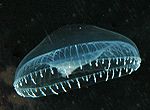 Aequorea victoria (jellyfish) Aequorea victoria (jellyfish) | ||||||||||||||||||||||||||||||
| Method | ELECTRON MICROSCOPY / single particle reconstruction / cryo EM / Resolution: 3.95 Å | ||||||||||||||||||||||||||||||
 Authors Authors | Khanra, N.K. / Meyerson, J.R. | ||||||||||||||||||||||||||||||
| Funding support |  United States, 1items United States, 1items
| ||||||||||||||||||||||||||||||
 Citation Citation | Journal: Nat Commun / Year: 2026 Title: Structures of partially occupied hetero-tetramers provide insight into kainate receptor activation and desensitization. Authors: Nandish K Khanra / Alexa Strauss / Laura Moreno Wasielewski / Sophie Lenze / Joel Meyerson / Andreas Reiner / Joshua Levitz /  Abstract: Kainate receptors (KARs) are critical mediators and modulators of synaptic transmission which undergo rapid activation and desensitization upon binding of the neurotransmitter glutamate. Under ...Kainate receptors (KARs) are critical mediators and modulators of synaptic transmission which undergo rapid activation and desensitization upon binding of the neurotransmitter glutamate. Under various physiological and pharmacological conditions agonist binding likely occurs to only a subset of subunits within these tetrameric receptors, motivating an analysis of the functional and conformational effects of partial versus complete ligand occupancy. Here we report cryo-EM structures of the GluK2/GluK5 hetero-tetramer under partially-occupied conditions using 5-iodowillardiine and AMPA as GluK5-selective agonists. High-resolution pre-active state structures containing closed/open ligand binding domain (LBD) dimers with intact interfaces reveal gating-associated interface reshaping, inter-dimer motions, and pore-linker repositioning in response to asymmetric agonist binding. Interfacial LBD mutations to a central cluster formed by the GluK5 subunits and to an inter-dimer interface between GluK2 and GluK5 subunits, highlight the roles of interactions between LBD dimers in controlling receptor function, including the distinct slow deactivation of GluK5-containing receptors. Finally, the absence or presence of intact, partially, and fully ruptured LBD interfaces under different ligand conditions allows us to propose a revised model of stepwise ionotropic glutamate receptor activation and desensitization. | ||||||||||||||||||||||||||||||
| History |
|
- Structure visualization
| Structure viewer | Molecule: MolmilJmol/JSmol |
|---|
- Downloads & links
-Download
| PDBx/mmCIF format | 9osi.cif.gz | 528 KB | Display | PDBx/mmCIF format |
|---|---|---|---|---|
| PDB format | pdb9osi.ent.gz | 414.6 KB | Display | PDB format |
| PDBx/mmJSON format | 9osi.json.gz | Tree view | PDBx/mmJSON format | |
| Others |  Other downloads Other downloads |
-Validation report
| Arichive directory | https://data.pdbj.org/pub/pdb/validation_reports/os/9osiftp://data.pdbj.org/pub/pdb/validation_reports/os/9osi | HTTPS FTP |
|---|
-Related structure data
| Related structure data |  70807MC  9osfC  9osgC M: map data used to model this data C: citing same article ( |
|---|---|
| Similar structure data |


-Links
 PDBj
PDBj
- Assembly
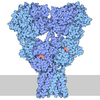
| Deposited unit | 
|
|---|---|
| 1 |
|
-Components
| #1: Protein | Mass: 123676.812 Da / Num. of mol.: 2 Source method: isolated from a genetically manipulated source Details: Glutamate receptor ionotropic, kainate 5 with Green fluorescent protein at the C-terminal Source: (gene. exp.) Rattus norvegicus (Norway rat), (gene. exp.) Aequorea victoria (jellyfish)Gene: Grik5, GFP / Cell line (production host): HEK293S GnTI- / Production host:  Homo sapiens (human) / References: UniProt: Q63273, UniProt: P42212 Homo sapiens (human) / References: UniProt: Q63273, UniProt: P42212#2: Protein | Mass: 105981.617 Da / Num. of mol.: 2 Source method: isolated from a genetically manipulated source Details: Glutamate receptor ionotropic, kainate 2 / Source: (gene. exp.) Rattus norvegicus (Norway rat) / Cell line: HEK293S GnTI- / Gene: Grik2, Glur6 / Production host: Homo sapiens (human) / References: UniProt: P42260Has protein modification | Y | |
|---|
-Experimental details
-Experiment
| Experiment | Method: ELECTRON MICROSCOPY |
|---|---|
| EM experiment | Aggregation state: PARTICLE / 3D reconstruction method: single particle reconstruction |
- Sample preparation
| Component | Name: The intact LBD state of GluK2/K5 with alpha-amino-3-hydroxy-5-methyl-4-isoxazolepropionic acid (AMPA) Type: COMPLEX / Entity ID: all / Source: RECOMBINANT | ||||||||||||||||||||
|---|---|---|---|---|---|---|---|---|---|---|---|---|---|---|---|---|---|---|---|---|---|
| Molecular weight | Value: 0.458802 MDa / Experimental value: NO | ||||||||||||||||||||
| Source (natural) |
| ||||||||||||||||||||
| Source (recombinant) | Organism: Homo sapiens (human) | ||||||||||||||||||||
| Buffer solution | pH: 8 / Details: 20 mM Tris, 300 mM NaCl, 0.35 mM DDM, pH 8.0 | ||||||||||||||||||||
| Buffer component |
| ||||||||||||||||||||
| Specimen | Conc.: 3 mg/ml / Embedding applied: NO / Shadowing applied: NO / Staining applied: NO / Vitrification applied: YES | ||||||||||||||||||||
| Specimen support | Details: Functionalized with PEG-thiol / Grid material: GOLD / Grid mesh size: 300 divisions/in. / Grid type: UltrAuFoil R1.2/1.3 | ||||||||||||||||||||
| Vitrification | Instrument: FEI VITROBOT MARK IV / Cryogen name: ETHANE / Humidity: 100 % / Chamber temperature: 295 K |
- Electron microscopy imaging
| Experimental equipment |  Model: Titan Krios / Image courtesy: FEI Company |
|---|---|
| Microscopy | Model: TFS KRIOS |
| Electron gun | Electron source:  FIELD EMISSION GUN / Accelerating voltage: 300 kV / Illumination mode: FLOOD BEAM FIELD EMISSION GUN / Accelerating voltage: 300 kV / Illumination mode: FLOOD BEAM |
| Electron lens | Mode: BRIGHT FIELD / Nominal defocus max: 2500 nm / Nominal defocus min: 1000 nm |
| Image recording | Electron dose: 51.28 e/Å2 / Film or detector model: GATAN K3 (6k x 4k) |
- Processing
| EM software |
| ||||||||||||
|---|---|---|---|---|---|---|---|---|---|---|---|---|---|
| CTF correction | Type: PHASE FLIPPING AND AMPLITUDE CORRECTION | ||||||||||||
| Particle selection | Num. of particles selected: 7403033 | ||||||||||||
| 3D reconstruction | Resolution: 3.95 Å / Resolution method: FSC 0.143 CUT-OFF / Num. of particles: 189632 / Symmetry type: POINT |
