 Movie
Movie Controller

[English] 日本語
 Yorodumi
- EMDB-70807: The intact LBD state of GluK2/K5 with alpha-amino-3-hydroxy-5-met... -
+ Open data

- Basic information
| Entry |  | |||||||||
|---|---|---|---|---|---|---|---|---|---|---|
| Title | The intact LBD state of GluK2/K5 with alpha-amino-3-hydroxy-5-methyl-4-isoxazolepropionic acid (AMPA) | |||||||||
 Map data Map data | The intact LBD state of GluK2/K5 bound to alpha-amino-3-hydroxy-5-methyl-4-isoxazolepropionic acid (AMPA) | |||||||||
 Sample Sample |
| |||||||||
 Keywords Keywords | Kainate receptor / ionotropic glutamate receptor / membrane protein / ligand-gated ion channel / SIGNALING PROTEIN | |||||||||
| Function / homology |  Function and homology information Function and homology informationregulation of synaptic vesicle fusion to presynaptic active zone membrane / protein retention in ER lumen / establishment of localization in cell / mossy fiber rosette / detection of cold stimulus involved in thermoception / Activation of Na-permeable kainate receptors / regulation of short-term neuronal synaptic plasticity / Activation of Ca-permeable Kainate Receptor / kainate selective glutamate receptor complex / ubiquitin conjugating enzyme binding ...regulation of synaptic vesicle fusion to presynaptic active zone membrane / protein retention in ER lumen / establishment of localization in cell / mossy fiber rosette / detection of cold stimulus involved in thermoception / Activation of Na-permeable kainate receptors / regulation of short-term neuronal synaptic plasticity / Activation of Ca-permeable Kainate Receptor / kainate selective glutamate receptor complex / ubiquitin conjugating enzyme binding / regulation of JNK cascade / negative regulation of synaptic transmission, glutamatergic / glutamate receptor activity / inhibitory postsynaptic potential / behavioral fear response / receptor clustering / glutamate receptor signaling pathway / neuronal action potential / kainate selective glutamate receptor activity / modulation of excitatory postsynaptic potential / extracellularly glutamate-gated ion channel activity / ionotropic glutamate receptor complex / neuron apoptotic process / positive regulation of synaptic transmission / regulation of long-term neuronal synaptic plasticity / glutamate-gated receptor activity / glutamate-gated calcium ion channel activity / dendrite cytoplasm / ligand-gated monoatomic ion channel activity involved in regulation of presynaptic membrane potential / bioluminescence / excitatory postsynaptic potential / hippocampal mossy fiber to CA3 synapse / SNARE binding / cellular response to glucose stimulus / SH3 domain binding / generation of precursor metabolites and energy / synaptic transmission, glutamatergic / PDZ domain binding / intracellular protein transport / transmitter-gated monoatomic ion channel activity involved in regulation of postsynaptic membrane potential / regulation of membrane potential / postsynaptic density membrane / modulation of chemical synaptic transmission / intracellular calcium ion homeostasis / positive regulation of neuron apoptotic process / terminal bouton / negative regulation of neuron apoptotic process / chemical synaptic transmission / scaffold protein binding / presynaptic membrane / perikaryon / postsynaptic membrane / postsynaptic density / axon / ubiquitin protein ligase binding / neuronal cell body / dendrite / synapse / glutamatergic synapse / endoplasmic reticulum / membrane / identical protein binding / plasma membrane Similarity search - Function | |||||||||
| Biological species |   Rattus norvegicus (Norway rat) / Rattus norvegicus (Norway rat) /  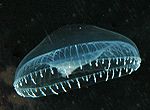 Aequorea victoria (jellyfish) Aequorea victoria (jellyfish) | |||||||||
| Method | single particle reconstruction / cryo EM / Resolution: 3.95 Å | |||||||||
 Authors Authors | Khanra NK / Meyerson JR | |||||||||
| Funding support |  United States, 1 items United States, 1 items
| |||||||||
 Citation Citation | Journal: Nat Commun / Year: 2026 Title: Structures of partially occupied hetero-tetramers provide insight into kainate receptor activation and desensitization. Authors: Nandish K Khanra / Alexa Strauss / Laura Moreno Wasielewski / Sophie Lenze / Joel Meyerson / Andreas Reiner / Joshua Levitz /  Abstract: Kainate receptors (KARs) are critical mediators and modulators of synaptic transmission which undergo rapid activation and desensitization upon binding of the neurotransmitter glutamate. Under ...Kainate receptors (KARs) are critical mediators and modulators of synaptic transmission which undergo rapid activation and desensitization upon binding of the neurotransmitter glutamate. Under various physiological and pharmacological conditions agonist binding likely occurs to only a subset of subunits within these tetrameric receptors, motivating an analysis of the functional and conformational effects of partial versus complete ligand occupancy. Here we report cryo-EM structures of the GluK2/GluK5 hetero-tetramer under partially-occupied conditions using 5-iodowillardiine and AMPA as GluK5-selective agonists. High-resolution pre-active state structures containing closed/open ligand binding domain (LBD) dimers with intact interfaces reveal gating-associated interface reshaping, inter-dimer motions, and pore-linker repositioning in response to asymmetric agonist binding. Interfacial LBD mutations to a central cluster formed by the GluK5 subunits and to an inter-dimer interface between GluK2 and GluK5 subunits, highlight the roles of interactions between LBD dimers in controlling receptor function, including the distinct slow deactivation of GluK5-containing receptors. Finally, the absence or presence of intact, partially, and fully ruptured LBD interfaces under different ligand conditions allows us to propose a revised model of stepwise ionotropic glutamate receptor activation and desensitization. | |||||||||
| History |
|
- Structure visualization
| Supplemental images |
|---|

- Downloads & links
-EMDB archive
| Map data | emd_70807.map.gz | 259.6 MB | EMDB map data format | |
|---|---|---|---|---|
| Header (meta data) | emd-70807-v30.xmlemd-70807.xml | 26 KB 26 KB | Display Display | EMDB header |
| FSC (resolution estimation) | emd_70807_fsc.xml | 13.8 KB | Display | FSC data file |
| Images |  emd_70807.png emd_70807.png | 69.3 KB | ||
| Filedesc metadata | emd-70807.cif.gz | 7.6 KB | ||
| Others | emd_70807_additional_1.map.gzemd_70807_additional_2.map.gzemd_70807_half_map_1.map.gzemd_70807_half_map_2.map.gz | 259.2 MB 259 MB 254.7 MB 254.7 MB | ||
| Archive directory |  https://data.pdbj.org/pub/emdb/structures/EMD-70807ftp://data.pdbj.org/pub/emdb/structures/EMD-70807 https://data.pdbj.org/pub/emdb/structures/EMD-70807ftp://data.pdbj.org/pub/emdb/structures/EMD-70807 | HTTPS FTP |
-Related structure data
| Related structure data |  9osiMC  9osfC  9osgC M: atomic model generated by this map C: citing same article ( |
|---|---|
| Similar structure data |


-Links
| EMDB pages | EMDB (EBI/PDBe) / EMDataResource |
|---|---|
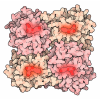
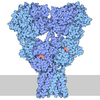
| Related items in Molecule of the Month |
-Map
| File | Download / File: emd_70807.map.gz / Format: CCP4 / Size: 274.6 MB / Type: IMAGE STORED AS FLOATING POINT NUMBER (4 BYTES) | ||||||||||||||||||||||||||||||||||||
|---|---|---|---|---|---|---|---|---|---|---|---|---|---|---|---|---|---|---|---|---|---|---|---|---|---|---|---|---|---|---|---|---|---|---|---|---|---|
| Annotation | The intact LBD state of GluK2/K5 bound to alpha-amino-3-hydroxy-5-methyl-4-isoxazolepropionic acid (AMPA) | ||||||||||||||||||||||||||||||||||||
| Projections & slices | Image control
Images are generated by Spider. | ||||||||||||||||||||||||||||||||||||
| Voxel size | X=Y=Z: 1.083 Å | ||||||||||||||||||||||||||||||||||||
| Density |
| ||||||||||||||||||||||||||||||||||||
| Symmetry | Space group: 1 | ||||||||||||||||||||||||||||||||||||
| Details | EMDB XML:
|
 Z (Sec.)
 Y (Row.)
 X (Col.)


-Supplemental data
-Additional map: The amino terminal domain (ATD) of the intact...
| File | emd_70807_additional_1.map | ||||||||||||
|---|---|---|---|---|---|---|---|---|---|---|---|---|---|
| Annotation | The amino terminal domain (ATD) of the intact LBD state of GluK2/K5 bound to alpha-amino-3-hydroxy-5-methyl-4-isoxazolepropionic acid (AMPA) | ||||||||||||
| Projections & Slices |
| ||||||||||||
| Density Histograms |


-Additional map: The ligand binding and transmembrane domain (LBD-TMD) of...
| File | emd_70807_additional_2.map | ||||||||||||
|---|---|---|---|---|---|---|---|---|---|---|---|---|---|
| Annotation | The ligand binding and transmembrane domain (LBD-TMD) of the intact LBD state of GluK2/K5 bound to alpha-amino-3-hydroxy-5-methyl-4-isoxazolepropionic acid (AMPA) | ||||||||||||
| Projections & Slices |
| ||||||||||||
| Density Histograms |


-Half map: Half map 1 of the intact LBD state...
| File | emd_70807_half_map_1.map | ||||||||||||
|---|---|---|---|---|---|---|---|---|---|---|---|---|---|
| Annotation | Half map 1 of the intact LBD state of GluK2/K5 bound to alpha-amino-3-hydroxy-5-methyl-4-isoxazolepropionic acid (AMPA) | ||||||||||||
| Projections & Slices |
| ||||||||||||
| Density Histograms |


-Half map: Half map 2 of the intact LBD state...
| File | emd_70807_half_map_2.map | ||||||||||||
|---|---|---|---|---|---|---|---|---|---|---|---|---|---|
| Annotation | Half map 2 of the intact LBD state of GluK2/K5 bound to alpha-amino-3-hydroxy-5-methyl-4-isoxazolepropionic acid (AMPA) | ||||||||||||
| Projections & Slices |
| ||||||||||||
| Density Histograms |


- Sample components
-Entire : The intact LBD state of GluK2/K5 with alpha-amino-3-hydroxy-5-met...
| Entire | Name: The intact LBD state of GluK2/K5 with alpha-amino-3-hydroxy-5-methyl-4-isoxazolepropionic acid (AMPA) |
|---|---|
| Components |
|
-Supramolecule #1: The intact LBD state of GluK2/K5 with alpha-amino-3-hydroxy-5-met...
| Supramolecule | Name: The intact LBD state of GluK2/K5 with alpha-amino-3-hydroxy-5-methyl-4-isoxazolepropionic acid (AMPA) type: complex / ID: 1 / Parent: 0 / Macromolecule list: all |
|---|---|
| Source (natural) | Organism: Rattus norvegicus (Norway rat) |
| Molecular weight | Theoretical: 458.802 KDa |
-Macromolecule #1: Glutamate receptor ionotropic, kainate 5,Green fluorescent protei...
| Macromolecule | Name: Glutamate receptor ionotropic, kainate 5,Green fluorescent protein chimera type: protein_or_peptide / ID: 1 Details: Glutamate receptor ionotropic, kainate 5 with Green fluorescent protein at the C-terminal Number of copies: 2 / Enantiomer: LEVO |
|---|---|
| Source (natural) | Organism: Aequorea victoria (jellyfish) |
| Molecular weight | Theoretical: 123.676812 KDa |
| Recombinant expression | Organism:  Homo sapiens (human) Homo sapiens (human) |
| Sequence | String: MPAELLLLLI VAFANPSCQV LSSLRMAAIL DDQTVCGRGE RLALALAREQ INGIIEVPAK ARVEVDIFEL QRDSQYETTD TMCQILPKG VVSVLGPSSS PASASTVSHI CGEKEIPHIK VGPEETPRLQ YLRFASVSLY PSNEDVSLAV SRILKSFNYP S ASLICAKA ...String: MPAELLLLLI VAFANPSCQV LSSLRMAAIL DDQTVCGRGE RLALALAREQ INGIIEVPAK ARVEVDIFEL QRDSQYETTD TMCQILPKG VVSVLGPSSS PASASTVSHI CGEKEIPHIK VGPEETPRLQ YLRFASVSLY PSNEDVSLAV SRILKSFNYP S ASLICAKA ECLLRLEELV RGFLISKETL SVRMLDDSRD PTPLLKEIRD DKVSTIIIDA NASISHLVLR KASELGMTSA FY KYILTTM DFPILHLDGI VEDSSNILGF SMFNTSHPFY PEFVRSLNMS WRENCEASTY PGPALSAALM FDAVHVVVSA VRE LNRSQE IGVKPLACTS ANIWPHGTSL MNYLRMVEYD GLTGRVEFNS KGQRTNYTLR ILEKSRQGHR EIGVWYSNRT LAMN ATTLD INLSQTLANK TLVVTTILEN PYVMRRPNFQ ALSGNERFEG FCVDMLRELA ELLRFRYRLR LVEDGLYGAP EPNGS WTGM VGELINRKAD LAVAAFTITA EREKVIDFSK PFMTLGISIL YRVHMGRKPG YFSFLDPFSP AVWLFMLLAY LAVSVV LFL AARLSPYEWY NPHPSLRARP HILENQYTLG NSLWFPVGGF MQQGSEIMPR ALSTRIVSGV WWAFTLIIIS SYTANLA AF LTVQRMEVPV ESADDLADQT NIEYGTIHAG STMTFFQNSR YQTYQRMWNY MQSKQPSVFV KSTEEGIARV LNSRYAFL L ESTMNEYHRR LNCNLTQIGG LLDTKGYGIG MPLGSPFRDE ITLAILQLQE NNRLEILKRK WWEGGRCPKE EDHRAKGLG MENIGGIFVV LIAGLIIAVF VAVMEFIYKS RAEAKRMKGL VPRGSAAAAM VSKGEELFTG VVPILVELDG DVNGHKFSVS GEGEGDATY GKLTLKFICT TGKLPVPWPT LVTTLTYGVQ CFSRYPDHMK QHDFFKSAMP EGYVQERTIF FKDDGNYKTR A EVKFEGDT LVNRIELKGI DFKEDGNILG HKLEYNYNSH NVYIMADKQK NGIKVNFKIR HNIEDGSVQL ADHYQQNTPI GD GPVLLPD NHYLSTQSKL SKDPNEKRDH MVLLEFVTAA GITLGMDELY KSGLRTETSQ VAPA UniProtKB: Glutamate receptor ionotropic, kainate 5, Green fluorescent protein |
-Macromolecule #2: Glutamate receptor ionotropic, kainate 2
| Macromolecule | Name: Glutamate receptor ionotropic, kainate 2 / type: protein_or_peptide / ID: 2 / Details: Glutamate receptor ionotropic, kainate 2 / Number of copies: 2 / Enantiomer: LEVO |
|---|---|
| Source (natural) | Organism: Rattus norvegicus (Norway rat) |
| Molecular weight | Theoretical: 105.981617 KDa |
| Recombinant expression | Organism: Homo sapiens (human) |
| Sequence | String: MKIISPVLSN LVFSRSIKVL LCLLWIGYSQ GTTHVLRFGG IFEYVESGPM GAEELAFRFA VNTINRNRTL LPNTTLTYDT QKINLYDSF EASKKACDQL SLGVAAIFGP SHSSSANAVQ SICNALGVPH IQTRWKHQVS DNKDSFYVSL YPDFSSLSRA I LDLVQFFK ...String: MKIISPVLSN LVFSRSIKVL LCLLWIGYSQ GTTHVLRFGG IFEYVESGPM GAEELAFRFA VNTINRNRTL LPNTTLTYDT QKINLYDSF EASKKACDQL SLGVAAIFGP SHSSSANAVQ SICNALGVPH IQTRWKHQVS DNKDSFYVSL YPDFSSLSRA I LDLVQFFK WKTVTVVYDD STGLIRLQEL IKAPSRYNLR LKIRQLPADT KDAKPLLKEM KRGKEFHVIF DCSHEMAAGI LK QALAMGM MTEYYHYIFT TLDLFALDVE PYRYSGVNMT GFRILNTENT QVSSIIEKWS MERLQAPPKP DSGLLDGFMT TDA ALMYDA VHVVSVAVQQ FPQMTVSSLQ CNRHKPWRFG TRFMSLIKEA HWEGLTGRIT FNKTNGLRTD FDLDVISLKE EGLE KIGTW DPASGLNMTE SQKGKPANIT DSLSNRSLIV TTILEEPYVL FKKSDKPLYG NDRFEGYCID LLRELSTILG FTYEI RLVE DGKYGAQDDV NGQWNGMVRE LIDHKADLAV APLAITYVRE KVIDFSKPFM TLGISILYRK PNGTNPGVFS FLNPLS PDI WMYVLLAYLG VSVVLFVIAR FSPYEWYNPH PSNPDSDVVE NNFTLLNSFW FGVGALMQQG SELMPKALST RIVGGIW WF FTLIIISSYT ANLAAFLTVE RMESPIDSAD DLAKQTKIEY GAVEDGATMT FFKKSKISTY DKMWAFMSSR RQSVLVKS N EEGIQRVLTS DYAFLMESTT IEFVTQRNCN LTQIGGLIDS KGYGVGTPMG SPYRDKITIA ILQLQEEGKL HMMKEKWWR GNGCPEEESK EASALGVQNI GGIFIVLAAG LVLSVFVAVG EFLYKSKKNA QLEKRSFCSA MVEELRMSLK CQRRLKHKPQ APVIVKTEE VINMHTFNDR RLPGKETMAS GLRSAWSHPQ FEKGGGSGGG SGGGSWSHPQ FEK UniProtKB: Glutamate receptor ionotropic, kainate 2 |
-Experimental details
-Structure determination
| Method | cryo EM |
|---|---|
 Processing Processing | single particle reconstruction |
| Aggregation state | particle |
-Sample preparation
| Concentration | 3.0 mg/mL | ||||||||||||
|---|---|---|---|---|---|---|---|---|---|---|---|---|---|
| Buffer | pH: 8 Component:
Details: 20 mM Tris, 300 mM NaCl, 0.35 mM DDM, pH 8.0 | ||||||||||||
| Grid | Model: UltrAuFoil R1.2/1.3 / Material: GOLD / Mesh: 300 / Pretreatment - Type: GLOW DISCHARGE / Pretreatment - Time: 60 sec. / Details: Functionalized with PEG-thiol | ||||||||||||
| Vitrification | Cryogen name: ETHANE / Chamber humidity: 100 % / Chamber temperature: 295 K / Instrument: FEI VITROBOT MARK IV |
- Electron microscopy
| Microscope | TFS KRIOS |
|---|---|
| Image recording | Film or detector model: GATAN K3 (6k x 4k) / Average electron dose: 51.28 e/Å2 |
| Electron beam | Acceleration voltage: 300 kV / Electron source:  FIELD EMISSION GUN FIELD EMISSION GUN |
| Electron optics | Illumination mode: FLOOD BEAM / Imaging mode: BRIGHT FIELD / Nominal defocus max: 2.5 µm / Nominal defocus min: 1.0 µm |
| Experimental equipment |  Model: Titan Krios / Image courtesy: FEI Company |

