 Movie
Movie Controller


+ Open data

- Basic information
| Entry | Database: PDB / ID: 9nx0 | ||||||||||||||||||||||||
|---|---|---|---|---|---|---|---|---|---|---|---|---|---|---|---|---|---|---|---|---|---|---|---|---|---|
| Title | Alpha7-nicotinic acetylcholine receptor bound to conotoxin ImI | ||||||||||||||||||||||||
 Components Components |
| ||||||||||||||||||||||||
 Keywords Keywords | MEMBRANE PROTEIN / ion channel / toxin | ||||||||||||||||||||||||
| Function / homology |  Function and homology information Function and homology informationsensory processing / regulation of synapse structural plasticity / dendrite arborization / synaptic transmission involved in micturition / activation of protein kinase C activity / response to acetylcholine / Highly calcium permeable postsynaptic nicotinic acetylcholine receptors / acetylcholine receptor activity / acetylcholine-gated channel complex / chloride channel regulator activity ...sensory processing / regulation of synapse structural plasticity / dendrite arborization / synaptic transmission involved in micturition / activation of protein kinase C activity / response to acetylcholine / Highly calcium permeable postsynaptic nicotinic acetylcholine receptors / acetylcholine receptor activity / acetylcholine-gated channel complex / chloride channel regulator activity / cholinergic synapse / regulation of amyloid fibril formation / acetylcholine-gated monoatomic cation-selective channel activity / short-term memory / acetylcholine receptor signaling pathway / dendritic spine organization / acetylcholine binding / regulation of amyloid precursor protein catabolic process / neurotransmitter receptor activity / positive regulation of amyloid-beta formation / synaptic transmission, cholinergic / postsynaptic specialization membrane / response to amyloid-beta / negative regulation of amyloid-beta formation / monoatomic ion transport / positive regulation of protein metabolic process / negative regulation of tumor necrosis factor production / modulation of excitatory postsynaptic potential / plasma membrane raft / monoatomic ion channel activity / toxic substance binding / axolemma / response to cold / negative regulation of cytokine production involved in inflammatory response / excitatory postsynaptic potential / positive regulation of excitatory postsynaptic potential / negative regulation of canonical NF-kappaB signal transduction / positive regulation of long-term synaptic potentiation / response to nicotine / memory / regulation of membrane potential / synapse organization / cognition / intracellular calcium ion homeostasis / calcium channel activity / positive regulation of angiogenesis / calcium ion transport / transmembrane signaling receptor activity / amyloid-beta binding / chemical synaptic transmission / presynaptic membrane / monoatomic ion transmembrane transport / response to hypoxia / positive regulation of MAPK cascade / learning or memory / positive regulation of ERK1 and ERK2 cascade / postsynapse / postsynaptic membrane / neuron projection / apical plasma membrane / external side of plasma membrane / positive regulation of cell population proliferation / dendrite / endoplasmic reticulum membrane / synapse / signal transduction / protein homodimerization activity / extracellular region / membrane / plasma membrane Similarity search - Function | ||||||||||||||||||||||||
| Biological species |  Homo sapiens (human) Homo sapiens (human) Conus imperialis (invertebrata) Conus imperialis (invertebrata) | ||||||||||||||||||||||||
| Method | ELECTRON MICROSCOPY / single particle reconstruction / cryo EM / Resolution: 3.06 Å | ||||||||||||||||||||||||
 Authors Authors | Stowell, M.H.B. / Hibbs, R.E. / Noviello, C.M. / Bhattacharjee, B. | ||||||||||||||||||||||||
| Funding support |  United States, 3items United States, 3items
| ||||||||||||||||||||||||
 Citation Citation | Journal: Structure / Year: 2026 Title: Shape-shifting conotoxins reveal divergent pore-targeting mechanisms in nicotinic receptors. Authors: Biddut Bhattacharjee / Colleen M Noviello / Md Mahfuzur Rahman / John P Mayer / Joanna Gajewiak / J Michael McIntosh / Ryan E Hibbs / Michael H B Stowell / Abstract: The neuronal α7 nicotinic acetylcholine receptor (α7-nAChR) and muscle-type nicotinic acetylcholine receptor (mt-nAChR) are pivotal in synaptic signaling within the brain and the neuromuscular ...The neuronal α7 nicotinic acetylcholine receptor (α7-nAChR) and muscle-type nicotinic acetylcholine receptor (mt-nAChR) are pivotal in synaptic signaling within the brain and the neuromuscular junction respectively. Additionally, they are both targets of a wide range of drugs and toxins. Here, we utilize cryo-EM to delineate structures of these nAChRs in complex with the conotoxins ImI and ImII from Conus imperialis. Despite nominal sequence differences, ImI and ImII exhibit discrete binding preferences and adopt drastically different conformational states upon binding. ImI engages the orthosteric sites of α7-nAChR, while ImII forms distinct pore-bound complexes with both α7-nAChR and mt-nAChR. Strikingly, ImII adopts a compact globular conformation that binds as a monomer to the α7-nAChR pore and as an oblate dimer to the mt-nAChR pore. These structures advance our understanding of nAChR-ligand interactions and the subtle sequence variations that result in dramatically altered functional outcomes in small peptide toxins. | ||||||||||||||||||||||||
| History |
|
- Structure visualization
| Structure viewer | Molecule: MolmilJmol/JSmol |
|---|
- Downloads & links
-Download
| PDBx/mmCIF format | 9nx0.cif.gz | 676.5 KB | Display | PDBx/mmCIF format |
|---|---|---|---|---|
| PDB format | pdb9nx0.ent.gz | 572.6 KB | Display | PDB format |
| PDBx/mmJSON format | 9nx0.json.gz | Tree view | PDBx/mmJSON format | |
| Others |  Other downloads Other downloads |
-Validation report
| Arichive directory | https://data.pdbj.org/pub/pdb/validation_reports/nx/9nx0ftp://data.pdbj.org/pub/pdb/validation_reports/nx/9nx0 | HTTPS FTP |
|---|
-Related structure data
| Related structure data |  49897MC  9nx1C  9nx2C M: map data used to model this data C: citing same article ( |
|---|---|
| Similar structure data |


-Links
 PDBj
PDBj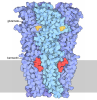
- Assembly
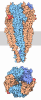
| Deposited unit | 
|
|---|---|
| 1 |
|
-Components
| #1: Protein/peptide | Mass: 1356.601 Da / Num. of mol.: 5 / Fragment: residues 5-16 / Source method: obtained synthetically / Source: (synth.) Conus imperialis (invertebrata) / References: UniProt: P50983#2: Protein | Mass: 54120.375 Da / Num. of mol.: 5 Source method: isolated from a genetically manipulated source Source: (gene. exp.) Homo sapiens (human) / Gene: CHRNA7, NACHRA7 / Cell line (production host): HEK293S / Production host: Homo sapiens (human) / References: UniProt: P36544#3: Polysaccharide | 2-acetamido-2-deoxy-beta-D-glucopyranose-(1-4)-2-acetamido-2-deoxy-beta-D-glucopyranose Source method: isolated from a genetically manipulated source #4: Sugar | ChemComp-NAG /  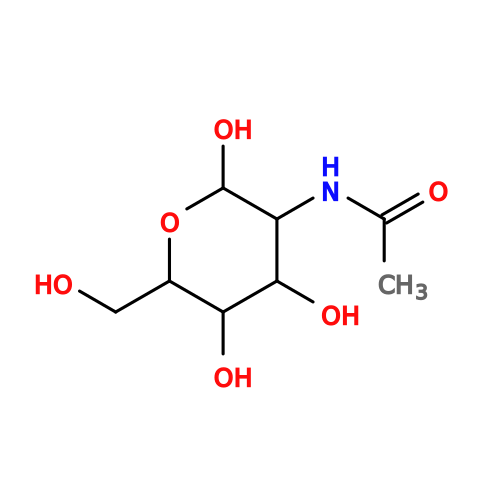 Type: D-saccharide, beta linking / Mass: 221.208 Da / Num. of mol.: 5 Type: D-saccharide, beta linking / Mass: 221.208 Da / Num. of mol.: 5Source method: isolated from a genetically manipulated source Formula: C8H15NO6 #5: Chemical | ChemComp-POV / (  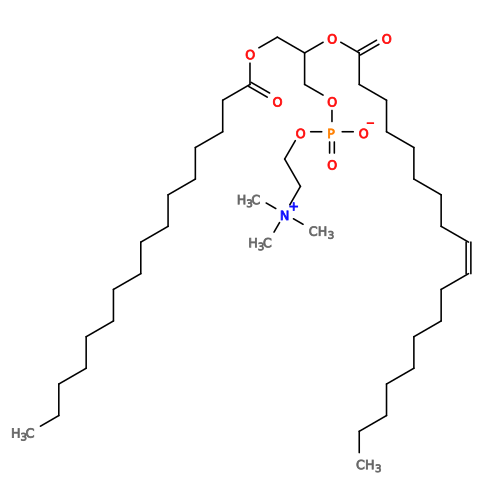 Mass: 760.076 Da / Num. of mol.: 5 / Source method: obtained synthetically / Formula: C42H82NO8P / Comment: phospholipid*YM Mass: 760.076 Da / Num. of mol.: 5 / Source method: obtained synthetically / Formula: C42H82NO8P / Comment: phospholipid*YMHas ligand of interest | Y | Has protein modification | Y | |
|---|
-Experimental details
-Experiment
| Experiment | Method: ELECTRON MICROSCOPY |
|---|---|
| EM experiment | Aggregation state: PARTICLE / 3D reconstruction method: single particle reconstruction |
- Sample preparation
| Component |
| ||||||||||||||||||||||||
|---|---|---|---|---|---|---|---|---|---|---|---|---|---|---|---|---|---|---|---|---|---|---|---|---|---|
| Molecular weight | Experimental value: NO | ||||||||||||||||||||||||
| Source (natural) |
| ||||||||||||||||||||||||
| Source (recombinant) | Organism: Homo sapiens (human) / Cell: HEK293S | ||||||||||||||||||||||||
| Buffer solution | pH: 7.4 | ||||||||||||||||||||||||
| Specimen | Embedding applied: NO / Shadowing applied: NO / Staining applied: NO / Vitrification applied: YES | ||||||||||||||||||||||||
| Specimen support | Grid type: Quantifoil | ||||||||||||||||||||||||
| Vitrification | Cryogen name: ETHANE |
- Electron microscopy imaging
| Experimental equipment |  Model: Titan Krios / Image courtesy: FEI Company |
|---|---|
| Microscopy | Model: TFS KRIOS |
| Electron gun | Electron source:  FIELD EMISSION GUN / Accelerating voltage: 300 kV / Illumination mode: FLOOD BEAM FIELD EMISSION GUN / Accelerating voltage: 300 kV / Illumination mode: FLOOD BEAM |
| Electron lens | Mode: BRIGHT FIELD / Nominal defocus max: 30000 nm / Nominal defocus min: 5000 nm / Calibrated defocus min: 5000 nm |
| Image recording | Electron dose: 55 e/Å2 / Detector mode: SUPER-RESOLUTION / Film or detector model: GATAN K2 SUMMIT (4k x 4k) |
- Processing
| EM software |
| ||||||||||||||||||||||||
|---|---|---|---|---|---|---|---|---|---|---|---|---|---|---|---|---|---|---|---|---|---|---|---|---|---|
| CTF correction | Type: PHASE FLIPPING AND AMPLITUDE CORRECTION | ||||||||||||||||||||||||
| Symmetry | Point symmetry: C5 (5 fold cyclic) | ||||||||||||||||||||||||
| 3D reconstruction | Resolution: 3.06 Å / Resolution method: FSC 0.143 CUT-OFF / Num. of particles: 80193 / Symmetry type: POINT | ||||||||||||||||||||||||
| Atomic model building | Protocol: FLEXIBLE FIT | ||||||||||||||||||||||||
| Atomic model building | PDB-ID: 7KOO Accession code: 7KOO / Source name: PDB / Type: experimental model | ||||||||||||||||||||||||
| Refinement | Highest resolution: 3.06 Å Stereochemistry target values: REAL-SPACE (WEIGHTED MAP SUM AT ATOM CENTERS) | ||||||||||||||||||||||||
| Refine LS restraints |
|

