[English] 日本語
Yorodumi
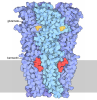
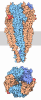
- EMDB-49898: Alpha7-nicotinic acetylcholine receptor bound to conotoxin ImII -

+
Open data


ID or keywords:

Loading...

-
Basic information

Entry
Database: EMDB / ID: EMD-49898
TitleAlpha7-nicotinic acetylcholine receptor bound to conotoxin ImII
Map data
Sample
  • Complex: Complex of conotoxin ImII and human Alpha7 nicotinic Acetylcholine receptor
    • Complex: Alpha7 nicotinic Acetylcholine receptor
      • Protein or peptide: Neuronal acetylcholine receptor subunit alpha-7
    • Complex: Alpha-conotoxin ImII
      • Protein or peptide: Alpha-conotoxin ImII
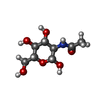
  • Ligand: 2-acetamido-2-deoxy-beta-D-glucopyranose
  • Ligand: EPIBATIDINE
Keywordsion channel / toxin / MEMBRANE PROTEIN
Function / homology
Function and homology information


sensory processing / synaptic transmission involved in micturition / host cell postsynaptic membrane / dendrite arborization / response to acetylcholine / Highly calcium permeable postsynaptic nicotinic acetylcholine receptors / acetylcholine receptor activity / acetylcholine-gated channel complex / acetylcholine receptor inhibitor activity / regulation of amyloid fibril formation ...sensory processing / synaptic transmission involved in micturition / host cell postsynaptic membrane / dendrite arborization / response to acetylcholine / Highly calcium permeable postsynaptic nicotinic acetylcholine receptors / acetylcholine receptor activity / acetylcholine-gated channel complex / acetylcholine receptor inhibitor activity / regulation of amyloid fibril formation / acetylcholine-gated monoatomic cation-selective channel activity / short-term memory / ion channel regulator activity / cation channel complex / dendritic spine organization / chloride channel regulator activity / acetylcholine binding / regulation of amyloid precursor protein catabolic process / acetylcholine receptor signaling pathway / neurotransmitter receptor complex / positive regulation of amyloid-beta formation / negative regulation of amyloid-beta formation / positive regulation of protein metabolic process / response to amyloid-beta / ligand-gated ion channel signaling pathway / monoatomic ion channel activity / modulation of excitatory postsynaptic potential / negative regulation of tumor necrosis factor production / plasma membrane raft / toxic substance binding / monoatomic ion transport / negative regulation of canonical NF-kappaB signal transduction / negative regulation of cytokine production involved in inflammatory response / positive regulation of excitatory postsynaptic potential / positive regulation of long-term synaptic potentiation / response to nicotine / regulation of membrane potential / excitatory postsynaptic potential / synapse organization / cognition / calcium channel activity / memory / intracellular calcium ion homeostasis / positive regulation of angiogenesis / transmembrane signaling receptor activity / calcium ion transport / amyloid-beta binding / toxin activity / monoatomic ion transmembrane transport / chemical synaptic transmission / postsynaptic membrane / response to hypoxia / learning or memory / positive regulation of ERK1 and ERK2 cascade / positive regulation of MAPK cascade / neuron projection / postsynapse / positive regulation of cell population proliferation / dendrite / synapse / endoplasmic reticulum membrane / signal transduction / protein homodimerization activity / extracellular region / membrane / plasma membrane
Similarity search - Function
Alpha-conotoxin family signature. / Nicotinic acetylcholine receptor / Neurotransmitter-gated ion-channel, conserved site / Neurotransmitter-gated ion-channels signature. / Neurotransmitter-gated ion-channel transmembrane domain / Neurotransmitter-gated ion-channel transmembrane region / Neurotransmitter-gated ion-channel transmembrane domain superfamily / Neuronal acetylcholine receptor / Neurotransmitter-gated ion-channel / Neurotransmitter-gated ion-channel ligand-binding domain ...Alpha-conotoxin family signature. / Nicotinic acetylcholine receptor / Neurotransmitter-gated ion-channel, conserved site / Neurotransmitter-gated ion-channels signature. / Neurotransmitter-gated ion-channel transmembrane domain / Neurotransmitter-gated ion-channel transmembrane region / Neurotransmitter-gated ion-channel transmembrane domain superfamily / Neuronal acetylcholine receptor / Neurotransmitter-gated ion-channel / Neurotransmitter-gated ion-channel ligand-binding domain / Neurotransmitter-gated ion-channel ligand-binding domain superfamily / Neurotransmitter-gated ion-channel ligand binding domain
Similarity search - Domain/homology
Neuronal acetylcholine receptor subunit alpha-7 / Alpha-conotoxin ImII
Similarity search - Component
Biological speciesHomo sapiens (human) / Conus imperialis (invertebrata)
Methodsingle particle reconstruction / cryo EM / Resolution: 3.1 Å
AuthorsStowell MHB / Hibbs RE / Noviello CM / Bhattacharjee B
Funding support United States, 3 items
OrganizationGrant numberCountry
National Institutes of Health/National Institute of Neurological Disorders and Stroke (NIH/NINDS)NS120496 United States
National Institutes of Health/National Institute of General Medical Sciences (NIH/NIGMS)U24GM129547 United States
National Institutes of Health/National Institute of General Medical Sciences (NIH/NIGMS)GM136430 United States
CitationJournal: Structure / Year: 2025
Title: Shape-shifting conotoxins reveal divergent pore-targeting mechanisms in nicotinic receptors.
Authors: Biddut Bhattacharjee / Colleen M Noviello / Md Mahfuzur Rahman / John P Mayer / Joanna Gajewiak / J Michael McIntosh / Ryan E Hibbs / Michael H B Stowell /
Abstract: The neuronal α7 nicotinic acetylcholine receptor (α7-nAChR) and muscle-type nicotinic acetylcholine receptor (mt-nAChR) are pivotal in synaptic signaling within the brain and the neuromuscular ...The neuronal α7 nicotinic acetylcholine receptor (α7-nAChR) and muscle-type nicotinic acetylcholine receptor (mt-nAChR) are pivotal in synaptic signaling within the brain and the neuromuscular junction respectively. Additionally, they are both targets of a wide range of drugs and toxins. Here, we utilize cryo-EM to delineate structures of these nAChRs in complex with the conotoxins ImI and ImII from Conus imperialis. Despite nominal sequence differences, ImI and ImII exhibit discrete binding preferences and adopt drastically different conformational states upon binding. ImI engages the orthosteric sites of α7-nAChR, while ImII forms distinct pore-bound complexes with both α7-nAChR and mt-nAChR. Strikingly, ImII adopts a compact globular conformation that binds as a monomer to the α7-nAChR pore and as an oblate dimer to the mt-nAChR pore. These structures advance our understanding of nAChR-ligand interactions and the subtle sequence variations that result in dramatically altered functional outcomes in small peptide toxins.
History
DepositionMar 25, 2025-
Header (metadata) releaseFeb 4, 2026-
Map releaseFeb 4, 2026-
UpdateFeb 4, 2026-
Current statusFeb 4, 2026Processing site: RCSB / Status: Released

-
Structure visualization

Supplemental images

Downloads & links

-
Map

FileDownload / File: emd_49898.map.gz / Format: CCP4 / Size: 103 MB / Type: IMAGE STORED AS FLOATING POINT NUMBER (4 BYTES)
Projections & slices

Image control

Size
Brightness
Contrast
Others
AxesZ (Sec.)Y (Row.)X (Col.)
1.07 Å/pix.
x 300 pix.
= 320.7 Å
1.07 Å/pix.
x 300 pix.
= 320.7 Å
1.07 Å/pix.
x 300 pix.
= 320.7 Å

Surface

Projections

Slices (1/3)

Slices (1/2)

Slices (2/3)

Images are generated by Spider.

Voxel sizeX=Y=Z: 1.069 Å
Density
Contour LevelBy AUTHOR: 0.12
Minimum - Maximum-0.3280107 - 0.93202424
Average (Standard dev.)0.0015915504 (±0.023957368)
SymmetrySpace group: 1
Details

EMDB XML:

Map geometry
Axis orderXYZ
Origin000
Dimensions300300300
Spacing300300300
CellA=B=C: 320.7 Å
α=β=γ: 90.0 °

-
Supplemental data

-
Half map: Half map A

Fileemd_49898_half_map_1.map
AnnotationHalf map A
Projections & Slices
AxesZYX

Projections

Slices (1/2)
Density Histograms

-
Half map: Half map B

Fileemd_49898_half_map_2.map
AnnotationHalf map B
Projections & Slices
AxesZYX

Projections

Slices (1/2)
Density Histograms

-
Sample components

-
Entire : Complex of conotoxin ImII and human Alpha7 nicotinic Acetylcholin...

EntireName: Complex of conotoxin ImII and human Alpha7 nicotinic Acetylcholine receptor
Components
  • Complex: Complex of conotoxin ImII and human Alpha7 nicotinic Acetylcholine receptor
    • Complex: Alpha7 nicotinic Acetylcholine receptor
      • Protein or peptide: Neuronal acetylcholine receptor subunit alpha-7
    • Complex: Alpha-conotoxin ImII
      • Protein or peptide: Alpha-conotoxin ImII
  • Ligand: 2-acetamido-2-deoxy-beta-D-glucopyranose
  • Ligand: EPIBATIDINE

-
Supramolecule #1: Complex of conotoxin ImII and human Alpha7 nicotinic Acetylcholin...

SupramoleculeName: Complex of conotoxin ImII and human Alpha7 nicotinic Acetylcholine receptor
type: complex / ID: 1 / Parent: 0 / Macromolecule list: #1-#2

-
Supramolecule #2: Alpha7 nicotinic Acetylcholine receptor

SupramoleculeName: Alpha7 nicotinic Acetylcholine receptor / type: complex / ID: 2 / Parent: 1 / Macromolecule list: #2
Source (natural)Organism: Homo sapiens (human)

-
Supramolecule #3: Alpha-conotoxin ImII

SupramoleculeName: Alpha-conotoxin ImII / type: complex / ID: 3 / Parent: 1 / Macromolecule list: #1
Source (natural)Organism: Conus imperialis (invertebrata) / Synthetically produced: Yes

-
Macromolecule #1: Alpha-conotoxin ImII

MacromoleculeName: Alpha-conotoxin ImII / type: protein_or_peptide / ID: 1 / Number of copies: 1 / Enantiomer: LEVO
Source (natural)Organism: Conus imperialis (invertebrata)
Molecular weightTheoretical: 1.518815 KDa
SequenceString:
ACCSDRRCRW RC

UniProtKB: Alpha-conotoxin ImII

-
Macromolecule #2: Neuronal acetylcholine receptor subunit alpha-7

MacromoleculeName: Neuronal acetylcholine receptor subunit alpha-7 / type: protein_or_peptide / ID: 2 / Number of copies: 5 / Enantiomer: LEVO
Source (natural)Organism: Homo sapiens (human)
Molecular weightTheoretical: 54.083312 KDa
Recombinant expressionOrganism: Homo sapiens (human)
SequenceString: EFQRKLYKEL VKNYNPLERP VANDSQPLTV YFSLSLLQIM DVDEKNQVLT TNIWLQMSWT DHYLQWNVSE YPGVKTVRFP DGQIWKPDI LLYNSADERF DATFHTNVLV NSSGHCQYLP PGIFKSSCYI DVRWFPFDVQ HCKLKFGSWS YGGWSLDLQM Q EADISGYI ...String:
EFQRKLYKEL VKNYNPLERP VANDSQPLTV YFSLSLLQIM DVDEKNQVLT TNIWLQMSWT DHYLQWNVSE YPGVKTVRFP DGQIWKPDI LLYNSADERF DATFHTNVLV NSSGHCQYLP PGIFKSSCYI DVRWFPFDVQ HCKLKFGSWS YGGWSLDLQM Q EADISGYI PNGEWDLVGI PGKRSERFYE CCKEPYPDVT FTVTMRRRTL YYGLNLLIPC VLISALALLV FLLPADSGEK IS LGITVLL SLTVFMLLVA EIMPATSDSV PLIAQYFAST MIIVGLSVVV TVIVLQYHHH DPDGGKMPKW TRVILLNWCA WFL RMKRPG EDKVRPACQH KQRRCSLASV EMSAVAPPPA SNGNLLYIGF RGLDGVHCVP TPDSGVVCGR MACSPTHDEH LLHG GQPPE GDPDLAKILE EVRYIANRFR CQDESEAVCS EWKFAACVVD RLCLMAFSVF TIICTIGILM SAPNFVEAVS KDF

UniProtKB: Neuronal acetylcholine receptor subunit alpha-7

-
Macromolecule #4: 2-acetamido-2-deoxy-beta-D-glucopyranose

MacromoleculeName: 2-acetamido-2-deoxy-beta-D-glucopyranose / type: ligand / ID: 4 / Number of copies: 10 / Formula: NAG
Molecular weightTheoretical: 221.208 Da
Chemical component information

ChemComp-NAG:
2-acetamido-2-deoxy-beta-D-glucopyranose

-
Macromolecule #5: EPIBATIDINE

MacromoleculeName: EPIBATIDINE / type: ligand / ID: 5 / Number of copies: 5 / Formula: EPJ
Molecular weightTheoretical: 208.687 Da
Chemical component information

ChemComp-EPJ:
EPIBATIDINE / alkaloid*YM

-
Experimental details

-
Structure determination

Methodcryo EM
Processingsingle particle reconstruction
Aggregation stateparticle

-
Sample preparation

BufferpH: 7.4
VitrificationCryogen name: ETHANE

-
Electron microscopy

MicroscopeTFS KRIOS
Image recordingFilm or detector model: GATAN K2 SUMMIT (4k x 4k) / Detector mode: SUPER-RESOLUTION / Average electron dose: 55.0 e/Å2
Electron beamAcceleration voltage: 300 kV / Electron source: FIELD EMISSION GUN
Electron opticsCalibrated defocus min: 5.0 µm / Illumination mode: FLOOD BEAM / Imaging mode: BRIGHT FIELD / Nominal defocus max: 30.0 µm / Nominal defocus min: 5.0 µm
Experimental equipment
Model: Titan Krios / Image courtesy: FEI Company

+
Image processing

CTF correctionType: PHASE FLIPPING AND AMPLITUDE CORRECTION
Startup modelType of model: NONE
Final reconstructionResolution.type: BY AUTHOR / Resolution: 3.1 Å / Resolution method: FSC 0.143 CUT-OFF / Software - Name: cryoSPARC / Number images used: 101142
Initial angle assignmentType: COMMON LINE
Final angle assignmentType: MAXIMUM LIKELIHOOD
FSC plot (resolution estimation)

-
Atomic model buiding 1

Initial modelPDB ID:

Chain - Source name: PDB / Chain - Initial model type: experimental model
RefinementProtocol: FLEXIBLE FIT
Output model

PDB-9nx1:
Alpha7-nicotinic acetylcholine receptor bound to conotoxin ImII

+
About Yorodumi

-
News

-
Feb 9, 2022. New format data for meta-information of EMDB entries

New format data for meta-information of EMDB entries

  • Version 3 of the EMDB header file is now the official format.
  • The previous official version 1.9 will be removed from the archive.

Related info.:EMDB header

External links:wwPDB to switch to version 3 of the EMDB data model

-
Aug 12, 2020. Covid-19 info

Covid-19 info

URL: https://pdbj.org/emnavi/covid19.php

New page: Covid-19 featured information page in EM Navigator.

Related info.:Covid-19 info / Mar 5, 2020. Novel coronavirus structure data

+
Mar 5, 2020. Novel coronavirus structure data

Novel coronavirus structure data

Related info.:Yorodumi Speices / Aug 12, 2020. Covid-19 info

External links:COVID-19 featured content - PDBj / Molecule of the Month (242):Coronavirus Proteases

+
Jan 31, 2019. EMDB accession codes are about to change! (news from PDBe EMDB page)

EMDB accession codes are about to change! (news from PDBe EMDB page)

  • The allocation of 4 digits for EMDB accession codes will soon come to an end. Whilst these codes will remain in use, new EMDB accession codes will include an additional digit and will expand incrementally as the available range of codes is exhausted. The current 4-digit format prefixed with “EMD-” (i.e. EMD-XXXX) will advance to a 5-digit format (i.e. EMD-XXXXX), and so on. It is currently estimated that the 4-digit codes will be depleted around Spring 2019, at which point the 5-digit format will come into force.
  • The EM Navigator/Yorodumi systems omit the EMD- prefix.

Related info.:Q: What is EMD? / ID/Accession-code notation in Yorodumi/EM Navigator

External links:EMDB Accession Codes are Changing Soon! / Contact to PDBj

+
Jul 12, 2017. Major update of PDB

Major update of PDB

  • wwPDB released updated PDB data conforming to the new PDBx/mmCIF dictionary.
  • This is a major update changing the version number from 4 to 5, and with Remediation, in which all the entries are updated.
  • In this update, many items about electron microscopy experimental information are reorganized (e.g. em_software).
  • Now, EM Navigator and Yorodumi are based on the updated data.

External links:wwPDB Remediation / Enriched Model Files Conforming to OneDep Data Standards Now Available in the PDB FTP Archive

-
Yorodumi

Thousand views of thousand structures

  • Yorodumi is a browser for structure data from EMDB, PDB, SASBDB, etc.
  • This page is also the successor to EM Navigator detail page, and also detail information page/front-end page for Omokage search.
  • The word "yorodu" (or yorozu) is an old Japanese word meaning "ten thousand". "mi" (miru) is to see.

Related info.:EMDB / PDB / SASBDB / Comparison of 3 databanks / Yorodumi Search / Aug 31, 2016. New EM Navigator & Yorodumi / Yorodumi Papers / Jmol/JSmol / Function and homology information / Changes in new EM Navigator and Yorodumi

Read more