 Movie
Movie Controller

[English] 日本語
 Yorodumi
- PDB-9m55: Structural insight into determinants of endogenous agonist select... -
+ Open data

- Basic information
| Entry | Database: PDB / ID: 9m55 | ||||||
|---|---|---|---|---|---|---|---|
| Title | Structural insight into determinants of endogenous agonist selectivity of aminergic receptors from octopamine b2 receptor structure | ||||||
 Components Components |
| ||||||
 Keywords Keywords | SIGNALING PROTEIN / GPCR | ||||||
| Function / homology |  Function and homology information Function and homology informationOlfactory Signaling Pathway / Activation of the phototransduction cascade / G protein-coupled acetylcholine receptor signaling pathway / G beta:gamma signalling through PLC beta / Presynaptic function of Kainate receptors / Thromboxane signalling through TP receptor / Activation of G protein gated Potassium channels / Inhibition of voltage gated Ca2+ channels via Gbeta/gamma subunits / G-protein activation / Glucagon signaling in metabolic regulation ...Olfactory Signaling Pathway / Activation of the phototransduction cascade / G protein-coupled acetylcholine receptor signaling pathway / G beta:gamma signalling through PLC beta / Presynaptic function of Kainate receptors / Thromboxane signalling through TP receptor / Activation of G protein gated Potassium channels / Inhibition of voltage gated Ca2+ channels via Gbeta/gamma subunits / G-protein activation / Glucagon signaling in metabolic regulation / G beta:gamma signalling through CDC42 / Prostacyclin signalling through prostacyclin receptor / Synthesis, secretion, and inactivation of Glucagon-like Peptide-1 (GLP-1) / photoreceptor disc membrane / G beta:gamma signalling through BTK / ADP signalling through P2Y purinoceptor 12 / Sensory perception of sweet, bitter, and umami (glutamate) taste / Glucagon-type ligand receptors / Adrenaline,noradrenaline inhibits insulin secretion / Vasopressin regulates renal water homeostasis via Aquaporins / G alpha (z) signalling events / Glucagon-like Peptide-1 (GLP1) regulates insulin secretion / cellular response to catecholamine stimulus / ADP signalling through P2Y purinoceptor 1 / G beta:gamma signalling through PI3Kgamma / ADORA2B mediated anti-inflammatory cytokines production / adenylate cyclase-activating dopamine receptor signaling pathway / cellular response to prostaglandin E stimulus / Cooperation of PDCL (PhLP1) and TRiC/CCT in G-protein beta folding / GPER1 signaling / heterotrimeric G-protein complex / Inactivation, recovery and regulation of the phototransduction cascade / G alpha (12/13) signalling events / extracellular vesicle / Thrombin signalling through proteinase activated receptors (PARs) / signaling receptor complex adaptor activity / GTPase binding / Ca2+ pathway / High laminar flow shear stress activates signaling by PIEZO1 and PECAM1:CDH5:KDR in endothelial cells / G alpha (i) signalling events / G alpha (s) signalling events / G alpha (q) signalling events / Ras protein signal transduction / Extra-nuclear estrogen signaling / G protein-coupled receptor signaling pathway / lysosomal membrane / GTPase activity / synapse / protein-containing complex binding / signal transduction / extracellular exosome / membrane / plasma membrane / cytosol / cytoplasm Similarity search - Function | ||||||
| Biological species |  Ixodes scapularis (black-legged tick) Ixodes scapularis (black-legged tick) Homo sapiens (human) Homo sapiens (human)  Mus musculus (house mouse) Mus musculus (house mouse) | ||||||
| Method | ELECTRON MICROSCOPY / single particle reconstruction / cryo EM / Resolution: 3.39 Å | ||||||
 Authors Authors | Hori, T. / Katsuta, K. / Shirouzu, M. | ||||||
| Funding support |  Japan, 1items Japan, 1items
| ||||||
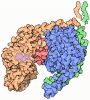
 Citation Citation | Journal: PNAS Nexus / Year: 2025 Title: Structural insights into endogenous agonist selectivity of aminergic receptors from the octopamine β receptor. Authors: Tetsuya Hori / Kazushige Katsura / Sayako Miyamoto-Kohno / Tomomi Uchikubo-Kamo / Mayumi Yonemochi / Mikako Shirouzu / Abstract: Tyrosine-derived amines (TDAs), such as octopamine, noradrenaline, dopamine, and tyramine, are essential neurotransmitters that play diverse roles in various physiological processes. The distinct ...Tyrosine-derived amines (TDAs), such as octopamine, noradrenaline, dopamine, and tyramine, are essential neurotransmitters that play diverse roles in various physiological processes. The distinct receptor selectivity of these structurally similar molecules is vital for their specific functions. However, all these receptors belong to the same subfamily of G-protein-coupled receptors and share high sequence homology within their orthosteric binding sites. The molecular basis of this selectivity remains unclear because of the absence of structural data on octopamine and tyramine receptors. In this study, we present cryo-electron microscopy structures of the deer tick octopamine β receptor (octβR) bound to octopamine or -2,4-dimethylphenyl-'-methylformamidine (DPMF), an acaricidal amitraz metabolite. Octopamine and DPMF formed aromatic interactions with Y307 and F328, residues crucial for octβR activation. The lower potency of other TDAs for octβR stems from the subtle effect of functional groups on both interactions, i.e. the meta-hydroxyl group of noradrenaline and dopamine hinders edge-to-edge interaction with Y307, and the absence of a 1-hydroxyl group in dopamine and tyramine prevents π-hydrogen bonding with F328. These structural insights into octβR selectivity are likely applicable across other TDA receptors, highlighting the pivotal role of residues 6.55 and 7.39. Consequently, the elucidated selection mechanism provides fundamental knowledge of aminergic ligand recognition, a process crucial for neurotransmission and overall organismal function. | ||||||
| History |
|
- Structure visualization
| Structure viewer | Molecule: MolmilJmol/JSmol |
|---|
- Downloads & links
-Download
| PDBx/mmCIF format | 9m55.cif.gz | 222.4 KB | Display | PDBx/mmCIF format |
|---|---|---|---|---|
| PDB format | pdb9m55.ent.gz | Display | PDB format | |
| PDBx/mmJSON format | 9m55.json.gz | Tree view | PDBx/mmJSON format | |
| Others |  Other downloads Other downloads |
-Validation report
| Arichive directory | https://data.pdbj.org/pub/pdb/validation_reports/m5/9m55ftp://data.pdbj.org/pub/pdb/validation_reports/m5/9m55 | HTTPS FTP |
|---|
-Related structure data
| Related structure data |  63636MC  9m57C M: map data used to model this data C: citing same article ( |
|---|---|
| Similar structure data |

-Links
 PDBj
PDBj
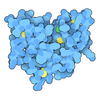
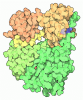

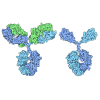
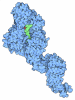
- Assembly
| Deposited unit | 
|
|---|---|
| 1 |
|
-Components
-Protein , 4 types, 4 molecules ABGR
| #1: Protein | Mass: 47011.234 Da / Num. of mol.: 1 Source method: isolated from a genetically manipulated source Source: (gene. exp.) Ixodes scapularis (black-legged tick) / Production host:   Escherichia coli (E. coli) Escherichia coli (E. coli) |
|---|---|
| #2: Protein | Mass: 39541.113 Da / Num. of mol.: 1 Source method: isolated from a genetically manipulated source Source: (gene. exp.) Homo sapiens (human) / Gene: GNB1 / Production host:  Spodoptera frugiperda granulovirus / References: UniProt: P62873 Spodoptera frugiperda granulovirus / References: UniProt: P62873 |
| #3: Protein | Mass: 11222.714 Da / Num. of mol.: 1 Source method: isolated from a genetically manipulated source Source: (gene. exp.) Homo sapiens (human) / Production host: Spodoptera frugiperda granulovirus |
| #4: Protein | Mass: 48186.727 Da / Num. of mol.: 1 Source method: isolated from a genetically manipulated source Source: (gene. exp.) Ixodes scapularis (black-legged tick) / Production host: Spodoptera frugiperda granulovirus |
-Antibody / Non-polymers , 2 types, 2 molecules S
| #5: Antibody | Mass: 32919.355 Da / Num. of mol.: 1 Source method: isolated from a genetically manipulated source Source: (gene. exp.) Mus musculus (house mouse) / Cell (production host): cell-free / Production host: Escherichia coli (E. coli) |
|---|---|
| #6: Chemical | ChemComp-A1L8N / ~{ Mass: 162.232 Da / Num. of mol.: 1 / Source method: obtained synthetically / Formula: C10H14N2 / Feature type: SUBJECT OF INVESTIGATION |
-Details
| Has ligand of interest | Y |
|---|---|
| Has protein modification | Y |
-Experimental details
-Experiment
| Experiment | Method: ELECTRON MICROSCOPY |
|---|---|
| EM experiment | Aggregation state: PARTICLE / 3D reconstruction method: single particle reconstruction |
- Sample preparation
| Component | Name: GPCR and G-protein complex / Type: COMPLEX / Entity ID: #1-#5 / Source: RECOMBINANT |
|---|---|
| Source (natural) | Organism: Ixodes scapularis (black-legged tick) |
| Source (recombinant) | Organism: Spodoptera frugiperda granulovirus |
| Buffer solution | pH: 7.5 |
| Specimen | Embedding applied: NO / Shadowing applied: NO / Staining applied: NO / Vitrification applied: YES |
| Vitrification | Cryogen name: ETHANE |
- Electron microscopy imaging
| Experimental equipment |  Model: Titan Krios / Image courtesy: FEI Company |
|---|---|
| Microscopy | Model: TFS KRIOS |
| Electron gun | Electron source:  FIELD EMISSION GUN / Accelerating voltage: 300 kV / Illumination mode: FLOOD BEAM FIELD EMISSION GUN / Accelerating voltage: 300 kV / Illumination mode: FLOOD BEAM |
| Electron lens | Mode: BRIGHT FIELD / Nominal defocus max: 2000 nm / Nominal defocus min: 800 nm |
| Image recording | Electron dose: 50.1 e/Å2 / Film or detector model: GATAN K3 (6k x 4k) |
- Processing
| CTF correction | Type: PHASE FLIPPING AND AMPLITUDE CORRECTION |
|---|---|
| 3D reconstruction | Resolution: 3.39 Å / Resolution method: FSC 0.143 CUT-OFF / Num. of particles: 246183 / Symmetry type: POINT |
