 ムービー
ムービー コントローラー


+ データを開く

- 基本情報
基本情報
| 登録情報 | データベース: PDB / ID: 9m42 | ||||||||||||||||||||||||
|---|---|---|---|---|---|---|---|---|---|---|---|---|---|---|---|---|---|---|---|---|---|---|---|---|---|
| タイトル | Structure-based discovery of potent agonists of the orphan receptor GPR139 | ||||||||||||||||||||||||
 要素 要素 |
| ||||||||||||||||||||||||
 キーワード キーワード | STRUCTURAL PROTEIN / GPR139 / Complex / G protein | ||||||||||||||||||||||||
| 機能・相同性 |  機能・相同性情報 機能・相同性情報neuropeptide receptor activity / endo-1,4-beta-xylanase / endo-1,4-beta-xylanase activity / xylan catabolic process / adenylate cyclase-activating G protein-coupled bile acid receptor signaling pathway / adenylate cyclase-activating serotonin receptor signaling pathway / regulation of skeletal muscle contraction / PKA activation in glucagon signalling / hair follicle placode formation / developmental growth ...neuropeptide receptor activity / endo-1,4-beta-xylanase / endo-1,4-beta-xylanase activity / xylan catabolic process / adenylate cyclase-activating G protein-coupled bile acid receptor signaling pathway / adenylate cyclase-activating serotonin receptor signaling pathway / regulation of skeletal muscle contraction / PKA activation in glucagon signalling / hair follicle placode formation / developmental growth / intracellular transport / D1 dopamine receptor binding / vascular endothelial cell response to laminar fluid shear stress / renal water homeostasis / activation of adenylate cyclase activity / Hedgehog 'off' state / cellular response to acidic pH / adenylate cyclase-activating adrenergic receptor signaling pathway / cellular response to glucagon stimulus / intracellular glucose homeostasis / positive regulation of insulin secretion involved in cellular response to glucose stimulus / adenylate cyclase activator activity / trans-Golgi network membrane / negative regulation of inflammatory response to antigenic stimulus / response to prostaglandin E / bone development / platelet aggregation / cognition / G-protein beta/gamma-subunit complex binding / Olfactory Signaling Pathway / Activation of the phototransduction cascade / G protein-coupled acetylcholine receptor signaling pathway / positive regulation of insulin secretion / G beta:gamma signalling through PLC beta / Presynaptic function of Kainate receptors / Thromboxane signalling through TP receptor / Activation of G protein gated Potassium channels / Inhibition of voltage gated Ca2+ channels via Gbeta/gamma subunits / G-protein activation / Glucagon signaling in metabolic regulation / G beta:gamma signalling through CDC42 / Prostacyclin signalling through prostacyclin receptor / G beta:gamma signalling through BTK / Synthesis, secretion, and inactivation of Glucagon-like Peptide-1 (GLP-1) / sensory perception of smell / photoreceptor disc membrane / ADP signalling through P2Y purinoceptor 12 / Sensory perception of sweet, bitter, and umami (glutamate) taste / Glucagon-type ligand receptors / Adrenaline,noradrenaline inhibits insulin secretion / Vasopressin regulates renal water homeostasis via Aquaporins / Glucagon-like Peptide-1 (GLP1) regulates insulin secretion / G alpha (z) signalling events / cellular response to catecholamine stimulus / ADP signalling through P2Y purinoceptor 1 / ADORA2B mediated anti-inflammatory cytokines production / G beta:gamma signalling through PI3Kgamma / adenylate cyclase-activating dopamine receptor signaling pathway / Cooperation of PDCL (PhLP1) and TRiC/CCT in G-protein beta folding / GPER1 signaling / cellular response to prostaglandin E stimulus / heterotrimeric G-protein complex / G alpha (12/13) signalling events / positive regulation of cold-induced thermogenesis / Inactivation, recovery and regulation of the phototransduction cascade / G-protein beta-subunit binding / extracellular vesicle / sensory perception of taste / adenylate cyclase-activating G protein-coupled receptor signaling pathway / Thrombin signalling through proteinase activated receptors (PARs) / signaling receptor complex adaptor activity / retina development in camera-type eye / GTPase binding / G protein activity / fibroblast proliferation / Ca2+ pathway / High laminar flow shear stress activates signaling by PIEZO1 and PECAM1:CDH5:KDR in endothelial cells / G alpha (i) signalling events / G alpha (s) signalling events / phospholipase C-activating G protein-coupled receptor signaling pathway / G alpha (q) signalling events / 加水分解酵素; 酸無水物に作用; GTPに作用・細胞または細胞小器官の運動に関与 / Ras protein signal transduction / cell population proliferation / Extra-nuclear estrogen signaling / G protein-coupled receptor signaling pathway / lysosomal membrane / GTPase activity / synapse / GTP binding / protein-containing complex binding / signal transduction / extracellular exosome / membrane / metal ion binding / identical protein binding / plasma membrane / cytoplasm / cytosol 類似検索 - 分子機能 | ||||||||||||||||||||||||
| 生物種 |  Homo sapiens (ヒト) Homo sapiens (ヒト) Niallia circulans (バクテリア) Niallia circulans (バクテリア) | ||||||||||||||||||||||||
| 手法 | 電子顕微鏡法 / 単粒子再構成法 / クライオ電子顕微鏡法 / 解像度: 3.2 Å | ||||||||||||||||||||||||
 データ登録者 データ登録者 | Cabezadevaca, I. / Trapkov, B. / Shen, L. / Pezeshki, M. / Zhang, X.H. / Liu, Z.j. / Hauser, A.S. / Carlsson, J. | ||||||||||||||||||||||||
| 資金援助 | 1件
| ||||||||||||||||||||||||
 引用 引用 | ジャーナル: Nat Commun / 年: 2025 タイトル: Ultra-large virtual screening unveils potent agonists of the neuromodulatory orphan receptor GPR139. 著者: Israel Cabeza de Vaca / Boris Trapkov / Ling Shen / Duy Duc Vo / Xiaoqun Zhang / Yunting Yang / Mitra Pezeshki / Xuehan Zhang / Frida Bällgren / Aljona Saleh / Andrii V Tarnovskiy / Dmytro S ...著者: Israel Cabeza de Vaca / Boris Trapkov / Ling Shen / Duy Duc Vo / Xiaoqun Zhang / Yunting Yang / Mitra Pezeshki / Xuehan Zhang / Frida Bällgren / Aljona Saleh / Andrii V Tarnovskiy / Dmytro S Radchenko / Yurii S Moroz / Hans Bräuner-Osborne / Per Svenningsson / Jan Kihlberg / Zhi-Jie Liu / Alexander Sebastian Hauser / Jens Carlsson /     要旨: The orphan G protein-coupled receptor (GPCR) GPR139 attracts interest as a target for neuropsychiatric disorders. Whereas the physiological functions of GPR139 remain elusive, a high-resolution ...The orphan G protein-coupled receptor (GPCR) GPR139 attracts interest as a target for neuropsychiatric disorders. Whereas the physiological functions of GPR139 remain elusive, a high-resolution receptor structure is now available. To assess whether structural information enables ligand discovery, we computationally dock 235 million compounds to the GPR139 binding site. Of 68 top-ranked compounds evaluated experimentally, five are full agonists with potencies ranging from 160 nM to 3.6 µM. Structure-guided optimization identifies one of the most potent GPR139 agonists, and a cryo-EM structure of the receptor-ligand complex confirms the predicted binding mode. Functional characterization provides insights into GPR139 signalling, and one agonist elicits behavioural effects in mice. We also explore the potential to replace experimental structure determination with the deep-learning method AlphaFold3, revealing a limited capability of artificial intelligence to model receptor-ligand interactions for understudied GPCRs. The results demonstrate how high-resolution GPCR structures combined with large-library docking can accelerate drug discovery. | ||||||||||||||||||||||||
| 履歴 |
|
- 構造の表示
構造の表示
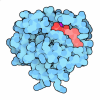
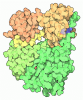
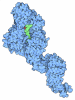
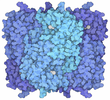
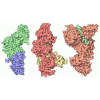
| 構造ビューア | 分子: MolmilJmol/JSmol |
|---|
- ダウンロードとリンク
-ダウンロード
| PDBx/mmCIF形式 | 9m42.cif.gz | 221.6 KB | 表示 | PDBx/mmCIF形式 |
|---|---|---|---|---|
| PDB形式 | pdb9m42.ent.gz | 表示 | PDB形式 | |
| PDBx/mmJSON形式 | 9m42.json.gz | ツリー表示 | PDBx/mmJSON形式 | |
| その他 |  その他のダウンロード その他のダウンロード |
-検証レポート
| アーカイブディレクトリ | https://data.pdbj.org/pub/pdb/validation_reports/m4/9m42ftp://data.pdbj.org/pub/pdb/validation_reports/m4/9m42 | HTTPS FTP |
|---|
-関連構造データ

-リンク
 PDBj
PDBj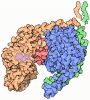
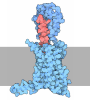
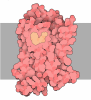
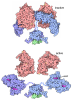
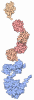
- 集合体
集合体
| 登録構造単位 | 
|
|---|---|
| 1 |
|
-要素
-Guanine nucleotide-binding protein ... , 3種, 3分子 ABG
| #1: タンパク質 | 分子量: 30595.510 Da / 分子数: 1 / 由来タイプ: 組換発現 / 由来: (組換発現) Homo sapiens (ヒト) / 遺伝子: GNAS, GNAS1, GSP / 発現宿主:  Escherichia coli (大腸菌) Escherichia coli (大腸菌)参照: UniProt: P63092, 加水分解酵素; 酸無水物に作用; GTPに作用・細胞または細胞小器官の運動に関与 |
|---|---|
| #2: タンパク質 | 分子量: 37564.102 Da / 分子数: 1 / 由来タイプ: 組換発現 / 由来: (組換発現) Homo sapiens (ヒト) / 遺伝子: GNB1発現宿主:  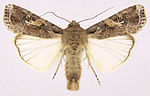 Spodoptera frugiperda (ツマジロクサヨトウ) Spodoptera frugiperda (ツマジロクサヨトウ)参照: UniProt: P62873 |
| #3: タンパク質 | 分子量: 10497.960 Da / 分子数: 1 / 由来タイプ: 組換発現 / 由来: (組換発現) Homo sapiens (ヒト) / 遺伝子: GNG2発現宿主: Spodoptera frugiperda (ツマジロクサヨトウ)参照: UniProt: P59768 |
-抗体 / タンパク質 , 2種, 2分子 NR
| #4: 抗体 | 分子量: 17483.693 Da / 分子数: 1 / 由来タイプ: 組換発現 / 由来: (組換発現) Homo sapiens (ヒト) / 発現宿主: Escherichia coli (大腸菌) |
|---|---|
| #5: タンパク質 | 分子量: 60964.281 Da / 分子数: 1 / 由来タイプ: 組換発現 詳細: Chimera of Endo-1,4-beta-xylanase and Probable G-protein coupled receptor 139 由来: (組換発現) Niallia circulans (バクテリア), (組換発現) Homo sapiens (ヒト)遺伝子: xlnA, GPR139, GPRG1, PGR3 発現宿主: Spodoptera frugiperda (ツマジロクサヨトウ)参照: UniProt: P09850, UniProt: Q6DWJ6, endo-1,4-beta-xylanase |
-非ポリマー , 2種, 2分子 
| #6: 化合物 | ChemComp-A1L8O / 分子量: 327.401 Da / 分子数: 1 / 由来タイプ: 合成 / 式: C17H17N3O2S / タイプ: SUBJECT OF INVESTIGATION |
|---|---|
| #7: 水 | ChemComp-HOH / 分子量: 18.015 Da / 分子数: 1 / 由来タイプ: 天然 / 式: H2O |
-詳細
| 研究の焦点であるリガンドがあるか | Y |
|---|---|
| Has protein modification | Y |
-実験情報
-実験
| 実験 | 手法: 電子顕微鏡法 |
|---|---|
| EM実験 | 試料の集合状態: PARTICLE / 3次元再構成法: 単粒子再構成法 |
- 試料調製
試料調製
| 構成要素 | 名称: GPR139_Gs/q / タイプ: COMPLEX / Entity ID: #1-#5 / 由来: RECOMBINANT | ||||||||||||
|---|---|---|---|---|---|---|---|---|---|---|---|---|---|
| 由来(天然) | 生物種: Homo sapiens (ヒト) | ||||||||||||
| 由来(組換発現) |
| ||||||||||||
| 緩衝液 | pH: 7.5 | ||||||||||||
| 試料 | 包埋: NO / シャドウイング: NO / 染色: NO / 凍結: YES | ||||||||||||
| 急速凍結 | 凍結剤: ETHANE |
- 電子顕微鏡撮影
| 実験機器 | 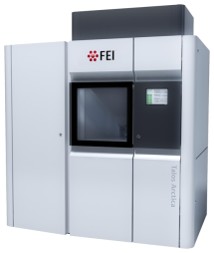 モデル: Talos Arctica / 画像提供: FEI Company |
|---|---|
| 顕微鏡 | モデル: FEI TALOS ARCTICA |
| 電子銃 | 電子線源:  FIELD EMISSION GUN / 加速電圧: 300 kV / 照射モード: FLOOD BEAM FIELD EMISSION GUN / 加速電圧: 300 kV / 照射モード: FLOOD BEAM |
| 電子レンズ | モード: BRIGHT FIELD / 最大 デフォーカス(公称値): 2000 nm / 最小 デフォーカス(公称値): 1200 nm |
| 撮影 | 電子線照射量: 60 e/Å2 フィルム・検出器のモデル: GATAN K3 BIOQUANTUM (6k x 4k) |
- 解析
解析
| EMソフトウェア |
| ||||||||||||||||||||||||
|---|---|---|---|---|---|---|---|---|---|---|---|---|---|---|---|---|---|---|---|---|---|---|---|---|---|
| CTF補正 | タイプ: PHASE FLIPPING AND AMPLITUDE CORRECTION | ||||||||||||||||||||||||
| 3次元再構成 | 解像度: 3.2 Å / 解像度の算出法: FSC 0.143 CUT-OFF / 粒子像の数: 138265 / 対称性のタイプ: POINT | ||||||||||||||||||||||||
| 精密化 | 最高解像度: 3.2 Å 立体化学のターゲット値: REAL-SPACE (WEIGHTED MAP SUM AT ATOM CENTERS) | ||||||||||||||||||||||||
| 拘束条件 |
|
