 Movie
Movie Controller

[English] 日本語
 Yorodumi
- PDB-9k7v: Structural insights into photosystem II supercomplex of a a sipho... -
+ Open data

- Basic information
| Entry | Database: PDB / ID: 9k7v | |||||||||||||||||||||||||||
|---|---|---|---|---|---|---|---|---|---|---|---|---|---|---|---|---|---|---|---|---|---|---|---|---|---|---|---|---|
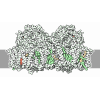
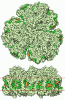
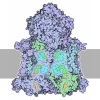
| Title | Structural insights into photosystem II supercomplex of a a siphonous green algae Bryopsis corticulans from intertidal zone | |||||||||||||||||||||||||||
 Components Components |
| |||||||||||||||||||||||||||
 Keywords Keywords | PHOTOSYNTHESIS / PSII-LHCII supercomplex | |||||||||||||||||||||||||||
| Function / homology |  Function and homology information Function and homology informationoxygen evolving activity / photosystem II stabilization / photosystem II reaction center / photosystem II / photosynthetic electron transport chain / photosystem II / chlorophyll binding / photosynthetic electron transport in photosystem II / photosynthesis, light reaction / phosphate ion binding ...oxygen evolving activity / photosystem II stabilization / photosystem II reaction center / photosystem II / photosynthetic electron transport chain / photosystem II / chlorophyll binding / photosynthetic electron transport in photosystem II / photosynthesis, light reaction / phosphate ion binding / chloroplast thylakoid membrane / photosynthesis / electron transfer activity / protein stabilization / iron ion binding / heme binding / metal ion binding Similarity search - Function | |||||||||||||||||||||||||||
| Biological species |  Bryopsis corticulans (plant) Bryopsis corticulans (plant) | |||||||||||||||||||||||||||
| Method | ELECTRON MICROSCOPY / single particle reconstruction / cryo EM / Resolution: 3.07 Å | |||||||||||||||||||||||||||
 Authors Authors | Liu, X.Y. / Wang, W.D. | |||||||||||||||||||||||||||
| Funding support |  China, 1items China, 1items
| |||||||||||||||||||||||||||
 Citation Citation | Journal: Plant Commun / Year: 2026 Title: Cryo-EM structural analyses of chlorophyll b-enriched PSI-LHC and PSII-LHC supercomplexes of the siphonous green alga Bryopsis corticulans. Authors: Xueyang Liu / Zhenhua Li / Liangliang Shen / Lili Shen / Bin Wu / Xiaoyi Li / Yanyan Yang / Shan Gao / Guangye Han / Tingyun Kuang / Cheng Liu / Jian-Ren Shen / Wenda Wang /  Abstract: The light-harvesting complexes of photosystem I (PSI) and PSII (LHCI and LHCII) in Bryopsis corticulans (B. corticulans) are homologous to those in Chlamydomonas reinhardtii and land plants but ...The light-harvesting complexes of photosystem I (PSI) and PSII (LHCI and LHCII) in Bryopsis corticulans (B. corticulans) are homologous to those in Chlamydomonas reinhardtii and land plants but exhibit a distinct chlorophyll (Chl) and carotenoid composition. Here, we report cryo-electron microscopy structures of the PSI-LHCI-LHCII supercomplex, comprising three LHCII trimers, and the CSMN-type PSII-LHCII supercomplex from B. corticulans. In the PSI supercomplex, ten LHCI subunits assemble into two belts and one heterodimer, coordinating a total of 86 Chl a and 65 Chl b molecules (Chl a/b ratio of 1.3, compared with 3.4 in C. reinhardtii), as well as 18 siphonaxanthin, 2 siphonein, and 13 α-carotene molecules. Of the three LHCII trimers bound to the PSI-LHCI supercomplex, two are anchored to the PSI core primarily via phosphorylated subunits, whereas the third, non-phosphorylated trimer is stabilized through interactions with Lhca-d and the adjacent LHCII trimer. In the CSMN-type PSII-LHCII supercomplex, the N-LHCII is positioned closer to the PSII core than in C. reinhardtii, likely owing to loss of the linker motif in the N-terminal region of B. corticulans CP29. Structure-based energy transfer analysis suggests that this spatial rearrangement enhances the efficiency of excitation energy transfer from N-LHCII to the PSII core. Collectively, these findings reveal structural adaptations that underlie the acclimation strategies of siphonous green algae inhabiting intertidal environments. | |||||||||||||||||||||||||||
| History |
|
- Structure visualization
| Structure viewer | Molecule: MolmilJmol/JSmol |
|---|
- Downloads & links
-Download
| PDBx/mmCIF format | 9k7v.cif.gz | 2.3 MB | Display | PDBx/mmCIF format |
|---|---|---|---|---|
| PDB format | pdb9k7v.ent.gz | 2 MB | Display | PDB format |
| PDBx/mmJSON format | 9k7v.json.gz | Tree view | PDBx/mmJSON format | |
| Others |  Other downloads Other downloads |
-Validation report
| Arichive directory | https://data.pdbj.org/pub/pdb/validation_reports/k7/9k7vftp://data.pdbj.org/pub/pdb/validation_reports/k7/9k7v | HTTPS FTP |
|---|
-Related structure data
| Related structure data |  62153MC  9jzrC  9k1eC M: map data used to model this data C: citing same article ( |
|---|---|
| Similar structure data |


-Links
 PDBj
PDBj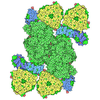
- Assembly
| Deposited unit | 
|
|---|---|
| 1 |
|
-Components
-Photosystem II ... , 11 types, 22 molecules ZzHhIiKkLlMmVvTtBbCcDd
| #1: Protein | Mass: 6736.073 Da / Num. of mol.: 2 / Source method: isolated from a natural source / Source: (natural) Bryopsis corticulans (plant) / References: UniProt: D0EVT4#3: Protein | Mass: 8056.390 Da / Num. of mol.: 2 / Source method: isolated from a natural source / Source: (natural) Bryopsis corticulans (plant) / References: UniProt: A0A2P0QH85#4: Protein/peptide | Mass: 4055.739 Da / Num. of mol.: 2 / Source method: isolated from a natural source / Source: (natural) Bryopsis corticulans (plant) / References: UniProt: A0A2P0QH95#5: Protein/peptide | Mass: 4874.861 Da / Num. of mol.: 2 / Source method: isolated from a natural source / Source: (natural) Bryopsis corticulans (plant) / References: UniProt: D0EVU6#6: Protein/peptide | Mass: 4405.188 Da / Num. of mol.: 2 / Source method: isolated from a natural source / Source: (natural) Bryopsis corticulans (plant) / References: UniProt: A0A023HHP9#7: Protein/peptide | Mass: 3652.409 Da / Num. of mol.: 2 / Source method: isolated from a natural source / Source: (natural) Bryopsis corticulans (plant) / References: UniProt: A0A2P0QH96#15: Protein/peptide | Mass: 3520.295 Da / Num. of mol.: 2 / Source method: isolated from a natural source / Source: (natural) Bryopsis corticulans (plant) / References: UniProt: A0A0D6E1D6#16: Protein/peptide | Mass: 3683.470 Da / Num. of mol.: 2 / Source method: isolated from a natural source / Source: (natural) Bryopsis corticulans (plant) / References: UniProt: A0A2P0QH70#18: Protein | Mass: 56062.527 Da / Num. of mol.: 2 / Source method: isolated from a natural source / Source: (natural) Bryopsis corticulans (plant) / References: UniProt: A0A0D6E1D0#20: Protein | Mass: 50338.395 Da / Num. of mol.: 2 / Source method: isolated from a natural source / Source: (natural) Bryopsis corticulans (plant) / References: UniProt: D0EVT6#21: Protein | Mass: 39575.414 Da / Num. of mol.: 2 / Source method: isolated from a natural source / Source: (natural) Bryopsis corticulans (plant) / References: UniProt: A0A0B5GKA5, photosystem II |
|---|
-Cytochrome b559 subunit ... , 2 types, 4 molecules EeFf
| #2: Protein | Mass: 9306.461 Da / Num. of mol.: 2 / Source method: isolated from a natural source / Source: (natural) Bryopsis corticulans (plant) / References: UniProt: A0A0D6E1E6#9: Protein/peptide | Mass: 4783.679 Da / Num. of mol.: 2 / Source method: isolated from a natural source / Source: (natural) Bryopsis corticulans (plant) / References: UniProt: A0A386AYR5 |
|---|
-Protein , 9 types, 28 molecules Rr1425396up7SsXxGNY8gnyqAaWw
| #8: Protein | Mass: 28733.895 Da / Num. of mol.: 2 / Source method: isolated from a natural source / Source: (natural) Bryopsis corticulans (plant)#10: Protein | Mass: 22832.611 Da / Num. of mol.: 2 / Source method: isolated from a natural source / Source: (natural) Bryopsis corticulans (plant)#11: Protein | Mass: 27946.504 Da / Num. of mol.: 2 / Source method: isolated from a natural source / Source: (natural) Bryopsis corticulans (plant)#12: Protein | Mass: 27448.963 Da / Num. of mol.: 6 / Source method: isolated from a natural source / Source: (natural) Bryopsis corticulans (plant)#13: Protein | Mass: 32800.270 Da / Num. of mol.: 2 / Source method: isolated from a natural source / Source: (natural) Bryopsis corticulans (plant)#14: Protein | Mass: 10899.735 Da / Num. of mol.: 2 / Source method: isolated from a natural source / Source: (natural) Bryopsis corticulans (plant)#17: Protein | Mass: 29898.654 Da / Num. of mol.: 8 / Source method: isolated from a natural source / Source: (natural) Bryopsis corticulans (plant)#19: Protein | Mass: 36192.219 Da / Num. of mol.: 2 / Source method: isolated from a natural source / Source: (natural) Bryopsis corticulans (plant)#22: Protein | Mass: 12285.922 Da / Num. of mol.: 2 / Source method: isolated from a natural source / Source: (natural) Bryopsis corticulans (plant) |
|---|
-Sugars , 1 types, 4 molecules 
| #37: Sugar | ChemComp-DGD /  Type: saccharide / Mass: 949.299 Da / Num. of mol.: 4 / Source method: obtained synthetically / Formula: C51H96O15 / Feature type: SUBJECT OF INVESTIGATION Type: saccharide / Mass: 949.299 Da / Num. of mol.: 4 / Source method: obtained synthetically / Formula: C51H96O15 / Feature type: SUBJECT OF INVESTIGATION |
|---|
-Non-polymers , 16 types, 524 molecules 
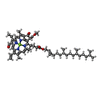
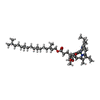
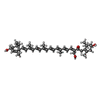
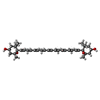
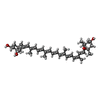

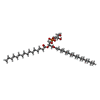
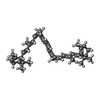
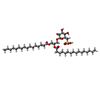
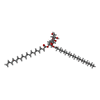
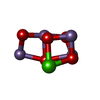


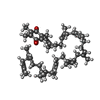
| #23: Chemical | 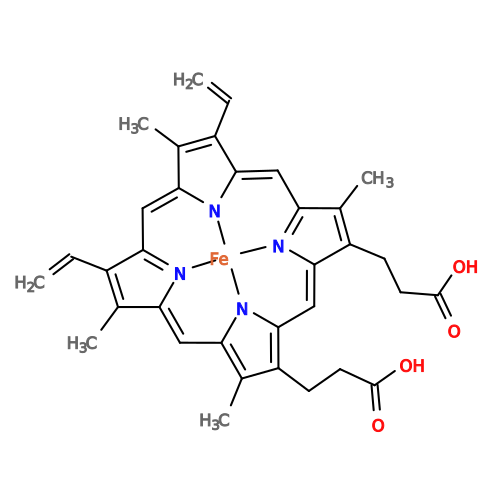 Mass: 616.487 Da / Num. of mol.: 2 / Source method: obtained synthetically / Formula: C34H32FeN4O4 / Feature type: SUBJECT OF INVESTIGATION Mass: 616.487 Da / Num. of mol.: 2 / Source method: obtained synthetically / Formula: C34H32FeN4O4 / Feature type: SUBJECT OF INVESTIGATION#24: Chemical | ChemComp-CHL /  Mass: 907.472 Da / Num. of mol.: 170 / Source method: obtained synthetically / Formula: C55H70MgN4O6 / Feature type: SUBJECT OF INVESTIGATION Mass: 907.472 Da / Num. of mol.: 170 / Source method: obtained synthetically / Formula: C55H70MgN4O6 / Feature type: SUBJECT OF INVESTIGATION#25: Chemical | ChemComp-CLA / 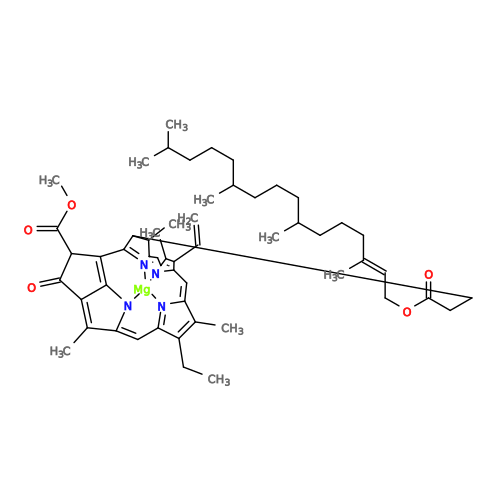 Mass: 893.489 Da / Num. of mol.: 208 / Source method: obtained synthetically / Formula: C55H72MgN4O5 / Feature type: SUBJECT OF INVESTIGATION Mass: 893.489 Da / Num. of mol.: 208 / Source method: obtained synthetically / Formula: C55H72MgN4O5 / Feature type: SUBJECT OF INVESTIGATION#26: Chemical | ChemComp-0IE / 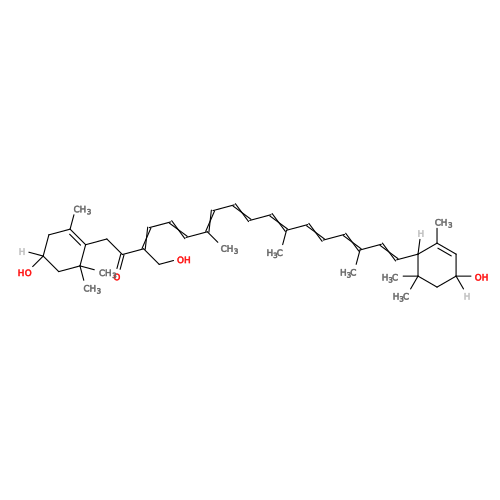 Mass: 600.870 Da / Num. of mol.: 31 / Source method: obtained synthetically / Formula: C40H56O4 / Feature type: SUBJECT OF INVESTIGATION Mass: 600.870 Da / Num. of mol.: 31 / Source method: obtained synthetically / Formula: C40H56O4 / Feature type: SUBJECT OF INVESTIGATION#27: Chemical | 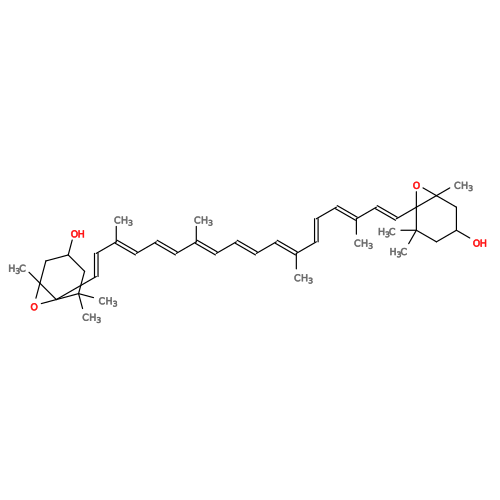 Mass: 600.870 Da / Num. of mol.: 2 / Source method: obtained synthetically / Formula: C40H56O4 / Feature type: SUBJECT OF INVESTIGATION Mass: 600.870 Da / Num. of mol.: 2 / Source method: obtained synthetically / Formula: C40H56O4 / Feature type: SUBJECT OF INVESTIGATION#28: Chemical | ChemComp-NEX / ( 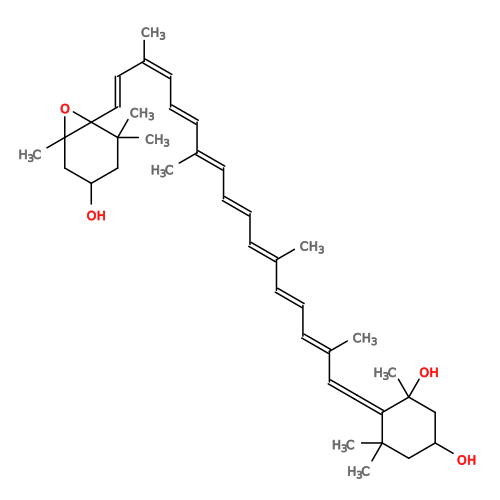 Mass: 600.870 Da / Num. of mol.: 20 / Source method: obtained synthetically / Formula: C40H56O4 / Feature type: SUBJECT OF INVESTIGATION Mass: 600.870 Da / Num. of mol.: 20 / Source method: obtained synthetically / Formula: C40H56O4 / Feature type: SUBJECT OF INVESTIGATION#29: Chemical | ChemComp-0UR / 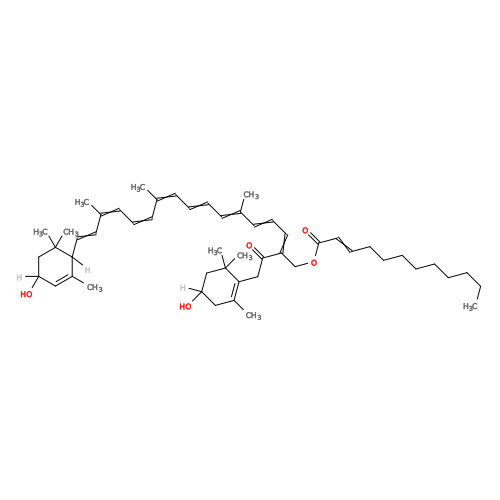 Mass: 781.157 Da / Num. of mol.: 18 / Source method: obtained synthetically / Formula: C52H76O5 / Feature type: SUBJECT OF INVESTIGATION Mass: 781.157 Da / Num. of mol.: 18 / Source method: obtained synthetically / Formula: C52H76O5 / Feature type: SUBJECT OF INVESTIGATION#30: Chemical | ChemComp-LHG / 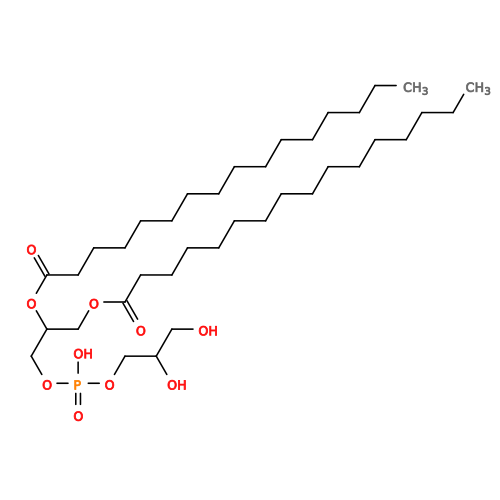 Mass: 722.970 Da / Num. of mol.: 23 / Source method: obtained synthetically / Formula: C38H75O10P / Feature type: SUBJECT OF INVESTIGATION / Comment: phospholipid*YM Mass: 722.970 Da / Num. of mol.: 23 / Source method: obtained synthetically / Formula: C38H75O10P / Feature type: SUBJECT OF INVESTIGATION / Comment: phospholipid*YM#31: Chemical | ChemComp-8CT / ( 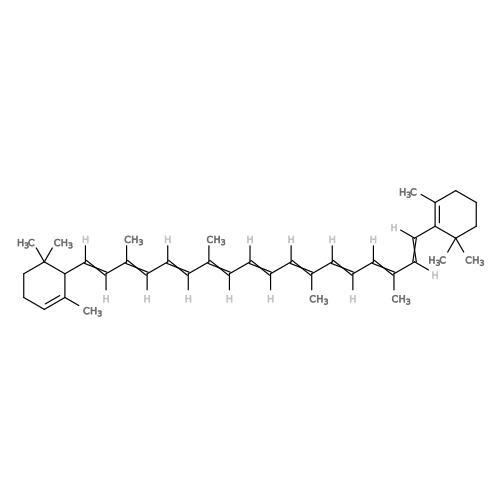 Mass: 536.873 Da / Num. of mol.: 22 / Source method: obtained synthetically / Formula: C40H56 / Feature type: SUBJECT OF INVESTIGATION Mass: 536.873 Da / Num. of mol.: 22 / Source method: obtained synthetically / Formula: C40H56 / Feature type: SUBJECT OF INVESTIGATION#32: Chemical | ChemComp-SQD / 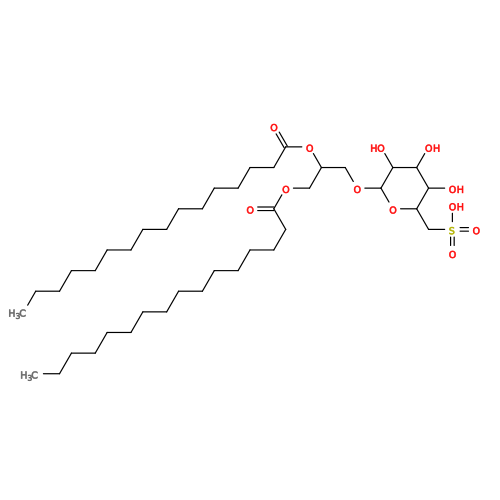 Mass: 795.116 Da / Num. of mol.: 6 / Source method: obtained synthetically / Formula: C41H78O12S / Feature type: SUBJECT OF INVESTIGATION Mass: 795.116 Da / Num. of mol.: 6 / Source method: obtained synthetically / Formula: C41H78O12S / Feature type: SUBJECT OF INVESTIGATION#33: Chemical | ChemComp-LMG / 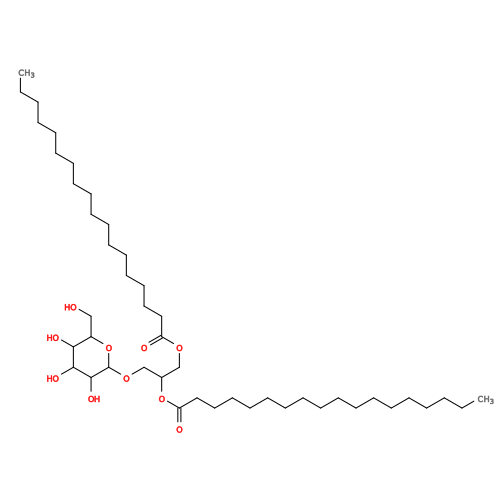 Mass: 787.158 Da / Num. of mol.: 10 / Source method: obtained synthetically / Formula: C45H86O10 / Feature type: SUBJECT OF INVESTIGATION Mass: 787.158 Da / Num. of mol.: 10 / Source method: obtained synthetically / Formula: C45H86O10 / Feature type: SUBJECT OF INVESTIGATION#34: Chemical | 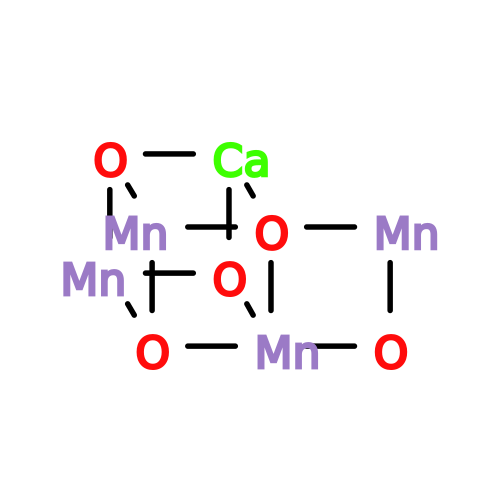 Mass: 339.827 Da / Num. of mol.: 2 / Source method: obtained synthetically / Formula: CaMn4O5 / Feature type: SUBJECT OF INVESTIGATION Mass: 339.827 Da / Num. of mol.: 2 / Source method: obtained synthetically / Formula: CaMn4O5 / Feature type: SUBJECT OF INVESTIGATION#35: Chemical | ChemComp-PHO / 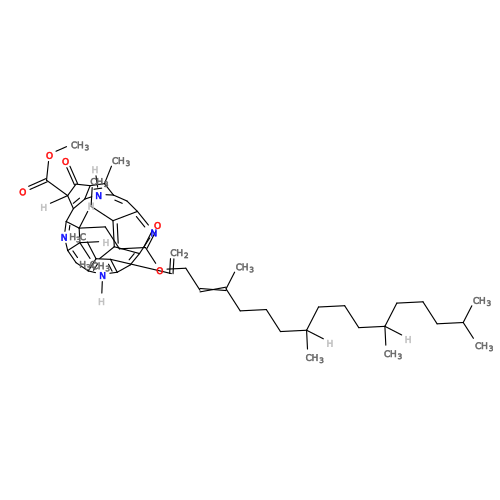 Mass: 871.200 Da / Num. of mol.: 4 / Source method: obtained synthetically / Formula: C55H74N4O5 / Feature type: SUBJECT OF INVESTIGATION Mass: 871.200 Da / Num. of mol.: 4 / Source method: obtained synthetically / Formula: C55H74N4O5 / Feature type: SUBJECT OF INVESTIGATION#36: Chemical | 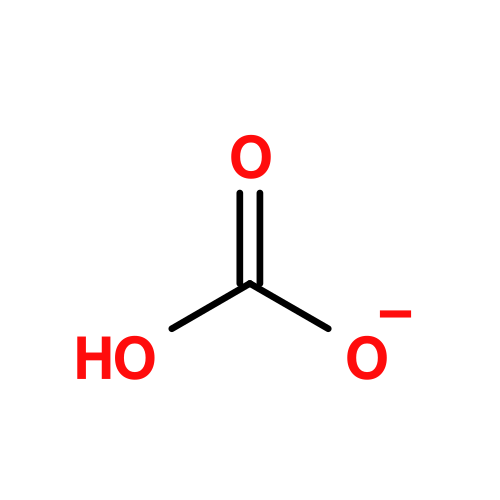 Mass: 61.017 Da / Num. of mol.: 2 / Source method: obtained synthetically / Formula: CHO3 / Feature type: SUBJECT OF INVESTIGATION / Comment: pH buffer*YM Mass: 61.017 Da / Num. of mol.: 2 / Source method: obtained synthetically / Formula: CHO3 / Feature type: SUBJECT OF INVESTIGATION / Comment: pH buffer*YM#38: Chemical | 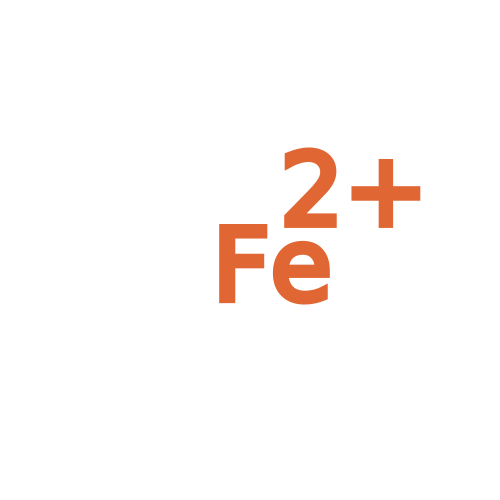 Mass: 55.845 Da / Num. of mol.: 2 / Source method: obtained synthetically / Formula: Fe / Feature type: SUBJECT OF INVESTIGATION Mass: 55.845 Da / Num. of mol.: 2 / Source method: obtained synthetically / Formula: Fe / Feature type: SUBJECT OF INVESTIGATION#39: Chemical | |
|---|