 Movie
Movie Controller

[English] 日本語
 Yorodumi
- PDB-9hwk: Structure of the Cytochrome o ubiquinol oxidase embedded in the n... -
+ Open data

- Basic information
| Entry | Database: PDB / ID: 9hwk | ||||||||||||||||||||||||||||||
|---|---|---|---|---|---|---|---|---|---|---|---|---|---|---|---|---|---|---|---|---|---|---|---|---|---|---|---|---|---|---|---|
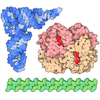
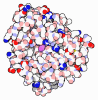
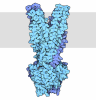
| Title | Structure of the Cytochrome o ubiquinol oxidase embedded in the nanodisc | ||||||||||||||||||||||||||||||
 Components Components | (Cytochrome bo(3) ubiquinol oxidase subunit ...) x 4 | ||||||||||||||||||||||||||||||
 Keywords Keywords | ELECTRON TRANSPORT / oxidase | ||||||||||||||||||||||||||||||
| Function / homology |  Function and homology information Function and homology informationcytochrome o ubiquinol oxidase complex / ubiquinol oxidase (H+-transporting) / cytochrome bo3 ubiquinol oxidase activity / aerobic electron transport chain / oxidoreductase activity, acting on diphenols and related substances as donors, oxygen as acceptor / cytochrome-c oxidase activity / proton transmembrane transporter activity / electron transport coupled proton transport / ATP synthesis coupled electron transport / aerobic respiration ...cytochrome o ubiquinol oxidase complex / ubiquinol oxidase (H+-transporting) / cytochrome bo3 ubiquinol oxidase activity / aerobic electron transport chain / oxidoreductase activity, acting on diphenols and related substances as donors, oxygen as acceptor / cytochrome-c oxidase activity / proton transmembrane transporter activity / electron transport coupled proton transport / ATP synthesis coupled electron transport / aerobic respiration / respiratory electron transport chain / copper ion binding / heme binding / metal ion binding / plasma membrane Similarity search - Function | ||||||||||||||||||||||||||||||
| Biological species |   Escherichia coli (E. coli) Escherichia coli (E. coli) | ||||||||||||||||||||||||||||||
| Method | ELECTRON MICROSCOPY / single particle reconstruction / cryo EM / Resolution: 2.72 Å | ||||||||||||||||||||||||||||||
 Authors Authors | Mim, C. / Zhang, Q. / Murthy, A.V. | ||||||||||||||||||||||||||||||
| Funding support |  Sweden, 1items Sweden, 1items
| ||||||||||||||||||||||||||||||
 Citation Citation | Journal: PLoS One / Year: 2026 Title: Exploration of a workflow for the classification and identification of co-purified protein complexes yields new structures and multiple MSP assembly states. Authors: Qingyang Zhang / Abhinandan Venkatesha Murthy / Carsten Mim /  Abstract: Native protein complexes have garnered interest as targets for structural dissemination. Cryogenic electron microscopy (cryo-EM) with its ability to image protein mixtures is the most promising tool ...Native protein complexes have garnered interest as targets for structural dissemination. Cryogenic electron microscopy (cryo-EM) with its ability to image protein mixtures is the most promising tool to enable structural proteomics. Additionally, image processing has evolved and can deal with conformational and compositional heterogeneity. Integrative approaches, namely mass spectrometry in conjunction with cryo-EM, have made it possible to characterize and identify complex mixtures. However, this comes at a cost of generating models and interpreting mass spectra. Here we present a modified approach that builds on publicly available software. By generating maps around 4 Å and unsupervised model building we were able to identify the most abundant proteins in our sample. This sample consisted of co-purified membrane proteins in nanodiscs. We found a novel structure and unexpected nanodisc assemblies. Our maps imply a direct interaction between membrane proteins and membrane scaffolding proteins. | ||||||||||||||||||||||||||||||
| History |
|
- Structure visualization
| Structure viewer | Molecule: MolmilJmol/JSmol |
|---|
- Downloads & links
-Download
| PDBx/mmCIF format | 9hwk.cif.gz | 553.3 KB | Display | PDBx/mmCIF format |
|---|---|---|---|---|
| PDB format | pdb9hwk.ent.gz | 361.7 KB | Display | PDB format |
| PDBx/mmJSON format | 9hwk.json.gz | Tree view | PDBx/mmJSON format | |
| Others |  Other downloads Other downloads |
-Validation report
| Arichive directory | https://data.pdbj.org/pub/pdb/validation_reports/hw/9hwkftp://data.pdbj.org/pub/pdb/validation_reports/hw/9hwk | HTTPS FTP |
|---|
-Related structure data
| Related structure data |  52451MC  9hwjC  9hwlC M: map data used to model this data C: citing same article ( |
|---|---|
| Similar structure data |


-Links
 PDBj
PDBj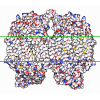
- Assembly
| Deposited unit | 
|
|---|---|
| 1 |
|
-Components
-Cytochrome bo(3) ubiquinol oxidase subunit ... , 4 types, 4 molecules FGHI
| #1: Protein | Mass: 74424.469 Da / Num. of mol.: 1 / Source method: isolated from a natural source / Source: (natural) Escherichia coli (E. coli)References: UniProt: P0ABJ0, ubiquinol oxidase (H+-transporting) |
|---|---|
| #2: Protein | Mass: 34947.203 Da / Num. of mol.: 1 / Source method: isolated from a natural source / Source: (natural) Escherichia coli (E. coli) / References: UniProt: P0ABJ2 |
| #3: Protein | Mass: 22642.566 Da / Num. of mol.: 1 / Source method: isolated from a natural source / Source: (natural) Escherichia coli (E. coli) / References: UniProt: P0ABJ4 |
| #4: Protein | Mass: 12037.402 Da / Num. of mol.: 1 / Source method: isolated from a natural source / Source: (natural) Escherichia coli (E. coli) / References: UniProt: P0ABJ7 |
-Non-polymers , 4 types, 4 molecules 
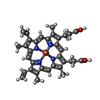

| #5: Chemical | ChemComp-HEO /  Mass: 838.854 Da / Num. of mol.: 1 / Source method: obtained synthetically / Formula: C49H58FeN4O5 / Feature type: SUBJECT OF INVESTIGATION Mass: 838.854 Da / Num. of mol.: 1 / Source method: obtained synthetically / Formula: C49H58FeN4O5 / Feature type: SUBJECT OF INVESTIGATION |
|---|---|
| #6: Chemical | ChemComp-HEM / 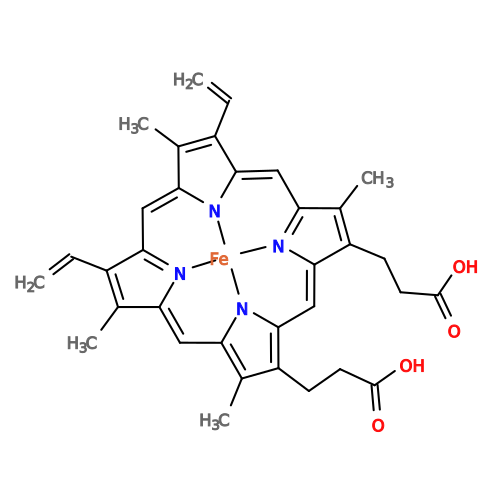 Mass: 616.487 Da / Num. of mol.: 1 / Source method: obtained synthetically / Formula: C34H32FeN4O4 / Feature type: SUBJECT OF INVESTIGATION Mass: 616.487 Da / Num. of mol.: 1 / Source method: obtained synthetically / Formula: C34H32FeN4O4 / Feature type: SUBJECT OF INVESTIGATION |
| #7: Chemical | ChemComp-CU / 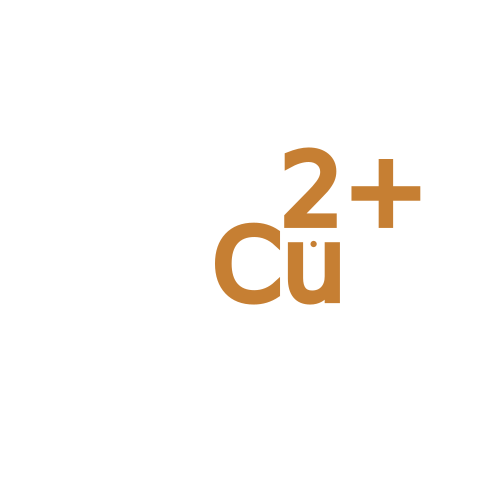 Mass: 63.546 Da / Num. of mol.: 1 / Source method: obtained synthetically / Formula: Cu / Feature type: SUBJECT OF INVESTIGATION Mass: 63.546 Da / Num. of mol.: 1 / Source method: obtained synthetically / Formula: Cu / Feature type: SUBJECT OF INVESTIGATION |
| #8: Chemical | ChemComp-ZN /  Mass: 65.409 Da / Num. of mol.: 1 / Source method: obtained synthetically / Formula: Zn / Feature type: SUBJECT OF INVESTIGATION Mass: 65.409 Da / Num. of mol.: 1 / Source method: obtained synthetically / Formula: Zn / Feature type: SUBJECT OF INVESTIGATION |
-Details
| Has ligand of interest | Y |
|---|---|
| Has protein modification | N |
-Experimental details
-Experiment
| Experiment | Method: ELECTRON MICROSCOPY |
|---|---|
| EM experiment | Aggregation state: PARTICLE / 3D reconstruction method: single particle reconstruction |
- Sample preparation
| Component | Name: Trimeric complex of ACRB transporter co-purified from E.coli in nanodisc Type: COMPLEX / Entity ID: #1-#2 / Source: NATURAL |
|---|---|
| Molecular weight | Experimental value: NO |
| Source (natural) | Organism: Escherichia coli (E. coli) |
| Buffer solution | pH: 7.5 / Details: 50mM HEPES, 150mM NaCl and 5mM EGTA |
| Specimen | Conc.: 4.6 mg/ml / Embedding applied: NO / Shadowing applied: NO / Staining applied: NO / Vitrification applied: YES |
| Specimen support | Grid material: COPPER / Grid mesh size: 300 divisions/in. / Grid type: Quantifoil R2/2 |
| Vitrification | Instrument: FEI VITROBOT MARK IV / Cryogen name: ETHANE / Details: 100% humidity, 16C |
- Electron microscopy imaging
| Experimental equipment |  Model: Titan Krios / Image courtesy: FEI Company |
|---|---|
| Microscopy | Model: TFS KRIOS |
| Electron gun | Electron source:  FIELD EMISSION GUN / Accelerating voltage: 300 kV / Illumination mode: FLOOD BEAM FIELD EMISSION GUN / Accelerating voltage: 300 kV / Illumination mode: FLOOD BEAM |
| Electron lens | Mode: BRIGHT FIELD / Nominal defocus max: 2500 nm / Nominal defocus min: 1000 nm |
| Image recording | Electron dose: 50 e/Å2 / Film or detector model: GATAN K3 BIOQUANTUM (6k x 4k) |
- Processing
| EM software |
| ||||||||||||||||||||||||
|---|---|---|---|---|---|---|---|---|---|---|---|---|---|---|---|---|---|---|---|---|---|---|---|---|---|
| CTF correction | Type: PHASE FLIPPING AND AMPLITUDE CORRECTION | ||||||||||||||||||||||||
| Particle selection | Num. of particles selected: 794072 | ||||||||||||||||||||||||
| Symmetry | Point symmetry: C1 (asymmetric) | ||||||||||||||||||||||||
| 3D reconstruction | Resolution: 2.72 Å / Resolution method: FSC 0.143 CUT-OFF / Num. of particles: 160179 / Symmetry type: POINT | ||||||||||||||||||||||||
| Atomic model building | Protocol: BACKBONE TRACE | ||||||||||||||||||||||||
| Atomic model building | PDB-ID: 2hrt Accession code: 2hrt / Source name: PDB / Type: experimental model | ||||||||||||||||||||||||
| Refine LS restraints |
|

