 Movie
Movie Controller

[English] 日本語
 Yorodumi
- PDB-9ho1: Room temperature structure of Aspartyl/Asparaginyl beta-hydroxyla... -
+ Open data

- Basic information
| Entry | Database: PDB / ID: 9ho1 | ||||||||||||||||||
|---|---|---|---|---|---|---|---|---|---|---|---|---|---|---|---|---|---|---|---|
| Title | Room temperature structure of Aspartyl/Asparaginyl beta-hydroxylase (AspH) in complex with Fe, 2-oxoglutarate, and hydroxylated Factor X derived peptide fragment, 1.5 s O2 exposure | ||||||||||||||||||
 Components Components |
| ||||||||||||||||||
 Keywords Keywords | OXIDOREDUCTASE / AspH / Aspartyl/Asparaginyl beta-hydroxylase / O2 exposure / product complex | ||||||||||||||||||
| Function / homology |  Function and homology information Function and homology informationpeptide-aspartate beta-dioxygenase / regulation of protein depolymerization / activation of store-operated calcium channel activity / regulation of cell communication by electrical coupling / junctional sarcoplasmic reticulum membrane / peptidyl-aspartic acid 3-dioxygenase activity / sarcoplasmic reticulum lumen / cortical endoplasmic reticulum / positive regulation of intracellular protein transport / coagulation factor Xa ...peptide-aspartate beta-dioxygenase / regulation of protein depolymerization / activation of store-operated calcium channel activity / regulation of cell communication by electrical coupling / junctional sarcoplasmic reticulum membrane / peptidyl-aspartic acid 3-dioxygenase activity / sarcoplasmic reticulum lumen / cortical endoplasmic reticulum / positive regulation of intracellular protein transport / coagulation factor Xa / Defective factor IX causes thrombophilia / Defective cofactor function of FVIIIa variant / Defective F9 variant does not activate FX / : / response to ATP / structural constituent of muscle / positive regulation of proteolysis / phosphatidylinositol-mediated signaling / positive regulation of calcium ion transport into cytosol / Protein hydroxylation / positive regulation of TOR signaling / Transport of gamma-carboxylated protein precursors from the endoplasmic reticulum to the Golgi apparatus / : / Gamma-carboxylation of protein precursors / detection of calcium ion / Removal of aminoterminal propeptides from gamma-carboxylated proteins / regulation of cytosolic calcium ion concentration / calcium ion homeostasis / : / regulation of release of sequestered calcium ion into cytosol by sarcoplasmic reticulum / Ion homeostasis / regulation of cardiac muscle contraction by regulation of the release of sequestered calcium ion / muscle contraction / cellular response to calcium ion / calcium channel complex / sarcoplasmic reticulum membrane / regulation of protein stability / phospholipid binding / Golgi lumen / Stimuli-sensing channels / blood coagulation / calcium ion transmembrane transport / transmembrane transporter binding / electron transfer activity / positive regulation of cell migration / endoplasmic reticulum lumen / serine-type endopeptidase activity / external side of plasma membrane / calcium ion binding / positive regulation of DNA-templated transcription / endoplasmic reticulum membrane / structural molecule activity / endoplasmic reticulum / proteolysis / : / extracellular region / plasma membrane Similarity search - Function | ||||||||||||||||||
| Biological species |  Homo sapiens (human) Homo sapiens (human) | ||||||||||||||||||
| Method |  X-RAY DIFFRACTION / FREE ELECTRON LASER / MOLECULAR REPLACEMENT / Resolution: 1.85 Å X-RAY DIFFRACTION / FREE ELECTRON LASER / MOLECULAR REPLACEMENT / Resolution: 1.85 Å | ||||||||||||||||||
 Authors Authors | de Munnik, M. / Rabe, P. / Brewitz, L. / Brasnett, A. / Zhou, T. / Schofield, C.J. / Kern, J.F. | ||||||||||||||||||
| Funding support |  United Kingdom, United Kingdom,  United States, 5items United States, 5items
| ||||||||||||||||||
 Citation Citation | Journal: Nat Commun / Year: 2026 Title: Structural basis of the promiscuity of the unusual Fe(II) and 2-oxoglutarate dependent human aspartate/asparagine-beta-hydroxylase. Authors: de Munnik, M. / Brasnett, A. / Zhou, T. / Myers, W. / Wang, Y. / Chatterjee, K. / Tumber, A. / Marshall, S.A. / Simon, P.S. / Aller, P. / Shilova, A. / Axford, D. / Makita, H. / Paley, D.W. ...Authors: de Munnik, M. / Brasnett, A. / Zhou, T. / Myers, W. / Wang, Y. / Chatterjee, K. / Tumber, A. / Marshall, S.A. / Simon, P.S. / Aller, P. / Shilova, A. / Axford, D. / Makita, H. / Paley, D.W. / Tiwari, V. / Stead, A.T. / Dehe, S. / Sanchez, H. / Rosenberg, D.J. / Alonso-Mori, R. / Bhowmick, A. / Yano, J. / Yachandra, V.K. / Park, J. / Park, S. / Orville, A.M. / Brewitz, L. / Kern, J.F. / Schofield, C.J. / Rabe, P. | ||||||||||||||||||
| History |
|
- Structure visualization
| Structure viewer | Molecule: MolmilJmol/JSmol |
|---|
- Downloads & links
-Download
| PDBx/mmCIF format | 9ho1.cif.gz | 237.6 KB | Display | PDBx/mmCIF format |
|---|---|---|---|---|
| PDB format | pdb9ho1.ent.gz | 155.3 KB | Display | PDB format |
| PDBx/mmJSON format | 9ho1.json.gz | Tree view | PDBx/mmJSON format | |
| Others |  Other downloads Other downloads |
-Validation report
| Arichive directory | https://data.pdbj.org/pub/pdb/validation_reports/ho/9ho1ftp://data.pdbj.org/pub/pdb/validation_reports/ho/9ho1 | HTTPS FTP |
|---|
-Related structure data
| Related structure data |  9fvuC  9fvvC  9fvwC  9fvxC  9fvyC  9fvzC  9fw0C  9hnzC  9ho0C  9ho2C  9ho3C C: citing same article ( |
|---|---|
| Similar structure data |
-Links
 PDBj
PDBj
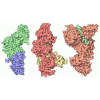
- Assembly
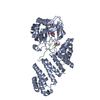
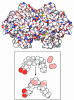
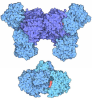
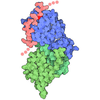
| Deposited unit | 
| ||||||||||||
|---|---|---|---|---|---|---|---|---|---|---|---|---|---|
| 1 |
| ||||||||||||
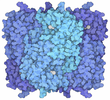
| Unit cell |
|
-Components
-Protein / Protein/peptide , 2 types, 2 molecules AB
| #1: Protein | Mass: 49405.336 Da / Num. of mol.: 1 Source method: isolated from a genetically manipulated source Source: (gene. exp.) Homo sapiens (human) / Gene: ASPH, BAH / Production host:   Escherichia coli BL21(DE3) (bacteria) Escherichia coli BL21(DE3) (bacteria)References: UniProt: Q12797, peptide-aspartate beta-dioxygenase |
|---|---|
| #2: Protein/peptide | Mass: 4206.383 Da / Num. of mol.: 1 / Mutation: C90S, C95S, C112S, C121S / Source method: obtained synthetically / Source: (synth.) Homo sapiens (human) / References: UniProt: P00742 |
-Non-polymers , 4 types, 172 molecules 


| #3: Chemical | ChemComp-AKG / 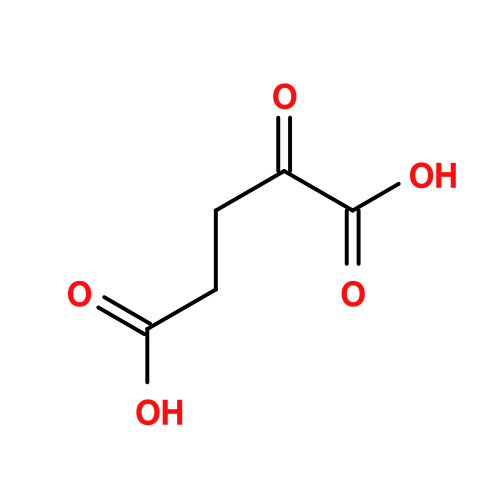 Mass: 146.098 Da / Num. of mol.: 1 / Source method: obtained synthetically / Formula: C5H6O5 Mass: 146.098 Da / Num. of mol.: 1 / Source method: obtained synthetically / Formula: C5H6O5 |
|---|---|
| #4: Chemical | ChemComp-SIN / 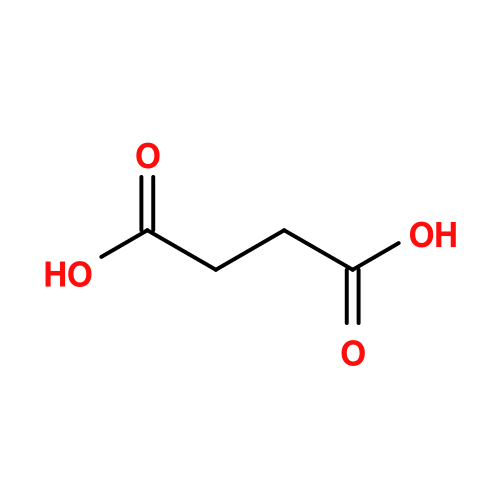 Mass: 118.088 Da / Num. of mol.: 1 / Source method: obtained synthetically / Formula: C4H6O4 Mass: 118.088 Da / Num. of mol.: 1 / Source method: obtained synthetically / Formula: C4H6O4 |
| #5: Chemical | ChemComp-FE /  Mass: 55.845 Da / Num. of mol.: 1 / Source method: obtained synthetically / Formula: Fe Mass: 55.845 Da / Num. of mol.: 1 / Source method: obtained synthetically / Formula: Fe |
| #6: Water | ChemComp-HOH / Mass: 18.015 Da / Num. of mol.: 169 / Source method: isolated from a natural source / Formula: H2O |
-Details
| Has ligand of interest | Y |
|---|---|
| Has protein modification | Y |
-Experimental details
-Experiment
| Experiment | Method: X-RAY DIFFRACTION / Number of used crystals: 1 |
|---|
- Sample preparation
| Crystal | Density Matthews: 2.79 Å3/Da / Density % sol: 55.98 % Description: Needle morphology, average distribution ~3 um x 3 um x 80 um |
|---|---|
| Crystal grow | Temperature: 278 K / Method: batch mode / pH: 7.5 Details: 16% PEG3350, 0.1M Bis Tris propane pH 7.5, 0.1 M KSCN |
-Data collection
| Diffraction | Mean temperature: 293 K / Ambient temp details: room temperature / Serial crystal experiment: Y |
|---|---|
| Diffraction source | Source: FREE ELECTRON LASER / Site: SLAC LCLS / Beamline: MFX / Wavelength: 1.266025 Å |
| Detector | Type: RAYONIX MX340-HS / Detector: CCD / Date: Jun 3, 2024 |
| Radiation | Protocol: SINGLE WAVELENGTH / Monochromatic (M) / Laue (L): M / Scattering type: x-ray |
| Radiation wavelength | Wavelength: 1.266025 Å / Relative weight: 1 |
| Reflection | Resolution: 1.85→23.96 Å / Num. obs: 49970 / % possible obs: 99.91 % / Redundancy: 43.92 % / Biso Wilson estimate: 33.87 Å2 / CC1/2: 0.977 / R split: 0.156 / Net I/σ(I): 5.01 |
| Reflection shell | Resolution: 1.85→1.88 Å / Redundancy: 10.1 % / Mean I/σ(I) obs: 0.794 / Num. unique obs: 2485 / CC1/2: 0.373 / R split: 0.868 / % possible all: 99.68 |
| Serial crystallography measurement | Pulse photon energy: 1.8 keV / XFEL pulse repetition rate: 30 Hz |
| Serial crystallography sample delivery | Description: ADE tape drive / Method: injection |
| Serial crystallography sample delivery injection | Flow rate: 6 µL/min |
- Processing
| Software |
| |||||||||||||||||||||||||||||||||||||||||||||||||||||||||||||||||||||||||||||||||||||||||||||||||||||||||
|---|---|---|---|---|---|---|---|---|---|---|---|---|---|---|---|---|---|---|---|---|---|---|---|---|---|---|---|---|---|---|---|---|---|---|---|---|---|---|---|---|---|---|---|---|---|---|---|---|---|---|---|---|---|---|---|---|---|---|---|---|---|---|---|---|---|---|---|---|---|---|---|---|---|---|---|---|---|---|---|---|---|---|---|---|---|---|---|---|---|---|---|---|---|---|---|---|---|---|---|---|---|---|---|---|---|---|
| Refinement | Method to determine structure: MOLECULAR REPLACEMENT / Resolution: 1.85→23.96 Å / SU ML: 0.2853 / Cross valid method: FREE R-VALUE / σ(F): 1.33 / Phase error: 26.7967 Stereochemistry target values: GeoStd + Monomer Library + CDL v1.2
| |||||||||||||||||||||||||||||||||||||||||||||||||||||||||||||||||||||||||||||||||||||||||||||||||||||||||
| Solvent computation | Shrinkage radii: 0.9 Å / VDW probe radii: 1.1 Å / Solvent model: FLAT BULK SOLVENT MODEL | |||||||||||||||||||||||||||||||||||||||||||||||||||||||||||||||||||||||||||||||||||||||||||||||||||||||||
| Displacement parameters | Biso mean: 47.25 Å2 | |||||||||||||||||||||||||||||||||||||||||||||||||||||||||||||||||||||||||||||||||||||||||||||||||||||||||
| Refinement step | Cycle: LAST / Resolution: 1.85→23.96 Å
| |||||||||||||||||||||||||||||||||||||||||||||||||||||||||||||||||||||||||||||||||||||||||||||||||||||||||
| Refine LS restraints |
| |||||||||||||||||||||||||||||||||||||||||||||||||||||||||||||||||||||||||||||||||||||||||||||||||||||||||
| LS refinement shell |
| |||||||||||||||||||||||||||||||||||||||||||||||||||||||||||||||||||||||||||||||||||||||||||||||||||||||||
| Refinement TLS params. | Method: refined / Origin x: 9.800882563915 Å / Origin y: 20.279023473484 Å / Origin z: 30.772225871839 Å
| |||||||||||||||||||||||||||||||||||||||||||||||||||||||||||||||||||||||||||||||||||||||||||||||||||||||||
| Refinement TLS group | Selection details: all |
