 Movie
Movie Controller

[English] 日本語
 Yorodumi
- PDB-9gvg: P116 from Mycoplasma pneumoniae in complex with mild growth suppr... -
+ Open data

- Basic information
| Entry | Database: PDB / ID: 9gvg | |||||||||||||||||||||
|---|---|---|---|---|---|---|---|---|---|---|---|---|---|---|---|---|---|---|---|---|---|---|
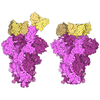
| Title | P116 from Mycoplasma pneumoniae in complex with mild growth suppressor monoclonal antibody | |||||||||||||||||||||
 Components Components |
| |||||||||||||||||||||
 Keywords Keywords | PROTEIN TRANSPORT / immunodominant / cholesterol / essential lipids / transporter / lipid binder / monoclonal antibody | |||||||||||||||||||||
| Function / homology | : / : / P116-like protein / membrane / Uncharacterized protein MG075 homolog Function and homology information Function and homology information | |||||||||||||||||||||
| Biological species |   Mus musculus (house mouse) Mus musculus (house mouse) Mycoplasmoides pneumoniae M129 (bacteria) Mycoplasmoides pneumoniae M129 (bacteria) | |||||||||||||||||||||
| Method | ELECTRON MICROSCOPY / single particle reconstruction / cryo EM / Resolution: 5.06 Å | |||||||||||||||||||||
 Authors Authors | Vizarraga, D. / Marcos Silva, M. / Martin Romero, J. / Guerra, P. / Fita, I. / Pinyol, J. | |||||||||||||||||||||
| Funding support |  Spain, 4items Spain, 4items
| |||||||||||||||||||||
 Citation Citation | Journal: Nat Commun / Year: 2025 Title: Sources of essential lipids for Mycoplasma pneumoniae via P116 to target liver and atherosclerotic lesions. Authors: David Vizarraga / Marina Marcos / Noemi Rotllan / Jesús Martín / David Santos / Mercedes Camacho / Begoña Soto / Lorena Velasco-Reniu / Pablo Guerra / Félix Pareja / María Collantes / ...Authors: David Vizarraga / Marina Marcos / Noemi Rotllan / Jesús Martín / David Santos / Mercedes Camacho / Begoña Soto / Lorena Velasco-Reniu / Pablo Guerra / Félix Pareja / María Collantes / Wanlu Wu / Irene Rodríguez-Arce / Luis Serrano / Jaume Piñol / Ignacio Fita / Joan Carles Escolà-Gil / Abstract: Mycoplasma pneumoniae (MPN) is a bacterial pathogen that primarily causes atypical pneumonia. It cannot synthesize certain essential lipids and therefore relies on the host for their acquisition to ...Mycoplasma pneumoniae (MPN) is a bacterial pathogen that primarily causes atypical pneumonia. It cannot synthesize certain essential lipids and therefore relies on the host for their acquisition to survive. MPN has been detected in increased amounts within ruptured atherosclerotic plaques. In this work, we show that the protein P116 facilitates cholesterol acquisition from LDL, HDL and various cell types. Targeting P116's C-terminal domain with a monoclonal antibody inhibits cholesterol acquisition and bacterial growth in vitro. Phase contrast epifluorescence microscopy of human arteries reveals that this antibody blocks MPN binding to atherosclerotic lesions ex vivo. Additionally, an MPN chassis injected into hyperlipidemic female mice localizes to the liver and atherosclerotic plaques. Here, we report that P116 plays a role in extracting essential lipids from lipoproteins and host cells and regulates MPN localization to atheromatous plaques. The study highlights MPN's potential as a tool for targeting atherosclerotic lesions and fatty liver. | |||||||||||||||||||||
| History |
|
- Structure visualization
| Structure viewer | Molecule: MolmilJmol/JSmol |
|---|
- Downloads & links
-Download
| PDBx/mmCIF format | 9gvg.cif.gz | 271.2 KB | Display | PDBx/mmCIF format |
|---|---|---|---|---|
| PDB format | pdb9gvg.ent.gz | Display | PDB format | |
| PDBx/mmJSON format | 9gvg.json.gz | Tree view | PDBx/mmJSON format | |
| Others |  Other downloads Other downloads |
-Validation report
| Arichive directory | https://data.pdbj.org/pub/pdb/validation_reports/gv/9gvgftp://data.pdbj.org/pub/pdb/validation_reports/gv/9gvg | HTTPS FTP |
|---|
-Related structure data
| Related structure data |  51635MC M: map data used to model this data C: citing same article ( |
|---|---|
| Similar structure data |
-Links
 PDBj
PDBj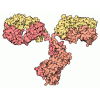
- Assembly
| Deposited unit | 
|
|---|---|
| 1 |
|
-Components
| #1: Antibody | Mass: 22809.572 Da / Num. of mol.: 1 Source method: isolated from a genetically manipulated source Source: (gene. exp.) Mus musculus (house mouse) / Production host: Mus musculus (house mouse) | ||
|---|---|---|---|
| #2: Antibody | Mass: 23367.701 Da / Num. of mol.: 1 Source method: isolated from a genetically manipulated source Source: (gene. exp.) Mus musculus (house mouse) / Production host: Mus musculus (house mouse) | ||
| #3: Protein | Mass: 91165.898 Da / Num. of mol.: 2 Source method: isolated from a genetically manipulated source Source: (gene. exp.) Mycoplasmoides pneumoniae M129 (bacteria)Gene: MPN_213, G07_orf1030, MP618 / Production host:  Escherichia coli BL21(DE3) (bacteria) / References: UniProt: P75556 Escherichia coli BL21(DE3) (bacteria) / References: UniProt: P75556Has protein modification | Y | |
-Experimental details
-Experiment
| Experiment | Method: ELECTRON MICROSCOPY |
|---|---|
| EM experiment | Aggregation state: PARTICLE / 3D reconstruction method: single particle reconstruction |
- Sample preparation
| Component | Name: Binary complex of mild growth suppressor monoclonal antibody with P116 protein from Mycoplasma pneumoniae. Type: COMPLEX / Entity ID: all / Source: RECOMBINANT | |||||||||||||||
|---|---|---|---|---|---|---|---|---|---|---|---|---|---|---|---|---|
| Molecular weight | Experimental value: NO | |||||||||||||||
| Source (natural) | Organism: Mycoplasmoides pneumoniae M129 (bacteria) | |||||||||||||||
| Source (recombinant) | Organism: Escherichia coli BL21(DE3) (bacteria) | |||||||||||||||
| Buffer solution | pH: 7.4 | |||||||||||||||
| Buffer component |
| |||||||||||||||
| Specimen | Conc.: 0.25 mg/ml / Embedding applied: NO / Shadowing applied: NO / Staining applied: NO / Vitrification applied: YES | |||||||||||||||
| Vitrification | Cryogen name: ETHANE |
- Electron microscopy imaging
| Microscopy | Model: TFS GLACIOS |
|---|---|
| Electron gun | Electron source:  FIELD EMISSION GUN / Accelerating voltage: 200 kV / Illumination mode: FLOOD BEAM FIELD EMISSION GUN / Accelerating voltage: 200 kV / Illumination mode: FLOOD BEAM |
| Electron lens | Mode: BRIGHT FIELD / Nominal defocus max: 2500 nm / Nominal defocus min: 1000 nm |
| Image recording | Electron dose: 7.24 e/Å2 / Film or detector model: FEI FALCON IV (4k x 4k) |
- Processing
| EM software |
| ||||||||||||||||||||||||||||||||||||
|---|---|---|---|---|---|---|---|---|---|---|---|---|---|---|---|---|---|---|---|---|---|---|---|---|---|---|---|---|---|---|---|---|---|---|---|---|---|
| CTF correction | Type: PHASE FLIPPING AND AMPLITUDE CORRECTION | ||||||||||||||||||||||||||||||||||||
| Symmetry | Point symmetry: C1 (asymmetric) | ||||||||||||||||||||||||||||||||||||
| 3D reconstruction | Resolution: 5.06 Å / Resolution method: FSC 0.143 CUT-OFF / Num. of particles: 412947 / Symmetry type: POINT | ||||||||||||||||||||||||||||||||||||
| Atomic model building | Protocol: AB INITIO MODEL | ||||||||||||||||||||||||||||||||||||
| Atomic model building | PDB-ID: 8A9A Pdb chain-ID: A / Accession code: 8A9A / Source name: PDB / Type: experimental model | ||||||||||||||||||||||||||||||||||||
| Refine LS restraints |
|

