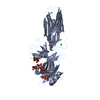
ムービー
ムービー コントローラー


+ データを開く

- 基本情報
基本情報
| 登録情報 | データベース: PDB / ID: 9cx9 | |||||||||||||||||||||||||||||||||||||||||||||||||||||||||||||||||||||
|---|---|---|---|---|---|---|---|---|---|---|---|---|---|---|---|---|---|---|---|---|---|---|---|---|---|---|---|---|---|---|---|---|---|---|---|---|---|---|---|---|---|---|---|---|---|---|---|---|---|---|---|---|---|---|---|---|---|---|---|---|---|---|---|---|---|---|---|---|---|---|
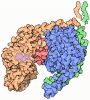
| タイトル | Structure of SH3 domain of Src in complex with beta-arrestin 1 | |||||||||||||||||||||||||||||||||||||||||||||||||||||||||||||||||||||
 要素 要素 |
| |||||||||||||||||||||||||||||||||||||||||||||||||||||||||||||||||||||
 キーワード キーワード | SIGNALING PROTEIN / GPCR signaling / arrestin / Src / SH3 | |||||||||||||||||||||||||||||||||||||||||||||||||||||||||||||||||||||
| 機能・相同性 |  機能・相同性情報 機能・相同性情報V2 vasopressin receptor binding / alpha-1A adrenergic receptor binding / follicle-stimulating hormone receptor binding / TGFBR3 regulates TGF-beta signaling / G alpha (s) signalling events / sensory perception of touch / follicle-stimulating hormone signaling pathway / alpha-1B adrenergic receptor binding / renal water retention / Defective AVP does not bind AVPR2 and causes neurohypophyseal diabetes insipidus (NDI) ...V2 vasopressin receptor binding / alpha-1A adrenergic receptor binding / follicle-stimulating hormone receptor binding / TGFBR3 regulates TGF-beta signaling / G alpha (s) signalling events / sensory perception of touch / follicle-stimulating hormone signaling pathway / alpha-1B adrenergic receptor binding / renal water retention / Defective AVP does not bind AVPR2 and causes neurohypophyseal diabetes insipidus (NDI) / protein phosphorylated amino acid binding / Vasopressin-like receptors / regulation of systemic arterial blood pressure by vasopressin / Lysosome Vesicle Biogenesis / vasopressin receptor activity / renal water absorption / Ub-specific processing proteases / regulation of inositol trisphosphate biosynthetic process / AP-2 adaptor complex binding / angiotensin receptor binding / MAP2K and MAPK activation / Golgi Associated Vesicle Biogenesis / Signaling by ERBB2 / Nuclear signaling by ERBB4 / Signaling by SCF-KIT / Regulation of KIT signaling / Signaling by EGFR / GAB1 signalosome / Regulation of gap junction activity / FCGR activation / PECAM1 interactions / Co-stimulation by CD28 / Co-inhibition by CTLA4 / EPHA-mediated growth cone collapse / Ephrin signaling / G alpha (i) signalling events / GP1b-IX-V activation signalling / Thrombin signalling through proteinase activated receptors (PARs) / VEGFR2 mediated cell proliferation / RET signaling / Receptor Mediated Mitophagy / ADP signalling through P2Y purinoceptor 1 / RAF activation / PIP3 activates AKT signaling / EPH-ephrin mediated repulsion of cells / PI5P, PP2A and IER3 Regulate PI3K/AKT Signaling / : / Downstream signal transduction / Downregulation of ERBB4 signaling / Cyclin D associated events in G1 / Regulation of RUNX3 expression and activity / Degradation of CDH1 / MAP2K and MAPK activation / hemostasis / Integrin signaling / GRB2:SOS provides linkage to MAPK signaling for Integrins / : / MET activates PTK2 signaling / Extra-nuclear estrogen signaling / EPHB-mediated forward signaling / p130Cas linkage to MAPK signaling for integrins / VEGFA-VEGFR2 Pathway / Cargo recognition for clathrin-mediated endocytosis / telencephalon development / Clathrin-mediated endocytosis / clathrin-cargo adaptor activity / negative regulation of interleukin-8 production / connexin binding / desensitization of G protein-coupled receptor signaling pathway / regulation of G protein-coupled receptor signaling pathway / arrestin family protein binding / G protein-coupled receptor internalization / mitogen-activated protein kinase kinase binding / sensory perception / Thrombin signalling through proteinase activated receptors (PARs) / clathrin binding / response to morphine / stress fiber assembly / positive regulation of Rho protein signal transduction / negative regulation of intrinsic apoptotic signaling pathway / positive regulation of systemic arterial blood pressure / progesterone receptor signaling pathway / negative regulation of interleukin-6 production / pseudopodium / positive regulation of intracellular signal transduction / positive regulation of receptor internalization / positive regulation of vasoconstriction / phototransduction / negative regulation of Notch signaling pathway / immune system process / endocytic vesicle / cysteine-type endopeptidase inhibitor activity / activation of adenylate cyclase activity / cellular response to hormone stimulus / insulin-like growth factor receptor binding / clathrin-coated pit / response to cytokine / negative regulation of protein ubiquitination / positive regulation of protein ubiquitination / nuclear estrogen receptor binding 類似検索 - 分子機能 | |||||||||||||||||||||||||||||||||||||||||||||||||||||||||||||||||||||
| 生物種 |   Mus musculus (ハツカネズミ) Mus musculus (ハツカネズミ) Rattus norvegicus (ドブネズミ) Rattus norvegicus (ドブネズミ)  Gallus gallus (ニワトリ) Gallus gallus (ニワトリ) Homo sapiens (ヒト) Homo sapiens (ヒト) | |||||||||||||||||||||||||||||||||||||||||||||||||||||||||||||||||||||
| 手法 | 電子顕微鏡法 / 単粒子再構成法 / クライオ電子顕微鏡法 / 解像度: 3.34 Å | |||||||||||||||||||||||||||||||||||||||||||||||||||||||||||||||||||||
 データ登録者 データ登録者 | Pakharukova, N. / Bansia, H. / Lefkowitz, R.J. / des Georges, A. | |||||||||||||||||||||||||||||||||||||||||||||||||||||||||||||||||||||
| 資金援助 |  米国, European Union, 米国, European Union,  フランス, 5件 フランス, 5件
| |||||||||||||||||||||||||||||||||||||||||||||||||||||||||||||||||||||
 引用 引用 | ジャーナル: Nat Commun / 年: 2026 タイトル: Mechanism of beta-arrestin 1 mediated Src activation via Src SH3 domain revealed by cryo-electron microscopy. 著者: Natalia Pakharukova / Brittany N Thomas / Harsh Bansia / Linus Li / Dana K Bassford / Rinat R Abzalimov / Jihee Kim / Alem W Kahsai / Biswaranjan Pani / Kunhong Xiao / Roni Ochakovski / Shibo ...著者: Natalia Pakharukova / Brittany N Thomas / Harsh Bansia / Linus Li / Dana K Bassford / Rinat R Abzalimov / Jihee Kim / Alem W Kahsai / Biswaranjan Pani / Kunhong Xiao / Roni Ochakovski / Shibo Liu / Xingdong Zhang / Seungkirl Ahn / Amedee des Georges / Robert J Lefkowitz / 要旨: Beta-arrestins (βarrs) are key regulators and transducers of G-protein coupled receptor signaling; however, little is known of how βarrs communicate with their downstream effectors. Here, we ...Beta-arrestins (βarrs) are key regulators and transducers of G-protein coupled receptor signaling; however, little is known of how βarrs communicate with their downstream effectors. Here, we delineate structural mechanisms underlying βarr-mediated signal transduction. Using cryo-electron microscopy, we elucidate how βarr1 recruits and activates the non-receptor tyrosine kinase Src, a well-established signaling partner of βarrs. βarr1 engages Src SH3 through two distinct sites, each employing a different recognition mechanism: a polyproline motif in the N-domain and a non-proline-based interaction in the central crest region. At both sites βarr1 interacts with the aromatic surface of SH3, disrupting the autoinhibited conformation of Src and directly triggering its allosteric activation. This structural evidence establishes βarr1 as an active regulatory protein rather than a passive scaffold and suggests a potentially general mechanism for βarr-mediated signaling across diverse effectors. #1: ジャーナル: bioRxiv / 年: 2025 タイトル: Mechanism of beta-arrestin 1 mediated Src activation via Src SH3 domain revealed by cryo-electron microscopy. 著者: Natalia Pakharukova / Brittany N Thomas / Harsh Bansia / Linus Li / Dana K Bassford / Rinat R Abzalimov / Jihee Kim / Alem W Kahsai / Biswaranjan Pani / Kunhong Xiao / Roni Ochakovski / Shibo ...著者: Natalia Pakharukova / Brittany N Thomas / Harsh Bansia / Linus Li / Dana K Bassford / Rinat R Abzalimov / Jihee Kim / Alem W Kahsai / Biswaranjan Pani / Kunhong Xiao / Roni Ochakovski / Shibo Liu / Xingdong Zhang / Seungkirl Ahn / Amedee des Georges / Robert J Lefkowitz / 要旨: Beta-arrestins (βarrs) are key regulators and transducers of G-protein coupled receptor signaling; however, little is known of how βarrs communicate with their downstream effectors. Here, we report ...Beta-arrestins (βarrs) are key regulators and transducers of G-protein coupled receptor signaling; however, little is known of how βarrs communicate with their downstream effectors. Here, we report the first structural insights into the fundamental mechanisms driving βarr-mediated signal transduction. Using cryo-electron microscopy, we elucidate how βarr1 recruits and activates the non-receptor tyrosine kinase Src, the first identified signaling partner of βarrs. βarr1 engages Src SH3 through two distinct sites, each employing a different recognition mechanism: a polyproline motif in the N-domain and a non-proline-based interaction in the central crest region. At both sites βarr1 interacts with the aromatic surface of SH3, disrupting the autoinhibited conformation of Src and directly triggering its allosteric activation. This structural evidence establishes βarr1 as an active regulatory protein rather than a passive scaffold and suggests a potentially general mechanism for βarr-mediated signaling across diverse effectors. | |||||||||||||||||||||||||||||||||||||||||||||||||||||||||||||||||||||
| 履歴 |
|
- 構造の表示
構造の表示
| 構造ビューア | 分子: MolmilJmol/JSmol |
|---|
- ダウンロードとリンク
-ダウンロード
| PDBx/mmCIF形式 | 9cx9.cif.gz | 127.2 KB | 表示 | PDBx/mmCIF形式 |
|---|---|---|---|---|
| PDB形式 | pdb9cx9.ent.gz | 90.6 KB | 表示 | PDB形式 |
| PDBx/mmJSON形式 | 9cx9.json.gz | ツリー表示 | PDBx/mmJSON形式 | |
| その他 |  その他のダウンロード その他のダウンロード |
-検証レポート
| アーカイブディレクトリ | https://data.pdbj.org/pub/pdb/validation_reports/cx/9cx9ftp://data.pdbj.org/pub/pdb/validation_reports/cx/9cx9 | HTTPS FTP |
|---|
-関連構造データ


-リンク
 PDBj
PDBj
- 集合体
集合体
| 登録構造単位 | 
|
|---|---|
| 1 |
|
-要素
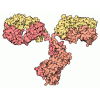
| #1: 抗体 | 分子量: 25512.354 Da / 分子数: 1 / 由来タイプ: 組換発現 / 由来: (組換発現) Mus musculus (ハツカネズミ) / 発現宿主:   Escherichia coli (大腸菌) Escherichia coli (大腸菌) |
|---|---|
| #2: 抗体 | 分子量: 23435.064 Da / 分子数: 1 / 由来タイプ: 組換発現 / 由来: (組換発現) Mus musculus (ハツカネズミ) / 発現宿主: Escherichia coli (大腸菌) |
| #3: タンパク質・ペプチド | 分子量: 3550.936 Da / 分子数: 1 / Fragment: UNP residues 343-371 / 由来タイプ: 合成 詳細: Synthetic phosphopeptide mimicking the C-tail of vasopressin 2 receptor 由来: (合成) Homo sapiens (ヒト) / 参照: UniProt: P30518 |
| #4: タンパク質 | 分子量: 44049.160 Da / 分子数: 1 Mutation: C59V, E92C, C125S, C140L, C150V, C242V, C251V, C269S 由来タイプ: 組換発現 / 由来: (組換発現) Rattus norvegicus (ドブネズミ) / 遺伝子: Arrb1発現宿主: Escherichia coli 'BL21-Gold(DE3)pLysS AG' (大腸菌)参照: UniProt: P29066 |
| #5: タンパク質 | 分子量: 9756.567 Da / 分子数: 1 / Mutation: R95C / 由来タイプ: 組換発現 / 由来: (組換発現) Gallus gallus (ニワトリ) / 遺伝子: SRC発現宿主: Escherichia coli 'BL21-Gold(DE3)pLysS AG' (大腸菌)参照: UniProt: P00523, non-specific protein-tyrosine kinase |
| 研究の焦点であるリガンドがあるか | N |
| Has protein modification | Y |
-実験情報
-実験
| 実験 | 手法: 電子顕微鏡法 |
|---|---|
| EM実験 | 試料の集合状態: PARTICLE / 3次元再構成法: 単粒子再構成法 |
- 試料調製
試料調製
| 構成要素 | 名称: Beta-arrestin 1 bound to a G protein-coupled receptor phosphopeptide and antibody fragment Fab30 in complex with SH3 domain of Src タイプ: COMPLEX / Entity ID: all / 由来: RECOMBINANT |
|---|---|
| 分子量 | 実験値: NO |
| 由来(天然) | 生物種: Rattus norvegicus (ドブネズミ) |
| 由来(組換発現) | 生物種: Escherichia coli (大腸菌) |
| 緩衝液 | pH: 7.5 |
| 試料 | 濃度: 8 mg/ml / 包埋: NO / シャドウイング: NO / 染色: NO / 凍結: YES |
| 急速凍結 | 装置: FEI VITROBOT MARK IV / 凍結剤: ETHANE / 湿度: 100 % / 凍結前の試料温度: 277 K |
- 電子顕微鏡撮影
| 実験機器 |  モデル: Titan Krios / 画像提供: FEI Company |
|---|---|
| 顕微鏡 | モデル: TFS KRIOS |
| 電子銃 | 電子線源:  FIELD EMISSION GUN / 加速電圧: 300 kV / 照射モード: FLOOD BEAM FIELD EMISSION GUN / 加速電圧: 300 kV / 照射モード: FLOOD BEAM |
| 電子レンズ | モード: BRIGHT FIELD / 最大 デフォーカス(公称値): 2400 nm / 最小 デフォーカス(公称値): 800 nm |
| 撮影 | 電子線照射量: 53.8 e/Å2 / フィルム・検出器のモデル: GATAN K3 (6k x 4k) |
- 解析
解析
| EMソフトウェア |
| ||||||||||||||||||||||||||||||||||||
|---|---|---|---|---|---|---|---|---|---|---|---|---|---|---|---|---|---|---|---|---|---|---|---|---|---|---|---|---|---|---|---|---|---|---|---|---|---|
| CTF補正 | タイプ: PHASE FLIPPING AND AMPLITUDE CORRECTION | ||||||||||||||||||||||||||||||||||||
| 3次元再構成 | 解像度: 3.34 Å / 解像度の算出法: FSC 0.143 CUT-OFF / 粒子像の数: 345529 / 対称性のタイプ: POINT | ||||||||||||||||||||||||||||||||||||
| 原子モデル構築 | 3D fitting-ID: 1 / Source name: PDB / タイプ: experimental model
| ||||||||||||||||||||||||||||||||||||
| 拘束条件 |
|