 Movie
Movie Controller


+ Open data

- Basic information
| Entry | Database: PDB / ID: 6skf | |||||||||||||||||||||||||||||||||||||||||||||||||||||||||||||||||||||||||||||||||||||||||||||||||||||||||||||||
|---|---|---|---|---|---|---|---|---|---|---|---|---|---|---|---|---|---|---|---|---|---|---|---|---|---|---|---|---|---|---|---|---|---|---|---|---|---|---|---|---|---|---|---|---|---|---|---|---|---|---|---|---|---|---|---|---|---|---|---|---|---|---|---|---|---|---|---|---|---|---|---|---|---|---|---|---|---|---|---|---|---|---|---|---|---|---|---|---|---|---|---|---|---|---|---|---|---|---|---|---|---|---|---|---|---|---|---|---|---|---|---|---|
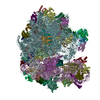
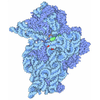
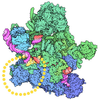
| Title | Cryo-EM Structure of T. kodakarensis 70S ribosome | |||||||||||||||||||||||||||||||||||||||||||||||||||||||||||||||||||||||||||||||||||||||||||||||||||||||||||||||
 Components Components |
| |||||||||||||||||||||||||||||||||||||||||||||||||||||||||||||||||||||||||||||||||||||||||||||||||||||||||||||||
 Keywords Keywords | RIBOSOME / T. kodakarensis / ac4C / cryo-EM | |||||||||||||||||||||||||||||||||||||||||||||||||||||||||||||||||||||||||||||||||||||||||||||||||||||||||||||||
| Function / homology |  Function and homology information Function and homology informationribonuclease P activity / tRNA 5'-leader removal / cleavage in ITS2 between 5.8S rRNA and LSU-rRNA of tricistronic rRNA transcript (SSU-rRNA, 5.8S rRNA, LSU-rRNA) / ribosomal large subunit biogenesis / maturation of SSU-rRNA from tricistronic rRNA transcript (SSU-rRNA, 5.8S rRNA, LSU-rRNA) / maturation of LSU-rRNA from tricistronic rRNA transcript (SSU-rRNA, 5.8S rRNA, LSU-rRNA) / maturation of SSU-rRNA / ribosome biogenesis / rRNA processing / ribosomal small subunit assembly ...ribonuclease P activity / tRNA 5'-leader removal / cleavage in ITS2 between 5.8S rRNA and LSU-rRNA of tricistronic rRNA transcript (SSU-rRNA, 5.8S rRNA, LSU-rRNA) / ribosomal large subunit biogenesis / maturation of SSU-rRNA from tricistronic rRNA transcript (SSU-rRNA, 5.8S rRNA, LSU-rRNA) / maturation of LSU-rRNA from tricistronic rRNA transcript (SSU-rRNA, 5.8S rRNA, LSU-rRNA) / maturation of SSU-rRNA / ribosome biogenesis / rRNA processing / ribosomal small subunit assembly / ribosomal small subunit biogenesis / 5S rRNA binding / ribosomal large subunit assembly / small ribosomal subunit / cytosolic small ribosomal subunit / large ribosomal subunit rRNA binding / tRNA binding / cytosolic large ribosomal subunit / cytoplasmic translation / rRNA binding / negative regulation of translation / ribonucleoprotein complex / structural constituent of ribosome / ribosome / translation / RNA binding / zinc ion binding / cytosol / cytoplasm Similarity search - Function | |||||||||||||||||||||||||||||||||||||||||||||||||||||||||||||||||||||||||||||||||||||||||||||||||||||||||||||||
| Biological species |   Thermococcus kodakarensis (archaea) Thermococcus kodakarensis (archaea) | |||||||||||||||||||||||||||||||||||||||||||||||||||||||||||||||||||||||||||||||||||||||||||||||||||||||||||||||
| Method | ELECTRON MICROSCOPY / single particle reconstruction / cryo EM / Resolution: 2.95 Å | |||||||||||||||||||||||||||||||||||||||||||||||||||||||||||||||||||||||||||||||||||||||||||||||||||||||||||||||
 Authors Authors | Matzov, D. / Sas-Chen, A. / Thomas, J.M. / Santangelo, T. / Meier, J.L. / Schwartz, S. / Shalev-Benami, M. | |||||||||||||||||||||||||||||||||||||||||||||||||||||||||||||||||||||||||||||||||||||||||||||||||||||||||||||||
 Citation Citation | Journal: Nature / Year: 2020 Title: Dynamic RNA acetylation revealed by quantitative cross-evolutionary mapping. Authors: Aldema Sas-Chen / Justin M Thomas / Donna Matzov / Masato Taoka / Kellie D Nance / Ronit Nir / Keri M Bryson / Ran Shachar / Geraldy L S Liman / Brett W Burkhart / Supuni Thalalla Gamage / ...Authors: Aldema Sas-Chen / Justin M Thomas / Donna Matzov / Masato Taoka / Kellie D Nance / Ronit Nir / Keri M Bryson / Ran Shachar / Geraldy L S Liman / Brett W Burkhart / Supuni Thalalla Gamage / Yuko Nobe / Chloe A Briney / Michaella J Levy / Ryan T Fuchs / G Brett Robb / Jesse Hartmann / Sunny Sharma / Qishan Lin / Laurence Florens / Michael P Washburn / Toshiaki Isobe / Thomas J Santangelo / Moran Shalev-Benami / Jordan L Meier / Schraga Schwartz /    Abstract: N-acetylcytidine (acC) is an ancient and highly conserved RNA modification that is present on tRNA and rRNA and has recently been investigated in eukaryotic mRNA. However, the distribution, dynamics ...N-acetylcytidine (acC) is an ancient and highly conserved RNA modification that is present on tRNA and rRNA and has recently been investigated in eukaryotic mRNA. However, the distribution, dynamics and functions of cytidine acetylation have yet to be fully elucidated. Here we report acC-seq, a chemical genomic method for the transcriptome-wide quantitative mapping of acC at single-nucleotide resolution. In human and yeast mRNAs, acC sites are not detected but can be induced-at a conserved sequence motif-via the ectopic overexpression of eukaryotic acetyltransferase complexes. By contrast, cross-evolutionary profiling revealed unprecedented levels of acC across hundreds of residues in rRNA, tRNA, non-coding RNA and mRNA from hyperthermophilic archaea. AcC is markedly induced in response to increases in temperature, and acetyltransferase-deficient archaeal strains exhibit temperature-dependent growth defects. Visualization of wild-type and acetyltransferase-deficient archaeal ribosomes by cryo-electron microscopy provided structural insights into the temperature-dependent distribution of acC and its potential thermoadaptive role. Our studies quantitatively define the acC landscape, providing a technical and conceptual foundation for elucidating the role of this modification in biology and disease. | |||||||||||||||||||||||||||||||||||||||||||||||||||||||||||||||||||||||||||||||||||||||||||||||||||||||||||||||
| History |
|
- Structure visualization
| Movie |
Movie viewer |
|---|---|
| Structure viewer | Molecule: MolmilJmol/JSmol |
- Downloads & links
-Download
| PDBx/mmCIF format | 6skf.cif.gz | 3.5 MB | Display | PDBx/mmCIF format |
|---|---|---|---|---|
| PDB format | pdb6skf.ent.gz | Display | PDB format | |
| PDBx/mmJSON format | 6skf.json.gz | Tree view | PDBx/mmJSON format | |
| Others |  Other downloads Other downloads |
-Validation report
| Arichive directory | https://data.pdbj.org/pub/pdb/validation_reports/sk/6skfftp://data.pdbj.org/pub/pdb/validation_reports/sk/6skf | HTTPS FTP |
|---|
-Related structure data
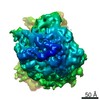
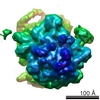
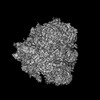
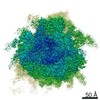
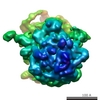
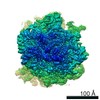
| Related structure data | 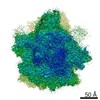 10223MC 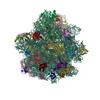 6skgC  6th6C M: map data used to model this data C: citing same article ( |
|---|---|
| Similar structure data |


-Links
 PDBj
PDBj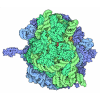
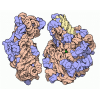
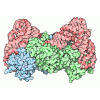
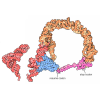
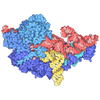
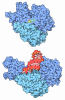

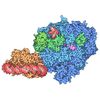
- Assembly
| Deposited unit | 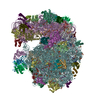
|
|---|---|
| 1 |
|
-Components
-RNA chain , 3 types, 3 molecules AaBABB
| #1: RNA chain | Mass: 488234.531 Da / Num. of mol.: 1 / Source method: isolated from a natural source / Source: (natural) Thermococcus kodakarensis (archaea) |
|---|---|
| #27: RNA chain | Mass: 990337.312 Da / Num. of mol.: 1 / Source method: isolated from a natural source / Source: (natural) Thermococcus kodakarensis (archaea) |
| #28: RNA chain | Mass: 40744.309 Da / Num. of mol.: 1 / Source method: isolated from a natural source / Source: (natural) Thermococcus kodakarensis (archaea) / References: GenBank: 57158259 |
+30S ribosomal protein ... , 24 types, 24 molecules AbAcAdAeAfAgAhAiAjAkAlAmAnAoApAqArAsAtAuAvAwAxAy
+50S ribosomal protein ... , 32 types, 34 molecules BCBDBEBFBGBHBIBJBKBLBMBNBOBPBQBRBSBTBUBVBWBXBYBZBaBbBcBdBeBg...
-Protein / Protein/peptide , 2 types, 2 molecules AzBk
| #26: Protein | Mass: 7001.247 Da / Num. of mol.: 1 / Source method: isolated from a natural source / Source: (natural) Thermococcus kodakarensis (archaea) / References: UniProt: Q5JFE2 |
|---|---|
| #60: Protein/peptide | Mass: 5051.409 Da / Num. of mol.: 1 / Source method: isolated from a natural source / Source: (natural) Thermococcus kodakarensis (archaea) / References: UniProt: Q5JEV0 |
-Non-polymers , 2 types, 2379 molecules 

| #62: Chemical | ChemComp-ZN /  Mass: 65.409 Da / Num. of mol.: 12 / Source method: obtained synthetically / Formula: Zn Mass: 65.409 Da / Num. of mol.: 12 / Source method: obtained synthetically / Formula: Zn#63: Water | ChemComp-HOH / | Mass: 18.015 Da / Num. of mol.: 2367 / Source method: isolated from a natural source / Formula: H2O |
|---|
-Details
| Has ligand of interest | Y |
|---|---|
| Has protein modification | N |
-Experimental details
-Experiment
| Experiment | Method: ELECTRON MICROSCOPY |
|---|---|
| EM experiment | Aggregation state: PARTICLE / 3D reconstruction method: single particle reconstruction |
- Sample preparation
| Component | Name: 70S ribosome from Thermococcus kodakarensis / Type: RIBOSOME / Entity ID: #1-#61 / Source: NATURAL |
|---|---|
| Molecular weight | Experimental value: NO |
| Source (natural) | Organism: Thermococcus kodakarensis (archaea) |
| Buffer solution | pH: 7.5 |
| Specimen | Conc.: 0.25 mg/ml / Embedding applied: NO / Shadowing applied: NO / Staining applied: NO / Vitrification applied: YES |
| Specimen support | Grid material: COPPER / Grid mesh size: 200 divisions/in. / Grid type: Quantifoil R2/2 |
| Vitrification | Instrument: FEI VITROBOT MARK IV / Cryogen name: ETHANE / Humidity: 100 % / Chamber temperature: 277.15 K |
- Electron microscopy imaging
| Experimental equipment |  Model: Titan Krios / Image courtesy: FEI Company |
|---|---|
| Microscopy | Model: FEI TITAN KRIOS |
| Electron gun | Electron source:  FIELD EMISSION GUN / Accelerating voltage: 300 kV / Illumination mode: FLOOD BEAM FIELD EMISSION GUN / Accelerating voltage: 300 kV / Illumination mode: FLOOD BEAM |
| Electron lens | Mode: BRIGHT FIELD / Calibrated magnification: 29000 X / C2 aperture diameter: 70 µm |
| Image recording | Electron dose: 34 e/Å2 / Detector mode: COUNTING / Film or detector model: FEI FALCON III (4k x 4k) |
- Processing
| EM software |
| ||||||||||||||||||||||||
|---|---|---|---|---|---|---|---|---|---|---|---|---|---|---|---|---|---|---|---|---|---|---|---|---|---|
| CTF correction | Type: PHASE FLIPPING AND AMPLITUDE CORRECTION | ||||||||||||||||||||||||
| Symmetry | Point symmetry: C1 (asymmetric) | ||||||||||||||||||||||||
| 3D reconstruction | Resolution: 2.95 Å / Resolution method: FSC 0.143 CUT-OFF / Num. of particles: 53737 / Symmetry type: POINT | ||||||||||||||||||||||||
| Atomic model building | Protocol: RIGID BODY FIT |
