[English] 日本語
Yorodumi
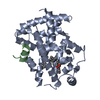
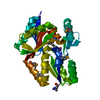
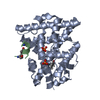
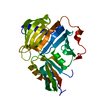
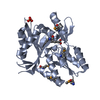
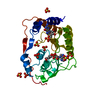
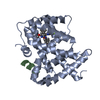
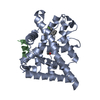
- PDB-6ilq: Crystal structure of PPARgamma with compound BR101549 -

+
Open data


ID or keywords:

Loading...

-
Basic information

Entry
Database: PDB / ID: 6ilq
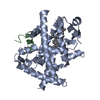
TitleCrystal structure of PPARgamma with compound BR101549
Components
  • Nuclear receptor coactivator 1
  • Peroxisome proliferator-activated receptor gamma
KeywordsNUCLEAR PROTEIN / peroxisome proliferator-activated receptor-g(PPAR-g) / transcription factor / ligand-binding domain / Steroid receptor Coactivator-1
Function / homology
Function and homology information


labyrinthine layer morphogenesis / regulation of thyroid hormone receptor signaling pathway / positive regulation of transcription from RNA polymerase II promoter by galactose / positive regulation of female receptivity / prostaglandin receptor activity / negative regulation of connective tissue replacement involved in inflammatory response wound healing / negative regulation of receptor signaling pathway via STAT / MECP2 regulates transcription factors / negative regulation of extracellular matrix assembly / beige fat cell differentiation ...labyrinthine layer morphogenesis / regulation of thyroid hormone receptor signaling pathway / positive regulation of transcription from RNA polymerase II promoter by galactose / positive regulation of female receptivity / prostaglandin receptor activity / negative regulation of connective tissue replacement involved in inflammatory response wound healing / negative regulation of receptor signaling pathway via STAT / MECP2 regulates transcription factors / negative regulation of extracellular matrix assembly / beige fat cell differentiation / negative regulation of vascular endothelial cell proliferation / positive regulation of cholesterol transport / negative regulation of cellular response to transforming growth factor beta stimulus / arachidonate binding / positive regulation of adiponectin secretion / NR1H2 & NR1H3 regulate gene expression to control bile acid homeostasis / white fat cell differentiation / DNA binding domain binding / positive regulation of vascular associated smooth muscle cell apoptotic process / negative regulation of cardiac muscle hypertrophy in response to stress / positive regulation of lipid metabolic process / STAT family protein binding / positive regulation of fatty acid metabolic process / WW domain binding / hypothalamus development / negative regulation of type II interferon-mediated signaling pathway / male mating behavior / LBD domain binding / negative regulation of cholesterol storage / lipid homeostasis / response to lipid / positive regulation of lipoprotein transport / negative regulation of SMAD protein signal transduction / E-box binding / progesterone receptor signaling pathway / cellular response to Thyroglobulin triiodothyronine / R-SMAD binding / Synthesis of bile acids and bile salts / monocyte differentiation / brown fat cell differentiation / negative regulation of blood vessel endothelial cell migration / negative regulation of BMP signaling pathway / cell fate commitment / negative regulation of vascular associated smooth muscle cell proliferation / alpha-actinin binding / negative regulation of macrophage derived foam cell differentiation / negative regulation of lipid storage / BMP signaling pathway / Synthesis of bile acids and bile salts via 27-hydroxycholesterol / positive regulation of cholesterol efflux / Endogenous sterols / positive regulation of fat cell differentiation / Synthesis of bile acids and bile salts via 7alpha-hydroxycholesterol / cellular response to low-density lipoprotein particle stimulus / response to retinoic acid / fat cell differentiation / long-chain fatty acid transport / protein-lysine-acetyltransferase activity / negative regulation of mitochondrial fission / negative regulation of osteoblast differentiation / nuclear retinoid X receptor binding / estrous cycle / cell maturation / retinoic acid receptor signaling pathway / Recycling of bile acids and salts / Transcriptional regulation of brown and beige adipocyte differentiation by EBF2 / histone acetyltransferase / lactation / NR1H3 & NR1H2 regulate gene expression linked to cholesterol transport and efflux / estrogen receptor signaling pathway / cellular response to hormone stimulus / intracellular receptor signaling pathway / negative regulation of MAPK cascade / peroxisome proliferator activated receptor signaling pathway / hormone-mediated signaling pathway / Regulation of lipid metabolism by PPARalpha / response to progesterone / cerebellum development / positive regulation of adipose tissue development / peptide binding / positive regulation of neuron differentiation / epithelial cell differentiation / response to nutrient / BMAL1:CLOCK,NPAS2 activates circadian expression / regulation of cellular response to insulin stimulus / placenta development / RORA,B,C and NR1D1 (REV-ERBA) regulate gene expression / Activation of gene expression by SREBF (SREBP) / SUMOylation of transcription cofactors / Expression of BMAL (ARNTL), CLOCK, and NPAS2 / negative regulation of miRNA transcription / fatty acid metabolic process / negative regulation of angiogenesis / positive regulation of apoptotic signaling pathway / nuclear estrogen receptor binding / nuclear receptor binding / hippocampus development / Regulation of PTEN gene transcription / transcription coregulator binding / negative regulation of smooth muscle cell proliferation
Similarity search - Function
Nuclear receptor coactivator 1 / Peroxisome proliferator-activated receptor gamma / Peroxisome proliferator-activated receptor gamma, N-terminal / PPAR gamma N-terminal region / Peroxisome proliferator-activated receptor / Nuclear receptor coactivator, DUF1518 / Nuclear receptor coactivator, Ncoa-type, interlocking / Nuclear receptor coactivator, Ncoa-type, interlocking domain superfamily / Nuclear receptor coactivator, DUF1518 / Nuclear receptor coactivator ...Nuclear receptor coactivator 1 / Peroxisome proliferator-activated receptor gamma / Peroxisome proliferator-activated receptor gamma, N-terminal / PPAR gamma N-terminal region / Peroxisome proliferator-activated receptor / Nuclear receptor coactivator, DUF1518 / Nuclear receptor coactivator, Ncoa-type, interlocking / Nuclear receptor coactivator, Ncoa-type, interlocking domain superfamily / Nuclear receptor coactivator, DUF1518 / Nuclear receptor coactivator / DUF1518 / Nuclear receptor coactivator, receptor-binding domain / Nuclear receptor coactivator / : / Steroid receptor coactivator / Unstructured region on nuclear receptor coactivator protein / Nuclear receptor coactivators bHLH domain / PAS domain / Nuclear receptor coactivator, interlocking / helix loop helix domain / Myc-type, basic helix-loop-helix (bHLH) domain / Myc-type, basic helix-loop-helix (bHLH) domain profile. / Helix-loop-helix DNA-binding domain superfamily / : / PAS fold / PAS fold / PAS domain / PAS repeat profile. / PAS domain / Retinoid X Receptor / Retinoid X Receptor / PAS domain superfamily / Nuclear hormone receptor / Nuclear hormones receptors DNA-binding region signature. / Zinc finger, nuclear hormone receptor-type / Double treble clef zinc finger, C4 type / Nuclear hormone receptors DNA-binding domain profile. / c4 zinc finger in nuclear hormone receptors / Nuclear hormone receptor, ligand-binding domain / Nuclear hormone receptor-like domain superfamily / Ligand-binding domain of nuclear hormone receptor / Nuclear receptor (NR) ligand-binding (LBD) domain profile. / Ligand binding domain of hormone receptors / Zinc finger, NHR/GATA-type / Orthogonal Bundle / Mainly Alpha
Similarity search - Domain/homology
Chem-AE0 / Peroxisome proliferator-activated receptor gamma / Nuclear receptor coactivator 1
Similarity search - Component
Biological speciesHomo sapiens (human)
MethodX-RAY DIFFRACTION / SYNCHROTRON / MOLECULAR REPLACEMENT / Resolution: 2.408 Å
AuthorsHong, E. / Jang, T.H. / Chin, J. / Kim, K.H. / Jung, W. / Kim, S.H.
CitationJournal: Bioorg.Med.Chem.Lett. / Year: 2019
Title: Identification of BR101549 as a lead candidate of non-TZD PPAR gamma agonist for the treatment of type 2 diabetes: Proof-of-concept evaluation and SAR.
Authors: Choung, W. / Jung, H.J. / Yang, D. / Nam, E.H. / Choi, H. / Lee, B.R. / Park, M. / Jang, S.M. / Lim, J.S. / Kim, W.S. / Kim, K.H. / Chin, J. / Jung, K. / Lee, G. / Hong, E. / Jang, T.H. / Myung, J. / Kim, S.H.
History
DepositionOct 19, 2018Deposition site: PDBJ / Processing site: PDBJ
Revision 1.0Sep 11, 2019Provider: repository / Type: Initial release
Revision 1.1Nov 22, 2023Group: Data collection / Database references / Refinement description
Category: chem_comp_atom / chem_comp_bond ...chem_comp_atom / chem_comp_bond / database_2 / pdbx_initial_refinement_model
Item: _database_2.pdbx_DOI / _database_2.pdbx_database_accession

-
Structure visualization

Structure viewerMolecule:
MolmilJmol/JSmol

Downloads & links

-
Assembly

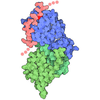
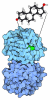
Deposited unit
A: Peroxisome proliferator-activated receptor gamma
B: Nuclear receptor coactivator 1
hetero molecules


Theoretical massNumber of molelcules
Total (without water)34,4313
Polymers33,9002
Non-polymers5311
Water1,13563
1


  • Idetical with deposited unit
  • defined by author&software
  • Evidence: gel filtration
TypeNameSymmetry operationNumber
identity operation1_555x,y,z1
Buried area1260 Å2
ΔGint-13 kcal/mol
Surface area12440 Å2
MethodPISA
Unit cell
Length a, b, c (Å)53.647, 85.257, 122.844
Angle α, β, γ (deg.)90.00, 90.00, 90.00
Int Tables number20
Space group name H-MC2221
Components on special symmetry positions
IDModelComponents
11A-657-

HOH

-
Components

#1: Protein Peroxisome proliferator-activated receptor gamma / PPAR-gamma / Nuclear receptor subfamily 1 group C member 3


Mass: 31094.135 Da / Num. of mol.: 1
Source method: isolated from a genetically manipulated source
Source: (gene. exp.) Homo sapiens (human) / Gene: PPARG, NR1C3 / Production host: Escherichia coli (E. coli) / References: UniProt: P37231
#2: Protein/peptide Nuclear receptor coactivator 1 / NCoA-1 / Class E basic helix-loop-helix protein 74 / bHLHe74 / Protein Hin-2 / RIP160 / Renal ...NCoA-1 / Class E basic helix-loop-helix protein 74 / bHLHe74 / Protein Hin-2 / RIP160 / Renal carcinoma antigen NY-REN-52 / Steroid receptor coactivator 1 / SRC-1


Mass: 2806.163 Da / Num. of mol.: 1 / Source method: obtained synthetically / Source: (synth.) Homo sapiens (human) / References: UniProt: Q15788, histone acetyltransferase
#3: Chemical ChemComp-AE0 / ethyl [2-butyl-6-oxo-1-{[2'-(5-oxo-4,5-dihydro-1,2,4-oxadiazol-3-yl)[1,1'-biphenyl]-4-yl]methyl}-4-(propan-2-yl)-1,6-dihydropyrimidin-5-yl]acetate


Mass: 530.615 Da / Num. of mol.: 1 / Source method: obtained synthetically / Formula: C30H34N4O5

#4: Water ChemComp-HOH / water


Mass: 18.015 Da / Num. of mol.: 63 / Source method: isolated from a natural source / Formula: H2O

-
Experimental details

-
Experiment

ExperimentMethod: X-RAY DIFFRACTION / Number of used crystals: 1

-
Sample preparation

CrystalDensity Matthews: 2.07 Å3/Da / Density % sol: 40.63 %
Crystal growTemperature: 291 K / Method: vapor diffusion, hanging drop / Details: 0.2 M MgCl2, 0.1 M TRIS 8.5 pH, 27 %w/v PEG 3350

-
Data collection

DiffractionMean temperature: 277 K / Serial crystal experiment: N
Diffraction sourceSource: SYNCHROTRON / Site: PAL/PLS / Beamline: 6B / Wavelength: 0.9795 Å
DetectorType: ADSC QUANTUM 315r / Detector: CCD / Date: May 11, 2017
RadiationProtocol: SINGLE WAVELENGTH / Monochromatic (M) / Laue (L): M / Scattering type: x-ray
Radiation wavelengthWavelength: 0.9795 Å / Relative weight: 1
ReflectionResolution: 2.408→25.44 Å / Num. obs: 10939 / % possible obs: 97.25 % / Redundancy: 6.4 % / CC1/2: 0.995 / Rmerge(I) obs: 0.09336 / Rpim(I) all: 0.04269 / Rrim(I) all: 0.1031 / Net I/σ(I): 30.5
Reflection shellResolution: 2.408→2.494 Å / Rmerge(I) obs: 0.3838 / Num. unique obs: 1040 / CC1/2: 0.973 / Rpim(I) all: 0.1532

-
Processing

Software
NameVersionClassification
PHENIX(1.14_3260: ???)refinement
HKL-2000data collection
HKL-2000data scaling
PHENIXmodel building
HKL-2000data reduction
PHENIXphasing
RefinementMethod to determine structure: MOLECULAR REPLACEMENT
Starting model: 3KMG
Resolution: 2.408→25.439 Å / SU ML: 0.34 / Cross valid method: FREE R-VALUE / σ(F): 1.38 / Phase error: 30.35
RfactorNum. reflection% reflection
Rfree0.3035 1097 10.03 %
Rwork0.2157 --
obs0.2238 10936 97.29 %
Solvent computationShrinkage radii: 0.9 Å / VDW probe radii: 1.11 Å
Refinement stepCycle: LAST / Resolution: 2.408→25.439 Å
ProteinNucleic acidLigandSolventTotal
Num. atoms2037 0 39 63 2139
Refine LS restraints
Refine-IDTypeDev idealNumber
X-RAY DIFFRACTIONf_bond_d0.0082120
X-RAY DIFFRACTIONf_angle_d0.9122863
X-RAY DIFFRACTIONf_dihedral_angle_d5.9661740
X-RAY DIFFRACTIONf_chiral_restr0.047337
X-RAY DIFFRACTIONf_plane_restr0.004355
LS refinement shell
Resolution (Å)Rfactor RfreeNum. reflection RfreeRfactor RworkNum. reflection RworkRefine-ID% reflection obs (%)
2.4076-2.51710.33961430.25311175X-RAY DIFFRACTION96
2.5171-2.64960.32451310.24381245X-RAY DIFFRACTION100
2.6496-2.81540.34381460.24351242X-RAY DIFFRACTION100
2.8154-3.03250.33731350.25051242X-RAY DIFFRACTION100
3.0325-3.33710.33291430.22911269X-RAY DIFFRACTION100
3.3371-3.81860.29261340.19861261X-RAY DIFFRACTION100
3.8186-4.80570.24831390.17631237X-RAY DIFFRACTION97
4.8057-25.440.30791260.22851168X-RAY DIFFRACTION87
Refinement TLS params.Method: refined / Origin x: -21.5237 Å / Origin y: -9.5726 Å / Origin z: 15.3419 Å
111213212223313233
T0.3612 Å20.0084 Å20.0054 Å2-0.378 Å20.0313 Å2--0.2472 Å2
L3.8505 °20.7414 °20.8796 °2-3.8432 °21.4744 °2--2.8779 °2
S-0.0296 Å °0.1255 Å °-0.1139 Å °0.0295 Å °0.1744 Å °-0.1145 Å °0.2051 Å °0.2734 Å °-0.1412 Å °
Refinement TLS groupSelection details: all

+
About Yorodumi

-
News

-
Feb 9, 2022. New format data for meta-information of EMDB entries

New format data for meta-information of EMDB entries

  • Version 3 of the EMDB header file is now the official format.
  • The previous official version 1.9 will be removed from the archive.

Related info.:EMDB header

External links:wwPDB to switch to version 3 of the EMDB data model

-
Aug 12, 2020. Covid-19 info

Covid-19 info

URL: https://pdbj.org/emnavi/covid19.php

New page: Covid-19 featured information page in EM Navigator.

Related info.:Covid-19 info / Mar 5, 2020. Novel coronavirus structure data

+
Mar 5, 2020. Novel coronavirus structure data

Novel coronavirus structure data

Related info.:Yorodumi Speices / Aug 12, 2020. Covid-19 info

External links:COVID-19 featured content - PDBj / Molecule of the Month (242):Coronavirus Proteases

+
Jan 31, 2019. EMDB accession codes are about to change! (news from PDBe EMDB page)

EMDB accession codes are about to change! (news from PDBe EMDB page)

  • The allocation of 4 digits for EMDB accession codes will soon come to an end. Whilst these codes will remain in use, new EMDB accession codes will include an additional digit and will expand incrementally as the available range of codes is exhausted. The current 4-digit format prefixed with “EMD-” (i.e. EMD-XXXX) will advance to a 5-digit format (i.e. EMD-XXXXX), and so on. It is currently estimated that the 4-digit codes will be depleted around Spring 2019, at which point the 5-digit format will come into force.
  • The EM Navigator/Yorodumi systems omit the EMD- prefix.

Related info.:Q: What is EMD? / ID/Accession-code notation in Yorodumi/EM Navigator

External links:EMDB Accession Codes are Changing Soon! / Contact to PDBj

+
Jul 12, 2017. Major update of PDB

Major update of PDB

  • wwPDB released updated PDB data conforming to the new PDBx/mmCIF dictionary.
  • This is a major update changing the version number from 4 to 5, and with Remediation, in which all the entries are updated.
  • In this update, many items about electron microscopy experimental information are reorganized (e.g. em_software).
  • Now, EM Navigator and Yorodumi are based on the updated data.

External links:wwPDB Remediation / Enriched Model Files Conforming to OneDep Data Standards Now Available in the PDB FTP Archive

-
Yorodumi

Thousand views of thousand structures

  • Yorodumi is a browser for structure data from EMDB, PDB, SASBDB, etc.
  • This page is also the successor to EM Navigator detail page, and also detail information page/front-end page for Omokage search.
  • The word "yorodu" (or yorozu) is an old Japanese word meaning "ten thousand". "mi" (miru) is to see.

Related info.:EMDB / PDB / SASBDB / Comparison of 3 databanks / Yorodumi Search / Aug 31, 2016. New EM Navigator & Yorodumi / Yorodumi Papers / Jmol/JSmol / Function and homology information / Changes in new EM Navigator and Yorodumi

Read more