- PDB-5ydr: Structure of DNMT1 RFTS domain in complex with ubiquitin -
+
Open data
ID or keywords:
Loading...
-
Basic information
Entry
Database: PDB / ID: 5ydr
Title
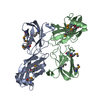
Structure of DNMT1 RFTS domain in complex with ubiquitin
Components
DNA (cytosine-5)-methyltransferase 1
Polyubiquitin-B
Keywords
PROTEIN BINDING/TRANSFERASE / DNA methylation / PROTEIN BINDING / PROTEIN BINDING-TRANSFERASE complex
Function / homology
Function and homology information
histone H3K23ub reader activity / histone H3K18ub reader activity / : / histone H3K14ub reader activity / chromosomal DNA methylation maintenance following DNA replication / negative regulation of vascular associated smooth muscle cell apoptotic process / DNA-methyltransferase activity / DNA (cytosine-5-)-methyltransferase / DNA (cytosine-5-)-methyltransferase activity / SUMOylation of DNA methylation proteins ...histone H3K23ub reader activity / histone H3K18ub reader activity / : / histone H3K14ub reader activity / chromosomal DNA methylation maintenance following DNA replication / negative regulation of vascular associated smooth muscle cell apoptotic process / DNA-methyltransferase activity / DNA (cytosine-5-)-methyltransferase / DNA (cytosine-5-)-methyltransferase activity / SUMOylation of DNA methylation proteins / STAT3 nuclear events downstream of ALK signaling / methyl-CpG binding / hypothalamus gonadotrophin-releasing hormone neuron development / female meiosis I / seminiferous tubule development / positive regulation of protein monoubiquitination / DNA methylation-dependent constitutive heterochromatin formation / fat pad development / mitochondrion transport along microtubule / negative regulation of gene expression via chromosomal CpG island methylation / female gonad development / lncRNA binding / male meiosis I / positive regulation of intrinsic apoptotic signaling pathway by p53 class mediator / energy homeostasis / pericentric heterochromatin / positive regulation of vascular associated smooth muscle cell proliferation / neuron projection morphogenesis / heterochromatin / Nuclear events stimulated by ALK signaling in cancer / Maturation of protein E / Maturation of protein E / regulation of neuron apoptotic process / ER Quality Control Compartment (ERQC) / Myoclonic epilepsy of Lafora / FLT3 signaling by CBL mutants / IRAK2 mediated activation of TAK1 complex / Alpha-protein kinase 1 signaling pathway / Glycogen synthesis / IRAK1 recruits IKK complex / IRAK1 recruits IKK complex upon TLR7/8 or 9 stimulation / Prevention of phagosomal-lysosomal fusion / Endosomal Sorting Complex Required For Transport (ESCRT) / Membrane binding and targetting of GAG proteins / Regulation of TBK1, IKKε (IKBKE)-mediated activation of IRF3, IRF7 / Negative regulation of FLT3 / regulation of mitochondrial membrane potential / PTK6 Regulates RTKs and Their Effectors AKT1 and DOK1 / Regulation of TBK1, IKKε-mediated activation of IRF3, IRF7 upon TLR3 ligation / IRAK2 mediated activation of TAK1 complex upon TLR7/8 or 9 stimulation / Constitutive Signaling by NOTCH1 HD Domain Mutants / NOTCH2 Activation and Transmission of Signal to the Nucleus / TICAM1,TRAF6-dependent induction of TAK1 complex / TICAM1-dependent activation of IRF3/IRF7 / APC/C:Cdc20 mediated degradation of Cyclin B / Downregulation of ERBB4 signaling / APC-Cdc20 mediated degradation of Nek2A / Regulation of FZD by ubiquitination / positive regulation of protein ubiquitination / p75NTR recruits signalling complexes / InlA-mediated entry of Listeria monocytogenes into host cells / regulation of proteasomal protein catabolic process / TRAF6 mediated IRF7 activation in TLR7/8 or 9 signaling / NF-kB is activated and signals survival / TRAF6-mediated induction of TAK1 complex within TLR4 complex / Regulation of pyruvate metabolism / Pexophagy / Downregulation of ERBB2:ERBB3 signaling / NRIF signals cell death from the nucleus / Regulation of PTEN localization / Regulation of innate immune responses to cytosolic DNA / VLDLR internalisation and degradation / DNA methylation / Activated NOTCH1 Transmits Signal to the Nucleus / Synthesis of active ubiquitin: roles of E1 and E2 enzymes / Translesion synthesis by REV1 / TICAM1, RIP1-mediated IKK complex recruitment / Regulation of BACH1 activity / Translesion synthesis by POLK / JNK (c-Jun kinases) phosphorylation and activation mediated by activated human TAK1 / InlB-mediated entry of Listeria monocytogenes into host cell / MAP3K8 (TPL2)-dependent MAPK1/3 activation / Activation of IRF3, IRF7 mediated by TBK1, IKKε (IKBKE) / Translesion synthesis by POLI / Downregulation of TGF-beta receptor signaling / Josephin domain DUBs / Gap-filling DNA repair synthesis and ligation in GG-NER / IKK complex recruitment mediated by RIP1 / PRC2 methylates histones and DNA / PINK1-PRKN Mediated Mitophagy / replication fork / TGF-beta receptor signaling in EMT (epithelial to mesenchymal transition) / TNFR1-induced NF-kappa-B signaling pathway / Defective pyroptosis / Regulation of activated PAK-2p34 by proteasome mediated degradation / TCF dependent signaling in response to WNT / Regulation of NF-kappa B signaling / activated TAK1 mediates p38 MAPK activation / Autodegradation of Cdh1 by Cdh1:APC/C / APC/C:Cdc20 mediated degradation of Securin Similarity search - Function
Arc Repressor Mutant, subunit A - #2230 / DMAP1-binding Domain / DMAP1-binding Domain / DMAP1-binding domain / DMAP1-binding domain profile. / DNA (cytosine-5)-methyltransferase 1, replication foci domain / Cytosine specific DNA methyltransferase replication foci domain / DNA methylase, C-5 cytosine-specific, conserved site / C-5 cytosine-specific DNA methylases C-terminal signature. / CXXC zinc finger domain ...Arc Repressor Mutant, subunit A - #2230 / DMAP1-binding Domain / DMAP1-binding Domain / DMAP1-binding domain / DMAP1-binding domain profile. / DNA (cytosine-5)-methyltransferase 1, replication foci domain / Cytosine specific DNA methyltransferase replication foci domain / DNA methylase, C-5 cytosine-specific, conserved site / C-5 cytosine-specific DNA methylases C-terminal signature. / CXXC zinc finger domain / Zinc finger, CXXC-type / Zinc finger CXXC-type profile. / : / DNA methylase, C-5 cytosine-specific, active site / C-5 cytosine-specific DNA methylases active site. / C-5 cytosine-specific DNA methylase (Dnmt) domain profile. / C-5 cytosine methyltransferase / C-5 cytosine-specific DNA methylase / Bromo adjacent homology domain / BAH domain / Bromo adjacent homology (BAH) domain / Bromo adjacent homology (BAH) domain superfamily / BAH domain profile. / : / Ubiquitin domain signature. / Ubiquitin conserved site / Ubiquitin domain / Ubiquitin family / Arc Repressor Mutant, subunit A / Ubiquitin homologues / Ubiquitin domain profile. / Ubiquitin-like domain / Ubiquitin-like domain superfamily / S-adenosyl-L-methionine-dependent methyltransferase superfamily / Orthogonal Bundle / Mainly Alpha Similarity search - Domain/homology
In the structure databanks used in Yorodumi, some data are registered as the other names, "COVID-19 virus" and "2019-nCoV". Here are the details of the virus and the list of structure data.
Jan 31, 2019. EMDB accession codes are about to change! (news from PDBe EMDB page)
EMDB accession codes are about to change! (news from PDBe EMDB page)
The allocation of 4 digits for EMDB accession codes will soon come to an end. Whilst these codes will remain in use, new EMDB accession codes will include an additional digit and will expand incrementally as the available range of codes is exhausted. The current 4-digit format prefixed with “EMD-” (i.e. EMD-XXXX) will advance to a 5-digit format (i.e. EMD-XXXXX), and so on. It is currently estimated that the 4-digit codes will be depleted around Spring 2019, at which point the 5-digit format will come into force.
The EM Navigator/Yorodumi systems omit the EMD- prefix.
Related info.:Q: What is EMD? / ID/Accession-code notation in Yorodumi/EM Navigator
Yorodumi is a browser for structure data from EMDB, PDB, SASBDB, etc.
This page is also the successor to EM Navigator detail page, and also detail information page/front-end page for Omokage search.
The word "yorodu" (or yorozu) is an old Japanese word meaning "ten thousand". "mi" (miru) is to see.
Related info.:EMDB / PDB / SASBDB / Comparison of 3 databanks / Yorodumi Search / Aug 31, 2016. New EM Navigator & Yorodumi / Yorodumi Papers / Jmol/JSmol / Function and homology information / Changes in new EM Navigator and Yorodumi
 Movie
Movie Controller


 Open data
 Basic information
 Components
 Keywords
 Function and homology information
 Homo sapiens (human)
 X-RAY DIFFRACTION /
  Authors
 Hong Kong, 1items
  Citation
 Structure visualization
 Downloads & links
 Other downloads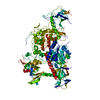

 PDBj
PDBj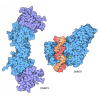
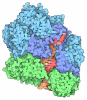
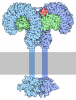
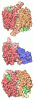
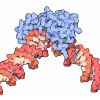
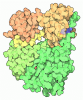
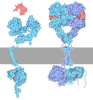
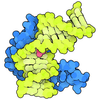
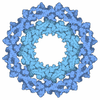
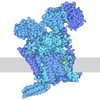
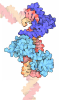
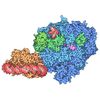
 Assembly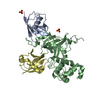

 Escherichia coli (E. coli) / References: UniProt: J3QS39, UniProt: P0CG47*PLUS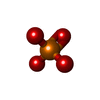
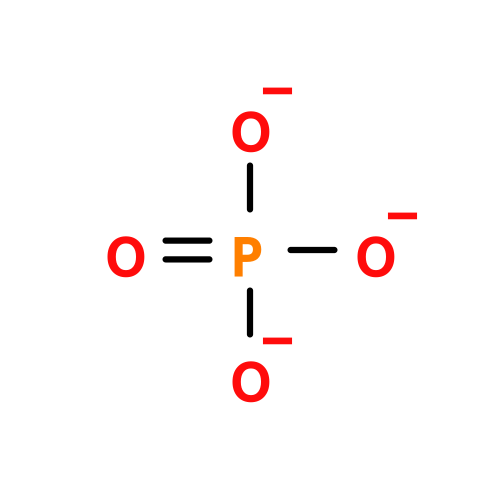 Mass: 94.971 Da / Num. of mol.: 2 / Source method: obtained synthetically / Formula: PO4
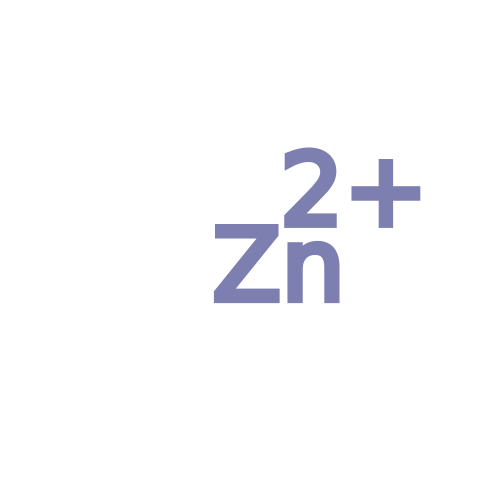 Mass: 65.409 Da / Num. of mol.: 1 / Source method: obtained synthetically / Formula: Zn
 Mass: 18.015 Da / Num. of mol.: 235 / Source method: isolated from a natural source / Formula: H2O
 Sample preparation
 Processing