cellular response to vitamin B1 / response to formaldehyde / response to water-immersion restraint stress / cellular response to UV-C / response to ether / fibroblast activation / regulation of protein catabolic process at postsynapse, modulating synaptic transmission / Trafficking of AMPA receptors / negative regulation of intrinsic apoptotic signaling pathway by p53 class mediator / receptor serine/threonine kinase binding ...cellular response to vitamin B1 / response to formaldehyde / response to water-immersion restraint stress / cellular response to UV-C / response to ether / fibroblast activation / regulation of protein catabolic process at postsynapse, modulating synaptic transmission / Trafficking of AMPA receptors / negative regulation of intrinsic apoptotic signaling pathway by p53 class mediator / receptor serine/threonine kinase binding / cellular response to alkaloid / response to steroid hormone / SUMO transferase activity / negative regulation of protein processing / peroxisome proliferator activated receptor binding / positive regulation of vascular associated smooth muscle cell migration / AKT phosphorylates targets in the cytosol / response to iron ion / NEDD8 ligase activity / regulation of protein catabolic process / positive regulation of muscle cell differentiation / cellular response to peptide hormone stimulus / cellular response to antibiotic / regulation of postsynaptic neurotransmitter receptor internalization / SUMOylation of ubiquitinylation proteins / Constitutive Signaling by AKT1 E17K in Cancer / ligase activity / negative regulation of DNA damage response, signal transduction by p53 class mediator / SUMOylation of transcription factors / negative regulation of signal transduction by p53 class mediator / cellular response to estrogen stimulus / protein localization to nucleus / protein sumoylation / response to magnesium ion / ribonucleoprotein complex binding / positive regulation of vascular associated smooth muscle cell proliferation / protein autoubiquitination / positive regulation of mitotic cell cycle / NPAS4 regulates expression of target genes / positive regulation of protein export from nucleus / DNA damage response, signal transduction by p53 class mediator / : / response to cocaine / negative regulation of neuron projection development / establishment of protein localization / cellular response to gamma radiation / ubiquitin binding / Stabilization of p53 / protein destabilization / Regulation of RUNX3 expression and activity / cellular response to growth factor stimulus / response to toxic substance / RING-type E3 ubiquitin transferase / Oncogene Induced Senescence / Regulation of TP53 Activity through Methylation / Degradation of CDH1 / cellular response to hydrogen peroxide / protein polyubiquitination / disordered domain specific binding / p53 binding / ubiquitin-protein transferase activity / endocytic vesicle membrane / Signaling by ALK fusions and activated point mutants / Regulation of TP53 Degradation / positive regulation of proteasomal ubiquitin-dependent protein catabolic process / ubiquitin protein ligase activity / protein-containing complex assembly / 5S rRNA binding / cellular response to hypoxia / ubiquitin-dependent protein catabolic process / Oxidative Stress Induced Senescence / Regulation of TP53 Activity through Phosphorylation / amyloid fibril formation / proteasome-mediated ubiquitin-dependent protein catabolic process / regulation of cell cycle / postsynaptic density / response to xenobiotic stimulus / protein ubiquitination / Ub-specific processing proteases / protein domain specific binding / response to antibiotic / negative regulation of DNA-templated transcription / ubiquitin protein ligase binding / apoptotic process / positive regulation of gene expression / positive regulation of cell population proliferation / negative regulation of apoptotic process / nucleolus / negative regulation of transcription by RNA polymerase II / glutamatergic synapse / enzyme binding / protein-containing complex / nucleoplasm / zinc ion binding / identical protein binding / nucleus / plasma membrane / cytosol / cytoplasm Similarity search - Function
Mass: 18.015 Da / Num. of mol.: 7 / Source method: isolated from a natural source / Formula: H2O
-
Details
Has protein modification
Y
Sequence details
THE SEQUENCE OF THIS PROTEIN WAS NOT AVAILABLE AT THE UNIPROT KNOWLEDGEBASE DATABASE (UNIPROTKB) AT ...THE SEQUENCE OF THIS PROTEIN WAS NOT AVAILABLE AT THE UNIPROT KNOWLEDGEBASE DATABASE (UNIPROTKB) AT THE TIME OF DEPOSITION. THIS IS AN ENGINEERED CONSTRUCT OF VSFGFP (PDB:4PFE) WITH 12-MER PMI INHIBITOR INSERTION, BASICALLY REPLACING RESIDUES 230-231 (AQ) WITH (TTSFAEYWALLS).
-
Experimental details
-
Experiment
Experiment
Method: X-RAY DIFFRACTION / Number of used crystals: 1
-
Sample preparation
Crystal
Density Matthews: 2.57 Å3/Da / Density % sol: 52.23 %
In the structure databanks used in Yorodumi, some data are registered as the other names, "COVID-19 virus" and "2019-nCoV". Here are the details of the virus and the list of structure data.
Jan 31, 2019. EMDB accession codes are about to change! (news from PDBe EMDB page)
EMDB accession codes are about to change! (news from PDBe EMDB page)
The allocation of 4 digits for EMDB accession codes will soon come to an end. Whilst these codes will remain in use, new EMDB accession codes will include an additional digit and will expand incrementally as the available range of codes is exhausted. The current 4-digit format prefixed with “EMD-” (i.e. EMD-XXXX) will advance to a 5-digit format (i.e. EMD-XXXXX), and so on. It is currently estimated that the 4-digit codes will be depleted around Spring 2019, at which point the 5-digit format will come into force.
The EM Navigator/Yorodumi systems omit the EMD- prefix.
Related info.:Q: What is EMD? / ID/Accession-code notation in Yorodumi/EM Navigator
Yorodumi is a browser for structure data from EMDB, PDB, SASBDB, etc.
This page is also the successor to EM Navigator detail page, and also detail information page/front-end page for Omokage search.
The word "yorodu" (or yorozu) is an old Japanese word meaning "ten thousand". "mi" (miru) is to see.
Related info.:EMDB / PDB / SASBDB / Comparison of 3 databanks / Yorodumi Search / Aug 31, 2016. New EM Navigator & Yorodumi / Yorodumi Papers / Jmol/JSmol / Function and homology information / Changes in new EM Navigator and Yorodumi
 Movie
Movie Controller

 Yorodumi
 Open data
 Basic information
 Components
 Keywords
 Function and homology information
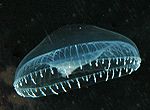 Aequorea victoria (jellyfish)
 Camelus dromedarius (Arabian camel)
 Homo sapiens (human)
 X-RAY DIFFRACTION /
  Authors
 Citation
 Structure visualization
 Downloads & links
 Other downloads


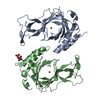

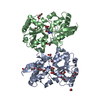
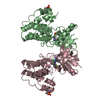

 PDBj
PDBj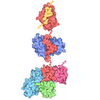
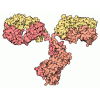
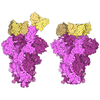
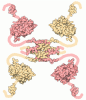
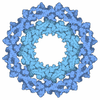
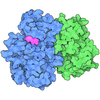
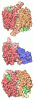
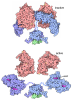
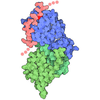
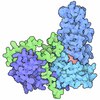

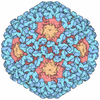
 Assembly

 Escherichia coli (E. coli)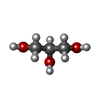

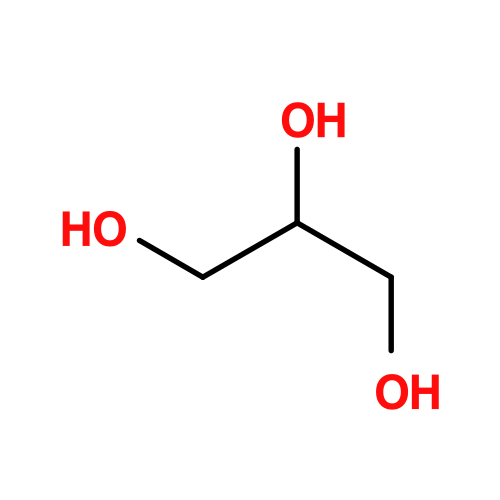 Mass: 92.094 Da / Num. of mol.: 1 / Source method: obtained synthetically / Formula: C3H8O3
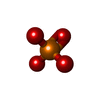
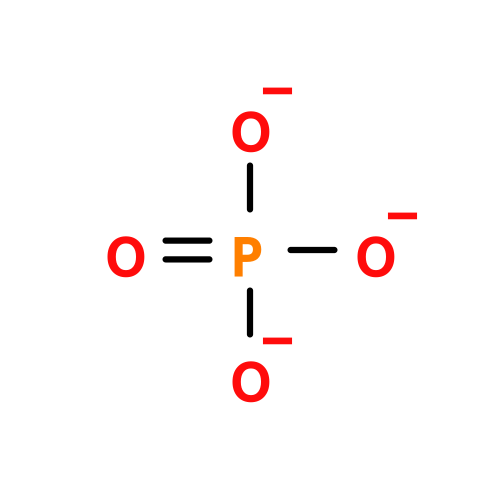 Mass: 94.971 Da / Num. of mol.: 2 / Source method: obtained synthetically / Formula: PO4
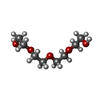
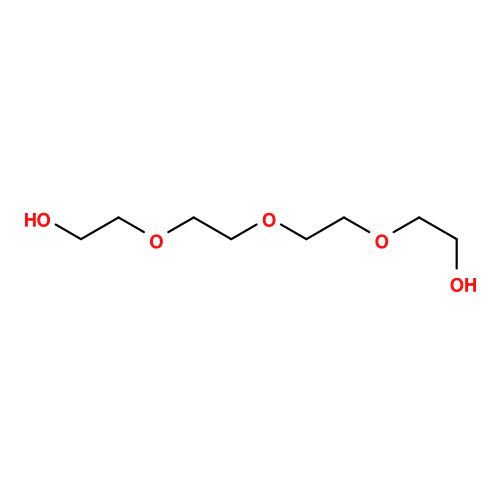 Mass: 194.226 Da / Num. of mol.: 1 / Source method: obtained synthetically / Formula: C8H18O5 / Comment: precipitant*YM
 Sample preparation
 / Beamline: BL13B1 / Wavelength: 1 Å
 Processing