- PDB-5q14: Ligand binding to FARNESOID-X-RECEPTOR -
+
Open data
ID or keywords:
Loading...
-
Basic information
Entry
Database: PDB / ID: 5q14
Title
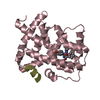
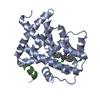
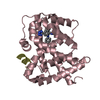
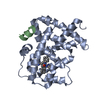
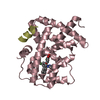
Ligand binding to FARNESOID-X-RECEPTOR
Components
Bile acid receptor
COACTIVATOR PEPTIDE SRC-1 HD3
Keywords
TRANSCRIPTION / D3R / FXR / Docking
Function / homology
Function and homology information
chenodeoxycholic acid binding / positive regulation of phosphatidic acid biosynthetic process / positive regulation of ammonia assimilation cycle / regulation of low-density lipoprotein particle clearance / cellular response to bile acid / intracellular triglyceride homeostasis / negative regulation of interleukin-1 production / negative regulation of very-low-density lipoprotein particle remodeling / regulation of insulin secretion involved in cellular response to glucose stimulus / regulation of bile acid biosynthetic process ...chenodeoxycholic acid binding / positive regulation of phosphatidic acid biosynthetic process / positive regulation of ammonia assimilation cycle / regulation of low-density lipoprotein particle clearance / cellular response to bile acid / intracellular triglyceride homeostasis / negative regulation of interleukin-1 production / negative regulation of very-low-density lipoprotein particle remodeling / regulation of insulin secretion involved in cellular response to glucose stimulus / regulation of bile acid biosynthetic process / negative regulation of monocyte chemotactic protein-1 production / intracellular glutamate homeostasis / nuclear receptor-mediated bile acid signaling pathway / bile acid nuclear receptor activity / toll-like receptor 9 signaling pathway / bile acid binding / positive regulation of transcription from RNA polymerase II promoter by galactose / urea cycle / positive regulation of female receptivity / cellular response to fatty acid / cell-cell junction assembly / regulation of cholesterol metabolic process / positive regulation of interleukin-17 production / negative regulation of interleukin-2 production / NR1H2 & NR1H3 regulate gene expression to control bile acid homeostasis / negative regulation of interleukin-6 production / male mating behavior / negative regulation of type II interferon production / progesterone receptor signaling pathway / Synthesis of bile acids and bile salts / response to progesterone / hypothalamus development / Synthesis of bile acids and bile salts via 27-hydroxycholesterol / negative regulation of tumor necrosis factor production / cerebellum development / fatty acid homeostasis / Endogenous sterols / Synthesis of bile acids and bile salts via 7alpha-hydroxycholesterol / positive regulation of insulin receptor signaling pathway / response to retinoic acid / lactation / negative regulation of tumor necrosis factor-mediated signaling pathway / nuclear retinoid X receptor binding / estrous cycle / positive regulation of neuron differentiation / protein-lysine-acetyltransferase activity / Recycling of bile acids and salts / Transcriptional regulation of brown and beige adipocyte differentiation by EBF2 / estrogen receptor signaling pathway / histone acetyltransferase / NR1H3 & NR1H2 regulate gene expression linked to cholesterol transport and efflux / cellular response to hormone stimulus / intracellular receptor signaling pathway / peroxisome proliferator activated receptor signaling pathway / Regulation of lipid metabolism by PPARalpha / positive regulation of adipose tissue development / bile acid and bile salt transport / cholesterol homeostasis / BMAL1:CLOCK,NPAS2 activates circadian expression / regulation of cellular response to insulin stimulus / RORA,B,C and NR1D1 (REV-ERBA) regulate gene expression / male gonad development / SUMOylation of transcription cofactors / Expression of BMAL (ARNTL), CLOCK, and NPAS2 / Activation of gene expression by SREBF (SREBP) / intracellular glucose homeostasis / hippocampus development / nuclear estrogen receptor binding / nuclear receptor binding / transcription coregulator binding / positive regulation of insulin secretion involved in cellular response to glucose stimulus / negative regulation of canonical NF-kappaB signal transduction / RNA polymerase II transcription regulatory region sequence-specific DNA binding / SUMOylation of intracellular receptors / Heme signaling / PPARA activates gene expression / Cytoprotection by HMOX1 / Transcriptional activation of mitochondrial biogenesis / negative regulation of inflammatory response / RNA polymerase II transcription regulator complex / cerebral cortex development / euchromatin / Transcriptional regulation of white adipocyte differentiation / Nuclear Receptor transcription pathway / mRNA transcription by RNA polymerase II / nuclear receptor activity / transcription coregulator activity / response to estradiol / cellular response to lipopolysaccharide / HATs acetylate histones / transcription regulator complex / MLL4 and MLL3 complexes regulate expression of PPARG target genes in adipogenesis and hepatic steatosis / cell differentiation / DNA-binding transcription activator activity, RNA polymerase II-specific / Estrogen-dependent gene expression / sequence-specific DNA binding / DNA-binding transcription factor activity, RNA polymerase II-specific / defense response to bacterium / signaling receptor complex / transcription coactivator activity Similarity search - Function
In the structure databanks used in Yorodumi, some data are registered as the other names, "COVID-19 virus" and "2019-nCoV". Here are the details of the virus and the list of structure data.
Jan 31, 2019. EMDB accession codes are about to change! (news from PDBe EMDB page)
EMDB accession codes are about to change! (news from PDBe EMDB page)
The allocation of 4 digits for EMDB accession codes will soon come to an end. Whilst these codes will remain in use, new EMDB accession codes will include an additional digit and will expand incrementally as the available range of codes is exhausted. The current 4-digit format prefixed with “EMD-” (i.e. EMD-XXXX) will advance to a 5-digit format (i.e. EMD-XXXXX), and so on. It is currently estimated that the 4-digit codes will be depleted around Spring 2019, at which point the 5-digit format will come into force.
The EM Navigator/Yorodumi systems omit the EMD- prefix.
Related info.:Q: What is EMD? / ID/Accession-code notation in Yorodumi/EM Navigator
Yorodumi is a browser for structure data from EMDB, PDB, SASBDB, etc.
This page is also the successor to EM Navigator detail page, and also detail information page/front-end page for Omokage search.
The word "yorodu" (or yorozu) is an old Japanese word meaning "ten thousand". "mi" (miru) is to see.
Related info.:EMDB / PDB / SASBDB / Comparison of 3 databanks / Yorodumi Search / Aug 31, 2016. New EM Navigator & Yorodumi / Yorodumi Papers / Jmol/JSmol / Function and homology information / Changes in new EM Navigator and Yorodumi
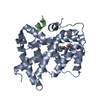
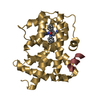
 Movie
Movie Controller


 Open data
 Basic information
 Components
 Keywords
 Function and homology information
 Homo sapiens (human)
 X-RAY DIFFRACTION /
  Authors
 Citation
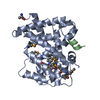
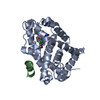
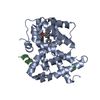
 Structure visualization
 Downloads & links
 Other downloads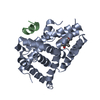




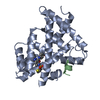
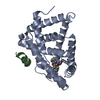

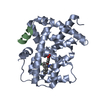
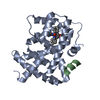



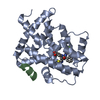

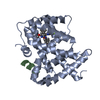
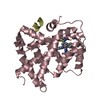

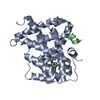


 PDBj
PDBj
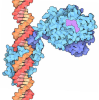
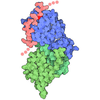
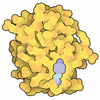
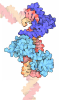
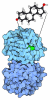
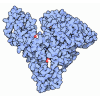
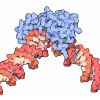
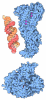
 Assembly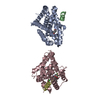
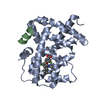

 Escherichia coli (E. coli) / References: UniProt: Q96RI1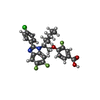
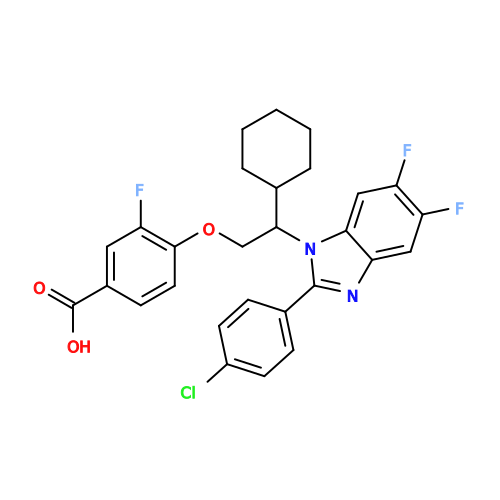 Mass: 528.950 Da / Num. of mol.: 2 / Source method: obtained synthetically / Formula: C28H24ClF3N2O3
 Mass: 18.015 Da / Num. of mol.: 549 / Source method: isolated from a natural source / Formula: H2O
 Sample preparation
 / Beamline: X10SA / Wavelength: 1 Å
 Processing