caspase-9 / caspase complex / negative regulation of ripoptosome assembly involved in necroptotic process / FBXO family protein binding / Formation of apoptosome / apoptosome / regulation of RIG-I signaling pathway / positive regulation of protein K48-linked ubiquitination / regulation of non-canonical NF-kappaB signal transduction / TNF receptor superfamily (TNFSF) members mediating non-canonical NF-kB pathway ...caspase-9 / caspase complex / negative regulation of ripoptosome assembly involved in necroptotic process / FBXO family protein binding / Formation of apoptosome / apoptosome / regulation of RIG-I signaling pathway / positive regulation of protein K48-linked ubiquitination / regulation of non-canonical NF-kappaB signal transduction / TNF receptor superfamily (TNFSF) members mediating non-canonical NF-kB pathway / regulation of necroptotic process / positive regulation of protein K63-linked ubiquitination / regulation of nucleotide-binding domain, leucine rich repeat containing receptor signaling pathway / leukocyte apoptotic process / CD40 receptor complex / glial cell apoptotic process / response to cobalt ion / Caspase activation via Dependence Receptors in the absence of ligand / negative regulation of necroptotic process / XY body / Activation of caspases through apoptosome-mediated cleavage / cysteine-type endopeptidase inhibitor activity involved in apoptotic process / Regulation of the apoptosome activity / SMAC (DIABLO) binds to IAPs / SMAC(DIABLO)-mediated dissociation of IAP:caspase complexes / non-canonical NF-kappaB signal transduction / fibroblast apoptotic process / AKT phosphorylates targets in the cytosol / epithelial cell apoptotic process / positive regulation of protein monoubiquitination / TNFR1-induced proapoptotic signaling / platelet formation / RIPK1-mediated regulated necrosis / regulation of reactive oxygen species metabolic process / response to anesthetic / regulation of toll-like receptor signaling pathway / regulation of innate immune response / Apoptotic cleavage of cellular proteins / Constitutive Signaling by AKT1 E17K in Cancer / necroptotic process / regulation of cell differentiation / signal transduction in response to DNA damage / positive regulation of execution phase of apoptosis / canonical NF-kappaB signal transduction / response to cAMP / cellular response to dexamethasone stimulus / intrinsic apoptotic signaling pathway / TICAM1, RIP1-mediated IKK complex recruitment / protein maturation / placenta development / ubiquitin binding / response to ischemia / positive regulation of protein ubiquitination / IKK complex recruitment mediated by RIP1 / tumor necrosis factor-mediated signaling pathway / TNFR1-induced NF-kappa-B signaling pathway / TNFR2 non-canonical NF-kB pathway / kidney development / enzyme activator activity / Regulation of TNFR1 signaling / NOD1/2 Signaling Pathway / RING-type E3 ubiquitin transferase / protein processing / Regulation of necroptotic cell death / SH3 domain binding / cytoplasmic side of plasma membrane / protein polyubiquitination / intrinsic apoptotic signaling pathway in response to DNA damage / ubiquitin-protein transferase activity / cellular response to UV / ubiquitin protein ligase activity / response to estradiol / peptidase activity / positive regulation of neuron apoptotic process / regulation of cell population proliferation / protein-folding chaperone binding / transferase activity / regulation of inflammatory response / neuron apoptotic process / response to ethanol / regulation of apoptotic process / response to lipopolysaccharide / proteasome-mediated ubiquitin-dependent protein catabolic process / transcription coactivator activity / response to hypoxia / cell surface receptor signaling pathway / positive regulation of canonical NF-kappaB signal transduction / regulation of cell cycle / Ub-specific processing proteases / positive regulation of apoptotic process / cysteine-type endopeptidase activity / apoptotic process / DNA damage response / protein kinase binding / negative regulation of apoptotic process / protein-containing complex binding / protein-containing complex / mitochondrion / zinc ion binding / identical protein binding 類似検索 - 分子機能
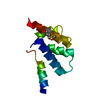
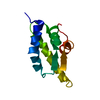
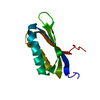
CASP9, CARD domain / BIRC2/BIRC3, UBA domain / : / BIRC2/3-like, UBA domain / Inhibitor Of Apoptosis Protein (2mihbC-IAP-1); Chain A / Inhibitor Of Apoptosis Protein (2mihbC-IAP-1); Chain A / : / Caspase recruitment domain / BIR repeat. / BIR repeat ...CASP9, CARD domain / BIRC2/BIRC3, UBA domain / : / BIRC2/3-like, UBA domain / Inhibitor Of Apoptosis Protein (2mihbC-IAP-1); Chain A / Inhibitor Of Apoptosis Protein (2mihbC-IAP-1); Chain A / : / Caspase recruitment domain / BIR repeat. / BIR repeat / Inhibitor of Apoptosis domain / BIR repeat profile. / Baculoviral inhibition of apoptosis protein repeat / CARD domain / CARD caspase recruitment domain profile. / Caspase recruitment domain / Peptidase C14 family / Peptidase family C14A, His active site / Caspase family histidine active site. / Peptidase C14, caspase non-catalytic subunit p10 / Peptidase family C14A, cysteine active site / Caspase family cysteine active site. / Caspase family p10 domain profile. / Peptidase C14A, caspase catalytic domain / Caspase, interleukin-1 beta converting enzyme (ICE) homologues / Peptidase C14, p20 domain / Caspase family p20 domain profile. / : / Caspase domain / Caspase-like domain superfamily / Zinc finger, C3HC4 type (RING finger) / Death-like domain superfamily / Ring finger / Zinc finger RING-type profile. / Zinc finger, RING-type / Orthogonal Bundle / Mainly Alpha 類似検索 - ドメイン・相同性
Caspase-9 / Baculoviral IAP repeat-containing protein 2 類似検索 - 構成要素
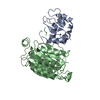
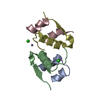
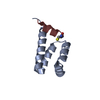
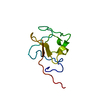
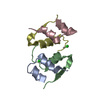
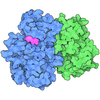
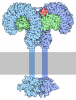
The biological assembly is the heterodimeric complex of CIAP1-BIR3 with N-terminal peptide from Caspase-9 (ATPFQE).
-
要素
#1: タンパク質
BaculoviralIAPrepeat-containingprotein2 / Inhibitor of apoptosis protein 2 / HIAP2 / HIAP-2 / C-IAP1 / TNFR2-TRAF-signaling complex protein 2 ...Inhibitor of apoptosis protein 2 / HIAP2 / HIAP-2 / C-IAP1 / TNFR2-TRAF-signaling complex protein 2 / IAP homolog B / RING finger protein 48
 ムービー
ムービー コントローラー


 データを開く
 基本情報
基本情報 要素
要素 キーワード
キーワード 機能・相同性情報
 Homo sapiens (ヒト)
 X線回折 /
  データ登録者
 引用
引用 構造の表示
構造の表示 ダウンロードとリンク
 その他のダウンロード

 PDBj
PDBj
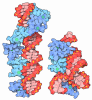
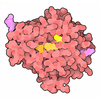
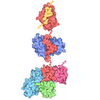

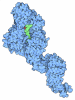
 集合体
集合体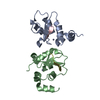

 Escherichia coli (大腸菌) / 株 (発現宿主): BL21 DE3 / 参照: UniProt: Q13490
 分子量: 65.409 Da / 分子数: 2 / 由来タイプ: 合成 / 式: Zn
 分子量: 18.015 Da / 分子数: 268 / 由来タイプ: 天然 / 式: H2O
 試料調製
試料調製 / ビームライン: 17-ID / 波長: 1 Å
 解析
解析