Movie
 Controller


[English] 日本語
 Yorodumi
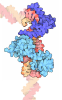
- PDB-31op: CryoEM structure of substrate engaged p97 in complex with Ufd1/Np... -
+ Open data

- Basic information
| Entry | Database: PDB / ID: 31op | ||||||||||||||||||
|---|---|---|---|---|---|---|---|---|---|---|---|---|---|---|---|---|---|---|---|
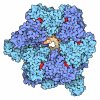
| Title | CryoEM structure of substrate engaged p97 in complex with Ufd1/Npl4 and C-terminal FAF1- State II | ||||||||||||||||||
 Components |
| ||||||||||||||||||
 Keywords | TRANSLOCASE / Complex / ATPase / Protein unfolding / Cell cycle | ||||||||||||||||||
| Function / homology |  Function and homology information UFD1-NPL4 complex / Fas signaling pathway / negative regulation of RIG-I signaling pathway / CD95 death-inducing signaling complex / flavin adenine dinucleotide catabolic process / VCP-NSFL1C complex / protein kinase regulator activity / intracellular protein-containing complex / endoplasmic reticulum stress-induced pre-emptive quality control / endosome to lysosome transport via multivesicular body sorting pathway ...UFD1-NPL4 complex / Fas signaling pathway / negative regulation of RIG-I signaling pathway / CD95 death-inducing signaling complex / flavin adenine dinucleotide catabolic process / VCP-NSFL1C complex / protein kinase regulator activity / intracellular protein-containing complex / endoplasmic reticulum stress-induced pre-emptive quality control / endosome to lysosome transport via multivesicular body sorting pathway / BAT3 complex binding / cellular response to arsenite ion / cytoplasmic ubiquitin ligase complex / Derlin-1 retrotranslocation complex / positive regulation of protein K63-linked deubiquitination / protein-DNA covalent cross-linking repair / deubiquitinase activator activity / positive regulation of oxidative phosphorylation / peptidyl-lysine trimethylation / cytoplasm protein quality control / regulation of protein localization to chromatin / ubiquitin-modified protein reader activity / RQC complex / cellular response to misfolded protein / mitotic spindle disassembly / VCP-NPL4-UFD1 AAA ATPase complex / mitochondrion transport along microtubule / positive regulation of mitochondrial membrane potential / positive regulation of protein monoubiquitination / regulation of protein catabolic process / vesicle-fusing ATPase / K48-linked polyubiquitin modification-dependent protein binding / nuclear outer membrane-endoplasmic reticulum membrane network / NAD+ metabolic process / regulation of aerobic respiration / K63-linked polyubiquitin modification-dependent protein binding / retrograde protein transport, ER to cytosol / stress granule disassembly / negative regulation of type I interferon production / ubiquitin-specific protease binding / polyubiquitin modification-dependent protein binding / ATPase complex / regulation of synapse organization / Golgi organization / positive regulation of ATP biosynthetic process / ubiquitin-like protein ligase binding / RHOH GTPase cycle / intracellular membrane-bounded organelle / skeletal system development / autophagosome maturation / MHC class I protein binding / HSF1 activation / positive regulation of intrinsic apoptotic signaling pathway by p53 class mediator / negative regulation of hippo signaling / endoplasmic reticulum to Golgi vesicle-mediated transport / NF-kappaB binding / mitophagy / interstrand cross-link repair / ATP metabolic process / protein unfolding / endoplasmic reticulum unfolded protein response / heat shock protein binding / Attachment and Entry / ribosome-associated ubiquitin-dependent protein catabolic process / ERAD pathway / Protein methylation / neuron projection morphogenesis / translesion synthesis / proteasome complex / Maturation of protein E / Maturation of protein E / ER Quality Control Compartment (ERQC) / Myoclonic epilepsy of Lafora / regulation of mitochondrial membrane potential / FLT3 signaling by CBL mutants / regulation of neuron apoptotic process / IRAK2 mediated activation of TAK1 complex / Alpha-protein kinase 1 signaling pathway / Glycogen synthesis / IRAK1 recruits IKK complex / IRAK1 recruits IKK complex upon TLR7/8 or 9 stimulation / Prevention of phagosomal-lysosomal fusion / Endosomal Sorting Complex Required For Transport (ESCRT) / Membrane binding and targetting of GAG proteins / positive regulation of DNA replication / Regulation of TBK1, IKKε (IKBKE)-mediated activation of IRF3, IRF7 / Negative regulation of FLT3 / Regulation of TBK1, IKKε-mediated activation of IRF3, IRF7 upon TLR3 ligation / IRAK2 mediated activation of TAK1 complex upon TLR7/8 or 9 stimulation / Constitutive Signaling by NOTCH1 HD Domain Mutants / viral genome replication / NOTCH2 Activation and Transmission of Signal to the Nucleus / TICAM1,TRAF6-dependent induction of TAK1 complex / PTK6 Regulates RTKs and Their Effectors AKT1 and DOK1 / TICAM1-dependent activation of IRF3/IRF7 / APC/C:Cdc20 mediated degradation of Cyclin B / positive regulation of protein ubiquitination / Downregulation of ERBB4 signaling / APC-Cdc20 mediated degradation of Nek2A / regulation of proteasomal protein catabolic process Similarity search - Function | ||||||||||||||||||
| Biological species |  Homo sapiens (human) | ||||||||||||||||||
| Method | ELECTRON MICROSCOPY / single particle reconstruction / cryo EM / Resolution: 3.5 Å | ||||||||||||||||||
 Authors | Drakonaki, A. / van den Boom, J. / Kroening, A. / Meyer, H. / Gatsogiannis, C. | ||||||||||||||||||
| Funding support |  Germany, 5items
| ||||||||||||||||||
 Citation | Journal: Nat Commun / Year: 2026 Title: Structural dynamics of substrate processing by the p97-Ufd1-Npl4-FAF1 machinery. Authors: Athina Drakonaki / Johannes van den Boom / Alexander Kröning / Hemmo Meyer / Christos Gatsogiannis / Abstract: The AAA-ATPase VCP/p97 unfolds ubiquitylated proteins in key signaling and cellular homeostasis pathways, yet the mechanisms by which Ufd1-Npl4 and FAF1 adapters handle ubiquitin chains to coordinate ...The AAA-ATPase VCP/p97 unfolds ubiquitylated proteins in key signaling and cellular homeostasis pathways, yet the mechanisms by which Ufd1-Npl4 and FAF1 adapters handle ubiquitin chains to coordinate substrate loading and processing remain unclear. Our cryo-EM study of p97-Ufd1-Npl4 and FAF1 engaging a substrate reveal interactions that drive substrate processing. While Npl4 is capped by distal ubiquitins, and the initiator ubiquitin can be traced from the Npl4 groove to the ATPase channel at near-atomic resolution, we find that the Npl4 tower adaptively responds to the configurational changes in the ATPase motor's spiral staircase. A helix in FAF1 together with the Ufd1-UT3 domain engage proximal ubiquitins while providing the necessary structural plasticity to accommodate this motion and deliver ubiquitins to Npl4's groove. Our study reveals the intricate, dynamic interplay between p97, Ufd1-Npl4, and FAF1 in efficient processing of ubiquitylated substrates. | ||||||||||||||||||
| History |
|
- Structure visualization
| Structure viewer | Molecule: MolmilJmol/JSmol |
|---|
- Downloads & links
-Download
| PDBx/mmCIF format | 31op.cif.gz | 1004.4 KB | Display | PDBx/mmCIF format |
|---|---|---|---|---|
| PDB format | pdb31op.ent.gz | Display | PDB format | |
| PDBx/mmJSON format | 31op.json.gz | Tree view | PDBx/mmJSON format | |
| Others |  Other downloads |
-Validation report
| Arichive directory | https://data.pdbj.org/pub/pdb/validation_reports/1o/31opftp://data.pdbj.org/pub/pdb/validation_reports/1o/31op | HTTPS FTP |
|---|
-Related structure data
| Related structure data |  58593MC  31olC  31oqC  31orC C: citing same article ( M: map data used to model this data |
|---|---|
| Similar structure data |


-Links
 PDBj
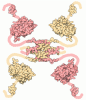
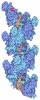
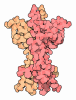
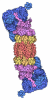
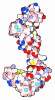
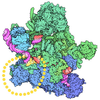
- Assembly
| Deposited unit | 
|
|---|---|
| 1 |
|
-Components
-Protein , 5 types, 15 molecules JKINLMGFEDCBAHT
| #1: Protein | Mass: 8576.831 Da / Num. of mol.: 6 Source method: isolated from a genetically manipulated source Source: (gene. exp.) Homo sapiens (human) / Gene: UBB / Production host:   Escherichia coli BL21 (bacteria) / References: UniProt: P0CG47 #2: Protein | | Mass: 68202.016 Da / Num. of mol.: 1 Source method: isolated from a genetically manipulated source Source: (gene. exp.) Homo sapiens (human) / Gene: NPLOC4, KIAA1499, NPL4 / Production host: Escherichia coli BL21 (bacteria) / References: UniProt: Q8TAT6#3: Protein | Mass: 91665.227 Da / Num. of mol.: 6 / Mutation: A232E, E578Q Source method: isolated from a genetically manipulated source Source: (gene. exp.) Homo sapiens (human) / Gene: VCP, HEL-220, HEL-S-70 / Production host: Escherichia coli BL21 (bacteria) / References: UniProt: P55072, vesicle-fusing ATPase#4: Protein | | Mass: 34544.316 Da / Num. of mol.: 1 Source method: isolated from a genetically manipulated source Source: (gene. exp.) Homo sapiens (human) / Gene: UFD1, UFD1L / Production host: Escherichia coli BL21 (bacteria) / References: UniProt: Q92890#5: Protein | | Mass: 20227.676 Da / Num. of mol.: 1 Source method: isolated from a genetically manipulated source Source: (gene. exp.) Homo sapiens (human) / Gene: FAF1, UBXD12, UBXN3A, CGI-03 / Production host: Escherichia coli BL21 (bacteria) / References: UniProt: Q9UNN5 |
|---|
-Non-polymers , 3 types, 32 molecules 

| #6: Chemical | ChemComp-ADP /  Mass: 427.201 Da / Num. of mol.: 12 / Source method: obtained synthetically / Formula: C10H15N5O10P2 / Feature type: SUBJECT OF INVESTIGATION / Comment: ADP, energy-carrying molecule*YM #7: Chemical | ChemComp-BEF /  Mass: 66.007 Da / Num. of mol.: 10 / Source method: obtained synthetically / Formula: BeF3 / Feature type: SUBJECT OF INVESTIGATION #8: Chemical | ChemComp-MG /  Mass: 24.305 Da / Num. of mol.: 10 / Source method: obtained synthetically / Formula: Mg / Feature type: SUBJECT OF INVESTIGATION |
|---|
-Details
| Has ligand of interest | Y |
|---|---|
| Has protein modification | N |
-Experimental details
-Experiment
| Experiment | Method: ELECTRON MICROSCOPY |
|---|---|
| EM experiment | Aggregation state: PARTICLE / 3D reconstruction method: single particle reconstruction |
- Sample preparation
| Component | Name: Substrate engaged p97 in complex with Ufd1/Npl4 and only-C-term FAF1 Type: CELL / Entity ID: #1-#5 / Source: RECOMBINANT | ||||||||||||||||||||||||||||||||||||||||
|---|---|---|---|---|---|---|---|---|---|---|---|---|---|---|---|---|---|---|---|---|---|---|---|---|---|---|---|---|---|---|---|---|---|---|---|---|---|---|---|---|---|
| Source (natural) | Organism: Homo sapiens (human) | ||||||||||||||||||||||||||||||||||||||||
| Source (recombinant) | Organism: Escherichia coli BL21 (bacteria) | ||||||||||||||||||||||||||||||||||||||||
| Buffer solution | pH: 7.5 / Details: pH 7.5 | ||||||||||||||||||||||||||||||||||||||||
| Buffer component |
| ||||||||||||||||||||||||||||||||||||||||
| Specimen | Conc.: 12 mg/ml / Embedding applied: NO / Shadowing applied: NO / Staining applied: NO / Vitrification applied: YES | ||||||||||||||||||||||||||||||||||||||||
| Vitrification | Instrument: FEI VITROBOT MARK II / Cryogen name: ETHANE / Humidity: 100 % / Chamber temperature: 286.15 K |
- Electron microscopy imaging
| Experimental equipment | 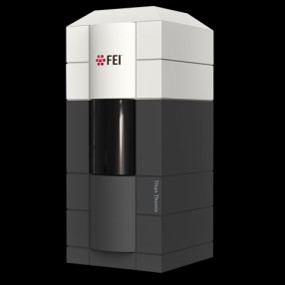 Model: Titan Krios / Image courtesy: FEI Company |
|---|---|
| Microscopy | Model: TFS KRIOS |
| Electron gun | Electron source:  FIELD EMISSION GUN / Accelerating voltage: 300 kV / Illumination mode: FLOOD BEAM |
| Electron lens | Mode: BRIGHT FIELD / Nominal magnification: 270000 X / Nominal defocus max: 2600 nm / Nominal defocus min: 800 nm / Cs: 2.7 mm / C2 aperture diameter: 50 µm / Alignment procedure: COMA FREE |
| Specimen holder | Cryogen: NITROGEN / Specimen holder model: FEI TITAN KRIOS AUTOGRID HOLDER |
| Image recording | Electron dose: 50 e/Å2 / Film or detector model: TFS FALCON 4i (4k x 4k) / Num. of grids imaged: 2 / Num. of real images: 279701 |
| EM imaging optics | Energyfilter name: TFS Selectris X / Energyfilter slit width: 10 eV |
| Image scans | Width: 4096 / Height: 4096 |
- Processing
| EM software |
| ||||||||||||||||||||||||||||||||||||||||
|---|---|---|---|---|---|---|---|---|---|---|---|---|---|---|---|---|---|---|---|---|---|---|---|---|---|---|---|---|---|---|---|---|---|---|---|---|---|---|---|---|---|
| CTF correction | Type: PHASE FLIPPING ONLY | ||||||||||||||||||||||||||||||||||||||||
| Particle selection | Num. of particles selected: 10568986 | ||||||||||||||||||||||||||||||||||||||||
| Symmetry | Point symmetry: C1 (asymmetric) | ||||||||||||||||||||||||||||||||||||||||
| 3D reconstruction | Resolution: 3.5 Å / Resolution method: FSC 0.143 CUT-OFF / Num. of particles: 64905 / Symmetry type: POINT |