- PDB-2mbq: K11-linked Diubiquitin average solution structure at pH 6.8, 150 ... -
+
Open data
ID or keywords:
Loading...
-
Basic information
Entry
Database: PDB / ID: 2mbq
Title
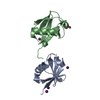
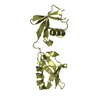
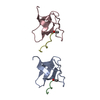
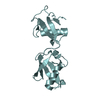
K11-linked Diubiquitin average solution structure at pH 6.8, 150 mM NaCl
Components
Ubiquitin
Keywords
SIGNALING PROTEIN / diubiquitin / K11
Function / homology
Function and homology information
Maturation of protein E / Maturation of protein E / ER Quality Control Compartment (ERQC) / Myoclonic epilepsy of Lafora / FLT3 signaling by CBL mutants / IRAK2 mediated activation of TAK1 complex / Alpha-protein kinase 1 signaling pathway / Glycogen synthesis / IRAK1 recruits IKK complex / IRAK1 recruits IKK complex upon TLR7/8 or 9 stimulation ...Maturation of protein E / Maturation of protein E / ER Quality Control Compartment (ERQC) / Myoclonic epilepsy of Lafora / FLT3 signaling by CBL mutants / IRAK2 mediated activation of TAK1 complex / Alpha-protein kinase 1 signaling pathway / Glycogen synthesis / IRAK1 recruits IKK complex / IRAK1 recruits IKK complex upon TLR7/8 or 9 stimulation / Prevention of phagosomal-lysosomal fusion / Endosomal Sorting Complex Required For Transport (ESCRT) / Membrane binding and targetting of GAG proteins / Regulation of TBK1, IKKε (IKBKE)-mediated activation of IRF3, IRF7 / Negative regulation of FLT3 / Regulation of TBK1, IKKε-mediated activation of IRF3, IRF7 upon TLR3 ligation / IRAK2 mediated activation of TAK1 complex upon TLR7/8 or 9 stimulation / Constitutive Signaling by NOTCH1 HD Domain Mutants / NOTCH2 Activation and Transmission of Signal to the Nucleus / TICAM1,TRAF6-dependent induction of TAK1 complex / PTK6 Regulates RTKs and Their Effectors AKT1 and DOK1 / TICAM1-dependent activation of IRF3/IRF7 / APC/C:Cdc20 mediated degradation of Cyclin B / Downregulation of ERBB4 signaling / APC-Cdc20 mediated degradation of Nek2A / Regulation of FZD by ubiquitination / p75NTR recruits signalling complexes / InlA-mediated entry of Listeria monocytogenes into host cells / TRAF6 mediated IRF7 activation in TLR7/8 or 9 signaling / NF-kB is activated and signals survival / TRAF6-mediated induction of TAK1 complex within TLR4 complex / Regulation of pyruvate metabolism / Pexophagy / PD-L1(CD274) glycosylation and translocation to plasma membrane / NRIF signals cell death from the nucleus / Downregulation of ERBB2:ERBB3 signaling / Regulation of PTEN localization / Regulation of innate immune responses to cytosolic DNA / VLDLR internalisation and degradation / Activated NOTCH1 Transmits Signal to the Nucleus / Translesion synthesis by REV1 / TICAM1, RIP1-mediated IKK complex recruitment / Synthesis of active ubiquitin: roles of E1 and E2 enzymes / ZNF598 and the Ribosome-associated Quality Trigger (RQT) complex dissociate a ribosome stalled on a no-go mRNA / Translesion synthesis by POLK / Regulation of BACH1 activity / InlB-mediated entry of Listeria monocytogenes into host cell / JNK (c-Jun kinases) phosphorylation and activation mediated by activated human TAK1 / Activation of IRF3, IRF7 mediated by TBK1, IKKε (IKBKE) / MAP3K8 (TPL2)-dependent MAPK1/3 activation / Translesion synthesis by POLI / Downregulation of TGF-beta receptor signaling / Josephin domain DUBs / Gap-filling DNA repair synthesis and ligation in GG-NER / IKK complex recruitment mediated by RIP1 / PINK1-PRKN Mediated Mitophagy / TGF-beta receptor signaling in EMT (epithelial to mesenchymal transition) / TNFR1-induced NF-kappa-B signaling pathway / Regulation of activated PAK-2p34 by proteasome mediated degradation / TCF dependent signaling in response to WNT / activated TAK1 mediates p38 MAPK activation / Regulation of NF-kappa B signaling / Maturation of DENV proteins / Autodegradation of Cdh1 by Cdh1:APC/C / APC/C:Cdc20 mediated degradation of Securin / NOTCH3 Activation and Transmission of Signal to the Nucleus / N-glycan trimming in the ER and Calnexin/Calreticulin cycle / Regulation of signaling by CBL / Negative regulators of DDX58/IFIH1 signaling / Asymmetric localization of PCP proteins / Negative regulation of FGFR3 signaling / Ubiquitin-dependent degradation of Cyclin D / Peroxisomal protein import / Fanconi Anemia Pathway / SCF-beta-TrCP mediated degradation of Emi1 / AUF1 (hnRNP D0) binds and destabilizes mRNA / NIK-->noncanonical NF-kB signaling / Stabilization of p53 / TNFR2 non-canonical NF-kB pathway / Negative regulation of FGFR2 signaling / Negative regulation of FGFR4 signaling / Enterobacterial factors antagonize host defense / Negative regulation of FGFR1 signaling / Termination of translesion DNA synthesis / Downregulation of SMAD2/3:SMAD4 transcriptional activity / Assembly of the pre-replicative complex / EGFR downregulation / Vpu mediated degradation of CD4 / Regulation of TNFR1 signaling / Cdc20:Phospho-APC/C mediated degradation of Cyclin A / Assembly Of The HIV Virion / SMAD2/SMAD3:SMAD4 heterotrimer regulates transcription / Dectin-1 mediated noncanonical NF-kB signaling / Degradation of DVL / Degradation of AXIN / Degradation of CRY and PER proteins / Spry regulation of FGF signaling / Late endosomal microautophagy / Hh mutants are degraded by ERAD / Iron uptake and transport Similarity search - Function
Mass: 8576.831 Da / Num. of mol.: 2 / Fragment: UNP residues 1-76 Source method: isolated from a genetically manipulated source Source: (gene. exp.) Homo sapiens (human) / Gene: UBC / Plasmid: pET3a / Production host: Escherichia coli (E. coli) / Strain (production host): BL21(DE3) pJY2 / References: UniProt: P0CG48
Sequence details
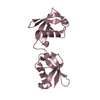
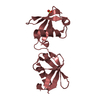
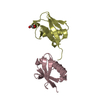
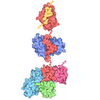
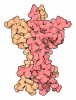
DISTAL UBIQUITIN (CHAIN A) AND PROXIMAL UBIQUITIN (CHAIN B) ARE CONNECTED VIA A COVALENT LINKAGE ...DISTAL UBIQUITIN (CHAIN A) AND PROXIMAL UBIQUITIN (CHAIN B) ARE CONNECTED VIA A COVALENT LINKAGE BETWEEN C GLY 76 OF CHAIN A AND NZ LYS 11 OF CHAIN B. THIS LINKAGE HAS NOT BEEN MODELED IN THIS STRUCTURE.
-
Experimental details
-
Experiment
Experiment
Method: SOLUTION NMR
NMR experiment
Conditions-ID
Experiment-ID
Solution-ID
Type
1
1
1
2D 1H-15N HSQC
1
2
1
2D 1H-15N IPAPHSQC
-
Sample preparation
Details
Contents: 75 uM [U-99% 15N] ubiquitin, 20 mM sodium phosphate, 150 mM sodium chloride, 93% H2O/7% D2O Solvent system: 93% H2O/7% D2O
Type: Bruker Avance / Manufacturer: Bruker / Model: AVANCE / Field strength: 600 MHz
-
Processing
NMR software
Name
Version
Developer
Classification
TopSpin
2.1
BrukerBiospin
collection
NMRPipe
Delaglio, Grzesiek, Vuister, Zhu, PfeiferandBax
processing
Sparky
Goddard
chemicalshiftassignment
in-house
refinement
Refinement
Method: in-house RDC (orientation), MTSL (distance) / Software ordinal: 1 Details: Ub/Ub orientation determined from RDCs via alignment tensors, and Z-distance refined using site-directed spin labeling distance constraints (MTSL on distal position 36) from 0 mM NaCl ...Details: Ub/Ub orientation determined from RDCs via alignment tensors, and Z-distance refined using site-directed spin labeling distance constraints (MTSL on distal position 36) from 0 mM NaCl structure. No MTSL data was collected at 150 mM NaCl.
NMR representative
Selection criteria: closest to the average
NMR ensemble
Conformer selection criteria: target function / Conformers calculated total number: 1 / Conformers submitted total number: 1
+
About Yorodumi
-
News
-
Feb 9, 2022. New format data for meta-information of EMDB entries
New format data for meta-information of EMDB entries
Version 3 of the EMDB header file is now the official format.
The previous official version 1.9 will be removed from the archive.
In the structure databanks used in Yorodumi, some data are registered as the other names, "COVID-19 virus" and "2019-nCoV". Here are the details of the virus and the list of structure data.
Jan 31, 2019. EMDB accession codes are about to change! (news from PDBe EMDB page)
EMDB accession codes are about to change! (news from PDBe EMDB page)
The allocation of 4 digits for EMDB accession codes will soon come to an end. Whilst these codes will remain in use, new EMDB accession codes will include an additional digit and will expand incrementally as the available range of codes is exhausted. The current 4-digit format prefixed with “EMD-” (i.e. EMD-XXXX) will advance to a 5-digit format (i.e. EMD-XXXXX), and so on. It is currently estimated that the 4-digit codes will be depleted around Spring 2019, at which point the 5-digit format will come into force.
The EM Navigator/Yorodumi systems omit the EMD- prefix.
Related info.:Q: What is EMD? / ID/Accession-code notation in Yorodumi/EM Navigator
Yorodumi is a browser for structure data from EMDB, PDB, SASBDB, etc.
This page is also the successor to EM Navigator detail page, and also detail information page/front-end page for Omokage search.
The word "yorodu" (or yorozu) is an old Japanese word meaning "ten thousand". "mi" (miru) is to see.
Related info.:EMDB / PDB / SASBDB / Comparison of 3 databanks / Yorodumi Search / Aug 31, 2016. New EM Navigator & Yorodumi / Yorodumi Papers / Jmol/JSmol / Function and homology information / Changes in new EM Navigator and Yorodumi
 Movie
Movie Controller

 Yorodumi
 Open data
 Basic information
 Components
 Keywords
 Function and homology information
 Homo sapiens (human)
 Authors
 Citation
 Structure visualization
 Downloads & links
 Other downloads



 PDBj
PDBj

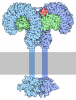
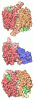
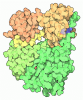
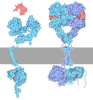
 Assembly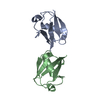

 Escherichia coli (E. coli) / Strain (production host): BL21(DE3) pJY2 / References: UniProt: P0CG48
 HSQC
HSQC Sample preparation
 Processing