regulation of single strand break repair / HDR through MMEJ (alt-NHEJ) / DNA Damage Recognition in GG-NER / Formation of Incision Complex in GG-NER / Dual Incision in GG-NER / pentosyltransferase activity / SUMOylation of DNA damage response and repair proteins / cellular response to superoxide / POLB-Dependent Long Patch Base Excision Repair / regulation of growth rate ...regulation of single strand break repair / HDR through MMEJ (alt-NHEJ) / DNA Damage Recognition in GG-NER / Formation of Incision Complex in GG-NER / Dual Incision in GG-NER / pentosyltransferase activity / SUMOylation of DNA damage response and repair proteins / cellular response to superoxide / POLB-Dependent Long Patch Base Excision Repair / regulation of growth rate / Downregulation of SMAD2/3:SMAD4 transcriptional activity / NAD+-histone H2BS6 serine ADP-ribosyltransferase activity / NAD+-histone H3S10 serine ADP-ribosyltransferase activity / NAD+-histone H2BE35 glutamate ADP-ribosyltransferase activity / positive regulation of myofibroblast differentiation / negative regulation of ATP biosynthetic process / NAD+-protein-tyrosine ADP-ribosyltransferase activity / NAD+-protein-histidine ADP-ribosyltransferase activity / regulation of base-excision repair / mitochondrial DNA metabolic process / regulation of circadian sleep/wake cycle, non-REM sleep / carbohydrate biosynthetic process / non-sequence-specific DNA binding, bending / NAD+-protein-serine ADP-ribosyltransferase activity / NAD DNA ADP-ribosyltransferase activity / single-strand break-containing DNA binding / mitochondrial DNA repair / DNA ADP-ribosylation / regulation of oxidative stress-induced neuron intrinsic apoptotic signaling pathway / signal transduction involved in regulation of gene expression / ATP generation from poly-ADP-D-ribose / replication fork reversal / positive regulation of necroptotic process / establishment of protein localization to chromatin / positive regulation of intracellular estrogen receptor signaling pathway / positive regulation of mitochondrial depolarization / negative regulation of interleukin-17 production / single strand break repair / positive regulation of DNA-templated transcription, elongation / transcription regulator activator activity / NAD+ ADP-ribosyltransferase / protein auto-ADP-ribosylation / negative regulation of telomere maintenance via telomere lengthening / cellular response to zinc ion / positive regulation of cardiac muscle hypertrophy / NAD+-protein-aspartate ADP-ribosyltransferase activity / DNA metabolic process / protein poly-ADP-ribosylation / NAD+-protein-glutamate ADP-ribosyltransferase activity / negative regulation of cGAS/STING signaling pathway / negative regulation of transcription elongation by RNA polymerase II / decidualization / NAD+-protein mono-ADP-ribosyltransferase activity / response to aldosterone / protein autoprocessing / R-SMAD binding / nuclear replication fork / Transferases; Glycosyltransferases; Pentosyltransferases / negative regulation of adipose tissue development / positive regulation of SMAD protein signal transduction / NAD+ poly-ADP-ribosyltransferase activity / cellular response to transforming growth factor beta stimulus / transforming growth factor beta receptor signaling pathway / positive regulation of double-strand break repair via homologous recombination / behavioral response to cocaine / protein localization to chromatin / nucleosome binding / response to gamma radiation / negative regulation of innate immune response / telomere maintenance / nuclear estrogen receptor binding / site of DNA damage / mitochondrion organization / cellular response to nerve growth factor stimulus / positive regulation of protein localization to nucleus / protein-DNA complex / base-excision repair / fibrillar center / NAD binding / cellular response to amyloid-beta / histone deacetylase binding / enzyme activator activity / double-strand break repair / cellular response to UV / cellular response to insulin stimulus / regulation of protein localization / nuclear envelope / site of double-strand break / transcription regulator complex / cellular response to oxidative stress / damaged DNA binding / RNA polymerase II-specific DNA-binding transcription factor binding / response to ethanol / nuclear body / positive regulation of canonical NF-kappaB signal transduction / chromosome / apoptotic process / DNA repair / negative regulation of DNA-templated transcription / ubiquitin protein ligase binding Similarity search - Function
Method: simulated annealing, simulated annealing / Software ordinal: 1 Details: Final Refinement from cyana generated restraints, Multiple rounds of calculations
NMR constraints
NOE constraints total: 1631 / NOE intraresidue total count: 449 / NOE long range total count: 412 / NOE medium range total count: 323 / NOE sequential total count: 447
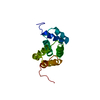
NMR representative
Selection criteria: lowest energy
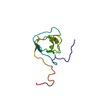
NMR ensemble
Conformer selection criteria: structures with the lowest energy Conformers calculated total number: 100 / Conformers submitted total number: 10
+
About Yorodumi
-
News
-
Feb 9, 2022. New format data for meta-information of EMDB entries
New format data for meta-information of EMDB entries
Version 3 of the EMDB header file is now the official format.
The previous official version 1.9 will be removed from the archive.
In the structure databanks used in Yorodumi, some data are registered as the other names, "COVID-19 virus" and "2019-nCoV". Here are the details of the virus and the list of structure data.
Jan 31, 2019. EMDB accession codes are about to change! (news from PDBe EMDB page)
EMDB accession codes are about to change! (news from PDBe EMDB page)
The allocation of 4 digits for EMDB accession codes will soon come to an end. Whilst these codes will remain in use, new EMDB accession codes will include an additional digit and will expand incrementally as the available range of codes is exhausted. The current 4-digit format prefixed with “EMD-” (i.e. EMD-XXXX) will advance to a 5-digit format (i.e. EMD-XXXXX), and so on. It is currently estimated that the 4-digit codes will be depleted around Spring 2019, at which point the 5-digit format will come into force.
The EM Navigator/Yorodumi systems omit the EMD- prefix.
Related info.:Q: What is EMD? / ID/Accession-code notation in Yorodumi/EM Navigator
Yorodumi is a browser for structure data from EMDB, PDB, SASBDB, etc.
This page is also the successor to EM Navigator detail page, and also detail information page/front-end page for Omokage search.
The word "yorodu" (or yorozu) is an old Japanese word meaning "ten thousand". "mi" (miru) is to see.
Related info.:EMDB / PDB / SASBDB / Comparison of 3 databanks / Yorodumi Search / Aug 31, 2016. New EM Navigator & Yorodumi / Yorodumi Papers / Jmol/JSmol / Function and homology information / Changes in new EM Navigator and Yorodumi
 Movie
Movie Controller


 Open data
 Basic information
 Components
 Keywords
 Function and homology information
 Rattus norvegicus (Norway rat)
 Authors
 Citation
 Structure visualization
 Downloads & links
 Other downloads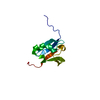

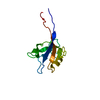
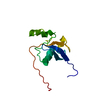
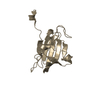

 PDBj
PDBj
 Assembly

 Escherichia coli (E. coli) / References: UniProt: P27008, NAD+ ADP-ribosyltransferase
 HSQC
HSQC Sample preparation
 Processing