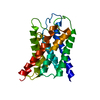
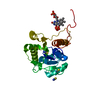
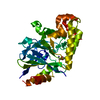
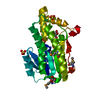
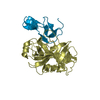
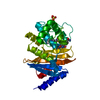
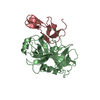
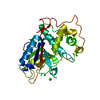
positive regulation of gliogenesis / negative regulation of muscle organ development / negative regulation of membrane potential / glucagon secretion / positive regulation of interleukin-21 production / MAPK3 (ERK1) activation / MAPK1 (ERK2) activation / regulation of glucagon secretion / hepatic immune response / Interleukin-6 signaling ...positive regulation of gliogenesis / negative regulation of muscle organ development / negative regulation of membrane potential / glucagon secretion / positive regulation of interleukin-21 production / MAPK3 (ERK1) activation / MAPK1 (ERK2) activation / regulation of glucagon secretion / hepatic immune response / Interleukin-6 signaling / negative regulation of primary miRNA processing / regulation of vascular endothelial growth factor production / negative regulation of interleukin-1-mediated signaling pathway / positive regulation of transmission of nerve impulse / positive regulation of cell proliferation in bone marrow / interleukin-6 receptor complex / positive regulation of apoptotic DNA fragmentation / hepatocyte proliferation / Regulation of Insulin-like Growth Factor (IGF) transport and uptake by Insulin-like Growth Factor Binding Proteins (IGFBPs) / Post-translational protein phosphorylation / negative regulation of hormone secretion / germinal center B cell differentiation / neutrophil apoptotic process / positive regulation of extracellular matrix disassembly / positive regulation of T-helper 2 cell differentiation / positive regulation of receptor signaling pathway via STAT / interleukin-6 receptor binding / positive regulation of B cell activation / cellular response to interleukin-17 / regulation of circadian sleep/wake cycle, non-REM sleep / T-helper 17 cell lineage commitment / inflammatory response to wounding / positive regulation of T-helper 2 cell cytokine production / endocrine pancreas development / epithelial cell proliferation involved in salivary gland morphogenesis / negative regulation of collagen biosynthetic process / positive regulation of acute inflammatory response / vascular endothelial growth factor production / negative regulation of chemokine production / T follicular helper cell differentiation / branching involved in salivary gland morphogenesis / positive regulation of platelet aggregation / positive regulation of cytokine production involved in inflammatory response / cell surface receptor signaling pathway via STAT / positive regulation of leukocyte adhesion to vascular endothelial cell / negative regulation of bone resorption / myeloid cell homeostasis / cellular response to hepatocyte growth factor stimulus / positive regulation of immunoglobulin production / interleukin-6-mediated signaling pathway / muscle cell cellular homeostasis / defense response to protozoan / positive regulation of interleukin-17 production / histone H3K9ac reader activity / positive regulation of interleukin-10 production / positive regulation of glial cell proliferation / positive regulation of vascular endothelial growth factor production / negative regulation of gluconeogenesis / cellular response to interleukin-1 / positive regulation of epithelial to mesenchymal transition / cell surface receptor signaling pathway via JAK-STAT / positive regulation of chemokine production / positive regulation of neuron differentiation / regulation of insulin secretion / liver regeneration / positive regulation of T cell proliferation / positive regulation of smooth muscle cell proliferation / cell redox homeostasis / response to glucocorticoid / positive regulation of DNA replication / cytokine activity / T cell activation / positive regulation of epithelial cell proliferation / acute-phase response / response to activity / positive regulation of translation / positive regulation of interleukin-1 beta production / response to amphetamine / positive regulation of interleukin-8 production / positive regulation of receptor signaling pathway via JAK-STAT / growth factor activity / positive regulation of neuron projection development / cellular response to virus / positive regulation of protein import into nucleus / positive regulation of miRNA transcription / response to wounding / positive regulation of interleukin-6 production / cellular response to tumor necrosis factor / cytokine-mediated signaling pathway / cellular response to hydrogen peroxide / neuron projection development / positive regulation of nitric oxide biosynthetic process / positive regulation of tumor necrosis factor production / regulation of cell shape / regulation of cell population proliferation / glucose homeostasis / cellular response to lipopolysaccharide / regulation of apoptotic process / gene expression / defense response to virus Similarity search - Function
Conformer selection criteria: structures with the least restraint violations Conformers calculated total number: 100 / Conformers submitted total number: 52
+
About Yorodumi
-
News
-
Feb 9, 2022. New format data for meta-information of EMDB entries
New format data for meta-information of EMDB entries
Version 3 of the EMDB header file is now the official format.
The previous official version 1.9 will be removed from the archive.
In the structure databanks used in Yorodumi, some data are registered as the other names, "COVID-19 virus" and "2019-nCoV". Here are the details of the virus and the list of structure data.
Jan 31, 2019. EMDB accession codes are about to change! (news from PDBe EMDB page)
EMDB accession codes are about to change! (news from PDBe EMDB page)
The allocation of 4 digits for EMDB accession codes will soon come to an end. Whilst these codes will remain in use, new EMDB accession codes will include an additional digit and will expand incrementally as the available range of codes is exhausted. The current 4-digit format prefixed with “EMD-” (i.e. EMD-XXXX) will advance to a 5-digit format (i.e. EMD-XXXXX), and so on. It is currently estimated that the 4-digit codes will be depleted around Spring 2019, at which point the 5-digit format will come into force.
The EM Navigator/Yorodumi systems omit the EMD- prefix.
Related info.:Q: What is EMD? / ID/Accession-code notation in Yorodumi/EM Navigator
Yorodumi is a browser for structure data from EMDB, PDB, SASBDB, etc.
This page is also the successor to EM Navigator detail page, and also detail information page/front-end page for Omokage search.
The word "yorodu" (or yorozu) is an old Japanese word meaning "ten thousand". "mi" (miru) is to see.
Related info.:EMDB / PDB / SASBDB / Comparison of 3 databanks / Yorodumi Search / Aug 31, 2016. New EM Navigator & Yorodumi / Yorodumi Papers / Jmol/JSmol / Function and homology information / Changes in new EM Navigator and Yorodumi