[English] 日本語
Yorodumi
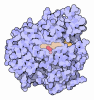
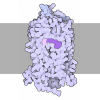
- PDB-23kl: Cryo-EM structure of PSII-LHCII-LHCP from Mesostigma viride. -

+
Open data


ID or keywords:

Loading...

-
Basic information

Entry
Database: PDB / ID: 23kl
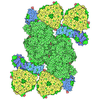
TitleCryo-EM structure of PSII-LHCII-LHCP from Mesostigma viride.
Components
  • (Chlorophyll a-b binding protein, ...) x 5
  • (Cytochrome b559 subunit ...) x 2
  • (Photosystem II ...) x 17
  • 23 kDa subunit of oxygen evolving system of photosystem II
  • Oxygen evolving enhancer protein 3
  • PSII 6.1 kDa protein
KeywordsPHOTOSYNTHESIS / PSII / LHCP
Function / homology
Function and homology information


chloroplast thylakoid / photosystem II oxygen evolving complex / photosystem II assembly / photosynthesis, light harvesting / oxygen evolving activity / photosystem II stabilization / photosystem II reaction center / photosystem II / photosystem II / photosynthetic electron transport chain ...chloroplast thylakoid / photosystem II oxygen evolving complex / photosystem II assembly / photosynthesis, light harvesting / oxygen evolving activity / photosystem II stabilization / photosystem II reaction center / photosystem II / photosystem II / photosynthetic electron transport chain / chlorophyll binding / extrinsic component of membrane / photosynthetic electron transport in photosystem II / photosynthesis, light reaction / phosphate ion binding / chloroplast thylakoid membrane / photosynthesis / cell redox homeostasis / electron transfer activity / protein stabilization / iron ion binding / heme binding / calcium ion binding
Similarity search - Function
Photosystem II PsbR / Photosystem II PsbY, plant / Photosystem II 10 kDa polypeptide PsbR / : / PsbP, C-terminal / PsbP / Oxygen-evolving enhancer protein 3 / Oxygen evolving enhancer protein 3 / Mog1/PsbP, alpha/beta/alpha sandwich / PsbQ-like domain superfamily ...Photosystem II PsbR / Photosystem II PsbY, plant / Photosystem II 10 kDa polypeptide PsbR / : / PsbP, C-terminal / PsbP / Oxygen-evolving enhancer protein 3 / Oxygen evolving enhancer protein 3 / Mog1/PsbP, alpha/beta/alpha sandwich / PsbQ-like domain superfamily / Photosystem II PsbW, class 2 / Photosystem II reaction centre W protein (PsbW) / Photosystem II reaction centre protein Ycf12 / Photosystem II complex subunit Ycf12 / Photosystem II PsbJ / Photosystem II PsbJ superfamily / PsbJ / Photosystem II PsbO, manganese-stabilising / Manganese-stabilising protein / photosystem II polypeptide / Photosystem II reaction centre M protein (PsbM) / Photosystem II PsbM superfamily / Photosystem II PsbZ, reaction centre / Photosystem II PsbZ superfamily / YCF9 / Photosystem II PsbM / Photosystem II PsbX / Photosystem II reaction centre X protein (PsbX) / Photosystem II PsbT / Photosystem II PsbL / Photosystem II CP43 reaction centre protein / Photosystem II PsbL superfamily / Photosystem II PsbT superfamily / Photosystem II CP43 reaction centre protein superfamily / Photosystem II reaction centre T protein / PsbL protein / Photosystem II PsbK / Photosystem II PsbK superfamily / Photosystem II 4 kDa reaction centre component / Photosystem II PsbI / Photosystem II CP47 reaction centre protein / Photosystem II PsbI superfamily / Photosystem II reaction centre I protein (PSII 4.8 kDa protein) / Photosystem II reaction centre protein H / Photosystem II protein D1 / Photosystem II reaction centre protein H superfamily / Photosystem II 10 kDa phosphoprotein / Photosystem II D2 protein / Photosystem II cytochrome b559, conserved site / Photosystem II cytochrome b559, alpha subunit / Photosystem II cytochrome b559, beta subunit / Photosystem II cytochrome b559, N-terminal / Photosystem II cytochrome b559, alpha subunit, lumenal region / Photosystem II cytochrome b559, alpha subunit superfamily / Cytochrome b559, alpha (gene psbE) and beta (gene psbF)subunits / Lumenal portion of Cytochrome b559, alpha (gene psbE) subunit / Cytochrome b559 subunits heme-binding site signature. / Photosystem antenna protein-like / Chlorophyll A-B binding protein, plant and chromista / Photosystem antenna protein-like superfamily / Photosystem II protein / Chlorophyll A-B binding protein / Chlorophyll A-B binding protein / : / Outer membrane protein/outer membrane enzyme PagP, beta-barrel / : / Photosynthetic reaction centre, L/M / Photosystem II protein D1/D2 superfamily / Photosynthetic reaction centre protein / Photosynthetic reaction center proteins signature.
Similarity search - Domain/homology
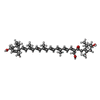
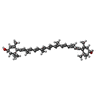
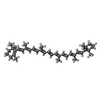
Siphonaxanthin / Siphonein / BETA-CAROTENE / BICARBONATE ION / CHLOROPHYLL B / CHLOROPHYLL A / DIGALACTOSYL DIACYL GLYCEROL (DGDG) / : / PROTOPORPHYRIN IX CONTAINING FE / 1,2-DIPALMITOYL-PHOSPHATIDYL-GLYCEROLE ...Siphonaxanthin / Siphonein / BETA-CAROTENE / BICARBONATE ION / CHLOROPHYLL B / CHLOROPHYLL A / DIGALACTOSYL DIACYL GLYCEROL (DGDG) / : / PROTOPORPHYRIN IX CONTAINING FE / 1,2-DIPALMITOYL-PHOSPHATIDYL-GLYCEROLE / 1,2-DISTEAROYL-MONOGALACTOSYL-DIGLYCERIDE / Chem-LUT / Chem-NEX / CA-MN4-O5 CLUSTER / PHEOPHYTIN A / Chem-PL9 / Chem-SQD / Chem-XAT / Photosystem II subunit O / 23 kDa subunit of oxygen evolving system of photosystem II / Photosystem II BY / Oxygen evolving enhancer protein 3 / Photosystem II subunit X / Chlorophyll a-b binding protein, chloroplastic / Chlorophyll a-b binding protein, chloroplastic / Chlorophyll a-b binding protein, chloroplastic / Chlorophyll a-b binding protein, chloroplastic / Chlorophyll a-b binding protein, chloroplastic / PSII 6.1 kDa protein / Photosystem II 10 kDa polypeptide, chloroplastic / Photosystem II reaction center protein Z / Cytochrome b559 subunit alpha / Cytochrome b559 subunit beta / Photosystem II reaction center protein L / Photosystem II reaction center protein J / Photosystem II reaction center protein M / Photosystem II reaction center protein K / Photosystem II reaction center protein I / Photosystem II reaction center protein Psb30 / Photosystem II reaction center protein H / Photosystem II reaction center protein T / Photosystem II CP47 reaction center protein / Photosystem II protein D1 / Photosystem II CP43 reaction center protein / Photosystem II D2 protein
Similarity search - Component
Biological speciesMesostigma viride (plant)
MethodELECTRON MICROSCOPY / single particle reconstruction / cryo EM / Resolution: 2.25 Å
AuthorsBai, T.Y. / Mao, Z.Y. / Qian, P. / Wang, Y.M. / Tian, L.R.
Funding support China, 1items
OrganizationGrant numberCountry
National Natural Science Foundation of China (NSFC) China
CitationJournal: Sci Adv / Year: 2026
Title: Structural insights into light harvesting and photosystem II evolution in the basal streptophyte .
Authors: Tianyu Bai / Zhiyuan Mao / Dapeng Sun / Fei Ma / Bingxin Ma / Yingjie Gao / Yuelin Li / Yi Yang / Wenqiang Tang / Andrew Hitchcock / Matthew P Johnson / Pu Qian / Yumei Wang / Lirong Tian /
Abstract: The basal streptophyte represents a critical evolutionary transition toward land plants, yet the molecular basis of its ancestral light-harvesting strategy remains elusive. Here, we present a 2.25- ...The basal streptophyte represents a critical evolutionary transition toward land plants, yet the molecular basis of its ancestral light-harvesting strategy remains elusive. Here, we present a 2.25-angstrom resolution cryo-EM structure of the PSII-LHCII-LHCP supercomplex, revealing a unique CSML-type architecture. Our structure reveals a nearly complete set of conserved PSII core subunits, indicating that much of the PSII structural framework found in terrestrial plants was established early in the streptophyte lineage. At the periphery, the complex features a specialized antenna module in which two ancestral LHCP monomers flank CP29. These ancestral antenna proteins bind an unusually high number of carotenoids, with seven carotenoids per subunit, and extensively incorporate marine-type keto carotenoids, siphonaxanthin, and siphonein, throughout the complex, thereby broadening absorption in the blue-green region. The canonical LHCII trimer exhibits a distinctive chlorophyll macrocluster and a 96-femtosecond ultrafast energy transfer component. Together, these findings provide a high-resolution molecular framework for an evolutionary intermediate that combines high-capacity aquatic light harvesting with structural features potentially relevant to photoprotection during the transition toward terrestrial life.
History
DepositionFeb 9, 2026Deposition site: PDBJ / Processing site: PDBC
Revision 1.0Nov 25, 2026Provider: repository / Type: Initial release
Revision 1.0Nov 25, 2026Data content type: EM metadata / Data content type: EM metadata / Provider: repository / Type: Initial release

-
Structure visualization

Structure viewerMolecule:
MolmilJmol/JSmol

Downloads & links

-
Assembly

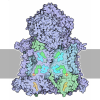
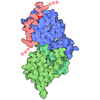
Deposited unit
0: Chlorophyll a-b binding protein, chloroplastic
1: Chlorophyll a-b binding protein, chloroplastic
A: Photosystem II protein D1
B: Photosystem II CP47 reaction center protein
C: Photosystem II CP43 reaction center protein
D: Photosystem II D2 protein
E: Cytochrome b559 subunit alpha
F: Cytochrome b559 subunit beta
G: Chlorophyll a-b binding protein, chloroplastic
H: Photosystem II reaction center protein H
I: Photosystem II reaction center protein I
J: Photosystem II reaction center protein J
K: Photosystem II reaction center protein K
L: Photosystem II reaction center protein L
M: Photosystem II reaction center protein M
N: Chlorophyll a-b binding protein, chloroplastic
O: Photosystem II subunit O
P: 23 kDa subunit of oxygen evolving system of photosystem II
Q: Oxygen evolving enhancer protein 3
R: Photosystem II reaction center protein Psb30
S: Chlorophyll a-b binding protein, chloroplastic
T: Photosystem II reaction center protein T
U: Chlorophyll a-b binding protein, chloroplastic
V: Chlorophyll a-b binding protein, chloroplastic
W: PSII 6.1 kDa protein
X: Photosystem II subunit X
Y: Chlorophyll a-b binding protein, chloroplastic
Z: Photosystem II reaction center protein Z
a: Photosystem II protein D1
b: Photosystem II CP47 reaction center protein
c: Photosystem II CP43 reaction center protein
d: Photosystem II D2 protein
e: Cytochrome b559 subunit alpha
f: Cytochrome b559 subunit beta
g: Chlorophyll a-b binding protein, chloroplastic
h: Photosystem II reaction center protein H
i: Photosystem II reaction center protein I
j: Photosystem II reaction center protein J
k: Photosystem II reaction center protein K
l: Photosystem II reaction center protein L
m: Photosystem II reaction center protein M
n: Chlorophyll a-b binding protein, chloroplastic
o: Photosystem II subunit O
p: 23 kDa subunit of oxygen evolving system of photosystem II
q: Oxygen evolving enhancer protein 3
r: Photosystem II reaction center protein Psb30
s: Chlorophyll a-b binding protein, chloroplastic
t: Photosystem II reaction center protein T
u: Chlorophyll a-b binding protein, chloroplastic
v: Chlorophyll a-b binding protein, chloroplastic
w: PSII 6.1 kDa protein
x: Photosystem II subunit X
y: Chlorophyll a-b binding protein, chloroplastic
z: Photosystem II reaction center protein Z
2: Photosystem II 10 kDa polypeptide, chloroplastic
3: Photosystem II 10 kDa polypeptide, chloroplastic
5: Photosystem II BY
6: Photosystem II BY
hetero molecules


Theoretical massNumber of molelcules
Total (without water)1,603,782517
Polymers1,227,19758
Non-polymers376,585459
Water22,0321223
1


  • Idetical with deposited unit
  • defined by author
  • Evidence: electron microscopy, not applicable
TypeNameSymmetry operationNumber
identity operation1_5551

-
Components

-
Chlorophyll a-b binding protein, ... , 5 types, 14 molecules 01GgNSVnsvUuYy

#1: Protein Chlorophyll a-b binding protein, chloroplastic


Mass: 28222.928 Da / Num. of mol.: 2 / Source method: isolated from a natural source / Source: (natural) Mesostigma viride (plant) / References: UniProt: A2SY27
#8: Protein Chlorophyll a-b binding protein, chloroplastic


Mass: 30176.576 Da / Num. of mol.: 2 / Source method: isolated from a natural source / Source: (natural) Mesostigma viride (plant) / References: UniProt: A2SY25
#15: Protein
Chlorophyll a-b binding protein, chloroplastic


Mass: 28389.176 Da / Num. of mol.: 6 / Source method: isolated from a natural source / Source: (natural) Mesostigma viride (plant) / References: UniProt: A2SY19
#21: Protein Chlorophyll a-b binding protein, chloroplastic


Mass: 32585.371 Da / Num. of mol.: 2 / Source method: isolated from a natural source / Source: (natural) Mesostigma viride (plant) / References: UniProt: A2SY24
#24: Protein Chlorophyll a-b binding protein, chloroplastic


Mass: 28519.125 Da / Num. of mol.: 2 / Source method: isolated from a natural source / Source: (natural) Mesostigma viride (plant) / References: UniProt: A2SY26

-
Photosystem II ... , 17 types, 34 molecules AaBbCcDdHhIiJjKkLlMmOoRrTtXxZz...

#2: Protein Photosystem II protein D1 / PSII D1 protein / Photosystem II Q(B) protein


Mass: 38949.504 Da / Num. of mol.: 2 / Source method: isolated from a natural source / Source: (natural) Mesostigma viride (plant) / References: UniProt: Q9MUW0, photosystem II
#3: Protein Photosystem II CP47 reaction center protein / PSII 47 kDa protein / Protein CP-47


Mass: 56434.465 Da / Num. of mol.: 2 / Source method: isolated from a natural source / Source: (natural) Mesostigma viride (plant) / References: UniProt: Q9MUV7
#4: Protein Photosystem II CP43 reaction center protein / PSII 43 kDa protein / Protein CP-43


Mass: 52174.590 Da / Num. of mol.: 2 / Source method: isolated from a natural source / Source: (natural) Mesostigma viride (plant) / References: UniProt: Q9MUW1
#5: Protein Photosystem II D2 protein / PSII D2 protein / Photosystem Q(A) protein


Mass: 39540.320 Da / Num. of mol.: 2 / Source method: isolated from a natural source / Source: (natural) Mesostigma viride (plant) / References: UniProt: Q9MUW2, photosystem II
#9: Protein Photosystem II reaction center protein H / PSII-H / Photosystem II 10 kDa phosphoprotein


Mass: 7916.259 Da / Num. of mol.: 2 / Source method: isolated from a natural source / Source: (natural) Mesostigma viride (plant) / References: UniProt: Q9MUV4
#10: Protein/peptide Photosystem II reaction center protein I / PSII-I / PSII 4.8 kDa protein


Mass: 4448.295 Da / Num. of mol.: 2 / Source method: isolated from a natural source / Source: (natural) Mesostigma viride (plant) / References: UniProt: Q9MUS1
#11: Protein/peptide Photosystem II reaction center protein J / PSII-J


Mass: 4305.029 Da / Num. of mol.: 2 / Source method: isolated from a natural source / Source: (natural) Mesostigma viride (plant) / References: UniProt: Q9MUQ3
#12: Protein/peptide Photosystem II reaction center protein K / PSII-K


Mass: 5328.439 Da / Num. of mol.: 2 / Source method: isolated from a natural source / Source: (natural) Mesostigma viride (plant) / References: UniProt: Q9MUS0
#13: Protein/peptide Photosystem II reaction center protein L / PSII-L


Mass: 4477.185 Da / Num. of mol.: 2 / Source method: isolated from a natural source / Source: (natural) Mesostigma viride (plant) / References: UniProt: Q9MUQ2
#14: Protein/peptide Photosystem II reaction center protein M / PSII-M


Mass: 3454.211 Da / Num. of mol.: 2 / Source method: isolated from a natural source / Source: (natural) Mesostigma viride (plant) / References: UniProt: Q9MUQ7
#16: Protein Photosystem II subunit O


Mass: 32870.434 Da / Num. of mol.: 2 / Source method: isolated from a natural source / Source: (natural) Mesostigma viride (plant) / References: UniProt: A0A7S4X3M9
#19: Protein/peptide Photosystem II reaction center protein Psb30 / Photosystem II reaction center protein Ycf12


Mass: 3417.175 Da / Num. of mol.: 2 / Source method: isolated from a natural source / Source: (natural) Mesostigma viride (plant) / References: UniProt: Q9MUS3
#20: Protein/peptide Photosystem II reaction center protein T / PSII-T


Mass: 3619.427 Da / Num. of mol.: 2 / Source method: isolated from a natural source / Source: (natural) Mesostigma viride (plant) / References: UniProt: Q9MUV6
#23: Protein Photosystem II subunit X


Mass: 12253.337 Da / Num. of mol.: 2 / Source method: isolated from a natural source / Source: (natural) Mesostigma viride (plant) / References: UniProt: A0A7S5CEJ1
#25: Protein Photosystem II reaction center protein Z / PSII-Z


Mass: 6647.021 Da / Num. of mol.: 2 / Source method: isolated from a natural source / Source: (natural) Mesostigma viride (plant) / References: UniProt: Q9MUP9
#26: Protein Photosystem II 10 kDa polypeptide, chloroplastic


Mass: 14087.241 Da / Num. of mol.: 2 / Source method: isolated from a natural source / Source: (natural) Mesostigma viride (plant) / References: UniProt: A2SY31
#27: Protein Photosystem II BY


Mass: 42321.539 Da / Num. of mol.: 2 / Source method: isolated from a natural source / Source: (natural) Mesostigma viride (plant) / References: UniProt: A0A7S4X4T2

-
Cytochrome b559 subunit ... , 2 types, 4 molecules EeFf

#6: Protein Cytochrome b559 subunit alpha / PSII reaction center subunit V


Mass: 9384.487 Da / Num. of mol.: 2 / Source method: isolated from a natural source / Source: (natural) Mesostigma viride (plant) / References: UniProt: Q9MUQ0
#7: Protein/peptide Cytochrome b559 subunit beta / PSII reaction center subunit VI


Mass: 4657.542 Da / Num. of mol.: 2 / Source method: isolated from a natural source / Source: (natural) Mesostigma viride (plant) / References: UniProt: Q9MUQ1

-
Protein , 3 types, 6 molecules PpQqWw

#17: Protein 23 kDa subunit of oxygen evolving system of photosystem II / 23 kDa thylakoid membrane protein / OEC 23 kDa subunit


Mass: 27846.428 Da / Num. of mol.: 2 / Source method: isolated from a natural source / Source: (natural) Mesostigma viride (plant) / References: UniProt: A0A7S4X4K2
#18: Protein Oxygen evolving enhancer protein 3


Mass: 21840.016 Da / Num. of mol.: 2 / Source method: isolated from a natural source / Source: (natural) Mesostigma viride (plant) / References: UniProt: A0A7S5CEB7
#22: Protein PSII 6.1 kDa protein


Mass: 12953.884 Da / Num. of mol.: 2 / Source method: isolated from a natural source / Source: (natural) Mesostigma viride (plant) / References: UniProt: A2SY30

-
Sugars , 1 types, 15 molecules

#41: Sugar
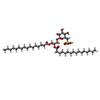
ChemComp-DGD / DIGALACTOSYL DIACYL GLYCEROL (DGDG)


Type: saccharide / Mass: 949.299 Da / Num. of mol.: 15 / Source method: obtained synthetically / Formula: C51H96O15

-
Non-polymers , 20 types, 1667 molecules
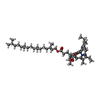
#28: Chemical...
ChemComp-CLA / CHLOROPHYLL A


Mass: 893.489 Da / Num. of mol.: 198 / Source method: obtained synthetically / Formula: C55H72MgN4O5
#29: Chemical...
ChemComp-CHL / CHLOROPHYLL B


Mass: 907.472 Da / Num. of mol.: 60 / Source method: obtained synthetically / Formula: C55H70MgN4O6
#30: Chemical
ChemComp-0IE / Siphonaxanthin


Mass: 600.870 Da / Num. of mol.: 12 / Source method: obtained synthetically / Formula: C40H56O4
#31: Chemical...
ChemComp-0UR / Siphonein


Mass: 781.157 Da / Num. of mol.: 25 / Source method: obtained synthetically / Formula: C52H76O5
#32: Chemical
ChemComp-LUT / (3R,3'R,6S)-4,5-DIDEHYDRO-5,6-DIHYDRO-BETA,BETA-CAROTENE-3,3'-DIOL / (3R,3'R)-BETA,BETA-CAROTENE-3,3'-DIOL / LUTEIN


Mass: 568.871 Da / Num. of mol.: 5 / Source method: obtained synthetically / Formula: C40H56O2
#33: Chemical...
ChemComp-BCR / BETA-CAROTENE


Mass: 536.873 Da / Num. of mol.: 22 / Source method: obtained synthetically / Formula: C40H56
#34: Chemical
ChemComp-PHO / PHEOPHYTIN A


Mass: 871.200 Da / Num. of mol.: 4 / Source method: obtained synthetically / Formula: C55H74N4O5
#35: Chemical
ChemComp-CL / CHLORIDE ION


Mass: 35.453 Da / Num. of mol.: 4 / Source method: obtained synthetically / Formula: Cl
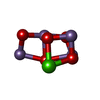
#36: Chemical ChemComp-OEX / CA-MN4-O5 CLUSTER


Mass: 339.827 Da / Num. of mol.: 2 / Source method: obtained synthetically / Formula: CaMn4O5
#37: Chemical
ChemComp-SQD / 1,2-DI-O-ACYL-3-O-[6-DEOXY-6-SULFO-ALPHA-D-GLUCOPYRANOSYL]-SN-GLYCEROL / SULFOQUINOVOSYLDIACYLGLYCEROL


Mass: 795.116 Da / Num. of mol.: 8 / Source method: obtained synthetically / Formula: C41H78O12S
#38: Chemical...
ChemComp-LMG / 1,2-DISTEAROYL-MONOGALACTOSYL-DIGLYCERIDE


Mass: 787.158 Da / Num. of mol.: 35 / Source method: obtained synthetically / Formula: C45H86O10
#39: Chemical
ChemComp-PL9 / 2,3-DIMETHYL-5-(3,7,11,15,19,23,27,31,35-NONAMETHYL-2,6,10,14,18,22,26,30,34-HEXATRIACONTANONAENYL-2,5-CYCLOHEXADIENE-1,4-DIONE-2,3-DIMETHYL-5-SOLANESYL-1,4-BENZOQUINONE / PLASTOQUINONE 9


Mass: 749.201 Da / Num. of mol.: 4 / Source method: obtained synthetically / Formula: C53H80O2
#40: Chemical ChemComp-FE2 / FE (II) ION


Mass: 55.845 Da / Num. of mol.: 2 / Source method: obtained synthetically / Formula: Fe
#42: Chemical...
ChemComp-LHG / 1,2-DIPALMITOYL-PHOSPHATIDYL-GLYCEROLE


Mass: 722.970 Da / Num. of mol.: 21 / Source method: obtained synthetically / Formula: C38H75O10P / Comment: phospholipid*YM
#43: Chemical...
ChemComp-LMN / Lauryl Maltose Neopentyl Glycol / 2,2-didecylpropane-1,3-bis-b-D-maltopyranoside


Mass: 1005.188 Da / Num. of mol.: 22 / Source method: obtained synthetically / Formula: C47H88O22 / Comment: detergent*YM
#44: Chemical ChemComp-BCT / BICARBONATE ION


Mass: 61.017 Da / Num. of mol.: 2 / Source method: obtained synthetically / Formula: CHO3 / Comment: pH buffer*YM
#45: Chemical ChemComp-HEM / PROTOPORPHYRIN IX CONTAINING FE / HEME


Mass: 616.487 Da / Num. of mol.: 2 / Source method: obtained synthetically / Formula: C34H32FeN4O4
#46: Chemical
ChemComp-NEX / (1R,3R)-6-{(3E,5E,7E,9E,11E,13E,15E,17E)-18-[(1S,4R,6R)-4-HYDROXY-2,2,6-TRIMETHYL-7-OXABICYCLO[4.1.0]HEPT-1-YL]-3,7,12,16-TETRAMETHYLOCTADECA-1,3,5,7,9,11,13,15,17-NONAENYLIDENE}-1,5,5-TRIMETHYLCYCLOHEXANE-1,3-DIOL / (3S,5R,6R,3'S,5'R,6'S)-5',6'-EPOXY-6,7-DIDEHYDRO- 5,6,5',6'-TETRAHYDRO-BETA,BETA-CAROTENE-3,5,3'-TRIOL / 9'-CIS-NEOXANTHIN


Mass: 600.870 Da / Num. of mol.: 10 / Source method: obtained synthetically / Formula: C40H56O4
#47: Chemical
ChemComp-XAT / (3S,5R,6S,3'S,5'R,6'S)-5,6,5',6'-DIEPOXY-5,6,5',6'- TETRAHYDRO-BETA,BETA-CAROTENE-3,3'-DIOL / VIOLAXANTHIN


Mass: 600.870 Da / Num. of mol.: 6 / Source method: isolated from a natural source / Formula: C40H56O4
#48: Water ChemComp-HOH / water


Mass: 18.015 Da / Num. of mol.: 1223 / Source method: isolated from a natural source / Formula: H2O

-
Details

Has ligand of interestN
Has protein modificationY

-
Experimental details

-
Experiment

ExperimentMethod: ELECTRON MICROSCOPY
EM experimentAggregation state: PARTICLE / 3D reconstruction method: single particle reconstruction

-
Sample preparation

ComponentName: PSII-LHCII-LHCP / Type: COMPLEX / Entity ID: #1-#27 / Source: NATURAL
Molecular weightExperimental value: NO
Source (natural)Organism: Mesostigma viride (plant)
Buffer solutionpH: 7.5
SpecimenEmbedding applied: NO / Shadowing applied: NO / Staining applied: NO / Vitrification applied: YES
VitrificationCryogen name: ETHANE

-
Electron microscopy imaging

Experimental equipment
Model: Tecnai Polara / Image courtesy: FEI Company
MicroscopyModel: FEI POLARA 300
Electron gunElectron source: OTHER / Accelerating voltage: 300 kV / Illumination mode: OTHER
Electron lensMode: OTHER / Nominal defocus max: 2000 nm / Nominal defocus min: 1000 nm
Image recordingElectron dose: 60 e/Å2 / Film or detector model: GATAN K3 (6k x 4k)

-
Processing

EM software
IDNameCategory
1crYOLOparticle selection
13cryoSPARC3D reconstruction
CTF correctionType: PHASE FLIPPING AND AMPLITUDE CORRECTION
3D reconstructionResolution: 2.25 Å / Resolution method: FSC 0.143 CUT-OFF / Num. of particles: 299782 / Symmetry type: POINT

+
About Yorodumi

-
News

-
Feb 9, 2022. New format data for meta-information of EMDB entries

New format data for meta-information of EMDB entries

  • Version 3 of the EMDB header file is now the official format.
  • The previous official version 1.9 will be removed from the archive.

Related info.:EMDB header

External links:wwPDB to switch to version 3 of the EMDB data model

-
Aug 12, 2020. Covid-19 info

Covid-19 info

URL: https://pdbj.org/emnavi/covid19.php

New page: Covid-19 featured information page in EM Navigator.

Related info.:Covid-19 info / Mar 5, 2020. Novel coronavirus structure data

+
Mar 5, 2020. Novel coronavirus structure data

Novel coronavirus structure data

Related info.:Yorodumi Speices / Aug 12, 2020. Covid-19 info

External links:COVID-19 featured content - PDBj / Molecule of the Month (242):Coronavirus Proteases

+
Jan 31, 2019. EMDB accession codes are about to change! (news from PDBe EMDB page)

EMDB accession codes are about to change! (news from PDBe EMDB page)

  • The allocation of 4 digits for EMDB accession codes will soon come to an end. Whilst these codes will remain in use, new EMDB accession codes will include an additional digit and will expand incrementally as the available range of codes is exhausted. The current 4-digit format prefixed with “EMD-” (i.e. EMD-XXXX) will advance to a 5-digit format (i.e. EMD-XXXXX), and so on. It is currently estimated that the 4-digit codes will be depleted around Spring 2019, at which point the 5-digit format will come into force.
  • The EM Navigator/Yorodumi systems omit the EMD- prefix.

Related info.:Q: What is EMD? / ID/Accession-code notation in Yorodumi/EM Navigator

External links:EMDB Accession Codes are Changing Soon! / Contact to PDBj

+
Jul 12, 2017. Major update of PDB

Major update of PDB

  • wwPDB released updated PDB data conforming to the new PDBx/mmCIF dictionary.
  • This is a major update changing the version number from 4 to 5, and with Remediation, in which all the entries are updated.
  • In this update, many items about electron microscopy experimental information are reorganized (e.g. em_software).
  • Now, EM Navigator and Yorodumi are based on the updated data.

External links:wwPDB Remediation / Enriched Model Files Conforming to OneDep Data Standards Now Available in the PDB FTP Archive

-
Yorodumi

Thousand views of thousand structures

  • Yorodumi is a browser for structure data from EMDB, PDB, SASBDB, etc.
  • This page is also the successor to EM Navigator detail page, and also detail information page/front-end page for Omokage search.
  • The word "yorodu" (or yorozu) is an old Japanese word meaning "ten thousand". "mi" (miru) is to see.

Related info.:EMDB / PDB / SASBDB / Comparison of 3 databanks / Yorodumi Search / Aug 31, 2016. New EM Navigator & Yorodumi / Yorodumi Papers / Jmol/JSmol / Function and homology information / Changes in new EM Navigator and Yorodumi

Read more