 Movie
Movie Controller


+ Open data

- Basic information
| Entry | Database: PDB / ID: 22gk | |||||||||||||||
|---|---|---|---|---|---|---|---|---|---|---|---|---|---|---|---|---|
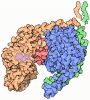
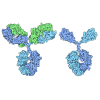
| Title | C5a bound C5aR2 in complex with beta-arrestin1 | |||||||||||||||
 Components Components |
| |||||||||||||||
 Keywords Keywords | MEMBRANE PROTEIN/IMMUNESYSTEM / C5aR2 / GPCR / membrane protein / active / arrestin / C5a / MEMBRANE PROTEIN-IMMUNESYSTEM complex | |||||||||||||||
| Function / homology |  Function and homology information Function and homology informationTGFBR3 regulates TGF-beta signaling / MAP2K and MAPK activation / Activation of SMO / Golgi Associated Vesicle Biogenesis / regulation of interleukin-8 production / Lysosome Vesicle Biogenesis / Terminal pathway of complement / membrane attack complex / complement component C5a receptor activity / AP-2 adaptor complex binding ...TGFBR3 regulates TGF-beta signaling / MAP2K and MAPK activation / Activation of SMO / Golgi Associated Vesicle Biogenesis / regulation of interleukin-8 production / Lysosome Vesicle Biogenesis / Terminal pathway of complement / membrane attack complex / complement component C5a receptor activity / AP-2 adaptor complex binding / Ub-specific processing proteases / clathrin coat of coated pit / Cargo recognition for clathrin-mediated endocytosis / clathrin heavy chain binding / negative regulation of neutrophil chemotaxis / negative regulation of macrophage chemotaxis / Activation of C3 and C5 / Clathrin-mediated endocytosis / complement activation, GZMK pathway / other organism cell membrane / clathrin-dependent endocytosis / desensitization of G protein-coupled receptor signaling pathway / acetylcholine receptor binding / complement receptor mediated signaling pathway / complement activation, alternative pathway / G protein-coupled receptor internalization / chemokine activity / inositol hexakisphosphate binding / negative regulation of Notch signaling pathway / Thrombin signalling through proteinase activated receptors (PARs) / G alpha (s) signalling events / sensory perception / negative regulation of interleukin-6 production / endopeptidase inhibitor activity / clathrin binding / small molecule binding / pseudopodium / phosphatidylinositol-3,4,5-trisphosphate binding / positive regulation of receptor internalization / negative regulation of tumor necrosis factor production / positive regulation of vascular endothelial growth factor production / complement activation, classical pathway / positive regulation of chemokine production / Regulation of Complement cascade / basal plasma membrane / Peptide ligand-binding receptors / receptor internalization / positive regulation of protein phosphorylation / G protein-coupled receptor binding / chemotaxis / G protein-coupled receptor activity / apical part of cell / phospholipase C-activating G protein-coupled receptor signaling pathway / protein transport / positive regulation of cytosolic calcium ion concentration / cytoplasmic vesicle / ubiquitin-dependent protein catabolic process / killing of cells of another organism / G alpha (i) signalling events / molecular adaptor activity / basolateral plasma membrane / positive regulation of ERK1 and ERK2 cascade / cell surface receptor signaling pathway / inflammatory response / G protein-coupled receptor signaling pathway / signaling receptor binding / signal transduction / : / DNA-templated transcription / extracellular exosome / extracellular region / nucleus / plasma membrane / cytosol / cytoplasm Similarity search - Function | |||||||||||||||
| Biological species |  Homo sapiens (human) Homo sapiens (human)  Mus musculus (house mouse) Mus musculus (house mouse) Bos taurus (domestic cattle) Bos taurus (domestic cattle) | |||||||||||||||
| Method | ELECTRON MICROSCOPY / single particle reconstruction / cryo EM / Resolution: 2.84 Å | |||||||||||||||
 Authors Authors | Qin, J. / Cai, C. / Shan, M. / Zhang, Y. | |||||||||||||||
| Funding support | 1items
| |||||||||||||||
 Citation Citation | Journal: Cell Res / Year: 2026 Title: Atypical signaling, ligand recognition and selective agonist discovery of complement receptor C5aR2. Authors: Jiao Qin / Chenxi Cai / Mayu Shan / Suqing Zhou / Qingya Shen / Tianyi Zhu / Mingming Zhao / Yang Mei / Fanghan Ji / Dan-Dan Shen / Shao-Kun Zang / Huibing Zhang / Haomang Xu / Ming Yang / ...Authors: Jiao Qin / Chenxi Cai / Mayu Shan / Suqing Zhou / Qingya Shen / Tianyi Zhu / Mingming Zhao / Yang Mei / Fanghan Ji / Dan-Dan Shen / Shao-Kun Zang / Huibing Zhang / Haomang Xu / Ming Yang / Wei-Wei Wang / Rong Xiao / Bing Yang / Chunyou Mao / Zhenhua Shao / Haijing Wu / Qianjin Lu / Yan Zhang /  Abstract: C5a, the most potent anaphylatoxin in the complement system, exerts its effects through the canonical G protein-coupled receptor C5aR1 and the arrestin-coupled receptor C5aR2. Despite the critical ...C5a, the most potent anaphylatoxin in the complement system, exerts its effects through the canonical G protein-coupled receptor C5aR1 and the arrestin-coupled receptor C5aR2. Despite the critical role of C5aR2 in immunomodulation, the molecular mechanisms underlying its biased signaling, ligand recognition, and associated pathophysiology remain poorly understood. Here, we report cryo-electron microscopy structures of β-arrestin 1-bound C5aR2 and C5aR1 stimulated by C5a or its metabolite C5a. By combining structural analysis with functional assays, we identified the key structural determinants that prevent G protein coupling and confer intrinsic bias toward β-arrestins. Comparative analysis elucidated the distinct ligand recognition mechanism of C5aR2 and explained the retained affinity of C5a for C5aR2. These findings guided the rational design of ZQ105, a highly selective C5aR2 agonist. Leveraging ZQ105 as a chemical probe, functional studies revealed that selective C5aR2 activation induces distinct pro-inflammatory responses and receptor internalization in neutrophils. This study provides novel structural insights into transducer engagement and ligand recognition by C5aR2, yielding a valuable pharmacological tool for exploring C5aR2-related pathophysiological processes. | |||||||||||||||
| History |
|
- Structure visualization
| Structure viewer | Molecule: MolmilJmol/JSmol |
|---|
- Downloads & links
-Download
| PDBx/mmCIF format | 22gk.cif.gz | 177.9 KB | Display | PDBx/mmCIF format |
|---|---|---|---|---|
| PDB format | pdb22gk.ent.gz | 136.2 KB | Display | PDB format |
| PDBx/mmJSON format | 22gk.json.gz | Tree view | PDBx/mmJSON format | |
| Others |  Other downloads Other downloads |
-Validation report
| Arichive directory | https://data.pdbj.org/pub/pdb/validation_reports/2g/22gkftp://data.pdbj.org/pub/pdb/validation_reports/2g/22gk | HTTPS FTP |
|---|
-Related structure data
| Related structure data |  68262MC  22crC  22glC  22gmC M: map data used to model this data C: citing same article ( |
|---|---|
| Similar structure data |


-Links
 PDBj
PDBj
- Assembly
| Deposited unit | 
|
|---|---|
| 1 |
|
-Components
| #1: Protein | Mass: 8342.727 Da / Num. of mol.: 1 / Mutation: C27R Source method: isolated from a genetically manipulated source Source: (gene. exp.) Homo sapiens (human) / Gene: C5, CPAMD4 / Production host:   Escherichia coli (E. coli) / References: UniProt: P01031 Escherichia coli (E. coli) / References: UniProt: P01031 |
|---|---|
| #2: Protein | Mass: 36513.188 Da / Num. of mol.: 1 Source method: isolated from a genetically manipulated source Source: (gene. exp.) Homo sapiens (human) / Gene: C5AR2, C5L2, GPR77 / Production host:  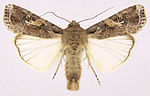 Spodoptera frugiperda (fall armyworm) / References: UniProt: Q9P296 Spodoptera frugiperda (fall armyworm) / References: UniProt: Q9P296 |
| #3: Antibody | Mass: 24407.180 Da / Num. of mol.: 1 Source method: isolated from a genetically manipulated source Source: (gene. exp.) Mus musculus (house mouse) / Production host: Escherichia coli (E. coli) |
| #4: Antibody | Mass: 23435.064 Da / Num. of mol.: 1 Source method: isolated from a genetically manipulated source Source: (gene. exp.) Mus musculus (house mouse) / Production host: Escherichia coli (E. coli) |
| #5: Protein | Mass: 38980.805 Da / Num. of mol.: 1 / Mutation: R169E Source method: isolated from a genetically manipulated source Source: (gene. exp.) Bos taurus (domestic cattle) / Gene: ARRB1 / Production host: Spodoptera frugiperda (fall armyworm) / References: UniProt: P17870 |
| Has ligand of interest | N |
| Has protein modification | Y |
-Experimental details
-Experiment
| Experiment | Method: ELECTRON MICROSCOPY |
|---|---|
| EM experiment | Aggregation state: PARTICLE / 3D reconstruction method: single particle reconstruction |
- Sample preparation
| Component | Name: C5a anaphylatoxin chemotactic receptor 2 / Type: COMPLEX / Entity ID: all / Source: RECOMBINANT | ||||||||||||||||
|---|---|---|---|---|---|---|---|---|---|---|---|---|---|---|---|---|---|
| Source (natural) |
| ||||||||||||||||
| Source (recombinant) |
| ||||||||||||||||
| Buffer solution | pH: 7.5 | ||||||||||||||||
| Specimen | Embedding applied: NO / Shadowing applied: NO / Staining applied: NO / Vitrification applied: YES | ||||||||||||||||
| Vitrification | Cryogen name: ETHANE |
- Electron microscopy imaging
| Experimental equipment |  Model: Titan Krios / Image courtesy: FEI Company |
|---|---|
| Microscopy | Model: TFS KRIOS |
| Electron gun | Electron source:  FIELD EMISSION GUN / Accelerating voltage: 300 kV / Illumination mode: FLOOD BEAM FIELD EMISSION GUN / Accelerating voltage: 300 kV / Illumination mode: FLOOD BEAM |
| Electron lens | Mode: BRIGHT FIELD / Nominal defocus max: 1500 nm / Nominal defocus min: 700 nm / Cs: 2.7 mm |
| Image recording | Electron dose: 52 e/Å2 / Film or detector model: FEI FALCON IV (4k x 4k) |
- Processing
| EM software |
| ||||||||||||
|---|---|---|---|---|---|---|---|---|---|---|---|---|---|
| CTF correction | Type: PHASE FLIPPING AND AMPLITUDE CORRECTION | ||||||||||||
| 3D reconstruction | Resolution: 2.84 Å / Resolution method: FSC 0.143 CUT-OFF / Num. of particles: 111355 / Symmetry type: POINT |
