 Movie
Movie Controller


+ Open data

- Basic information
| Entry |  | |||||||||
|---|---|---|---|---|---|---|---|---|---|---|
| Title | C5a-desArg bound C5aR2 in complex with beta-arrestin1 | |||||||||
 Map data Map data | ||||||||||
 Sample Sample |
| |||||||||
 Keywords Keywords | C5aR2 / GPCR / membrane protein / active / arrestin / C5a-desArg / MEMBRANE PROTEIN/IMMUNE SYSTEM / MEMBRANE PROTEIN-IMMUNE SYSTEM complex | |||||||||
| Function / homology |  Function and homology information Function and homology informationTGFBR3 regulates TGF-beta signaling / MAP2K and MAPK activation / Activation of SMO / Golgi Associated Vesicle Biogenesis / regulation of interleukin-8 production / Lysosome Vesicle Biogenesis / Terminal pathway of complement / membrane attack complex / complement component C5a receptor activity / AP-2 adaptor complex binding ...TGFBR3 regulates TGF-beta signaling / MAP2K and MAPK activation / Activation of SMO / Golgi Associated Vesicle Biogenesis / regulation of interleukin-8 production / Lysosome Vesicle Biogenesis / Terminal pathway of complement / membrane attack complex / complement component C5a receptor activity / AP-2 adaptor complex binding / Ub-specific processing proteases / clathrin coat of coated pit / Cargo recognition for clathrin-mediated endocytosis / clathrin heavy chain binding / negative regulation of neutrophil chemotaxis / protein localization to non-motile cilium / Clathrin-mediated endocytosis / Activation of C3 and C5 / negative regulation of macrophage chemotaxis / complement activation, GZMK pathway / desensitization of G protein-coupled receptor signaling pathway / acetylcholine receptor binding / complement receptor mediated signaling pathway / clathrin-dependent endocytosis / G protein-coupled receptor internalization / inositol hexakisphosphate binding / chemokine activity / negative regulation of Notch signaling pathway / Thrombin signalling through proteinase activated receptors (PARs) / G alpha (s) signalling events / sensory perception / negative regulation of interleukin-6 production / clathrin binding / small molecule binding / endopeptidase inhibitor activity / positive regulation of smoothened signaling pathway / pseudopodium / phosphatidylinositol-3,4,5-trisphosphate binding / positive regulation of receptor internalization / negative regulation of tumor necrosis factor production / positive regulation of vascular endothelial growth factor production / positive regulation of chemokine production / Regulation of Complement cascade / basal plasma membrane / Peptide ligand-binding receptors / receptor internalization / positive regulation of protein phosphorylation / G protein-coupled receptor binding / chemotaxis / G protein-coupled receptor activity / positive regulation of angiogenesis / apical part of cell / phospholipase C-activating G protein-coupled receptor signaling pathway / positive regulation of cytosolic calcium ion concentration / cytoplasmic vesicle / ubiquitin-dependent protein catabolic process / G alpha (i) signalling events / basolateral plasma membrane / molecular adaptor activity / positive regulation of ERK1 and ERK2 cascade / cell surface receptor signaling pathway / inflammatory response / G protein-coupled receptor signaling pathway / signaling receptor binding / signal transduction / extracellular exosome / extracellular region / nucleus / plasma membrane / cytosol / cytoplasm Similarity search - Function | |||||||||
| Biological species |  Homo sapiens (human) / Homo sapiens (human) /   Mus musculus (house mouse) / Mus musculus (house mouse) /  Bos taurus (domestic cattle) Bos taurus (domestic cattle) | |||||||||
| Method | single particle reconstruction / cryo EM / Resolution: 2.9 Å | |||||||||
 Authors Authors | Qin J / Cai C / Shan M / Zhang Y | |||||||||
| Funding support | 1 items
| |||||||||
 Citation Citation | Journal: Cell Res / Year: 2026 Title: Atypical signaling, ligand recognition and selective agonist discovery of complement receptor C5aR2. Authors: Jiao Qin / Chenxi Cai / Mayu Shan / Suqing Zhou / Qingya Shen / Tianyi Zhu / Mingming Zhao / Yang Mei / Fanghan Ji / Dan-Dan Shen / Shao-Kun Zang / Huibing Zhang / Haomang Xu / Ming Yang / ...Authors: Jiao Qin / Chenxi Cai / Mayu Shan / Suqing Zhou / Qingya Shen / Tianyi Zhu / Mingming Zhao / Yang Mei / Fanghan Ji / Dan-Dan Shen / Shao-Kun Zang / Huibing Zhang / Haomang Xu / Ming Yang / Wei-Wei Wang / Rong Xiao / Bing Yang / Chunyou Mao / Zhenhua Shao / Haijing Wu / Qianjin Lu / Yan Zhang /  Abstract: C5a, the most potent anaphylatoxin in the complement system, exerts its effects through the canonical G protein-coupled receptor C5aR1 and the arrestin-coupled receptor C5aR2. Despite the critical ...C5a, the most potent anaphylatoxin in the complement system, exerts its effects through the canonical G protein-coupled receptor C5aR1 and the arrestin-coupled receptor C5aR2. Despite the critical role of C5aR2 in immunomodulation, the molecular mechanisms underlying its biased signaling, ligand recognition, and associated pathophysiology remain poorly understood. Here, we report cryo-electron microscopy structures of β-arrestin 1-bound C5aR2 and C5aR1 stimulated by C5a or its metabolite C5a. By combining structural analysis with functional assays, we identified the key structural determinants that prevent G protein coupling and confer intrinsic bias toward β-arrestins. Comparative analysis elucidated the distinct ligand recognition mechanism of C5aR2 and explained the retained affinity of C5a for C5aR2. These findings guided the rational design of ZQ105, a highly selective C5aR2 agonist. Leveraging ZQ105 as a chemical probe, functional studies revealed that selective C5aR2 activation induces distinct pro-inflammatory responses and receptor internalization in neutrophils. This study provides novel structural insights into transducer engagement and ligand recognition by C5aR2, yielding a valuable pharmacological tool for exploring C5aR2-related pathophysiological processes. | |||||||||
| History |
|
- Structure visualization
| Supplemental images |
|---|

- Downloads & links
-EMDB archive
| Map data | emd_68177.map.gz | 103.2 MB | EMDB map data format | |
|---|---|---|---|---|
| Header (meta data) | emd-68177-v30.xmlemd-68177.xml | 19.3 KB 19.3 KB | Display Display | EMDB header |
| Images |  emd_68177.png emd_68177.png | 42.9 KB | ||
| Filedesc metadata | emd-68177.cif.gz | 6.7 KB | ||
| Archive directory |  https://data.pdbj.org/pub/emdb/structures/EMD-68177ftp://data.pdbj.org/pub/emdb/structures/EMD-68177 https://data.pdbj.org/pub/emdb/structures/EMD-68177ftp://data.pdbj.org/pub/emdb/structures/EMD-68177 | HTTPS FTP |
-Related structure data
| Related structure data |  22crMC  22gkC  22glC  22gmC C: citing same article ( M: atomic model generated by this map |
|---|---|
| Similar structure data |


-Links
| EMDB pages | EMDB (EBI/PDBe) / EMDataResource |
|---|---|
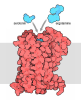
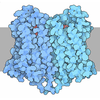
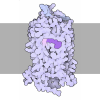
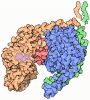
| Related items in Molecule of the Month |
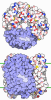
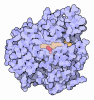
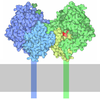
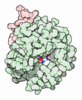
-Map
| File | Download / File: emd_68177.map.gz / Format: CCP4 / Size: 125 MB / Type: IMAGE STORED AS FLOATING POINT NUMBER (4 BYTES) | ||||||||||||||||||||||||||||||||||||
|---|---|---|---|---|---|---|---|---|---|---|---|---|---|---|---|---|---|---|---|---|---|---|---|---|---|---|---|---|---|---|---|---|---|---|---|---|---|
| Projections & slices | Image control
Images are generated by Spider. | ||||||||||||||||||||||||||||||||||||
| Voxel size | X=Y=Z: 0.93 Å | ||||||||||||||||||||||||||||||||||||
| Density |
| ||||||||||||||||||||||||||||||||||||
| Symmetry | Space group: 1 | ||||||||||||||||||||||||||||||||||||
| Details | EMDB XML:
|
 Z (Sec.)
 Y (Row.)
 X (Col.)


-Supplemental data
- Sample components
-Entire : C5a anaphylatoxin chemotactic receptor 2
| Entire | Name: C5a anaphylatoxin chemotactic receptor 2 |
|---|---|
| Components |
|
-Supramolecule #1: C5a anaphylatoxin chemotactic receptor 2
| Supramolecule | Name: C5a anaphylatoxin chemotactic receptor 2 / type: organelle_or_cellular_component / ID: 1 / Parent: 0 / Macromolecule list: all |
|---|---|
| Source (natural) | Organism: Homo sapiens (human) |
-Macromolecule #1: C5a anaphylatoxin
| Macromolecule | Name: C5a anaphylatoxin / type: protein_or_peptide / ID: 1 / Number of copies: 1 / Enantiomer: LEVO |
|---|---|
| Source (natural) | Organism: Homo sapiens (human) |
| Molecular weight | Theoretical: 8.342727 KDa |
| Recombinant expression | Organism:   Escherichia coli (E. coli) Escherichia coli (E. coli) |
| Sequence | String: TLQKKIEEIA AKYKHSVVKK CCYDGARVNN DETCEQRAAR ISLGPRCIKA FTECCVVASQ LRANISHKDM QLGR UniProtKB: Complement C5 |
-Macromolecule #2: C5a anaphylatoxin chemotactic receptor 2
| Macromolecule | Name: C5a anaphylatoxin chemotactic receptor 2 / type: protein_or_peptide / ID: 2 / Number of copies: 1 / Enantiomer: LEVO |
|---|---|
| Source (natural) | Organism: Homo sapiens (human) |
| Molecular weight | Theoretical: 36.513188 KDa |
| Recombinant expression | Organism:   Spodoptera frugiperda (fall armyworm) Spodoptera frugiperda (fall armyworm) |
| Sequence | String: MGNDSVSYEY GDYSDLSDRP VDCLDGACLA IDPLRVAPLP LYAAIFLVGV PGNAMVAWVA GKVARRRVGA TWLLHLAVAD LLCCLSLPI LAVPIARGGH WPYGAVGCRA LPSIILLTMY ASVLLLAALS ADLCFLALGP AWWSTVQRAC GVQVACGAAW T LALLLTVP ...String: MGNDSVSYEY GDYSDLSDRP VDCLDGACLA IDPLRVAPLP LYAAIFLVGV PGNAMVAWVA GKVARRRVGA TWLLHLAVAD LLCCLSLPI LAVPIARGGH WPYGAVGCRA LPSIILLTMY ASVLLLAALS ADLCFLALGP AWWSTVQRAC GVQVACGAAW T LALLLTVP SAIYRRLHQE HFPARLQCVV DYGGSSSTEN AVTAIRFLFG FLGPLVAVAS CHSALLCWAA RRCRPLGTAI VV GFFVCWA PYHLLGLVLT VAAPNSALLA RALRAEPLIV GLALAHSCLN PMLFLYFGRA QLRRSLPAAC HWALRESQGQ DE (SEP)VD(SEP)KK(SEP) (TPO)(SEP)HDLVSEME V UniProtKB: C5a anaphylatoxin chemotactic receptor 2 |
-Macromolecule #3: Fab30 heavy chain
| Macromolecule | Name: Fab30 heavy chain / type: protein_or_peptide / ID: 3 / Number of copies: 1 / Enantiomer: LEVO |
|---|---|
| Source (natural) | Organism: Mus musculus (house mouse) |
| Molecular weight | Theoretical: 24.40718 KDa |
| Recombinant expression | Organism: Escherichia coli (E. coli) |
| Sequence | String: EISEVQLVES GGGLVQPGGS LRLSCAASGF NVYSSSIHWV RQAPGKGLEW VASISSYYGY TYYADSVKGR FTISADTSKN TAYLQMNSL RAEDTAVYYC ARSRQFWYSG LDYWGQGTLV TVSSASTKGP SVFPLAPSSK STSGGTAALG CLVKDYFPEP V TVSWNSGA ...String: EISEVQLVES GGGLVQPGGS LRLSCAASGF NVYSSSIHWV RQAPGKGLEW VASISSYYGY TYYADSVKGR FTISADTSKN TAYLQMNSL RAEDTAVYYC ARSRQFWYSG LDYWGQGTLV TVSSASTKGP SVFPLAPSSK STSGGTAALG CLVKDYFPEP V TVSWNSGA LTSGVHTFPA VLQSSGLYSL SSVVTVPSSS LGTQTYICNV NHKPSNTKVD KKVEPKSCDK T |
-Macromolecule #4: Fab30 light chain
| Macromolecule | Name: Fab30 light chain / type: protein_or_peptide / ID: 4 / Number of copies: 1 / Enantiomer: LEVO |
|---|---|
| Source (natural) | Organism: Mus musculus (house mouse) |
| Molecular weight | Theoretical: 23.435064 KDa |
| Recombinant expression | Organism: Escherichia coli (E. coli) |
| Sequence | String: SDIQMTQSPS SLSASVGDRV TITCRASQSV SSAVAWYQQK PGKAPKLLIY SASSLYSGVP SRFSGSRSGT DFTLTISSLQ PEDFATYYC QQYKYVPVTF GQGTKVEIKR TVAAPSVFIF PPSDSQLKSG TASVVCLLNN FYPREAKVQW KVDNALQSGN S QESVTEQD ...String: SDIQMTQSPS SLSASVGDRV TITCRASQSV SSAVAWYQQK PGKAPKLLIY SASSLYSGVP SRFSGSRSGT DFTLTISSLQ PEDFATYYC QQYKYVPVTF GQGTKVEIKR TVAAPSVFIF PPSDSQLKSG TASVVCLLNN FYPREAKVQW KVDNALQSGN S QESVTEQD SKDSTYSLSS TLTLSKADYE KHKVYACEVT HQGLSSPVTK SFNRGEC |
-Macromolecule #5: Beta-arrestin-1
| Macromolecule | Name: Beta-arrestin-1 / type: protein_or_peptide / ID: 5 / Number of copies: 1 / Enantiomer: LEVO |
|---|---|
| Source (natural) | Organism: Bos taurus (domestic cattle) |
| Molecular weight | Theoretical: 44.135273 KDa |
| Recombinant expression | Organism: Spodoptera frugiperda (fall armyworm) |
| Sequence | String: MGDKGTRVFK KASPNGKLTV YLGKRDFVDH IDLVEPVDGV VLVDPEYLKE RRVYVTLTCA FRYGREDLDV LGLTFRKDLF VANVQSFPP APEDKKPLTR LQERLIKKLG EHAYPFTFEI PPNLPCSVTL QPGPEDTGKA CGVDYEVKAF CAENLEEKIH K RNSVRLVI ...String: MGDKGTRVFK KASPNGKLTV YLGKRDFVDH IDLVEPVDGV VLVDPEYLKE RRVYVTLTCA FRYGREDLDV LGLTFRKDLF VANVQSFPP APEDKKPLTR LQERLIKKLG EHAYPFTFEI PPNLPCSVTL QPGPEDTGKA CGVDYEVKAF CAENLEEKIH K RNSVRLVI EKVQYAPERP GPQPTAETTR QFLMSDKPLH LEASLDKEIY YHGEPISVNV HVTNNTNKTV KKIKISVRQY AD ICLFNTA QYKCPVAMEE ADDTVAPSST FCKVYTLTPF LANNREKRGL ALDGKLKHED TNLASSTLLR EGANREILGI IVS YKVKVK LVVSRGGLLG DLASSDVAVE LPFTLMHPKP KEEPPHREVP EHETPVDTNL IELDTNDDDA AAEDFAR UniProtKB: Beta-arrestin-1 |
-Experimental details
-Structure determination
| Method | cryo EM |
|---|---|
 Processing Processing | single particle reconstruction |
| Aggregation state | particle |
-Sample preparation
| Buffer | pH: 7.5 |
|---|---|
| Vitrification | Cryogen name: ETHANE |
- Electron microscopy
| Microscope | TFS KRIOS |
|---|---|
| Image recording | Film or detector model: FEI FALCON IV (4k x 4k) / Average electron dose: 52.0 e/Å2 |
| Electron beam | Acceleration voltage: 300 kV / Electron source:  FIELD EMISSION GUN FIELD EMISSION GUN |
| Electron optics | Illumination mode: FLOOD BEAM / Imaging mode: BRIGHT FIELD / Cs: 2.7 mm / Nominal defocus max: 1.5 µm / Nominal defocus min: 0.7000000000000001 µm |
| Experimental equipment |  Model: Titan Krios / Image courtesy: FEI Company |
