Movie
Movie Controller

[English] 日本語
 Yorodumi
- PDB-11rl: CryoEM structure of the human origin recognition complex with DNA... -
+ Open data

- Basic information
| Entry | Database: PDB / ID: 11rl | |||||||||
|---|---|---|---|---|---|---|---|---|---|---|
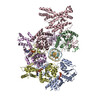
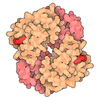
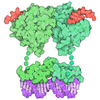
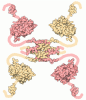
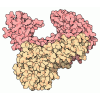
| Title | CryoEM structure of the human origin recognition complex with DNA and CDC6 protein | |||||||||
 Components Components |
| |||||||||
 Keywords Keywords | REPLICATION / Origin Recognition Complex / ORC / origin licensing / WH domain / ATPase / protein-DNA complex | |||||||||
| Function / homology |  Function and homology information Function and homology informationcellular response to vasopressin / traversing start control point of mitotic cell cycle / positive regulation of chromosome segregation / CDC6 association with the ORC:origin complex / polar body extrusion after meiotic divisions / origin recognition complex / E2F-enabled inhibition of pre-replication complex formation / inner kinetochore / nuclear origin of replication recognition complex / nuclear pre-replicative complex ...cellular response to vasopressin / traversing start control point of mitotic cell cycle / positive regulation of chromosome segregation / CDC6 association with the ORC:origin complex / polar body extrusion after meiotic divisions / origin recognition complex / E2F-enabled inhibition of pre-replication complex formation / inner kinetochore / nuclear origin of replication recognition complex / nuclear pre-replicative complex / DNA replication checkpoint signaling / DNA replication preinitiation complex / negative regulation of DNA replication / regulation of cyclin-dependent protein serine/threonine kinase activity / mitotic DNA replication checkpoint signaling / Transcription of E2F targets under negative control by DREAM complex / regulation of mitotic metaphase/anaphase transition / G1/S-Specific Transcription / spindle midzone / positive regulation of cytokinesis / cellular response to angiotensin / regulation of DNA replication / DNA replication origin binding / Activation of the pre-replicative complex / DNA replication initiation / protein polymerization / Activation of ATR in response to replication stress / heterochromatin / positive regulation of fibroblast proliferation / Assembly of the ORC complex at the origin of replication / protein serine/threonine kinase binding / Assembly of the pre-replicative complex / CDK-mediated phosphorylation and removal of Cdc6 / Orc1 removal from chromatin / spindle pole / DNA replication / cell division / chromosome, telomeric region / protein-macromolecule adaptor activity / chromosome / nucleotide binding / negative regulation of cell population proliferation / centrosome / chromatin binding / nucleolus / chromatin / negative regulation of transcription by RNA polymerase II / ATP hydrolysis activity / DNA binding / nucleoplasm / ATP binding / membrane / nucleus / cytosol / cytoplasm Similarity search - Function | |||||||||
| Biological species |  Homo sapiens (human) Homo sapiens (human)DNA molecule (others) | |||||||||
| Method | ELECTRON MICROSCOPY / single particle reconstruction / cryo EM / Resolution: 2.8 Å | |||||||||
 Authors Authors | Chouhan, O.P. / Joshua Tor, L. | |||||||||
| Funding support |  United States, 1items United States, 1items
| |||||||||
 Citation Citation | Journal: To Be Published Title: Evolution of Origin Sequence and Recognition for Licensing of Eukaryotic DNA Replication Authors: Bauer, J. / Zali, N. / Chouhan, O.P. / El Demerdash, O. / Loell, K. / Kinney, J. / Joshua-Tor, L. / Stillman, B. | |||||||||
| History |
|
- Structure visualization
| Structure viewer | Molecule: MolmilJmol/JSmol |
|---|
- Downloads & links
-Download
| PDBx/mmCIF format | 11rl.cif.gz | 567.7 KB | Display | PDBx/mmCIF format |
|---|---|---|---|---|
| PDB format | pdb11rl.ent.gz | 435.5 KB | Display | PDB format |
| PDBx/mmJSON format | 11rl.json.gz | Tree view | PDBx/mmJSON format | |
| Others |  Other downloads Other downloads |
-Validation report
| Arichive directory | https://data.pdbj.org/pub/pdb/validation_reports/1r/11rlftp://data.pdbj.org/pub/pdb/validation_reports/1r/11rl | HTTPS FTP |
|---|
-Related structure data
| Related structure data |  75978MC  11stC  11suC  11svC M: map data used to model this data C: citing same article ( |
|---|---|
| Similar structure data |


-Links
 PDBj
PDBj
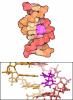
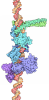
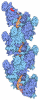
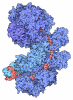
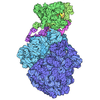
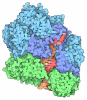
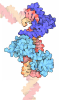
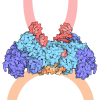
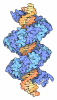
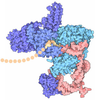
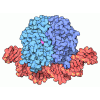
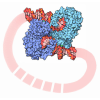
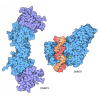
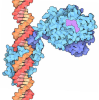
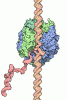
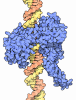
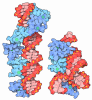
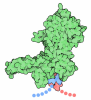
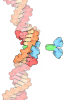

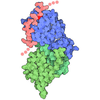
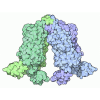
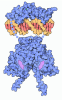
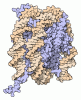
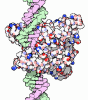
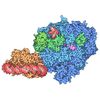
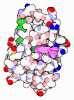
- Assembly
| Deposited unit | 
|
|---|---|
| 1 |
|
-Components
-Origin recognition complex subunit ... , 5 types, 5 molecules BDACE
| #1: Protein | Mass: 66063.375 Da / Num. of mol.: 1 Source method: isolated from a genetically manipulated source Source: (gene. exp.) Homo sapiens (human) / Gene: ORC2, ORC2L / Cell line (production host): Sf9 / Production host:  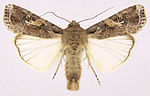 Spodoptera frugiperda (fall armyworm) / References: UniProt: Q13416 Spodoptera frugiperda (fall armyworm) / References: UniProt: Q13416 |
|---|---|
| #2: Protein | Mass: 50443.266 Da / Num. of mol.: 1 Source method: isolated from a genetically manipulated source Details: No Tag, Native protein / Source: (gene. exp.) Homo sapiens (human) / Gene: ORC4, ORC4L / Cell line (production host): Sf9 / Production host: Spodoptera frugiperda (fall armyworm) / References: UniProt: O43929 |
| #5: Protein | Mass: 97556.914 Da / Num. of mol.: 1 Source method: isolated from a genetically manipulated source Details: N-terminal TwinStrep-SUMOstar-TEV tag, which was cleaved off using TEV protease, and G remained at the N-terminal after TEV cleavage. Source: (gene. exp.) Homo sapiens (human) / Gene: ORC1, ORC1L, PARC1 / Cell line (production host): Sf9 / Production host: Spodoptera frugiperda (fall armyworm) / References: UniProt: Q13415 |
| #6: Protein | Mass: 82422.109 Da / Num. of mol.: 1 Source method: isolated from a genetically manipulated source Details: N-terminal TwinStrep-SUMOstar-TEV tag, which was cleaved off using TEV protease, and G remained at the N-terminal after TEV cleavage. Source: (gene. exp.) Homo sapiens (human) / Gene: ORC3, LATHEO, ORC3L / Cell line (production host): Sf9 / Production host: Spodoptera frugiperda (fall armyworm) / References: UniProt: Q9UBD5 |
| #7: Protein | Mass: 50349.934 Da / Num. of mol.: 1 Source method: isolated from a genetically manipulated source Source: (gene. exp.) Homo sapiens (human) / Gene: ORC5, ORC5L / Cell line (production host): Sf9 / Production host: Spodoptera frugiperda (fall armyworm) / References: UniProt: O43913 |
-DNA chain , 2 types, 2 molecules HI
| #3: DNA chain | Mass: 18630.834 Da / Num. of mol.: 1 / Source method: obtained synthetically / Source: (synth.) DNA molecule (others) |
|---|---|
| #4: DNA chain | Mass: 18364.727 Da / Num. of mol.: 1 / Source method: obtained synthetically / Source: (synth.) DNA molecule (others) |
-Protein , 1 types, 1 molecules G
| #8: Protein | Mass: 62877.402 Da / Num. of mol.: 1 Source method: isolated from a genetically manipulated source Details: N-terminal 8XHis-SUMOstar-TEV tag, which was cleaved off using TEV protease, and G remained at the N-terminal after TEV cleavage. Source: (gene. exp.) Homo sapiens (human) / Gene: CDC6, CDC18L / Production host:   Escherichia coli BL21(DE3) (bacteria) / Variant (production host): Rosetta / References: UniProt: Q99741 Escherichia coli BL21(DE3) (bacteria) / Variant (production host): Rosetta / References: UniProt: Q99741 |
|---|
-Non-polymers , 2 types, 8 molecules 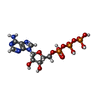

| #9: Chemical | ChemComp-ATP / 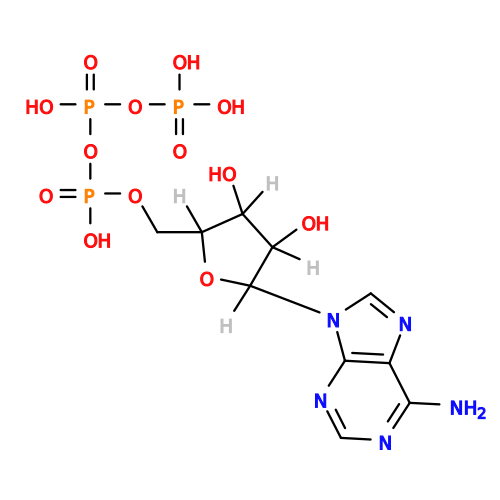 Mass: 507.181 Da / Num. of mol.: 4 / Source method: obtained synthetically / Formula: C10H16N5O13P3 / Feature type: SUBJECT OF INVESTIGATION / Comment: ATP, energy-carrying molecule*YM Mass: 507.181 Da / Num. of mol.: 4 / Source method: obtained synthetically / Formula: C10H16N5O13P3 / Feature type: SUBJECT OF INVESTIGATION / Comment: ATP, energy-carrying molecule*YM#10: Chemical | ChemComp-MG /  Mass: 24.305 Da / Num. of mol.: 4 / Source method: obtained synthetically / Formula: Mg / Feature type: SUBJECT OF INVESTIGATION Mass: 24.305 Da / Num. of mol.: 4 / Source method: obtained synthetically / Formula: Mg / Feature type: SUBJECT OF INVESTIGATION |
|---|
-Details
| Has ligand of interest | Y |
|---|---|
| Has protein modification | N |
-Experimental details
-Experiment
| Experiment | Method: ELECTRON MICROSCOPY |
|---|---|
| EM experiment | Aggregation state: PARTICLE / 3D reconstruction method: single particle reconstruction |
- Sample preparation
| Component | Name: Human ORC subunits (1-5) and Human CDC6 protein complex with 60bp DNA Type: COMPLEX Details: Purified proteins were mixed with 60bp DNA in glycerol-free buffer containing ATP analogs and magnesium acetate. ORC:CDC6:DNA molar ratio of 1:2:3. Final protein concentration of 1 mg/mL, ...Details: Purified proteins were mixed with 60bp DNA in glycerol-free buffer containing ATP analogs and magnesium acetate. ORC:CDC6:DNA molar ratio of 1:2:3. Final protein concentration of 1 mg/mL, with 0.05% lauryl maltose neopentyl glycol (LMNG). Blotted using a Leica EM GP2 automatic plunge freezer. Entity ID: #1-#8 / Source: RECOMBINANT | ||||||||||||||||||||
|---|---|---|---|---|---|---|---|---|---|---|---|---|---|---|---|---|---|---|---|---|---|
| Molecular weight | Value: 0.408 MDa / Experimental value: NO | ||||||||||||||||||||
| Source (natural) | Organism: Homo sapiens (human) | ||||||||||||||||||||
| Source (recombinant) | Organism: Spodoptera frugiperda (fall armyworm) / Plasmid: DH10 MultiBac | ||||||||||||||||||||
| Buffer solution | pH: 7.5 Details: 25 mM HEPES pH 7.5, 100 mM KCl, 2 mM DTT, 0.05% LMNG | ||||||||||||||||||||
| Buffer component |
| ||||||||||||||||||||
| Specimen | Conc.: 1 mg/ml / Embedding applied: NO / Shadowing applied: NO / Staining applied: NO / Vitrification applied: YES Details: Pre-incubated in assembly buffer (50 mM HEPES pH 7.5, 150 mM KCl, 5 mM Mg(OAc)2, 2 mM DTT) for 20 minutes | ||||||||||||||||||||
| Specimen support | Grid material: COPPER / Grid mesh size: 300 divisions/in. / Grid type: Quantifoil R0.6/1 | ||||||||||||||||||||
| Vitrification | Instrument: LEICA EM GP / Cryogen name: ETHANE / Humidity: 90 % / Chamber temperature: 298 K Details: The sample was applied to a glow-discharged Quantifoil R 0.6/1 300 mesh copper grid (previously washed with ethyl acetate), incubated for 10 seconds, blotted for 3 seconds, and plunged into ...Details: The sample was applied to a glow-discharged Quantifoil R 0.6/1 300 mesh copper grid (previously washed with ethyl acetate), incubated for 10 seconds, blotted for 3 seconds, and plunged into liquid ethane using a Leica Automatic Plunge Freezer EM GP2. |
- Electron microscopy imaging
| Experimental equipment |  Model: Titan Krios / Image courtesy: FEI Company |
|---|---|
| Microscopy | Model: TFS KRIOS |
| Electron gun | Electron source:  FIELD EMISSION GUN / Accelerating voltage: 300 kV / Illumination mode: FLOOD BEAM FIELD EMISSION GUN / Accelerating voltage: 300 kV / Illumination mode: FLOOD BEAM |
| Electron lens | Mode: BRIGHT FIELD / Nominal magnification: 105000 X / Nominal defocus max: 2200 nm / Nominal defocus min: 600 nm |
| Specimen holder | Cryogen: NITROGEN / Specimen holder model: FEI TITAN KRIOS AUTOGRID HOLDER |
| Image recording | Electron dose: 43.2 e/Å2 / Film or detector model: GATAN K3 BIOQUANTUM (6k x 4k) / Num. of grids imaged: 2 / Num. of real images: 7088 Details: Cryo-electron microscopy data were collected using an FEI/ThermoFisher Titan Krios TEM operating at 300 keV. A Gatan K3 direct electron detector, equipped with a BioQuantum energy filter, ...Details: Cryo-electron microscopy data were collected using an FEI/ThermoFisher Titan Krios TEM operating at 300 keV. A Gatan K3 direct electron detector, equipped with a BioQuantum energy filter, was utilized to semi-automatically collect dose-fractionated movies using ThermoFisher EPU data collection software. |
- Processing
| EM software |
| ||||||||||||||||||||||||||||||||||||||||||||||||||||||||||||
|---|---|---|---|---|---|---|---|---|---|---|---|---|---|---|---|---|---|---|---|---|---|---|---|---|---|---|---|---|---|---|---|---|---|---|---|---|---|---|---|---|---|---|---|---|---|---|---|---|---|---|---|---|---|---|---|---|---|---|---|---|---|
| CTF correction | Details: CTF correction was done first in WARP during exposure/micrograph pre-processing, and re-corrected during the final refinements/reconstruction of the map in cryoSPARC Type: PHASE FLIPPING AND AMPLITUDE CORRECTION | ||||||||||||||||||||||||||||||||||||||||||||||||||||||||||||
| Particle selection | Details: Particle picking used a BoxNet pre-trained neural network implemented in TensorFlow, with a particle diameter of 180 angstrom and a threshold score of 0.5 | ||||||||||||||||||||||||||||||||||||||||||||||||||||||||||||
| 3D reconstruction | Resolution: 2.8 Å / Resolution method: FSC 0.5 CUT-OFF / Num. of particles: 130819 / Num. of class averages: 1 / Symmetry type: POINT | ||||||||||||||||||||||||||||||||||||||||||||||||||||||||||||
| Atomic model building | Protocol: FLEXIBLE FIT / Space: REAL Details: Initial local fitting was done using Chimera, and then Coot was used for flexible fitting and model building. | ||||||||||||||||||||||||||||||||||||||||||||||||||||||||||||
| Atomic model building | PDB-ID: 7JPS Accession code: 7JPS / Source name: PDB / Type: experimental model | ||||||||||||||||||||||||||||||||||||||||||||||||||||||||||||
| Refinement | Highest resolution: 2.8 Å Stereochemistry target values: REAL-SPACE (WEIGHTED MAP SUM AT ATOM CENTERS) | ||||||||||||||||||||||||||||||||||||||||||||||||||||||||||||
| Refine LS restraints |
|