 Movie
Movie Controller


+ Open data

- Basic information
| Entry | Database: PDB / ID: 10qm | |||||||||||||||||||||||||||
|---|---|---|---|---|---|---|---|---|---|---|---|---|---|---|---|---|---|---|---|---|---|---|---|---|---|---|---|---|
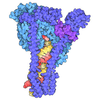
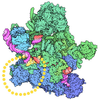
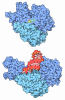
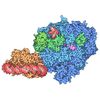
| Title | E.coli 50S ribosomal subunit bound to compound 48a | |||||||||||||||||||||||||||
 Components Components |
| |||||||||||||||||||||||||||
 Keywords Keywords | RIBOSOME / 50S subunit / antibiotic | |||||||||||||||||||||||||||
| Function / homology |  Function and homology information Function and homology informationtranscriptional attenuation / endoribonuclease inhibitor activity / positive regulation of ribosome biogenesis / RNA-binding transcription regulator activity / negative regulation of cytoplasmic translation / translation repressor activity / negative regulation of DNA-templated DNA replication initiation / cytosolic ribosome assembly / ribosome assembly / assembly of large subunit precursor of preribosome ...transcriptional attenuation / endoribonuclease inhibitor activity / positive regulation of ribosome biogenesis / RNA-binding transcription regulator activity / negative regulation of cytoplasmic translation / translation repressor activity / negative regulation of DNA-templated DNA replication initiation / cytosolic ribosome assembly / ribosome assembly / assembly of large subunit precursor of preribosome / regulation of cell growth / DNA-templated transcription termination / response to radiation / mRNA 5'-UTR binding / transferase activity / large ribosomal subunit / ribosome binding / 5S rRNA binding / ribosomal large subunit assembly / large ribosomal subunit rRNA binding / cytosolic large ribosomal subunit / tRNA binding / cytoplasmic translation / negative regulation of translation / rRNA binding / ribosome / translation / structural constituent of ribosome / ribonucleoprotein complex / response to antibiotic / negative regulation of DNA-templated transcription / mRNA binding / DNA binding / RNA binding / zinc ion binding / cytosol / cytoplasm Similarity search - Function | |||||||||||||||||||||||||||
| Biological species |   Escherichia coli (E. coli) Escherichia coli (E. coli) | |||||||||||||||||||||||||||
| Method | ELECTRON MICROSCOPY / single particle reconstruction / cryo EM / Resolution: 2.49 Å | |||||||||||||||||||||||||||
 Authors Authors | Raskar, T. / Lee, I. | |||||||||||||||||||||||||||
| Funding support |  United States, 2items United States, 2items
| |||||||||||||||||||||||||||
 Citation Citation | Journal: Eur J Med Chem / Year: 2026 Title: Structure-based design and synthesis of group A streptogramins that bind to the nascent peptide exit tunnel of the ribosome. Authors: Isabel J Lee / Qi Li / Tushar Raskar / Jenna Pellegrino / Andrew K Ecker / Sara Y Howard / James S Fraser / Ian B Seiple /  Abstract: Natural products and their derivatives have long served as powerful tools for treating bacterial infections, but the rise of antibiotic resistance threatens their continued effectiveness. Targeted ...Natural products and their derivatives have long served as powerful tools for treating bacterial infections, but the rise of antibiotic resistance threatens their continued effectiveness. Targeted structural modification of existing classes of antibiotics is an effective strategy to overcome resistance and extend clinical utility. The development of group A streptogramins that overcome acetyltransferase resistance, a pervasive resistance mechanism to the class, is an example of successful implementation of this strategy. However, the synthetic chemistry to reach these new analogs was limited in its ability to access modifications at the C4 position on the scaffold, a promising modification site that produced the most potent streptogramin to date. Here, we report the development of a modified route to group A streptogramins that enables access to a broad diversity of functionality at C4. Using cryo-EM data to guide structural modifications, we synthesize several series of C4-modified group A streptogramins with sidechains designed to make binding contacts with the exit tunnel of the ribosome. We identify multiple analogs that are active against multidrug-resistant bacteria, including strains that are resistant to macrolides, β-lactams, vancomycin, and first-generation streptogramins. We structurally characterize the binding of two analogs to the bacterial ribosome, revealing new π-stacking interactions between the C4 sidechain and the non-canonical U1782-U2586 base pair. These findings demonstrate how structure-guided drug design can drive the development of next-generation antibiotics and increase the therapeutic potential of the streptogramin class. | |||||||||||||||||||||||||||
| History |
|
- Structure visualization
| Structure viewer | Molecule: MolmilJmol/JSmol |
|---|
- Downloads & links
-Download
| PDBx/mmCIF format | 10qm.cif.gz | 2.7 MB | Display | PDBx/mmCIF format |
|---|---|---|---|---|
| PDB format | pdb10qm.ent.gz | Display | PDB format | |
| PDBx/mmJSON format | 10qm.json.gz | Tree view | PDBx/mmJSON format | |
| Others |  Other downloads Other downloads |
-Validation report
| Arichive directory | https://data.pdbj.org/pub/pdb/validation_reports/0q/10qmftp://data.pdbj.org/pub/pdb/validation_reports/0q/10qm | HTTPS FTP |
|---|
-Related structure data
| Related structure data |  75389MC M: map data used to model this data C: citing same article ( |
|---|---|
| Similar structure data |
-Links
 PDBj
PDBj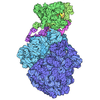
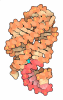
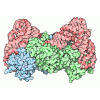
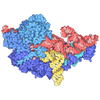
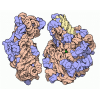
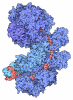
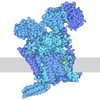
- Assembly
| Deposited unit | 
|
|---|---|
| 1 |
|
-Components
-RNA chain , 2 types, 2 molecules IJ
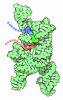
| #1: RNA chain | Mass: 941811.562 Da / Num. of mol.: 1 / Source method: isolated from a natural source / Source: (natural) Escherichia coli (E. coli) |
|---|---|
| #2: RNA chain | Mass: 38790.090 Da / Num. of mol.: 1 / Source method: isolated from a natural source / Source: (natural) Escherichia coli (E. coli) / References: GenBank: 1273279017 |
-50S ribosomal protein ... , 13 types, 13 molecules KLUYabcefhikm
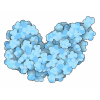
| #3: Protein | Mass: 29923.619 Da / Num. of mol.: 1 / Source method: isolated from a natural source / Source: (natural) Escherichia coli (E. coli) / References: UniProt: P60422 |
|---|---|
| #4: Protein | Mass: 22277.535 Da / Num. of mol.: 1 / Source method: isolated from a natural source / Source: (natural) Escherichia coli (E. coli) / References: UniProt: P60438 |
| #13: Protein | Mass: 15327.261 Da / Num. of mol.: 1 / Source method: isolated from a natural source / Source: (natural) Escherichia coli (E. coli) / References: UniProt: P0ADY7 |
| #17: Protein | Mass: 13528.024 Da / Num. of mol.: 1 / Source method: isolated from a natural source / Source: (natural) Escherichia coli (E. coli) / References: UniProt: B7MAS6 |
| #19: Protein | Mass: 12253.359 Da / Num. of mol.: 1 / Source method: isolated from a natural source / Source: (natural) Escherichia coli (E. coli) / References: UniProt: P61175 |
| #20: Protein | Mass: 11222.160 Da / Num. of mol.: 1 / Source method: isolated from a natural source / Source: (natural) Escherichia coli (E. coli) / References: UniProt: C3SQV2 |
| #21: Protein | Mass: 11339.250 Da / Num. of mol.: 1 / Source method: isolated from a natural source / Source: (natural) Escherichia coli (E. coli) / References: UniProt: C3SQZ7 |
| #23: Protein | Mass: 9146.540 Da / Num. of mol.: 1 / Source method: isolated from a natural source / Source: (natural) Escherichia coli (E. coli) / References: UniProt: P0A7L8 |
| #24: Protein | Mass: 8896.354 Da / Num. of mol.: 1 / Source method: isolated from a natural source / Source: (natural) Escherichia coli (E. coli) / References: UniProt: A0A0E2KZD0 |
| #26: Protein | Mass: 6423.625 Da / Num. of mol.: 1 / Source method: isolated from a natural source / Source: (natural) Escherichia coli (E. coli) / References: UniProt: P0AG51 |
| #27: Protein | Mass: 6332.249 Da / Num. of mol.: 1 / Source method: isolated from a natural source / Source: (natural) Escherichia coli (E. coli) / References: UniProt: A0A828UBL8 |
| #29: Protein/peptide | Mass: 5397.463 Da / Num. of mol.: 1 / Source method: isolated from a natural source / Source: (natural) Escherichia coli (E. coli) / References: UniProt: B7MGC4 |
| #31: Protein/peptide | Mass: 4377.390 Da / Num. of mol.: 1 / Source method: isolated from a natural source / Source: (natural) Escherichia coli (E. coli) / References: UniProt: A0A0E2L017 |
-Large ribosomal subunit protein ... , 15 types, 15 molecules MNOPQRSTVWXdgjl
| #5: Protein | Mass: 22121.566 Da / Num. of mol.: 1 / Source method: isolated from a natural source / Source: (natural) Escherichia coli (E. coli) / References: UniProt: P60723 |
|---|---|
| #6: Protein | Mass: 20333.611 Da / Num. of mol.: 1 / Source method: isolated from a natural source / Source: (natural) Escherichia coli (E. coli) / References: UniProt: P62399 |
| #7: Protein | Mass: 18932.791 Da / Num. of mol.: 1 / Source method: isolated from a natural source / Source: (natural) Escherichia coli (E. coli) / References: UniProt: P0AG55 |
| #8: Protein | Mass: 15789.020 Da / Num. of mol.: 1 / Source method: isolated from a natural source / Source: (natural) Escherichia coli (E. coli) / References: UniProt: P0A7R1 |
| #9: Protein | Mass: 14020.303 Da / Num. of mol.: 1 / Source method: isolated from a natural source / Source: (natural) Escherichia coli (E. coli) / References: UniProt: A7ZUJ6 |
| #10: Protein | Mass: 16050.606 Da / Num. of mol.: 1 / Source method: isolated from a natural source / Source: (natural) Escherichia coli (E. coli) / References: UniProt: P0AA10 |
| #11: Protein | Mass: 13565.067 Da / Num. of mol.: 1 / Source method: isolated from a natural source / Source: (natural) Escherichia coli (E. coli) / References: UniProt: P0ADY3 |
| #12: Protein | Mass: 15008.471 Da / Num. of mol.: 1 / Source method: isolated from a natural source / Source: (natural) Escherichia coli (E. coli) / References: UniProt: P02413 |
| #14: Protein | Mass: 14393.657 Da / Num. of mol.: 1 / Source method: isolated from a natural source / Source: (natural) Escherichia coli (E. coli) / References: UniProt: P0AG44 |
| #15: Protein | Mass: 12794.668 Da / Num. of mol.: 1 / Source method: isolated from a natural source / Source: (natural) Escherichia coli (E. coli) / References: UniProt: P0C018 |
| #16: Protein | Mass: 13159.278 Da / Num. of mol.: 1 / Source method: isolated from a natural source / Source: (natural) Escherichia coli (E. coli) / References: UniProt: P0A7K8 |
| #22: Protein | Mass: 10713.465 Da / Num. of mol.: 1 / Source method: isolated from a natural source / Source: (natural) Escherichia coli (E. coli) / References: UniProt: P68919 |
| #25: Protein | Mass: 7155.267 Da / Num. of mol.: 1 / Source method: isolated from a natural source / Source: (natural) Escherichia coli (E. coli) / References: UniProt: P0A7M8 |
| #28: Protein/peptide | Mass: 5814.842 Da / Num. of mol.: 1 / Source method: isolated from a natural source / Source: (natural) Escherichia coli (E. coli) / References: UniProt: P0A7N9 |
| #30: Protein | Mass: 7181.835 Da / Num. of mol.: 1 / Source method: isolated from a natural source / Source: (natural) Escherichia coli (E. coli) / References: UniProt: P0A7Q2 |
-Protein , 1 types, 1 molecules Z
| #18: Protein | Mass: 11586.374 Da / Num. of mol.: 1 / Source method: isolated from a natural source / Source: (natural) Escherichia coli (E. coli) / References: UniProt: C3SSG2 |
|---|
-Non-polymers , 5 types, 16902 molecules 



| #32: Chemical | ChemComp-MG /  Mass: 24.305 Da / Num. of mol.: 185 / Source method: obtained synthetically / Formula: Mg Mass: 24.305 Da / Num. of mol.: 185 / Source method: obtained synthetically / Formula: Mg#33: Chemical | ChemComp-A1C7K / ( | Mass: 733.872 Da / Num. of mol.: 1 / Source method: obtained synthetically / Formula: C39H52FN7O6 / Feature type: SUBJECT OF INVESTIGATION #34: Chemical | ChemComp-NA / |  Mass: 22.990 Da / Num. of mol.: 1 / Source method: obtained synthetically / Formula: Na Mass: 22.990 Da / Num. of mol.: 1 / Source method: obtained synthetically / Formula: Na#35: Chemical | ChemComp-ZN / |  Mass: 65.409 Da / Num. of mol.: 1 / Source method: obtained synthetically / Formula: Zn Mass: 65.409 Da / Num. of mol.: 1 / Source method: obtained synthetically / Formula: Zn#36: Water | ChemComp-HOH / | Mass: 18.015 Da / Num. of mol.: 16714 / Source method: isolated from a natural source / Formula: H2O |
|---|
-Details
| Has ligand of interest | Y |
|---|---|
| Has protein modification | Y |
-Experimental details
-Experiment
| Experiment | Method: ELECTRON MICROSCOPY |
|---|---|
| EM experiment | Aggregation state: PARTICLE / 3D reconstruction method: single particle reconstruction |
- Sample preparation
| Component | Name: 50S ribosomal subunit / Type: RIBOSOME / Entity ID: #1-#31 / Source: NATURAL |
|---|---|
| Source (natural) | Organism: Escherichia coli (E. coli) |
| Buffer solution | pH: 7.4 |
| Specimen | Embedding applied: NO / Shadowing applied: NO / Staining applied: NO / Vitrification applied: YES |
| Vitrification | Cryogen name: ETHANE |
- Electron microscopy imaging
| Experimental equipment | 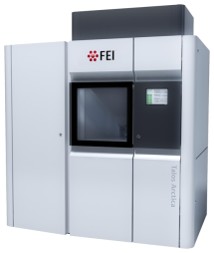 Model: Talos Arctica / Image courtesy: FEI Company |
|---|---|
| Microscopy | Model: FEI TALOS ARCTICA |
| Electron gun | Electron source:  FIELD EMISSION GUN / Accelerating voltage: 200 kV / Illumination mode: FLOOD BEAM FIELD EMISSION GUN / Accelerating voltage: 200 kV / Illumination mode: FLOOD BEAM |
| Electron lens | Mode: BRIGHT FIELD / Nominal defocus max: 3000 nm / Nominal defocus min: 1000 nm |
| Image recording | Electron dose: 60 e/Å2 / Film or detector model: GATAN K3 (6k x 4k) |
- Processing
| EM software |
| |||||||||
|---|---|---|---|---|---|---|---|---|---|---|
| CTF correction | Type: PHASE FLIPPING AND AMPLITUDE CORRECTION | |||||||||
| 3D reconstruction | Resolution: 2.49 Å / Resolution method: FSC 0.143 CUT-OFF / Num. of particles: 569471 / Symmetry type: POINT |
