 Movie
Movie Controller

[English] 日本語
 Yorodumi
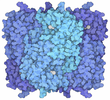
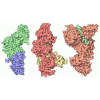
- PDB-10ij: S305I Frontotemporal Lobar Degeneration (FTLD) type I tau filament -
+ Open data

- Basic information
| Entry | Database: PDB / ID: 10ij | ||||||||||||||||||||||||||||||||||||||||||
|---|---|---|---|---|---|---|---|---|---|---|---|---|---|---|---|---|---|---|---|---|---|---|---|---|---|---|---|---|---|---|---|---|---|---|---|---|---|---|---|---|---|---|---|
| Title | S305I Frontotemporal Lobar Degeneration (FTLD) type I tau filament | ||||||||||||||||||||||||||||||||||||||||||
 Components Components | Microtubule-associated protein tau | ||||||||||||||||||||||||||||||||||||||||||
 Keywords Keywords | PROTEIN FIBRIL / tau / MAPT / FTD / FTLD / amyloid / neurodegeneration | ||||||||||||||||||||||||||||||||||||||||||
| Function / homology |  Function and homology information Function and homology informationplus-end-directed organelle transport along microtubule / histone-dependent DNA binding / neurofibrillary tangle / microtubule lateral binding / axonal transport / tubulin complex / positive regulation of protein localization to synapse / phosphatidylinositol bisphosphate binding / generation of neurons / axonal transport of mitochondrion ...plus-end-directed organelle transport along microtubule / histone-dependent DNA binding / neurofibrillary tangle / microtubule lateral binding / axonal transport / tubulin complex / positive regulation of protein localization to synapse / phosphatidylinositol bisphosphate binding / generation of neurons / axonal transport of mitochondrion / axon development / rRNA metabolic process / central nervous system neuron development / regulation of microtubule-based movement / negative regulation of protein localization to mitochondrion / regulation of mitochondrial fission / regulation of chromosome organization / intracellular distribution of mitochondria / minor groove of adenine-thymine-rich DNA binding / lipoprotein particle binding / microtubule polymerization / negative regulation of mitochondrial membrane potential / regulation of microtubule polymerization / dynactin binding / apolipoprotein binding / regulation of calcium-mediated signaling / main axon / Caspase-mediated cleavage of cytoskeletal proteins / glial cell projection / regulation of microtubule polymerization or depolymerization / neurofibrillary tangle assembly / negative regulation of mitochondrial fission / protein polymerization / positive regulation of axon extension / axolemma / positive regulation of microtubule polymerization / regulation of cellular response to heat / positive regulation of superoxide anion generation / Activation of AMPK downstream of NMDARs / cytoplasmic microtubule organization / cellular response to brain-derived neurotrophic factor stimulus / regulation of long-term synaptic depression / axon cytoplasm / positive regulation of protein localization / supramolecular fiber organization / synapse assembly / somatodendritic compartment / astrocyte activation / nuclear periphery / phosphatidylinositol binding / protein phosphatase 2A binding / enzyme inhibitor activity / stress granule assembly / SH3 domain binding / cellular response to reactive oxygen species / regulation of microtubule cytoskeleton organization / memory / microglial cell activation / cellular response to nerve growth factor stimulus / regulation of synaptic plasticity / Hsp90 protein binding / microtubule cytoskeleton organization / regulation of autophagy / synapse organization / protein homooligomerization / PKR-mediated signaling / response to lead ion / neuron projection development / cytoplasmic ribonucleoprotein granule / microtubule cytoskeleton / cell-cell signaling / cellular response to heat / single-stranded DNA binding / actin binding / protein-folding chaperone binding / growth cone / double-stranded DNA binding / cell body / microtubule / sequence-specific DNA binding / amyloid fibril formation / microtubule binding / dendritic spine / learning or memory / protein-macromolecule adaptor activity / neuron projection / membrane raft / negative regulation of gene expression / axon / neuronal cell body / DNA damage response / dendrite / protein kinase binding / enzyme binding / mitochondrion / DNA binding / RNA binding / extracellular region / identical protein binding / nucleus Similarity search - Function | ||||||||||||||||||||||||||||||||||||||||||
| Biological species |  Homo sapiens (human) Homo sapiens (human) | ||||||||||||||||||||||||||||||||||||||||||
| Method | ELECTRON MICROSCOPY / helical reconstruction / cryo EM / Resolution: 3.1 Å | ||||||||||||||||||||||||||||||||||||||||||
 Authors Authors | Pan, H.S. / Merz, G.E. / Tse, E. / Southworth, D.R. | ||||||||||||||||||||||||||||||||||||||||||
| Funding support |  United States, 13items United States, 13items
| ||||||||||||||||||||||||||||||||||||||||||
 Citation Citation | Journal: bioRxiv / Year: 2026 Title: Distinct tau filament folds in familial frontotemporal dementia due to the S305I mutation. Authors: Henry S Pan / Gregory E Merz / Alissa Nana Li / Minh Quan Le / Hyunil Jo / Athena Quddus / Anthony Yung / Rian C Kormos / Arthur A Melo / Eliana Marisa Ramos / Argentina Lario Lago / ...Authors: Henry S Pan / Gregory E Merz / Alissa Nana Li / Minh Quan Le / Hyunil Jo / Athena Quddus / Anthony Yung / Rian C Kormos / Arthur A Melo / Eliana Marisa Ramos / Argentina Lario Lago / Salvatore Spina / Lea T Grinberg / Howard J Rosen / Eric Tse / Maria Luisa Gorno-Tempini / William F DeGrado / William W Seeley / Daniel R Southworth / Abstract: Frontotemporal lobar degeneration with tau inclusions (FTLD-tau) comprise a class of fatal heterogeneous neurodegenerative diseases. Approximately 10% arise from pathogenic MAPT mutations and often ...Frontotemporal lobar degeneration with tau inclusions (FTLD-tau) comprise a class of fatal heterogeneous neurodegenerative diseases. Approximately 10% arise from pathogenic MAPT mutations and often cause severe, early-onset disease with pathology that is distinct yet partially overlapping with sporadic cases. Here, we evaluated post-mortem tissue from a patient with FTLD-tau due to S305I showing neuropathology most consistent with argyrophilic grain disease (AGD), a prevalent limbic tauopathy of aging. Structures determined by cryo-electron microscopy reveal tau filament folds that differ from those found in sporadic AGD or other tauopathies and feature a 4-layer architecture stabilized by the Ile substitution within its core. Comparative structural analysis reveals conserved motifs are shared among AGD, corticobasal degeneration, and P301T. A well-defined density stacks along a cationic cleft, indicative of a bound RNA-like polyanion or small-molecule. analysis shows the S305I mutation promotes fibrilization relative to normal tau. These results demonstrate that stabilizes a distinct aggregation-prone tau fold that likely contributes to disease pathology and heterogeneity beyond its known splicing defects, and underscore potential limitations of using the most pathologically similar genetic form as a model for sporadic FTLD-tau. | ||||||||||||||||||||||||||||||||||||||||||
| History |
|
- Structure visualization
| Structure viewer | Molecule: MolmilJmol/JSmol |
|---|
- Downloads & links
-Download
| PDBx/mmCIF format | 10ij.cif.gz | 428.3 KB | Display | PDBx/mmCIF format |
|---|---|---|---|---|
| PDB format | pdb10ij.ent.gz | 362.9 KB | Display | PDB format |
| PDBx/mmJSON format | 10ij.json.gz | Tree view | PDBx/mmJSON format | |
| Others |  Other downloads Other downloads |
-Validation report
| Arichive directory | https://data.pdbj.org/pub/pdb/validation_reports/0i/10ijftp://data.pdbj.org/pub/pdb/validation_reports/0i/10ij | HTTPS FTP |
|---|
-Related structure data
| Related structure data |  75195MC  10ikC M: map data used to model this data C: citing same article ( |
|---|---|
| Similar structure data |

-Links
 PDBj
PDBj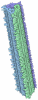
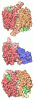
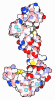
- Assembly
| Deposited unit | 
|
|---|---|
| 1 |
|
-Components
| #1: Protein | Mass: 11562.394 Da / Num. of mol.: 11 / Mutation: S305I Source method: isolated from a genetically manipulated source Source: (gene. exp.) Homo sapiens (human), (natural) Homo sapiens (human)Production host:   Escherichia coli (E. coli) / References: UniProt: P10636 Escherichia coli (E. coli) / References: UniProt: P10636Has protein modification | N | |
|---|
-Experimental details
-Experiment
| Experiment | Method: ELECTRON MICROSCOPY |
|---|---|
| EM experiment | Aggregation state: TISSUE / 3D reconstruction method: helical reconstruction |
- Sample preparation
| Component | Name: Filaments purified S305I FTLD individual brain tissue / Type: TISSUE / Entity ID: all / Source: RECOMBINANT |
|---|---|
| Source (natural) | Organism: Homo sapiens (human) |
| Buffer solution | pH: 7.4 |
| Specimen | Embedding applied: NO / Shadowing applied: NO / Staining applied: NO / Vitrification applied: YES |
| Specimen support | Grid material: GOLD / Grid mesh size: 200 divisions/in. / Grid type: Quantifoil R1.2/1.3 |
| Vitrification | Instrument: FEI VITROBOT MARK IV / Cryogen name: ETHANE |
- Electron microscopy imaging
| Experimental equipment |  Model: Titan Krios / Image courtesy: FEI Company |
|---|---|
| Microscopy | Model: TFS KRIOS |
| Electron gun | Electron source:  FIELD EMISSION GUN / Accelerating voltage: 300 kV / Illumination mode: FLOOD BEAM FIELD EMISSION GUN / Accelerating voltage: 300 kV / Illumination mode: FLOOD BEAM |
| Electron lens | Mode: BRIGHT FIELD / Calibrated magnification: 105000 X / Nominal defocus max: 1800 nm / Nominal defocus min: 800 nm / C2 aperture diameter: 70 µm / Alignment procedure: COMA FREE |
| Specimen holder | Cryogen: NITROGEN / Specimen holder model: FEI TITAN KRIOS AUTOGRID HOLDER |
| Image recording | Average exposure time: 5.4 sec. / Electron dose: 46 e/Å2 / Film or detector model: GATAN K3 (6k x 4k) / Num. of grids imaged: 1 / Num. of real images: 7393 |
- Processing
| EM software |
| ||||||||||||||||
|---|---|---|---|---|---|---|---|---|---|---|---|---|---|---|---|---|---|
| CTF correction | Type: PHASE FLIPPING AND AMPLITUDE CORRECTION | ||||||||||||||||
| Helical symmerty | Angular rotation/subunit: 178.6 ° / Axial rise/subunit: 4.78 Å / Axial symmetry: C1 | ||||||||||||||||
| 3D reconstruction | Resolution: 3.1 Å / Resolution method: FSC 0.143 CUT-OFF / Num. of particles: 47171 / Symmetry type: HELICAL |
