 Movie
Movie Controller


+ Open data

- Basic information
| Entry | Database: PDB / ID: 10gn | ||||||||||||||||||||||||
|---|---|---|---|---|---|---|---|---|---|---|---|---|---|---|---|---|---|---|---|---|---|---|---|---|---|
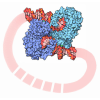
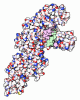
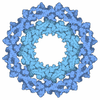
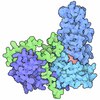
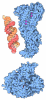
| Title | Nucleosome containing an 8oxoG at SHL+3 | ||||||||||||||||||||||||
 Components Components |
| ||||||||||||||||||||||||
 Keywords Keywords | DNA BINDING PROTEIN / Nucleosome / 8oxoG / DNA Repair | ||||||||||||||||||||||||
| Function / homology |  Function and homology information Function and homology informationChAHP complex assembly / FXIIa activates plasma kallikrein-kinin system / Interaction of NuRD complexes with transcription factors / CHD6, CHD7, CHD8, CHD9 subfamily / NuRD complex assembly / CHD1 and CHD2 subfamily / negative regulation of megakaryocyte differentiation / protein localization to CENP-A containing chromatin / Chromatin modifying enzymes / Replacement of protamines by nucleosomes in the male pronucleus ...ChAHP complex assembly / FXIIa activates plasma kallikrein-kinin system / Interaction of NuRD complexes with transcription factors / CHD6, CHD7, CHD8, CHD9 subfamily / NuRD complex assembly / CHD1 and CHD2 subfamily / negative regulation of megakaryocyte differentiation / protein localization to CENP-A containing chromatin / Chromatin modifying enzymes / Replacement of protamines by nucleosomes in the male pronucleus / Packaging Of Telomere Ends / Recognition and association of DNA glycosylase with site containing an affected purine / Cleavage of the damaged purine / telomere organization / Interleukin-7 signaling / Deposition of new CENPA-containing nucleosomes at the centromere / Recognition and association of DNA glycosylase with site containing an affected pyrimidine / Cleavage of the damaged pyrimidine / RNA Polymerase I Promoter Opening / Inhibition of DNA recombination at telomere / Assembly of the ORC complex at the origin of replication / SUMOylation of chromatin organization proteins / Regulation of endogenous retroelements by the Human Silencing Hub (HUSH) complex / Meiotic synapsis / DNA methylation / Condensation of Prophase Chromosomes / Chromatin modifications during the maternal to zygotic transition (MZT) / SIRT1 negatively regulates rRNA expression / HCMV Late Events / ERCC6 (CSB) and EHMT2 (G9a) positively regulate rRNA expression / PRC2 methylates histones and DNA / Regulation of endogenous retroelements by KRAB-ZFP proteins / Defective pyroptosis / HDACs deacetylate histones / Transcriptional regulation by small RNAs / Regulation of endogenous retroelements by Piwi-interacting RNAs (piRNAs) / RNA Polymerase I Promoter Escape / Nonhomologous End-Joining (NHEJ) / HDMs demethylate histones / Activated PKN1 stimulates transcription of AR (androgen receptor) regulated genes KLK2 and KLK3 / RUNX1 regulates genes involved in megakaryocyte differentiation and platelet function / Negative Regulation of CDH1 Gene Transcription / NoRC negatively regulates rRNA expression / PKMTs methylate histone lysines / G2/M DNA damage checkpoint / Formation of the beta-catenin:TCF transactivating complex / B-WICH complex positively regulates rRNA expression / DNA Damage/Telomere Stress Induced Senescence / Meiotic recombination / Pre-NOTCH Transcription and Translation / Activation of anterior HOX genes in hindbrain development during early embryogenesis / Transcriptional regulation of granulopoiesis / nucleosomal DNA binding / RMTs methylate histone arginines / Metalloprotease DUBs / HCMV Early Events / innate immune response in mucosa / structural constituent of chromatin / nucleosome / Regulation of PD-L1(CD274) transcription / UCH proteinases / nucleosome assembly / HATs acetylate histones / E3 ubiquitin ligases ubiquitinate target proteins / Recruitment and ATM-mediated phosphorylation of repair and signaling proteins at DNA double strand breaks / Factors involved in megakaryocyte development and platelet production / MLL4 and MLL3 complexes regulate expression of PPARG target genes in adipogenesis and hepatic steatosis / RUNX1 regulates transcription of genes involved in differentiation of HSCs / Dengue Virus-Host Interactions / chromatin organization / Processing of DNA double-strand break ends / antimicrobial humoral immune response mediated by antimicrobial peptide / Senescence-Associated Secretory Phenotype (SASP) / heterochromatin formation / Oxidative Stress Induced Senescence / antibacterial humoral response / Estrogen-dependent gene expression / chromosome, telomeric region / defense response to Gram-positive bacterium / Ub-specific processing proteases / protein heterodimerization activity / Amyloid fiber formation / enzyme binding / protein-containing complex / DNA binding / RNA binding / extracellular exosome / nucleoplasm / extracellular region / membrane / identical protein binding / nucleus Similarity search - Function | ||||||||||||||||||||||||
| Biological species |  Homo sapiens (human) Homo sapiens (human)synthetic construct (others) | ||||||||||||||||||||||||
| Method | ELECTRON MICROSCOPY / single particle reconstruction / cryo EM / Resolution: 3 Å | ||||||||||||||||||||||||
 Authors Authors | Vito, A.F. / Ling, J.A. / Freudenthal, B.D. | ||||||||||||||||||||||||
| Funding support |  United States, 1items United States, 1items
| ||||||||||||||||||||||||
 Citation Citation | Journal: Biomolecules / Year: 2026 Title: 8oxoG:A Is Structurally Accommodated in the Nucleosome Core Particle, Yet Inaccessible to MUTYH-Initiated DNA Repair. Authors: Abigayle F Vito / Justin A Ling / Julia C Ferrara / Caleb S Jacques / Natacha Gillet / Roy González-Alemán / Yuya Qiu / Mohammad Hashemian / Carlos H Trasviña-Arenas / Sheila S David / ...Authors: Abigayle F Vito / Justin A Ling / Julia C Ferrara / Caleb S Jacques / Natacha Gillet / Roy González-Alemán / Yuya Qiu / Mohammad Hashemian / Carlos H Trasviña-Arenas / Sheila S David / Sarah Delaney / Emmanuelle Bignon / Bret D Freudenthal /  Abstract: Eukaryotic genomic DNA is packaged into chromatin as nucleosomes, where it remains susceptible to reactive oxygen species (ROS) that generate the mutagenic lesion 8-oxo-7,8-dihydroguanine (8oxoG). ...Eukaryotic genomic DNA is packaged into chromatin as nucleosomes, where it remains susceptible to reactive oxygen species (ROS) that generate the mutagenic lesion 8-oxo-7,8-dihydroguanine (8oxoG). While 8-oxoguanine DNA glycosylase 1 (OGG1) can initiate repair of 8oxoG base paired with C within the nucleosome core particle (NCP) in a position- dependent manner, it is unknown whether MutY homolog (MUTYH), the DNA glycosylase that excises misincorporated A opposite 8oxoG, can initiate repair of 8oxoG:A base pairs within NCPs. To address this, we combined cryo-EM, molecular dynamics (MD) simulations, and biochemical assays. We determined that MUTYH activity on nucleosomal 8oxoG:A is strongly suppressed, with detectable excision limited to the entry/exit region. Cryo-EM structures at four superhelical locations reveal that 8oxoG adopts the conformation and Hoogsteen base pairs with A, as in non-nucleosomal DNA, indicating that lesion presentation is not altered by the histone octamer. MD simulations further reveal that 8oxoG:A base pair dynamics and local DNA backbone perturbations are similar in nucleosomal and non-nucleosomal DNA. Together, these data establish that the NCP sterically excludes MUTYH from 8oxoG:A base pairs, making them largely inaccessible to MUTYH processing. This work ultimately provides mechanistic insight for the elevated G to T transversion rate observed in histone-bound DNA following oxidative stress. | ||||||||||||||||||||||||
| History |
|
- Structure visualization
| Structure viewer | Molecule: MolmilJmol/JSmol |
|---|
- Downloads & links
-Download
| PDBx/mmCIF format | 10gn.cif.gz | 319.8 KB | Display | PDBx/mmCIF format |
|---|---|---|---|---|
| PDB format | pdb10gn.ent.gz | 241.9 KB | Display | PDB format |
| PDBx/mmJSON format | 10gn.json.gz | Tree view | PDBx/mmJSON format | |
| Others |  Other downloads Other downloads |
-Validation report
| Arichive directory | https://data.pdbj.org/pub/pdb/validation_reports/0g/10gnftp://data.pdbj.org/pub/pdb/validation_reports/0g/10gn | HTTPS FTP |
|---|
-Related structure data
| Related structure data |  75156MC  10gjC  10gkC  10glC  10gmC  10goC M: map data used to model this data C: citing same article ( |
|---|---|
| Similar structure data |


-Links
 PDBj
PDBj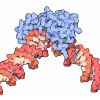
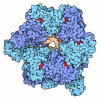
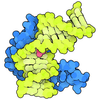
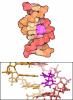

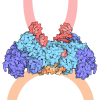

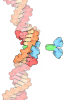

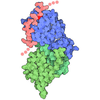
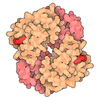
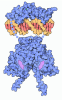
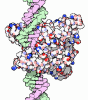
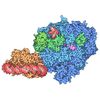
- Assembly
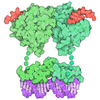
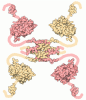
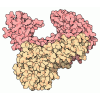
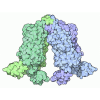
| Deposited unit | 
|
|---|---|
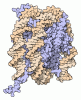
| 1 |
|
-Components
-Protein , 4 types, 8 molecules AEBFCGDH
| #1: Protein | Mass: 15257.838 Da / Num. of mol.: 2 Source method: isolated from a genetically manipulated source Source: (gene. exp.) Homo sapiens (human)Gene: H3C15, HIST2H3A, H3C14, H3F2, H3FM, HIST2H3C, H3C13, HIST2H3D Production host:   Escherichia coli (E. coli) / References: UniProt: Q71DI3 Escherichia coli (E. coli) / References: UniProt: Q71DI3#2: Protein | Mass: 11263.231 Da / Num. of mol.: 2 Source method: isolated from a genetically manipulated source Source: (gene. exp.) Homo sapiens (human)Gene: H4C1, H4/A, H4FA, HIST1H4A, H4C2, H4/I, H4FI, HIST1H4B, H4C3, H4/G, H4FG, HIST1H4C, H4C4, H4/B, H4FB, HIST1H4D, H4C5, H4/J, H4FJ, HIST1H4E, H4C6, H4/C, H4FC, HIST1H4F, H4C8, H4/H, H4FH, ...Gene: H4C1, H4/A, H4FA, HIST1H4A, H4C2, H4/I, H4FI, HIST1H4B, H4C3, H4/G, H4FG, HIST1H4C, H4C4, H4/B, H4FB, HIST1H4D, H4C5, H4/J, H4FJ, HIST1H4E, H4C6, H4/C, H4FC, HIST1H4F, H4C8, H4/H, H4FH, HIST1H4H, H4C9, H4/M, H4FM, HIST1H4I, H4C11, H4/E, H4FE, HIST1H4J, H4C12, H4/D, H4FD, HIST1H4K, H4C13, H4/K, H4FK, HIST1H4L, H4C14, H4/N, H4F2, H4FN, HIST2H4, HIST2H4A, H4C15, H4/O, H4FO, HIST2H4B, H4-16, HIST4H4 Production host: Escherichia coli (E. coli) / References: UniProt: P62805#3: Protein | Mass: 13990.342 Da / Num. of mol.: 2 Source method: isolated from a genetically manipulated source Source: (gene. exp.) Homo sapiens (human)Gene: H2AC11, H2AFP, HIST1H2AG, H2AC13, H2AFC, HIST1H2AI, H2AC15, H2AFD, HIST1H2AK, H2AC16, H2AFI, HIST1H2AL, H2AC17, H2AFN, HIST1H2AM Production host: Escherichia coli (E. coli) / References: UniProt: P0C0S8#4: Protein | Mass: 13806.018 Da / Num. of mol.: 2 Source method: isolated from a genetically manipulated source Source: (gene. exp.) Homo sapiens (human)Gene: H2BC4, H2BFL, HIST1H2BC, H2BC6, H2BFH, HIST1H2BE, H2BC7, H2BFG, HIST1H2BF, H2BC8, H2BFA, HIST1H2BG, H2BC10, H2BFK, HIST1H2BI Production host: Escherichia coli (E. coli) / References: UniProt: P62807 |
|---|
-DNA chain , 2 types, 2 molecules IJ
| #5: DNA chain | Mass: 45154.770 Da / Num. of mol.: 1 / Source method: obtained synthetically / Source: (synth.) synthetic construct (others) |
|---|---|
| #6: DNA chain | Mass: 45610.043 Da / Num. of mol.: 1 / Source method: obtained synthetically / Source: (synth.) synthetic construct (others) |
-Details
| Has ligand of interest | Y |
|---|---|
| Has protein modification | N |
-Experimental details
-Experiment
| Experiment | Method: ELECTRON MICROSCOPY |
|---|---|
| EM experiment | Aggregation state: PARTICLE / 3D reconstruction method: single particle reconstruction |
- Sample preparation
| Component | Name: Nucleosome containing an 8oxoG at SHL+3 / Type: COMPLEX / Entity ID: all / Source: RECOMBINANT | |||||||||||||||||||||||||
|---|---|---|---|---|---|---|---|---|---|---|---|---|---|---|---|---|---|---|---|---|---|---|---|---|---|---|
| Source (natural) | Organism: Homo sapiens (human) | |||||||||||||||||||||||||
| Source (recombinant) | Organism: Escherichia coli (E. coli) | |||||||||||||||||||||||||
| Buffer solution | pH: 7.1 Details: 25mM HEPES (pH-7.1), 50 mM NaCl, 1mM TCEP, and 5mM EDTA | |||||||||||||||||||||||||
| Buffer component |
| |||||||||||||||||||||||||
| Specimen | Embedding applied: NO / Shadowing applied: NO / Staining applied: NO / Vitrification applied: YES | |||||||||||||||||||||||||
| Specimen support | Grid material: COPPER / Grid mesh size: 300 divisions/in. / Grid type: Quantifoil R2/2 | |||||||||||||||||||||||||
| Vitrification | Cryogen name: ETHANE / Humidity: 95 % / Chamber temperature: 277.15 K |
- Electron microscopy imaging
| Experimental equipment |  Model: Titan Krios / Image courtesy: FEI Company |
|---|---|
| Microscopy | Model: TFS KRIOS |
| Electron gun | Electron source:  FIELD EMISSION GUN / Accelerating voltage: 300 kV / Illumination mode: FLOOD BEAM FIELD EMISSION GUN / Accelerating voltage: 300 kV / Illumination mode: FLOOD BEAM |
| Electron lens | Mode: BRIGHT FIELD / Nominal defocus max: 2500 nm / Nominal defocus min: 500 nm |
| Image recording | Electron dose: 60 e/Å2 / Film or detector model: TFS FALCON 4i (4k x 4k) |
- Processing
| EM software |
| |||||||||
|---|---|---|---|---|---|---|---|---|---|---|
| CTF correction | Type: PHASE FLIPPING AND AMPLITUDE CORRECTION | |||||||||
| 3D reconstruction | Resolution: 3 Å / Resolution method: FSC 0.143 CUT-OFF / Num. of particles: 55539 / Symmetry type: POINT | |||||||||
| Refinement | Highest resolution: 3 Å Stereochemistry target values: REAL-SPACE (WEIGHTED MAP SUM AT ATOM CENTERS) |
