 Movie
Movie Controller

[English] 日本語
 Yorodumi
- PDB-10ad: Cryo-EM structure of the human BK channel bound to the agonist NS1619 -
+ Open data

- Basic information
| Entry | Database: PDB / ID: 10ad | ||||||||||||||||||||||||
|---|---|---|---|---|---|---|---|---|---|---|---|---|---|---|---|---|---|---|---|---|---|---|---|---|---|
| Title | Cryo-EM structure of the human BK channel bound to the agonist NS1619 | ||||||||||||||||||||||||
 Components Components | Isoform 5 of Calcium-activated potassium channel subunit alpha-1 | ||||||||||||||||||||||||
 Keywords Keywords | MEMBRANE PROTEIN / BK / Slo1 | ||||||||||||||||||||||||
| Function / homology |  Function and homology information Function and homology informationmicturition / Acetylcholine inhibits contraction of outer hair cells / large conductance calcium-activated potassium channel activity / Ca2+ activated K+ channels / calcium-activated potassium channel activity / negative regulation of cell volume / smooth muscle contraction involved in micturition / response to carbon monoxide / response to osmotic stress / Sensory processing of sound by inner hair cells of the cochlea ...micturition / Acetylcholine inhibits contraction of outer hair cells / large conductance calcium-activated potassium channel activity / Ca2+ activated K+ channels / calcium-activated potassium channel activity / negative regulation of cell volume / smooth muscle contraction involved in micturition / response to carbon monoxide / response to osmotic stress / Sensory processing of sound by inner hair cells of the cochlea / cGMP effects / intracellular potassium ion homeostasis / potassium ion transport / voltage-gated potassium channel activity / voltage-gated potassium channel complex / potassium ion transmembrane transport / response to calcium ion / regulation of membrane potential / vasodilation / caveola / actin binding / response to hypoxia / postsynaptic membrane / apical plasma membrane / positive regulation of apoptotic process / membrane / metal ion binding / identical protein binding / plasma membrane Similarity search - Function | ||||||||||||||||||||||||
| Biological species |  Homo sapiens (human) Homo sapiens (human) | ||||||||||||||||||||||||
| Method | ELECTRON MICROSCOPY / single particle reconstruction / cryo EM / Resolution: 3.44 Å | ||||||||||||||||||||||||
 Authors Authors | Gonzalez-Sanabria, N. / Contreras, G.F. / Perozo, E. / Latorre, R. | ||||||||||||||||||||||||
| Funding support |  United States, United States,  Chile, 4items Chile, 4items
| ||||||||||||||||||||||||
 Citation Citation | Journal: Proc Natl Acad Sci U S A / Year: 2026 Title: The BK channel-NS1619 agonist complex reveals molecular insights into allosteric activation gating. Authors: Naileth Gonzalez-Sanabria / Gustavo F Contreras / Maximiliano Rojas / Yorley Duarte / Fernando D Gonzalez-Nilo / Eduardo Perozo / Ramon Latorre / Abstract: BK channels play essential roles in a wealth of physiological functions, including regulating smooth muscle tone and neurotransmitter release. Its dysfunction, often caused by loss-of-function ...BK channels play essential roles in a wealth of physiological functions, including regulating smooth muscle tone and neurotransmitter release. Its dysfunction, often caused by loss-of-function mutations, can lead to severe phenotypes, including ataxia and sensory impairment. Despite the therapeutic potential of BK channel agonists, the molecular mechanisms by which they stabilize the pore's open conformation remain unclear. Using cryoelectron microscopy and molecular dynamic simulations, we identified that NS1619, a synthetic benzimidazolone agonist, first described as a BK opener, binds within a pocket formed by the S6/RCK1 linker and the S4 transmembrane segment. Our simulations suggest that agonist binding promotes a twisting motion in the S6 segment, enabling critical interactions with residues K330, K331, and F223. These findings provide a molecular model for the mechanism of NS1619 and suggest that its binding site can accommodate other agonists, highlighting a promising target for therapeutic development. | ||||||||||||||||||||||||
| History |
|
- Structure visualization
| Structure viewer | Molecule: MolmilJmol/JSmol |
|---|
- Downloads & links
-Download
| PDBx/mmCIF format | 10ad.cif.gz | 1.1 MB | Display | PDBx/mmCIF format |
|---|---|---|---|---|
| PDB format | pdb10ad.ent.gz | Display | PDB format | |
| PDBx/mmJSON format | 10ad.json.gz | Tree view | PDBx/mmJSON format | |
| Others |  Other downloads Other downloads |
-Validation report
| Arichive directory | https://data.pdbj.org/pub/pdb/validation_reports/0a/10adftp://data.pdbj.org/pub/pdb/validation_reports/0a/10ad | HTTPS FTP |
|---|
-Related structure data
| Related structure data |  75024MC M: map data used to model this data C: citing same article ( |
|---|---|
| Similar structure data |
-Links
 PDBj
PDBj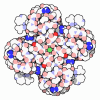
- Assembly
| Deposited unit | 
|
|---|---|
| 1 |
|
-Components
| #1: Protein | Mass: 125343.727 Da / Num. of mol.: 4 Source method: isolated from a genetically manipulated source Source: (gene. exp.) Homo sapiens (human) / Gene: KCNMA1, KCNMA, SLO / Cell line (production host): HEK293S GnTI- / Production host: Homo sapiens (human) / References: UniProt: Q12791#2: Chemical | ChemComp-MG /  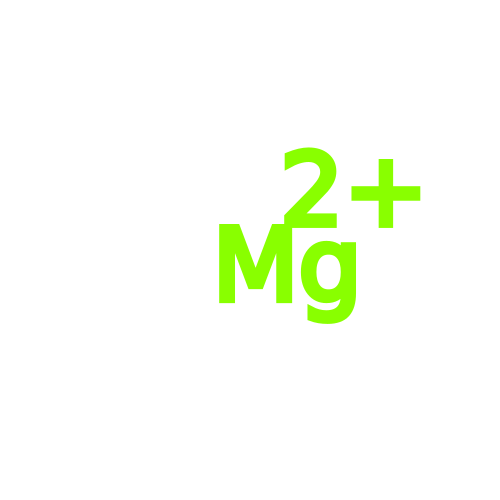 Mass: 24.305 Da / Num. of mol.: 4 / Source method: obtained synthetically / Formula: Mg Mass: 24.305 Da / Num. of mol.: 4 / Source method: obtained synthetically / Formula: Mg#3: Chemical | ChemComp-CA /   Mass: 40.078 Da / Num. of mol.: 8 / Source method: obtained synthetically / Formula: Ca Mass: 40.078 Da / Num. of mol.: 8 / Source method: obtained synthetically / Formula: Ca#4: Chemical | ChemComp-A1E02 / Mass: 362.227 Da / Num. of mol.: 4 / Source method: obtained synthetically / Formula: C15H8F6N2O2 / Feature type: SUBJECT OF INVESTIGATION Has ligand of interest | Y | Has protein modification | N | |
|---|
-Experimental details
-Experiment
| Experiment | Method: ELECTRON MICROSCOPY |
|---|---|
| EM experiment | Aggregation state: PARTICLE / 3D reconstruction method: single particle reconstruction |
- Sample preparation
| Component | Name: hBK NS1619 complex / Type: COMPLEX Details: Cryo-EM sample of the human BK (KCNMA1) channel in complex with the synthetic agonist NS1619 Entity ID: #1 / Source: RECOMBINANT | ||||||||||||||||||||||||||||||
|---|---|---|---|---|---|---|---|---|---|---|---|---|---|---|---|---|---|---|---|---|---|---|---|---|---|---|---|---|---|---|---|
| Molecular weight | Experimental value: NO | ||||||||||||||||||||||||||||||
| Source (natural) | Organism: Homo sapiens (human) | ||||||||||||||||||||||||||||||
| Source (recombinant) | Organism: Homo sapiens (human) / Cell: HEK293S GnTI- | ||||||||||||||||||||||||||||||
| Buffer solution | pH: 8 | ||||||||||||||||||||||||||||||
| Buffer component |
| ||||||||||||||||||||||||||||||
| Specimen | Conc.: 3.5 mg/ml / Embedding applied: NO / Shadowing applied: NO / Staining applied: NO / Vitrification applied: YES | ||||||||||||||||||||||||||||||
| Specimen support | Grid material: COPPER / Grid mesh size: 200 divisions/in. / Grid type: Quantifoil R1.2/1.3 | ||||||||||||||||||||||||||||||
| Vitrification | Instrument: FEI VITROBOT MARK IV / Cryogen name: ETHANE / Humidity: 100 % / Chamber temperature: 295.15 K |
- Electron microscopy imaging
| Experimental equipment |  Model: Titan Krios / Image courtesy: FEI Company |
|---|---|
| Microscopy | Model: TFS KRIOS |
| Electron gun | Electron source:  FIELD EMISSION GUN / Accelerating voltage: 300 kV / Illumination mode: FLOOD BEAM FIELD EMISSION GUN / Accelerating voltage: 300 kV / Illumination mode: FLOOD BEAM |
| Electron lens | Mode: BRIGHT FIELD / Nominal defocus max: 2400 nm / Nominal defocus min: 800 nm / Cs: 2.7 mm |
| Specimen holder | Specimen holder model: FEI TITAN KRIOS AUTOGRID HOLDER |
| Image recording | Electron dose: 1 e/Å2 / Film or detector model: GATAN K3 (6k x 4k) |
- Processing
| EM software |
| ||||||||||||||||||||||||||||
|---|---|---|---|---|---|---|---|---|---|---|---|---|---|---|---|---|---|---|---|---|---|---|---|---|---|---|---|---|---|
| CTF correction | Type: PHASE FLIPPING AND AMPLITUDE CORRECTION | ||||||||||||||||||||||||||||
| Symmetry | Point symmetry: C4 (4 fold cyclic) | ||||||||||||||||||||||||||||
| 3D reconstruction | Resolution: 3.44 Å / Resolution method: FSC 0.143 CUT-OFF / Num. of particles: 90000 / Symmetry type: POINT | ||||||||||||||||||||||||||||
| Atomic model building | PDB-ID: 6V22 Accession code: 6V22 / Source name: PDB / Type: experimental model |

