National Natural Science Foundation of China (NSFC)
32330052, 32322039, 32271252, and 32501082
China
Citation
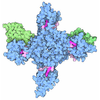
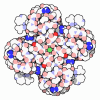
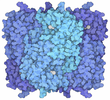
Journal: Nature / Year: 2026 Title: Diverse binding poses of agonistic neurotoxins on human Na1.6. Authors: Xiao Fan / Jian Huang / Lin Yang / Jiaofeng Chen / Huan Wang / Xiaoshuang Huang / Jinli Geng / Qinglin Wu / Yuzhen Xie / Fangzhou Lu / Qinmeng Guo / Zilin Shen / Xueqin Jin / Nieng Yan / Abstract: Voltage-gated sodium (Na) channels are key targets of various venomous toxins. Deciphering the binding poses and mechanisms of action of representative toxins will help to dissect the functional ...Voltage-gated sodium (Na) channels are key targets of various venomous toxins. Deciphering the binding poses and mechanisms of action of representative toxins will help to dissect the functional mechanism of the channels and facilitate therapeutic development targeting Na channels. Here we present cryo-electron microscopy (cryo-EM) structures of distinct binding poses of three agonistic peptide toxins on the human Na1.6-β1 channel complex. The globular β-scorpion toxin Cn2 nestles between the extracellular segment of voltage-sensing domain (VSD) in the second repeat of the Na1.6 core α-unit (VSD) and the pore extracellular loops in the third repeat of the Na1.6 core α-unit (ECL), where it is stabilized by interactions with both protein regions and the branched N1372-glycan. Cone snail ι-conotoxin RXIA adopts an elongated conformation, spanning VSD and VSD to wrap around the shoulder of the pore domain (PD). The bullet ant-derived toxin δ-paraponeritoxin-Pc1a exists as a transmembrane helix that stands between VSD and PD. Our findings, corroborated by functional characterizations, illustrate the diversity in peptide toxin binding poses and mechanisms of action, link stabilization of the up state of VSD or VSD to channel activation, and provide clues to the rational design of selective Na channel modulators.
In the structure databanks used in Yorodumi, some data are registered as the other names, "COVID-19 virus" and "2019-nCoV". Here are the details of the virus and the list of structure data.
Jan 31, 2019. EMDB accession codes are about to change! (news from PDBe EMDB page)
EMDB accession codes are about to change! (news from PDBe EMDB page)
The allocation of 4 digits for EMDB accession codes will soon come to an end. Whilst these codes will remain in use, new EMDB accession codes will include an additional digit and will expand incrementally as the available range of codes is exhausted. The current 4-digit format prefixed with “EMD-” (i.e. EMD-XXXX) will advance to a 5-digit format (i.e. EMD-XXXXX), and so on. It is currently estimated that the 4-digit codes will be depleted around Spring 2019, at which point the 5-digit format will come into force.
The EM Navigator/Yorodumi systems omit the EMD- prefix.
Related info.:Q: What is EMD? / ID/Accession-code notation in Yorodumi/EM Navigator
Yorodumi is a browser for structure data from EMDB, PDB, SASBDB, etc.
This page is also the successor to EM Navigator detail page, and also detail information page/front-end page for Omokage search.
The word "yorodu" (or yorozu) is an old Japanese word meaning "ten thousand". "mi" (miru) is to see.
Related info.:EMDB / PDB / SASBDB / Comparison of 3 databanks / Yorodumi Search / Aug 31, 2016. New EM Navigator & Yorodumi / Yorodumi Papers / Jmol/JSmol / Function and homology information / Changes in new EM Navigator and Yorodumi
 Movie
Movie Controller


 Open data
 Basic information
 Map data
 Sample
 Keywords
 Function and homology information
 Homo sapiens (human) /
 Centruroides noxius (Mexican scorpion)
 Authors
 China, 1 items
  Citation
 Structure visualization
 Downloads & links
 emd_80133.png
 https://data.pdbj.org/pub/emdb/structures/EMD-80133


 Z (Sec.)
 Y (Row.)
 X (Col.)


 Sample components

 Processing
 Electron microscopy
 FIELD EMISSION GUN

