Movie
 Controller


[English] 日本語
 Yorodumi
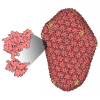
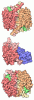
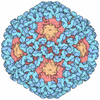
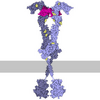
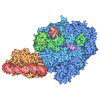
- EMDB-79237: Cryo-EM structure of pSTAT1 bound to importin alpha 5 (2:1 assembly) -
+ Open data

- Basic information
| Entry |  | |||||||||
|---|---|---|---|---|---|---|---|---|---|---|
| Title | Cryo-EM structure of pSTAT1 bound to importin alpha 5 (2:1 assembly) | |||||||||
 Map data | ||||||||||
 Sample |
| |||||||||
 Keywords | importin / transcription factor / transport protein / TRANSCRIPTION | |||||||||
| Function / homology |  Function and homology information renal tubule development / metanephric mesenchymal cell differentiation / negative regulation of metanephric nephron tubule epithelial cell differentiation / negative regulation by virus of viral protein levels in host cell / negative regulation of mesenchymal to epithelial transition involved in metanephros morphogenesis / ISGF3 complex / response to interferon-beta / Inhibition of nitric oxide production / metanephric mesenchymal cell proliferation involved in metanephros development / interleukin-27-mediated signaling pathway ...renal tubule development / metanephric mesenchymal cell differentiation / negative regulation of metanephric nephron tubule epithelial cell differentiation / negative regulation by virus of viral protein levels in host cell / negative regulation of mesenchymal to epithelial transition involved in metanephros morphogenesis / ISGF3 complex / response to interferon-beta / Inhibition of nitric oxide production / metanephric mesenchymal cell proliferation involved in metanephros development / interleukin-27-mediated signaling pathway / regulation of DNA recombination / Differentiation of naive CD4+ T cells to T helper 1 cells (Th1 cells) / Interleukin-9 signaling / Interleukin-21 signaling / interleukin-7-mediated signaling pathway / interleukin-9-mediated signaling pathway / positive regulation of mesenchymal cell proliferation / Transport of Ribonucleoproteins into the Host Nucleus / NLS-dependent protein nuclear import complex / Apoptosis induced DNA fragmentation / postsynapse to nucleus signaling pathway / tumor necrosis factor receptor binding / nuclear localization sequence binding / NS1 Mediated Effects on Host Pathways / Interleukin-27 signaling / Interleukin-35 Signalling / Signaling by cytosolic FGFR1 fusion mutants / cell surface receptor signaling pathway via STAT / NLS-bearing protein import into nucleus / nuclear import signal receptor activity / NOTCH3 Intracellular Domain Regulates Transcription / Interleukin-20 family signaling / Interleukin-6 signaling / type I interferon-mediated signaling pathway / negative regulation of endothelial cell proliferation / Vpr-mediated nuclear import of PICs / histone acetyltransferase binding / Integration of provirus / Regulation of IFNA/IFNB signaling / positive regulation of interferon-alpha production / ubiquitin-like protein ligase binding / Regulation of IFNG signaling / type II interferon-mediated signaling pathway / Growth hormone receptor signaling / RNA polymerase II core promoter sequence-specific DNA binding / nuclear pore / cellular response to interferon-beta / cell surface receptor signaling pathway via JAK-STAT / positive regulation of defense response to virus by host / Signaling by PDGFRA transmembrane, juxtamembrane and kinase domain mutants / Signaling by PDGFRA extracellular domain mutants / Signaling by CSF3 (G-CSF) / negative regulation of angiogenesis / tumor necrosis factor-mediated signaling pathway / response to type II interferon / positive regulation of erythrocyte differentiation / Downstream signal transduction / Turbulent (oscillatory, disturbed) flow shear stress activates signaling by PIEZO1 and integrins in endothelial cells / defense response / transcription corepressor binding / Signaling by phosphorylated juxtamembrane, extracellular and kinase domain KIT mutants / negative regulation of canonical NF-kappaB signal transduction / Assembly of the ORC complex at the origin of replication / RNA polymerase II transcription regulatory region sequence-specific DNA binding / promoter-specific chromatin binding / Maturation of DENV proteins / cellular response to type II interferon / Downregulation of SMAD2/3:SMAD4 transcriptional activity / Signaling by SCF-KIT / Inactivation of CSF3 (G-CSF) signaling / PKR-mediated signaling / response to peptide hormone / ISG15 antiviral mechanism / Interferon gamma signaling / RNA polymerase II transcription regulator complex / transcription coactivator binding / Signaling by CSF1 (M-CSF) in myeloid cells / Interferon alpha/beta signaling / Regulation of RUNX2 expression and activity / Signaling by ALK fusions and activated point mutants / histone binding / Regulation of PD-L1(CD274) transcription / defense response to virus / regulation of cell population proliferation / Interleukin-4 and Interleukin-13 signaling / double-stranded DNA binding / regulation of apoptotic process / DNA-binding transcription factor activity, RNA polymerase II-specific / postsynaptic density / RNA polymerase II cis-regulatory region sequence-specific DNA binding / cadherin binding / DNA-binding transcription factor activity / glutamatergic synapse / regulation of transcription by RNA polymerase II / dendrite / positive regulation of DNA-templated transcription / chromatin / negative regulation of transcription by RNA polymerase II / SARS-CoV-2 activates/modulates innate and adaptive immune responses / perinuclear region of cytoplasm Similarity search - Function | |||||||||
| Biological species |  Homo sapiens (human) | |||||||||
| Method | single particle reconstruction / cryo EM / Resolution: 3.6 Å | |||||||||
 Authors | Kumar P / Vinkemeier U / Cingolani G | |||||||||
| Funding support |  United States, 2 items
| |||||||||
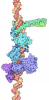
 Citation | Journal: bioRxiv / Year: 2026 Title: Cytokine-induced nuclear translocation of STAT1 via a non-transferable NLS. Authors: Pramod Kumar / James R Cavey / Ruoyu Yang / Oran White / Andreas Begitt / Liu He / Stephanie S Suinn / Nathan F Bellis / Ravi K Lokareddy / Uwe Vinkemeier / Gino Cingolani /  Abstract: The targeting function of nuclear localization signals (NLSs) is generally considered independent of a protein's native sequence or fold and is readily transferable to heterologous cargos. Contrary ...The targeting function of nuclear localization signals (NLSs) is generally considered independent of a protein's native sequence or fold and is readily transferable to heterologous cargos. Contrary to this paradigm, rapid nuclear translocation of phosphorylated STAT1 (pSTAT1) following cytokine stimulation requires importin β, Ran-GTP, and the importin α5 isoform, which recognizes a non-transferable NLS. Here, we present cryo-EM structures of pSTAT1 bound to importin α5, revealing an asymmetric 2:1 complex that diverges from canonical NLS-mediated cargo recognition. Importin α5 occupies the DNA-binding groove of the pSTAT1 dimer, with a single STAT1 N-terminal domain positioning the C-terminal Armadillo repeats 9-10 (S1B domain) orthogonal to the DNA-binding interface. This interface is also targeted by the Ebola virus protein VP24, an antagonist of interferon signaling. We further show that Ran-GTP alone is insufficient to trigger nuclear release of pSTAT1, which additionally requires the exportin CAS. A cryo-EM reconstruction of the CAS-Ran-GTP-α5 complex, supported by in vitro competition assays, demonstrates that CAS and pSTAT1 are mutually exclusive ligands for importin α5. Together, these findings define the molecular choreography of cytokine-induced STAT1 nuclear translocation and release, establishing a general paradigm for STAT family signaling. | |||||||||
| History |
|
- Structure visualization
| Supplemental images |
|---|

- Downloads & links
-EMDB archive
| Map data | emd_79237.map.gz | 254.2 MB | EMDB map data format | |
|---|---|---|---|---|
| Header (meta data) | emd-79237-v30.xmlemd-79237.xml | 24.8 KB 24.8 KB | Display Display | EMDB header |
| FSC (resolution estimation) | emd_79237_fsc.xml | 17 KB | Display | FSC data file |
| Images |  emd_79237.png | 69.4 KB | ||
| Masks | emd_79237_msk_1.map | 512 MB | Mask map | |
| Filedesc metadata | emd-79237.cif.gz | 7.6 KB | ||
| Others | emd_79237_half_map_1.map.gzemd_79237_half_map_2.map.gz | 475.4 MB 475.4 MB | ||
| Archive directory |  https://data.pdbj.org/pub/emdb/structures/EMD-79237ftp://data.pdbj.org/pub/emdb/structures/EMD-79237 | HTTPS FTP |
-Related structure data
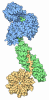
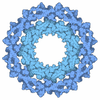
| Related structure data |  38ykMC  11jgC  11phC  38htC C: citing same article ( M: atomic model generated by this map |
|---|---|
| Similar structure data |


-Links
| EMDB pages | EMDB (EBI/PDBe) / EMDataResource |
|---|---|
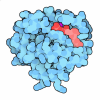
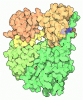
| Related items in Molecule of the Month |
-Map
| File | Download / File: emd_79237.map.gz / Format: CCP4 / Size: 512 MB / Type: IMAGE STORED AS FLOATING POINT NUMBER (4 BYTES) | ||||||||||||||||||||||||||||||||||||
|---|---|---|---|---|---|---|---|---|---|---|---|---|---|---|---|---|---|---|---|---|---|---|---|---|---|---|---|---|---|---|---|---|---|---|---|---|---|
| Projections & slices | Image control
Images are generated by Spider. | ||||||||||||||||||||||||||||||||||||
| Voxel size | X=Y=Z: 0.717 Å | ||||||||||||||||||||||||||||||||||||
| Density |
| ||||||||||||||||||||||||||||||||||||
| Symmetry | Space group: 1 | ||||||||||||||||||||||||||||||||||||
| Details | EMDB XML:
|
 Z (Sec.)
 Y (Row.)
 X (Col.)


-Supplemental data
-Mask #1
| File | emd_79237_msk_1.map | ||||||||||||
|---|---|---|---|---|---|---|---|---|---|---|---|---|---|
| Projections & Slices |
| ||||||||||||
| Density Histograms |


-Half map: #2
| File | emd_79237_half_map_1.map | ||||||||||||
|---|---|---|---|---|---|---|---|---|---|---|---|---|---|
| Projections & Slices |
| ||||||||||||
| Density Histograms |


-Half map: #1
| File | emd_79237_half_map_2.map | ||||||||||||
|---|---|---|---|---|---|---|---|---|---|---|---|---|---|
| Projections & Slices |
| ||||||||||||
| Density Histograms |


- Sample components
-Entire : This is a ternary complex formed through the assembly of two phos...
| Entire | Name: This is a ternary complex formed through the assembly of two phosphorylated STAT1 protomers and one importin alpha 5 protomer. |
|---|---|
| Components |
|
-Supramolecule #1: This is a ternary complex formed through the assembly of two phos...
| Supramolecule | Name: This is a ternary complex formed through the assembly of two phosphorylated STAT1 protomers and one importin alpha 5 protomer. type: complex / ID: 1 / Parent: 0 / Macromolecule list: all |
|---|---|
| Molecular weight | Theoretical: 174.67 KDa |
-Macromolecule #1: Importin subunit alpha-5
| Macromolecule | Name: Importin subunit alpha-5 / type: protein_or_peptide / ID: 1 / Number of copies: 1 / Enantiomer: LEVO |
|---|---|
| Source (natural) | Organism: Homo sapiens (human) |
| Molecular weight | Theoretical: 60.279453 KDa |
| Recombinant expression | Organism:   Escherichia coli BL21(DE3) (bacteria) |
| Sequence | String: MTTPGKENFR LKSYKNKSLN PDEMRRRREE EGLQLRKQKR EEQLFKRRNV ATAEEETEEE VMSDGGFHEA QISNMEMAPG GVITSDMIE MIFSKSPEQQ LSATQKFRKL LSKEPNPPID EVISTPGVVA RFVEFLKRKE NCTLQFESAW VLTNIASGNS L QTRIVIQA ...String: MTTPGKENFR LKSYKNKSLN PDEMRRRREE EGLQLRKQKR EEQLFKRRNV ATAEEETEEE VMSDGGFHEA QISNMEMAPG GVITSDMIE MIFSKSPEQQ LSATQKFRKL LSKEPNPPID EVISTPGVVA RFVEFLKRKE NCTLQFESAW VLTNIASGNS L QTRIVIQA GAVPIFIELL SSEFEDVQEQ AVWALGNIAG DSTMCRDYVL DCNILPPLLQ LFSKQNRLTM TRNAVWALSN LC RGKSPPP EFAKVSPCLN VLSWLLFVSD TDVLADACWA LSYLSDGPND KIQAVIDAGV CRRLVELLMH NDYKVVSPAL RAV GNIVTG DDIQTQVILN CSALQSLLHL LSSPKESIKK EACWTISNIT AGNRAQIQTV IDANIFPALI SILQTAEFRT RKEA AWAIT NATSGGSAEQ IKYLVELGCI KPLCDLLTVM DSKIVQVALN GLENILRLGE QEAKRNGTGI NPYCALIEEA YGLDK IEFL QSHENQEIYQ KAFDLIEHYF GTEDEDSSIA PQVDLNQQQY IFQQCEAPME GFQL UniProtKB: Importin subunit alpha-5 |
-Macromolecule #2: Signal transducer and activator of transcription 1-alpha/beta
| Macromolecule | Name: Signal transducer and activator of transcription 1-alpha/beta type: protein_or_peptide / ID: 2 / Details: STAT1 / Number of copies: 2 / Enantiomer: LEVO |
|---|---|
| Source (natural) | Organism: Homo sapiens (human) |
| Molecular weight | Theoretical: 87.519594 KDa |
| Recombinant expression | Organism:  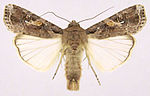 Spodoptera frugiperda (fall armyworm) |
| Sequence | String: MSQWYELQQL DSKFLEQVHQ LYDDSFPMEI RQYLAQWLEK QDWEHAANDV SFATIRFHDL LSQLDDQYSR FSLENNFLLQ HNIRKSKRN LQDNFQEDPI QMSMIIYSCL KEERKILENA QRFNQAQSGN IQSTVMLDKQ KELDSKVRNV KDKVMCIEHE I KSLEDLQD ...String: MSQWYELQQL DSKFLEQVHQ LYDDSFPMEI RQYLAQWLEK QDWEHAANDV SFATIRFHDL LSQLDDQYSR FSLENNFLLQ HNIRKSKRN LQDNFQEDPI QMSMIIYSCL KEERKILENA QRFNQAQSGN IQSTVMLDKQ KELDSKVRNV KDKVMCIEHE I KSLEDLQD EYDFKCKTLQ NREHETNGVA KSDQKQEQLL LKKMYLMLDN KRKEVVHKII ELLNVTELTQ NALINDELVE WK RRQQSAC IGGPPNACLD QLQNWFTIVA ESLQQVRQQL KKLEELEQKY TYEHDPITKN KQVLWDRTFS LFQQLIQSSF VVE RQPCMP THPQRPLVLK TGVQFTVKLR LLVKLQELNY NLKVKVLFDK DVNERNTVKG FRKFNILGTH TKVMNMEEST NGSL AAEFR HLQLKEQKNA GTRTNEGPLI VTEELHSLSF ETQLCQPGLV IDLETTSLPV VVISNVSQLP SGWASILWYN MLVAE PRNL SFFLTPPCAR WAQLSEVLSW QFSSVTKRGL NVDQLNMLGE KLLGPNASPD GLIPWTRFCK ENINDKNFPF WLWIES ILE LIKKHLLPLW NDGCIMGFIS KERERALLKD QQPGTFLLRF SESSREGAIT FTWVERSQNG GEPDFHAVEP YTKKELS AV TFPDIIRNYK VMAAENIPEN PLKYLYPNID KDHAFGKYYS RPKEAPEPME LDGPKGTG(PTR)I KTELISVSEV HPSR LQTTD NLLPMSPEEF DEVSRIVGSV EFDSMMNTV UniProtKB: Signal transducer and activator of transcription 1-alpha/beta |
-Experimental details
-Structure determination
| Method | cryo EM |
|---|---|
 Processing | single particle reconstruction |
| Aggregation state | particle |
-Sample preparation
| Concentration | 1.0 mg/mL |
|---|---|
| Buffer | pH: 8 Details: 20mM Tris, pH 8.0, 150 mM NaCl, 3mM Beta Mercapto Ethanol, 1mM phenylmethylsulfonyl fluoride. |
| Grid | Model: UltrAuFoil R1.2/1.3 / Material: GOLD / Mesh: 300 / Support film - Material: GOLD / Support film - topology: HOLEY ARRAY / Support film - Film thickness: 4 / Pretreatment - Type: GLOW DISCHARGE / Pretreatment - Time: 30 sec. / Pretreatment - Pressure: 0.325 kPa |
| Vitrification | Cryogen name: ETHANE / Chamber humidity: 100 % / Chamber temperature: 295 K / Instrument: FEI VITROBOT MARK IV |
| Details | The sample was monodisperse. |
- Electron microscopy
| Microscope | TFS KRIOS |
|---|---|
| Image recording | Film or detector model: FEI FALCON IV (4k x 4k) / Digitization - Dimensions - Width: 4096 pixel / Digitization - Dimensions - Height: 4096 pixel / Number grids imaged: 3 / Number real images: 12613 / Average exposure time: 2.5 sec. / Average electron dose: 50.0 e/Å2 |
| Electron beam | Acceleration voltage: 300 kV / Electron source:  FIELD EMISSION GUN |
| Electron optics | C2 aperture diameter: 70.0 µm / Illumination mode: SPOT SCAN / Imaging mode: BRIGHT FIELD / Cs: 2.7 mm / Nominal defocus max: 2.5 µm / Nominal defocus min: 0.65 µm / Nominal magnification: 165000 |
| Sample stage | Specimen holder model: FEI TITAN KRIOS AUTOGRID HOLDER / Cooling holder cryogen: NITROGEN |
| Experimental equipment | 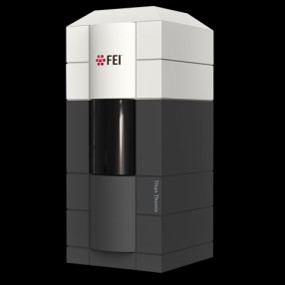 Model: Titan Krios / Image courtesy: FEI Company |
+Image processing

-Atomic model buiding 1
| Initial model | PDB ID: Chain - Chain ID: A / Chain - Residue range: 1-750 / Chain - Source name: AlphaFold / Chain - Initial model type: in silico model |
|---|---|
| Refinement | Space: REAL / Protocol: RIGID BODY FIT / Overall B value: 154 / Target criteria: Cross correlation |
| Output model | PDB-38yk: |