[English] 日本語
Yorodumi
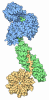
- EMDB-76275: Cryo-EM structure of the iNOS:CaM proximal state -

+
Open data


ID or keywords:

Loading...

-
Basic information

Entry
Database: EMDB / ID: EMD-76275
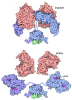
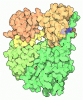
TitleCryo-EM structure of the iNOS:CaM proximal state
Map dataiNOS:CaM Proximal Unsharpened Map
Sample
  • Complex: iNOS:CaM Dimer
    • Protein or peptide: Nitric oxide synthase, inducible
    • Protein or peptide: Calmodulin-1
  • Ligand: ZINC ION
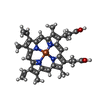
  • Ligand: PROTOPORPHYRIN IX CONTAINING FE
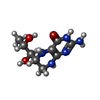
  • Ligand: 5,6,7,8-TETRAHYDROBIOPTERIN
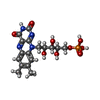
  • Ligand: FLAVIN MONONUCLEOTIDE
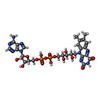
  • Ligand: FLAVIN-ADENINE DINUCLEOTIDE
  • Ligand: CALCIUM ION
KeywordsNitric oxide synthase / Calmodulin / Enzyme complex / Heme-binding protein / CYTOSOLIC PROTEIN
Function / homology
Function and homology information


positive regulation of leukocyte mediated cytotoxicity / Inhibition of nitric oxide production / regulation of cellular respiration / prostaglandin secretion / Nitric oxide stimulates guanylate cyclase / ROS and RNS production in phagocytes / tetrahydrobiopterin binding / arginine binding / superoxide metabolic process / peptidyl-cysteine S-nitrosylation ...positive regulation of leukocyte mediated cytotoxicity / Inhibition of nitric oxide production / regulation of cellular respiration / prostaglandin secretion / Nitric oxide stimulates guanylate cyclase / ROS and RNS production in phagocytes / tetrahydrobiopterin binding / arginine binding / superoxide metabolic process / peptidyl-cysteine S-nitrosylation / CaM pathway / Cam-PDE 1 activation / Sodium/Calcium exchangers / Calmodulin induced events / Reduction of cytosolic Ca++ levels / : / Activation of Ca-permeable Kainate Receptor / CREB1 phosphorylation through the activation of CaMKII/CaMKK/CaMKIV cascasde / organelle localization by membrane tethering / Loss of phosphorylation of MECP2 at T308 / CREB1 phosphorylation through the activation of Adenylate Cyclase / CaMK IV-mediated phosphorylation of CREB / regulation of cytokine production involved in inflammatory response / PKA activation / CASP4 inflammasome assembly / Glycogen breakdown (glycogenolysis) / presynaptic endocytosis / Activation of RAC1 downstream of NMDARs / CLEC7A (Dectin-1) induces NFAT activation / negative regulation of ryanodine-sensitive calcium-release channel activity / Fc-gamma receptor signaling pathway involved in phagocytosis / negative regulation of high voltage-gated calcium channel activity / autophagosome membrane docking / negative regulation of calcium ion export across plasma membrane / regulation of cardiac muscle cell action potential / regulation of ryanodine-sensitive calcium-release channel activity / Synthesis of IP3 and IP4 in the cytosol / regulation of insulin secretion / Phase 0 - rapid depolarisation / peroxisomal matrix / Negative regulation of NMDA receptor-mediated neuronal transmission / Unblocking of NMDA receptors, glutamate binding and activation / presynaptic cytosol / calcineurin-mediated signaling / RHO GTPases activate PAKs / regulation of cell communication by electrical coupling involved in cardiac conduction / nitric-oxide synthase (NADPH) / Ion transport by P-type ATPases / Uptake and function of anthrax toxins / Long-term potentiation / protein phosphatase activator activity / Calcineurin activates NFAT / DARPP-32 events / nitric-oxide synthase activity / Regulation of MECP2 expression and activity / Smooth Muscle Contraction / response to bacterium / detection of calcium ion / cellular response to interferon-beta / regulation of cardiac muscle contraction / L-arginine catabolic process / negative regulation of blood pressure / RHO GTPases activate IQGAPs / nitric oxide biosynthetic process / catalytic complex / calcium channel inhibitor activity / eNOS activation / Tetrahydrobiopterin (BH4) synthesis, recycling, salvage and regulation / calyx of Held / regulation of heart rate / regulation of release of sequestered calcium ion into cytosol by sarcoplasmic reticulum / Ion homeostasis / Activation of AMPK downstream of NMDARs / titin binding / Protein methylation / sperm midpiece / cell redox homeostasis / response to hormone / regulation of cardiac muscle contraction by regulation of the release of sequestered calcium ion / voltage-gated potassium channel complex / nitric oxide-cGMP-mediated signaling / FCERI mediated Ca+2 mobilization / substantia nigra development / calcium channel complex / FCGR3A-mediated IL10 synthesis / protein serine/threonine kinase activator activity / Antigen activates B Cell Receptor (BCR) leading to generation of second messengers / positive regulation of receptor signaling pathway via JAK-STAT / Ras activation upon Ca2+ influx through NMDA receptor / adenylate cyclase activator activity / positive regulation of interleukin-8 production / regulation of cytokinesis / VEGFR2 mediated cell proliferation / spindle microtubule / VEGFR2 mediated vascular permeability / calcium channel regulator activity / sarcomere / Translocation of SLC2A4 (GLUT4) to the plasma membrane / negative regulation of protein catabolic process / circadian rhythm
Similarity search - Function
Nitric-oxide synthase, eukaryote / Nitric oxide synthase, N-terminal / Nitric oxide synthase, N-terminal domain superfamily / Nitric oxide synthase, domain 2 superfamily / Nitric oxide synthase, domain 1 superfamily / Nitric oxide synthase, domain 3 superfamily / : / Nitric oxide synthase, oxygenase domain / Nitric oxide synthase (NOS) signature. / Sulfite reductase [NADPH] flavoprotein alpha-component-like, FAD-binding ...Nitric-oxide synthase, eukaryote / Nitric oxide synthase, N-terminal / Nitric oxide synthase, N-terminal domain superfamily / Nitric oxide synthase, domain 2 superfamily / Nitric oxide synthase, domain 1 superfamily / Nitric oxide synthase, domain 3 superfamily / : / Nitric oxide synthase, oxygenase domain / Nitric oxide synthase (NOS) signature. / Sulfite reductase [NADPH] flavoprotein alpha-component-like, FAD-binding / NADPH-cytochrome p450 reductase, FAD-binding, alpha-helical domain superfamily / FAD binding domain / Flavodoxin-like / Flavoprotein pyridine nucleotide cytochrome reductase / : / Flavodoxin / Flavodoxin-like domain profile. / Flavodoxin/nitric oxide synthase / Oxidoreductase FAD/NAD(P)-binding / Oxidoreductase NAD-binding domain / FAD-binding domain, ferredoxin reductase-type / Ferredoxin-NADP reductase (FNR), nucleotide-binding domain / Ferredoxin reductase-type FAD binding domain profile. / Riboflavin synthase-like beta-barrel / Flavoprotein-like superfamily / EF-hand domain pair / EF-hand, calcium binding motif / EF-Hand 1, calcium-binding site / EF-hand calcium-binding domain. / EF-hand calcium-binding domain profile. / EF-hand domain / EF-hand domain pair
Similarity search - Domain/homology
Calmodulin-1 / Nitric oxide synthase, inducible
Similarity search - Component
Biological speciesHomo sapiens (human)
Methodsingle particle reconstruction / cryo EM / Resolution: 2.97 Å
AuthorsLee K / Southworth D
Funding support United States, 4 items
OrganizationGrant numberCountry
National Institutes of Health/National Institute of General Medical Sciences (NIH/NIGMS)GM110001 United States
National Institutes of Health/National Institute of General Medical Sciences (NIH/NIGMS)GM138690 United States
National Institutes of Health/National Institute of General Medical Sciences (NIH/NIGMS)GM153714 United States
National Institutes of Health/National Institute of General Medical Sciences (NIH/NIGMS)T32GM140223 United States
CitationJournal: Nat Struct Mol Biol / Year: 2026
Title: Structural basis of electron transfer by the human nitric oxide synthase holoenzyme complex.
Authors: Kanghyun Lee / Cristian Martinez-Ramos / Ting Jiang / Thomas H Pospiech / Eric Tse / Miranda Lau / Changjian Feng / Yoichi Osawa / Daniel R Southworth /
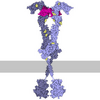
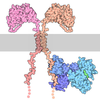
Abstract: Mammalian nitric oxide synthase (NOS) generates nitric oxide (NO), an essential signaling molecule in neurotransmission, inflammation and cardiovascular regulation. NOS dysregulation contributes to ...Mammalian nitric oxide synthase (NOS) generates nitric oxide (NO), an essential signaling molecule in neurotransmission, inflammation and cardiovascular regulation. NOS dysregulation contributes to neurodegeneration, septic shock and ischemia. The structural basis of NOS function remains unclear, likely because of its dynamic, multicomponent architecture. Catalysis requires electron transfer across five cofactors, with the oxygenase (Oxy) domain converting L-arginine to NO after receiving electrons from the reductase (Red) domain through calmodulin (CaM) activation. Here, we report cryo-electron microscopy structures of the human inducible NOS:CaM holoenzyme, revealing an architecture in which the Red:CaM arm spans the Oxy dimer in an apparent active state for cross-monomer electron transfer. The flavin mononucleotide subdomain is rotated ~90° relative to the Red core, positioning its cofactor ~9 Å from the heme, adjacent to a conserved tryptophan residue within a narrow Oxy domain tunnel. Red-Oxy flexibility in the active state may facilitate electron shuttling among cofactors, defining how NOS cofactors are transiently aligned to enable catalysis.
History
DepositionMar 24, 2026-
Header (metadata) releaseNov 25, 2026-
Map releaseNov 25, 2026-
UpdateNov 25, 2026-
Current statusNov 25, 2026Processing site: RCSB / Status: Released

-
Structure visualization

Supplemental images

Downloads & links

-
Map

FileDownload / File: emd_76275.map.gz / Format: CCP4 / Size: 149.9 MB / Type: IMAGE STORED AS FLOATING POINT NUMBER (4 BYTES)
AnnotationiNOS:CaM Proximal Unsharpened Map
Projections & slices

Image control

Size
Brightness
Contrast
Others
AxesZ (Sec.)Y (Row.)X (Col.)
0.83 Å/pix.
x 340 pix.
= 283.56 Å
0.83 Å/pix.
x 340 pix.
= 283.56 Å
0.83 Å/pix.
x 340 pix.
= 283.56 Å

Surface

Projections

Slices (1/3)

Slices (1/2)

Slices (2/3)

Images are generated by Spider.

Voxel sizeX=Y=Z: 0.834 Å
Density
Contour LevelBy AUTHOR: 0.15
Minimum - Maximum-0.47062787 - 1.2434291
Average (Standard dev.)-0.0006972347 (±0.02983809)
SymmetrySpace group: 1
Details

EMDB XML:

Map geometry
Axis orderXYZ
Origin000
Dimensions340340340
Spacing340340340
CellA=B=C: 283.56 Å
α=β=γ: 90.0 °

-
Supplemental data

-
Additional map: iNOS:CaM Proximal Sharpened Map

Fileemd_76275_additional_1.map
AnnotationiNOS:CaM Proximal Sharpened Map
Projections & Slices
AxesZYX

Projections

Slices (1/2)
Density Histograms

-
Half map: iNOS:CaM Proximal Half A Map

Fileemd_76275_half_map_1.map
AnnotationiNOS:CaM Proximal Half A Map
Projections & Slices
AxesZYX

Projections

Slices (1/2)
Density Histograms

-
Half map: iNOS:CaM Proximal Half B Map

Fileemd_76275_half_map_2.map
AnnotationiNOS:CaM Proximal Half B Map
Projections & Slices
AxesZYX

Projections

Slices (1/2)
Density Histograms

-
Sample components

-
Entire : iNOS:CaM Dimer

EntireName: iNOS:CaM Dimer
Components
  • Complex: iNOS:CaM Dimer
    • Protein or peptide: Nitric oxide synthase, inducible
    • Protein or peptide: Calmodulin-1
  • Ligand: ZINC ION
  • Ligand: PROTOPORPHYRIN IX CONTAINING FE
  • Ligand: 5,6,7,8-TETRAHYDROBIOPTERIN
  • Ligand: FLAVIN MONONUCLEOTIDE
  • Ligand: FLAVIN-ADENINE DINUCLEOTIDE
  • Ligand: CALCIUM ION

-
Supramolecule #1: iNOS:CaM Dimer

SupramoleculeName: iNOS:CaM Dimer / type: complex / ID: 1 / Parent: 0 / Macromolecule list: #1-#2
Source (natural)Organism: Homo sapiens (human)

-
Macromolecule #1: Nitric oxide synthase, inducible

MacromoleculeName: Nitric oxide synthase, inducible / type: protein_or_peptide / ID: 1 / Number of copies: 2 / Enantiomer: LEVO / EC number: nitric-oxide synthase (NADPH)
Source (natural)Organism: Homo sapiens (human)
Molecular weightTheoretical: 133.903547 KDa
Recombinant expressionOrganism: Escherichia coli (E. coli)
SequenceString: MHHHHHHSSG VDLGTENLYF QSNAACPWKF LFKTKFHQYA MNGEKDINNN VEKAPCATSS PVTQDDLQYH NLSKQQNESP QPLVETGKK SPESLVKLDA TPLSSPRHVR IKNWGSGMTF QDTLHHKAKG ILTCRSKSCL GSIMTPKSLT RGPRDKPTPP D ELLPQAIE ...String:
MHHHHHHSSG VDLGTENLYF QSNAACPWKF LFKTKFHQYA MNGEKDINNN VEKAPCATSS PVTQDDLQYH NLSKQQNESP QPLVETGKK SPESLVKLDA TPLSSPRHVR IKNWGSGMTF QDTLHHKAKG ILTCRSKSCL GSIMTPKSLT RGPRDKPTPP D ELLPQAIE FVNQYYGSFK EAKIEEHLAR VEAVTKEIET TGTYQLTGDE LIFATKQAWR NAPRCIGRIQ WSNLQVFDAR SC STAREMF EHICRHVRYS TNNGNIRSAI TVFPQRSDGK HDFRVWNAQL IRYAGYQMPD GSIRGDPANV EFTQLCIDLG WKP KYGRFD VVPLVLQANG RDPELFEIPP DLVLEVAMEH PKYEWFRELE LKWYALPAVA NMLLEVGGLE FPGCPFNGWY MGTE IGVRD FCDVQRYNIL EEVGRRMGLE THKLASLWKD QAVVEINIAV LHSFQKQNVT IMDHHSAAES FMKYMQNEYR SRGGC PADW IWLVPPMSGS ITPVFHQEML NYVLSPFYYY QVEAWKTHVW QDEKRRPKRR EIPLKVLVKA VLFACMLMRK TMASRV RVT ILFATETGKS EALAWDLGAL FSCAFNPKVV CMDKYRLSCL EEERLLLVVT STFGNGDCPG NGEKLKKSLF MLKELNN KF RYAVFGLGSS MYPRFCAFAH DIDQKLSHLG ASQLTPMGEG DELSGQEDAF RSWAVQTFKA ACETFDVRGK QHIQIPKL Y TSNVTWDPHH YRLVQDSQPL DLSKALSSMH AKNVFTMRLK SRQNLQSPTS SRATILVELS CEDGQGLNYL PGEHLGVCP GNQPALVQGI LERVVDGPTP HQTVRLEALD ESGSYWVSDK RLPPCSLSQA LTYFLDITTP PTQLLLQKLA QVATEEPERQ RLEALCQPS EYSKWKFTNS PTFLEVLEEF PSLRVSAGFL LSQLPILKPR FYSISSSRDH TPTEIHLTVA VVTYHTRDGQ G PLHHGVCS TWLNSLKPQD PVPCFVRNAS GFHLPEDPSH PCILIGPGTG IAPFRSFWQQ RLHDSQHKGV RGGRMTLVFG CR RPDEDHI YQEEMLEMAQ KGVLHAVHTA YSRLPGKPKV YVQDILRQQL ASEVLRVLHK EPGHLYVCGD VRMARDVAHT LKQ LVAAKL KLNEEQVEDY FFQLKSQKRY HEDIFGAVFP YEAKKDRVAV QPSSLEMSAL

UniProtKB: Nitric oxide synthase, inducible

-
Macromolecule #2: Calmodulin-1

MacromoleculeName: Calmodulin-1 / type: protein_or_peptide / ID: 2 / Number of copies: 1 / Enantiomer: LEVO
Source (natural)Organism: Homo sapiens (human)
Molecular weightTheoretical: 16.852545 KDa
Recombinant expressionOrganism: Escherichia coli (E. coli)
SequenceString:
MADQLTEEQI AEFKEAFSLF DKDGDGTITT KELGTVMRSL GQNPTEAELQ DMINEVDADG NGTIDFPEFL TMMARKMKDT DSEEEIREA FRVFDKDGNG YISAAELRHV MTNLGEKLTD EEVDEMIREA DIDGDGQVNY EEFVQMMTAK

UniProtKB: Calmodulin-1

-
Macromolecule #3: ZINC ION

MacromoleculeName: ZINC ION / type: ligand / ID: 3 / Number of copies: 1 / Formula: ZN
Molecular weightTheoretical: 65.409 Da

-
Macromolecule #4: PROTOPORPHYRIN IX CONTAINING FE

MacromoleculeName: PROTOPORPHYRIN IX CONTAINING FE / type: ligand / ID: 4 / Number of copies: 2 / Formula: HEM
Molecular weightTheoretical: 616.487 Da
Chemical component information

ChemComp-HEM:
PROTOPORPHYRIN IX CONTAINING FE

-
Macromolecule #5: 5,6,7,8-TETRAHYDROBIOPTERIN

MacromoleculeName: 5,6,7,8-TETRAHYDROBIOPTERIN / type: ligand / ID: 5 / Number of copies: 2 / Formula: H4B
Molecular weightTheoretical: 241.247 Da
Chemical component information

ChemComp-H4B:
5,6,7,8-TETRAHYDROBIOPTERIN / neurotransmitter*YM

-
Macromolecule #6: FLAVIN MONONUCLEOTIDE

MacromoleculeName: FLAVIN MONONUCLEOTIDE / type: ligand / ID: 6 / Number of copies: 1 / Formula: FMN
Molecular weightTheoretical: 456.344 Da
Chemical component information

ChemComp-FMN:
FLAVIN MONONUCLEOTIDE

-
Macromolecule #7: FLAVIN-ADENINE DINUCLEOTIDE

MacromoleculeName: FLAVIN-ADENINE DINUCLEOTIDE / type: ligand / ID: 7 / Number of copies: 1 / Formula: FAD
Molecular weightTheoretical: 785.55 Da
Chemical component information

ChemComp-FAD:
FLAVIN-ADENINE DINUCLEOTIDE / FAD*YM

-
Macromolecule #8: CALCIUM ION

MacromoleculeName: CALCIUM ION / type: ligand / ID: 8 / Number of copies: 4 / Formula: CA
Molecular weightTheoretical: 40.078 Da

-
Experimental details

-
Structure determination

Methodcryo EM
Processingsingle particle reconstruction
Aggregation stateparticle

-
Sample preparation

BufferpH: 7.5
VitrificationCryogen name: ETHANE

-
Electron microscopy

MicroscopeTFS KRIOS
Image recordingFilm or detector model: GATAN K3 BIOQUANTUM (6k x 4k) / Average electron dose: 66.0 e/Å2
Electron beamAcceleration voltage: 300 kV / Electron source: FIELD EMISSION GUN
Electron opticsIllumination mode: FLOOD BEAM / Imaging mode: BRIGHT FIELD / Nominal defocus max: 2.0 µm / Nominal defocus min: 1.0 µm
Experimental equipment
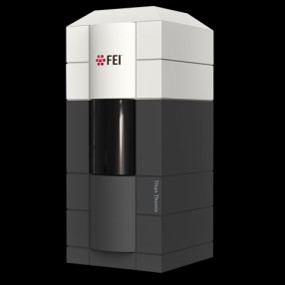
Model: Titan Krios / Image courtesy: FEI Company

+
Image processing

CTF correctionType: PHASE FLIPPING AND AMPLITUDE CORRECTION
Startup modelType of model: OTHER
Final reconstructionResolution.type: BY AUTHOR / Resolution: 2.97 Å / Resolution method: FSC 0.143 CUT-OFF / Software - Name: cryoSPARC / Number images used: 40215
Initial angle assignmentType: MAXIMUM LIKELIHOOD
Final angle assignmentType: MAXIMUM LIKELIHOOD

+
About Yorodumi

-
News

-
Feb 9, 2022. New format data for meta-information of EMDB entries

New format data for meta-information of EMDB entries

  • Version 3 of the EMDB header file is now the official format.
  • The previous official version 1.9 will be removed from the archive.

Related info.:EMDB header

External links:wwPDB to switch to version 3 of the EMDB data model

-
Aug 12, 2020. Covid-19 info

Covid-19 info

URL: https://pdbj.org/emnavi/covid19.php

New page: Covid-19 featured information page in EM Navigator.

Related info.:Covid-19 info / Mar 5, 2020. Novel coronavirus structure data

+
Mar 5, 2020. Novel coronavirus structure data

Novel coronavirus structure data

Related info.:Yorodumi Speices / Aug 12, 2020. Covid-19 info

External links:COVID-19 featured content - PDBj / Molecule of the Month (242):Coronavirus Proteases

+
Jan 31, 2019. EMDB accession codes are about to change! (news from PDBe EMDB page)

EMDB accession codes are about to change! (news from PDBe EMDB page)

  • The allocation of 4 digits for EMDB accession codes will soon come to an end. Whilst these codes will remain in use, new EMDB accession codes will include an additional digit and will expand incrementally as the available range of codes is exhausted. The current 4-digit format prefixed with “EMD-” (i.e. EMD-XXXX) will advance to a 5-digit format (i.e. EMD-XXXXX), and so on. It is currently estimated that the 4-digit codes will be depleted around Spring 2019, at which point the 5-digit format will come into force.
  • The EM Navigator/Yorodumi systems omit the EMD- prefix.

Related info.:Q: What is EMD? / ID/Accession-code notation in Yorodumi/EM Navigator

External links:EMDB Accession Codes are Changing Soon! / Contact to PDBj

+
Jul 12, 2017. Major update of PDB

Major update of PDB

  • wwPDB released updated PDB data conforming to the new PDBx/mmCIF dictionary.
  • This is a major update changing the version number from 4 to 5, and with Remediation, in which all the entries are updated.
  • In this update, many items about electron microscopy experimental information are reorganized (e.g. em_software).
  • Now, EM Navigator and Yorodumi are based on the updated data.

External links:wwPDB Remediation / Enriched Model Files Conforming to OneDep Data Standards Now Available in the PDB FTP Archive

-
Yorodumi

Thousand views of thousand structures

  • Yorodumi is a browser for structure data from EMDB, PDB, SASBDB, etc.
  • This page is also the successor to EM Navigator detail page, and also detail information page/front-end page for Omokage search.
  • The word "yorodu" (or yorozu) is an old Japanese word meaning "ten thousand". "mi" (miru) is to see.

Related info.:EMDB / PDB / SASBDB / Comparison of 3 databanks / Yorodumi Search / Aug 31, 2016. New EM Navigator & Yorodumi / Yorodumi Papers / Jmol/JSmol / Function and homology information / Changes in new EM Navigator and Yorodumi

Read more