National Institutes of Health/National Heart, Lung, and Blood Institute (NIH/NHLBI)
5R01HL019278-48
United States
Citation
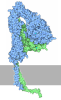
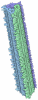
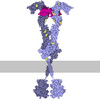
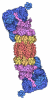
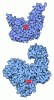
Journal: Blood Adv / Year: 2026 Title: A monoclonal antibody to platelet αIIbβ3 that inhibits protein disulfide isomerase binding and platelet aggregation. Authors: Lu Wang / Jialing Wang / Jihong Li / Barry S Coller / Abstract: Platelet integrin αIIbβ3 plays a pivotal role in hemostasis and thrombosis. Protein disulfide isomerase (PDI) binds to αIIbβ3 and mediates its activation. The binding region(s) on αIIbβ3 for ...Platelet integrin αIIbβ3 plays a pivotal role in hemostasis and thrombosis. Protein disulfide isomerase (PDI) binds to αIIbβ3 and mediates its activation. The binding region(s) on αIIbβ3 for PDI remains to be established. We identified a new anti-αIIbβ3 murine monoclonal antibody, R21C11, that inhibits PDI binding to platelets, ligand binding to αIIbβ3, and platelet aggregation. R21C11 inhibited recombinant PDI binding to platelets activated with the PAR1 thrombin receptor activating peptide SFLLRN (T6). Reciprocally, PDI partially reduced R21C11 binding to platelets. PDI was translocated to the platelet surface after activation and activated platelets showed higher PDI reductase activity. R211C11 decreased both the amount of PDI and the reductase activity. R21C11 partially inhibited both fibrinogen and PAC-1 binding to αIIbβ3 and platelet aggregation induced by ADP and T6. R21C11 bound slowly to unactivated platelets and more rapidly after T6 activation; eptifibatide, which induces the αIIbβ3 extended-open conformation, also increased the speed of R21C11 binding. Activation also increased total R21C11 binding. Cryogenic electron microscopy single-particle analysis of the R21C11 Fab-αIIbβ3 complex revealed that R21C11 binds to the β3 β-tail domain in both nearly bent and semiextended-closed conformations of αIIbβ3. R21C11 Fab clashed with the β3 β-I domain in the fully bent conformation, accounting for the slow binding rate of R21C11. These data are consistent with R21C11 inhibiting PDI binding by steric hindrance and the activation dependence of PDI binding. Taken together, these data suggest that the β-tail domain and/or neighboring area is the binding site for PDI on integrin αIIbβ3.
In the structure databanks used in Yorodumi, some data are registered as the other names, "COVID-19 virus" and "2019-nCoV". Here are the details of the virus and the list of structure data.
Jan 31, 2019. EMDB accession codes are about to change! (news from PDBe EMDB page)
EMDB accession codes are about to change! (news from PDBe EMDB page)
The allocation of 4 digits for EMDB accession codes will soon come to an end. Whilst these codes will remain in use, new EMDB accession codes will include an additional digit and will expand incrementally as the available range of codes is exhausted. The current 4-digit format prefixed with “EMD-” (i.e. EMD-XXXX) will advance to a 5-digit format (i.e. EMD-XXXXX), and so on. It is currently estimated that the 4-digit codes will be depleted around Spring 2019, at which point the 5-digit format will come into force.
The EM Navigator/Yorodumi systems omit the EMD- prefix.
Related info.:Q: What is EMD? / ID/Accession-code notation in Yorodumi/EM Navigator
Yorodumi is a browser for structure data from EMDB, PDB, SASBDB, etc.
This page is also the successor to EM Navigator detail page, and also detail information page/front-end page for Omokage search.
The word "yorodu" (or yorozu) is an old Japanese word meaning "ten thousand". "mi" (miru) is to see.
Related info.:EMDB / PDB / SASBDB / Comparison of 3 databanks / Yorodumi Search / Aug 31, 2016. New EM Navigator & Yorodumi / Yorodumi Papers / Jmol/JSmol / Function and homology information / Changes in new EM Navigator and Yorodumi
 Movie
Movie Controller

 Yorodumi
 Open data
 Basic information
 Map data
 Sample
 Keywords
 Function and homology information
 Homo sapiens (human) /
 Mus musculus (house mouse)
 Authors
 United States, 1 items
  Citation
 Structure visualization
 Downloads & links
 emd_76179.png
 https://data.pdbj.org/pub/emdb/structures/EMD-76179


 Z (Sec.)
 Y (Row.)
 X (Col.)


 Sample components
 Processing
 Electron microscopy
 FIELD EMISSION GUN


