tau / MAPT / FTD / FTLD / amyloid / neurodegeneration / PROTEIN FIBRIL
機能・相同性
機能・相同性情報
plus-end-directed organelle transport along microtubule / histone-dependent DNA binding / negative regulation of protein localization to mitochondrion / neurofibrillary tangle / microtubule lateral binding / axonal transport / tubulin complex / positive regulation of protein localization to synapse / phosphatidylinositol bisphosphate binding / generation of neurons ...plus-end-directed organelle transport along microtubule / histone-dependent DNA binding / negative regulation of protein localization to mitochondrion / neurofibrillary tangle / microtubule lateral binding / axonal transport / tubulin complex / positive regulation of protein localization to synapse / phosphatidylinositol bisphosphate binding / generation of neurons / rRNA metabolic process / axonal transport of mitochondrion / regulation of mitochondrial fission / axon development / regulation of microtubule-based movement / regulation of chromosome organization / intracellular distribution of mitochondria / central nervous system neuron development / minor groove of adenine-thymine-rich DNA binding / lipoprotein particle binding / microtubule polymerization / negative regulation of mitochondrial membrane potential / regulation of microtubule polymerization / dynactin binding / apolipoprotein binding / protein polymerization / main axon / axolemma / Caspase-mediated cleavage of cytoskeletal proteins / regulation of microtubule polymerization or depolymerization / negative regulation of mitochondrial fission / glial cell projection / neurofibrillary tangle assembly / positive regulation of axon extension / positive regulation of microtubule polymerization / regulation of cellular response to heat / Activation of AMPK downstream of NMDARs / positive regulation of protein localization / positive regulation of superoxide anion generation / cellular response to brain-derived neurotrophic factor stimulus / regulation of long-term synaptic depression / supramolecular fiber organization / cytoplasmic microtubule organization / regulation of calcium-mediated signaling / somatodendritic compartment / axon cytoplasm / synapse assembly / astrocyte activation / phosphatidylinositol binding / nuclear periphery / enzyme inhibitor activity / protein phosphatase 2A binding / stress granule assembly / regulation of microtubule cytoskeleton organization / regulation of autophagy / cellular response to reactive oxygen species / microglial cell activation / cellular response to nerve growth factor stimulus / Hsp90 protein binding / protein homooligomerization / SH3 domain binding / PKR-mediated signaling / regulation of synaptic plasticity / synapse organization / response to lead ion / microtubule cytoskeleton organization / memory / cytoplasmic ribonucleoprotein granule / neuron projection development / cell-cell signaling / single-stranded DNA binding / cellular response to heat / growth cone / protein-folding chaperone binding / microtubule cytoskeleton / actin binding / cell body / double-stranded DNA binding / microtubule binding / sequence-specific DNA binding / amyloid fibril formation / dendritic spine / microtubule / protein-macromolecule adaptor activity / learning or memory / neuron projection / membrane raft / negative regulation of gene expression / axon / neuronal cell body / DNA damage response / dendrite / protein kinase binding / enzyme binding / mitochondrion / DNA binding / RNA binding / extracellular region / identical protein binding / nucleus 類似検索 - 分子機能
Microtubule-associated protein Tau / Microtubule associated protein, tubulin-binding repeat / Tau and MAP protein, tubulin-binding repeat / Tau and MAP proteins tubulin-binding repeat signature. / Tau and MAP proteins tubulin-binding repeat profile. / : 類似検索 - ドメイン・相同性
National Institutes of Health/National Institute on Aging (NIH/NIA)
P01AG002132
米国
National Institutes of Health/National Institute on Aging (NIH/NIA)
P30AG062422
米国
National Institutes of Health/National Institute on Aging (NIH/NIA)
P01AG019724
米国
National Institutes of Health/National Institute on Aging (NIH/NIA)
U01AG057195
米国
National Institutes of Health/National Institute on Aging (NIH/NIA)
U19AG063911
米国
Other private
Other private
National Institutes of Health/National Institute on Aging (NIH/NIA)
U19: AG063911
米国
Other private
U54 NS092089
Other private
U01 AG045390
National Institutes of Health/National Institute on Aging (NIH/NIA)
P01 AG019724
米国
Other private
P30 AG062422
National Institutes of Health/National Institute on Aging (NIH/NIA)
U24 AG21886
米国
Other private
A141860
引用
ジャーナル: bioRxiv / 年: 2026 タイトル: Distinct tau filament folds in familial frontotemporal dementia due to the S305I mutation. 著者: Henry S Pan / Gregory E Merz / Alissa Nana Li / Minh Quan Le / Hyunil Jo / Athena Quddus / Anthony Yung / Rian C Kormos / Arthur A Melo / Eliana Marisa Ramos / Argentina Lario Lago / ...著者: Henry S Pan / Gregory E Merz / Alissa Nana Li / Minh Quan Le / Hyunil Jo / Athena Quddus / Anthony Yung / Rian C Kormos / Arthur A Melo / Eliana Marisa Ramos / Argentina Lario Lago / Salvatore Spina / Lea T Grinberg / Howard J Rosen / Eric Tse / Maria Luisa Gorno-Tempini / William F DeGrado / William W Seeley / Daniel R Southworth / 要旨: Frontotemporal lobar degeneration with tau inclusions (FTLD-tau) comprise a class of fatal heterogeneous neurodegenerative diseases. Approximately 10% arise from pathogenic MAPT mutations and often ...Frontotemporal lobar degeneration with tau inclusions (FTLD-tau) comprise a class of fatal heterogeneous neurodegenerative diseases. Approximately 10% arise from pathogenic MAPT mutations and often cause severe, early-onset disease with pathology that is distinct yet partially overlapping with sporadic cases. Here, we evaluated post-mortem tissue from a patient with FTLD-tau due to S305I showing neuropathology most consistent with argyrophilic grain disease (AGD), a prevalent limbic tauopathy of aging. Structures determined by cryo-electron microscopy reveal tau filament folds that differ from those found in sporadic AGD or other tauopathies and feature a 4-layer architecture stabilized by the Ile substitution within its core. Comparative structural analysis reveals conserved motifs are shared among AGD, corticobasal degeneration, and P301T. A well-defined density stacks along a cationic cleft, indicative of a bound RNA-like polyanion or small-molecule. analysis shows the S305I mutation promotes fibrilization relative to normal tau. These results demonstrate that stabilizes a distinct aggregation-prone tau fold that likely contributes to disease pathology and heterogeneity beyond its known splicing defects, and underscore potential limitations of using the most pathologically similar genetic form as a model for sporadic FTLD-tau.
 ムービー
ムービー コントローラー


 データを開く
 基本情報
基本情報
 マップデータ
 試料
試料 キーワード
キーワード 機能・相同性情報
 Homo sapiens (ヒト)
 データ登録者
 米国, 14件
  引用
引用 構造の表示
構造の表示
 ダウンロードとリンク
 emd_75196.png
 http://ftp.pdbj.org/pub/emdb/structures/EMD-75196


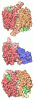

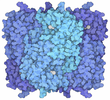
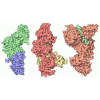
 Z (Sec.)
 Y (Row.)
 X (Col.)


 試料の構成要素
 Escherichia coli (大腸菌)
 解析
解析 電子顕微鏡法
 FIELD EMISSION GUN

