National Institutes of Health/National Institute Of Allergy and Infectious Diseases (NIH/NIAID)
P01 AI172531
United States
Citation
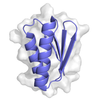
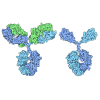
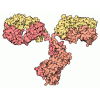
Journal: bioRxiv / Year: 2026 Title: The buried S2 apex of SARS-CoV-2 spike elicits an immunodominant germline-restricted public antibody response. Authors: Suncheol Park / Jacob Mischka / Nisreen Okba / Anass Abbad / Meng Yuan / Komal Srivastava / Charles Gleason / Lubbertus C F Mulder / Jeffrey Copps / Katrina Saam / Sandhya Bangaru / Florian ...Authors: Suncheol Park / Jacob Mischka / Nisreen Okba / Anass Abbad / Meng Yuan / Komal Srivastava / Charles Gleason / Lubbertus C F Mulder / Jeffrey Copps / Katrina Saam / Sandhya Bangaru / Florian Krammer / Ian A Wilson / Viviana Simon / Andrew B Ward / Abstract: The continued mutational pressure on the SARS-CoV-2 S1 subunit underscores the need to target the conserved S2 region for pan-coronavirus vaccine development. A detailed molecular understanding of S2- ...The continued mutational pressure on the SARS-CoV-2 S1 subunit underscores the need to target the conserved S2 region for pan-coronavirus vaccine development. A detailed molecular understanding of S2-directed immune responses is therefore essential. In this study, we identified the S2 apex as the most immunodominant epitope within the S2 subunit, eliciting robust antibody responses despite occlusion by S1, using electron-microscopy-based polyclonal epitope mapping (EMPEM) of plasma from infected and vaccinated individuals. Structure-guided sequence analysis with antibody databases revealed that antibodies targeting a poorly characterized S2 Apex-B site form a convergent public clonotype, which is predominantly derived from the IGHV3-30 germline with a 14-residue CDRH3 containing a G/S-G-S/N-Y motif. This clonotype is extensively expanded, accounting for up to 40% of total spike-reactive antibody sequence counts in individual vaccinated donors. This study elucidates the molecular basis the high-frequency elicitation of this non-neutralizing clonotype emphasizing that its immunodominance acts as a primary hurdle for universal coronavirus vaccines and underscore the need for precision antigen design to redirect immunity toward more potent neutralizing targets.
In the structure databanks used in Yorodumi, some data are registered as the other names, "COVID-19 virus" and "2019-nCoV". Here are the details of the virus and the list of structure data.
Jan 31, 2019. EMDB accession codes are about to change! (news from PDBe EMDB page)
EMDB accession codes are about to change! (news from PDBe EMDB page)
The allocation of 4 digits for EMDB accession codes will soon come to an end. Whilst these codes will remain in use, new EMDB accession codes will include an additional digit and will expand incrementally as the available range of codes is exhausted. The current 4-digit format prefixed with “EMD-” (i.e. EMD-XXXX) will advance to a 5-digit format (i.e. EMD-XXXXX), and so on. It is currently estimated that the 4-digit codes will be depleted around Spring 2019, at which point the 5-digit format will come into force.
The EM Navigator/Yorodumi systems omit the EMD- prefix.
Related info.:Q: What is EMD? / ID/Accession-code notation in Yorodumi/EM Navigator
Yorodumi is a browser for structure data from EMDB, PDB, SASBDB, etc.
This page is also the successor to EM Navigator detail page, and also detail information page/front-end page for Omokage search.
The word "yorodu" (or yorozu) is an old Japanese word meaning "ten thousand". "mi" (miru) is to see.
Related info.:EMDB / PDB / SASBDB / Comparison of 3 databanks / Yorodumi Search / Aug 31, 2016. New EM Navigator & Yorodumi / Yorodumi Papers / Jmol/JSmol / Function and homology information / Changes in new EM Navigator and Yorodumi
 Movie
Movie Controller


 Open data
 Basic information
 Map data
 Sample
 Keywords
 Function and homology information
 Homo sapiens (human)
 Authors
 United States, 1 items
  Citation
 Structure visualization
 Downloads & links
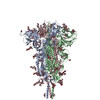
 emd_74739.png
 http://ftp.pdbj.org/pub/emdb/structures/EMD-74739


 Z (Sec.)
 Y (Row.)
 X (Col.)


 Sample components
 Processing
 Electron microscopy
 FIELD EMISSION GUN