 Movie
Movie Controller


+ Open data

- Basic information
| Entry |  | |||||||||
|---|---|---|---|---|---|---|---|---|---|---|
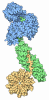
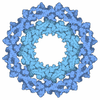
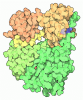
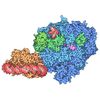
| Title | Cryo-EM structure of ATR-ATRIP-ETAA1 AAD | |||||||||
 Map data Map data | ||||||||||
 Sample Sample |
| |||||||||
 Keywords Keywords | kinase / PI3K-related kinase / complex / replication stress response / replication checkpoint / NUCLEAR PROTEIN | |||||||||
| Function / homology |  Function and homology information Function and homology informationATR-ATRIP complex / establishment of RNA localization to telomere / positive regulation of telomerase catalytic core complex assembly / nuclear membrane disassembly / establishment of protein-containing complex localization to telomere / MutSalpha complex binding / histone H2AXS139 kinase activity / response to arsenic-containing substance / MutLalpha complex binding / negative regulation of DNA replication ...ATR-ATRIP complex / establishment of RNA localization to telomere / positive regulation of telomerase catalytic core complex assembly / nuclear membrane disassembly / establishment of protein-containing complex localization to telomere / MutSalpha complex binding / histone H2AXS139 kinase activity / response to arsenic-containing substance / MutLalpha complex binding / negative regulation of DNA replication / nucleobase-containing compound metabolic process / mitotic G2/M transition checkpoint / regulation of double-strand break repair / positive regulation of protein serine/threonine kinase activity / K63-linked polyubiquitin modification-dependent protein binding / protein localization to chromosome, telomeric region / regulation of DNA damage checkpoint / HDR through Single Strand Annealing (SSA) / nuclear replication fork / Impaired BRCA2 binding to RAD51 / replicative senescence / positive regulation of DNA damage response, signal transduction by p53 class mediator / Regulation of HSF1-mediated heat shock response / Presynaptic phase of homologous DNA pairing and strand exchange / response to mechanical stimulus / Activation of ATR in response to replication stress / interstrand cross-link repair / DNA damage checkpoint signaling / regulation of cellular response to heat / positive regulation of telomere maintenance via telomerase / protein serine/threonine kinase activator activity / telomere maintenance / replication fork processing / Meiotic synapsis / site of DNA damage / TP53 Regulates Transcription of DNA Repair Genes / Fanconi Anemia Pathway / cellular response to gamma radiation / PML body / G2/M DNA damage checkpoint / double-strand break repair / cellular response to UV / nuclear envelope / Processing of DNA double-strand break ends / Regulation of TP53 Activity through Phosphorylation / DNA replication / protein kinase activity / non-specific serine/threonine protein kinase / nuclear speck / response to xenobiotic stimulus / chromosome / DNA repair / protein serine kinase activity / protein serine/threonine kinase activity / DNA damage response / DNA binding / nucleoplasm / ATP binding / nucleus Similarity search - Function | |||||||||
| Biological species |  Homo sapiens (human) Homo sapiens (human) | |||||||||
| Method | single particle reconstruction / cryo EM / Resolution: 3.0 Å | |||||||||
 Authors Authors | Li B / Pavletich NP | |||||||||
| Funding support |  United States, 2 items United States, 2 items
| |||||||||
 Citation Citation | Journal: Nat Struct Mol Biol / Year: 2026 Title: Structural mechanism of TOPBP1 activating the ATR-ATRIP replication checkpoint kinase. Authors: Buren Li / Ayat Yaseen / Nikola P Pavletich / Abstract: The ATR protein kinase preserves genomic integrity during DNA replication by controlling checkpoints needed for the orderly progression of S phase and for the responses to replication stress. ATR, ...The ATR protein kinase preserves genomic integrity during DNA replication by controlling checkpoints needed for the orderly progression of S phase and for the responses to replication stress. ATR, with its obligate partner ATRIP, is activated by the TOPBP1 and ETAA1 proteins, which control different branches of ATR signaling. TOPBP1 is essential for induction of the S phase checkpoint in response to stalled replication forks, while ETAA1 is required for timely progression to mitosis from an unperturbed S phase. TOPBP1 and ETAA1 contain ATR-activating domains (AADs) of limited homology, but how they activate ATR has not yet been fully elucidated. Here we present the 3.0-Å cryo-EM structure of the human ATR-ATRIP complex bound to the TOPBP1 AAD, showing that TOPBP1 activates ATR by inducing a global conformational change that allosterically realigns active site residues in the kinase domain ~70 Å away. We also present the 3.3-Å structure of the ATR-ATRIP-ETAA1 AAD complex, which reveals a binding mode distinct from TOPBP1. Our data suggest that the distinct binding modes of TOPBP1 and ETAA1 contribute to the different cellular contexts and outcomes of ATR-ATRIP activation. | |||||||||
| History |
|
- Structure visualization
| Supplemental images |
|---|

- Downloads & links
-EMDB archive
| Map data | emd_74050.map.gz | 27.4 MB | EMDB map data format | |
|---|---|---|---|---|
| Header (meta data) | emd-74050-v30.xmlemd-74050.xml | 24.6 KB 24.6 KB | Display Display | EMDB header |
| Images |  emd_74050.png emd_74050.png | 145.8 KB | ||
| Filedesc metadata | emd-74050.cif.gz | 8.7 KB | ||
| Archive directory |  https://data.pdbj.org/pub/emdb/structures/EMD-74050ftp://data.pdbj.org/pub/emdb/structures/EMD-74050 https://data.pdbj.org/pub/emdb/structures/EMD-74050ftp://data.pdbj.org/pub/emdb/structures/EMD-74050 | HTTPS FTP |
-Related structure data
| Related structure data |  9zd3MC  13deC  9zcyC  9zd1C  9zd4C C: citing same article ( M: atomic model generated by this map |
|---|---|
| Similar structure data |


-Links
| EMDB pages | EMDB (EBI/PDBe) / EMDataResource |
|---|---|
| Related items in Molecule of the Month |

-Map
| File | Download / File: emd_74050.map.gz / Format: CCP4 / Size: 103 MB / Type: IMAGE STORED AS FLOATING POINT NUMBER (4 BYTES) | ||||||||||||||||||||||||||||||||||||
|---|---|---|---|---|---|---|---|---|---|---|---|---|---|---|---|---|---|---|---|---|---|---|---|---|---|---|---|---|---|---|---|---|---|---|---|---|---|
| Projections & slices | Image control
Images are generated by Spider. | ||||||||||||||||||||||||||||||||||||
| Voxel size | X=Y=Z: 1.064 Å | ||||||||||||||||||||||||||||||||||||
| Density |
| ||||||||||||||||||||||||||||||||||||
| Symmetry | Space group: 1 | ||||||||||||||||||||||||||||||||||||
| Details | EMDB XML:
|
 X (Sec.)
 Y (Row.)
 Z (Col.)


-Supplemental data
- Sample components
-Entire : ATR-ATRIP-ETAA1 AAD
| Entire | Name: ATR-ATRIP-ETAA1 AAD |
|---|---|
| Components |
|
-Supramolecule #1: ATR-ATRIP-ETAA1 AAD
| Supramolecule | Name: ATR-ATRIP-ETAA1 AAD / type: complex / ID: 1 / Parent: 0 / Macromolecule list: #1-#3 |
|---|---|
| Source (natural) | Organism: Homo sapiens (human) |
| Molecular weight | Theoretical: 830 KDa |
-Macromolecule #1: Serine/threonine-protein kinase ATR
| Macromolecule | Name: Serine/threonine-protein kinase ATR / type: protein_or_peptide / ID: 1 / Number of copies: 2 / Enantiomer: LEVO / EC number: non-specific serine/threonine protein kinase |
|---|---|
| Source (natural) | Organism: Homo sapiens (human) |
| Molecular weight | Theoretical: 304.008312 KDa |
| Recombinant expression | Organism: Homo sapiens (human) |
| Sequence | String: MDYKDDDDKE NLYFQGGGRM GEHGLELASM IPALRELGSA TPEEYNTVVQ KPRQILCQFI DRILTDVNVV AVELVKKTDS QPTSVMLLD FIQHIMKSSP LMFVNVSGSH EAKGSCIEFS NWIITRLLRI AATPSCHLLH KKICEVICSL LFLFKSKSPA I FGVLTKEL ...String: MDYKDDDDKE NLYFQGGGRM GEHGLELASM IPALRELGSA TPEEYNTVVQ KPRQILCQFI DRILTDVNVV AVELVKKTDS QPTSVMLLD FIQHIMKSSP LMFVNVSGSH EAKGSCIEFS NWIITRLLRI AATPSCHLLH KKICEVICSL LFLFKSKSPA I FGVLTKEL LQLFEDLVYL HRRNVMGHAV EWPVVMSRFL SQLDEHMGYL QSAPLQLMSM QNLEFIEVTL LMVLTRIIAI VF FRRQELL LWQIGCVLLE YGSPKIKSLA ISFLTELFQL GGLPAQPAST FFSSFLELLK HLVEMDTDQL KLYEEPLSKL IKT LFPFEA EAYRNIEPVY LNMLLEKLCV MFEDGVLMRL KSDLLKAALC HLLQYFLKFV PAGYESALQV RKVYVRNICK ALLD VLGIE VDAEYLLGPL YAALKMESME IIEEIQCQTQ QENLSSNSDG ISPKRRRLSS SLNPSKRAPK QTEEIKHVDM NQKSI LWSA LKQKAESLQI SLEYSGLKNP VIEMLEGIAV VLQLTALCTV HCSHQNMNCR TFKDCQHKSK KKPSVVITWM SLDFYT KVL KSCRSLLESV QKLDLEATID KVVKIYDALI YMQVNSSFED HILEDLCGML SLPWIYSHSD DGCLKLTTFA ANLLTLS CR ISDSYSPQAQ SRCVFLLTLF PRRIFLEWRT AVYNWALQSS HEVIRASCVS GFFILLQQQN SCNRVPKILI DKVKDDSD I VKKEFASILG QLVCTLHGMF YLTSSLTEPF SEHGHVDLFC RNLKATSQHE CSSSQLKASV CKPFLFLLKK KIPSPVKLA FIDNLHHLCK HLDFREDETD VKAVLGTLLN LMEDPDKDVR VAFSGNIKHI LESLDSEDGF IKELFVLRMK EAYTHAQISR NNELKDTLI LTTGDIGRAA KGDLVPFALL HLLHCLLSKS ASVSGAAYTE IRALVAAKSV KLQSFFSQYK KPICQFLVES L HSSQMTAL PNTPCQNADV RKQDVAHQRE MALNTLSEIA NVFDFPDLNR FLTRTLQVLL PDLAAKASPA ASALIRTLGK QL NVNRREI LINNFKYIFS HLVCSCSKDE LERALHYLKN ETEIELGSLL RQDFQGLHNE LLLRIGEHYQ QVFNGLSILA SFA SSDDPY QGPRDIISPE LMADYLQPKL LGILAFFNMQ LLSSSVGIED KKMALNSLMS LMKLMGPKHV SSVRVKMMTT LRTG LRFKD DFPELCCRAW DCFVRCLDHA CLGSLLSHVI VALLPLIHIQ PKETAAIFHY LIIENRDAVQ DFLHEIYFLP DHPEL KKIK AVLQEYRKET SESTDLQTTL QLSMKAIQHE NVDVRIHALT SLKETLYKNQ EKLIKYATDS ETVEPIISQL VTVLLK GCQ DANSQARLLC GECLGELGAI DPGRLDFSTT ETQGKDFTFV TGVEDSSFAY GLLMELTRAY LAYADNSRAQ DSAAYAI QE LLSIYDCREM ETNGPGHQLW RRFPEHVREI LEPHLNTRYK SSQKSTDWSG VKKPIYLSKL GSNFAEWSAS WAGYLITK V RHDLASKIFT CCSIMMKHDF KVTIYLLPHI LVYVLLGCNQ EDQQEVYAEI MAVLKHDDQH TINTQDIASD LCQLSTQTV FSMLDHLTQW ARHKFQALKA EKCPHSKSNR NKVDSMVSTV DYEDYQSVTR FLDLIPQDTL AVASFRSKAY TRAVMHFESF ITEKKQNIQ EHLGFLQKLY AAMHEPDGVA GVSAIRKAEP SLKEQILEHE SLGLLRDATA CYDRAIQLEP DQIIHYHGVV K SMLGLGQL STVITQVNGV HANRSEWTDE LNTYRVEAAW KLSQWDLVEN YLAADGKSTT WSVRLGQLLL SAKKRDITAF YD SLKLVRA EQIVPLSAAS FERGSYQRGY EYIVRLHMLC ELEHSIKPLF QHSPGDSSQE DSLNWVARLE MTQNSYRAKE PIL ALRRAL LSLNKRPDYN EMVGECWLQS ARVARKAGHH QTAYNALLNA GESRLAELYV ERAKWLWSKG DVHQALIVLQ KGVE LCFPE NETPPEGKNM LIHGRAMLLV GRFMEETANF ESNAIMKKYK DVTACLPEWE DGHFYLAKYY DKLMPMVTDN KMEKQ GDLI RYIVLHFGRS LQYGNQFIYQ SMPRMLTLWL DYGTKAYEWE KAGRSDRVQM RNDLGKINKV ITEHTNYLAP YQFLTA FSQ LISRICHSHD EVFVVLMEII AKVFLAYPQQ AMWMMTAVSK SSYPMRVNRC KEILNKAIHM KKSLEKFVGD ATRLTDK LL ELCNKPVDGS SSTLSMSTHF KMLKKLVEEA TFSEILIPLQ SVMIPTLPSI LGTHANHASH EPFPGHWAYI AGFDDMVE I LASLQKPKKI SLKGSDGKFY IMMCKPKDDL RKDCRLMEFN SLINKCLRKD AESRRRELHI RTYAVIPLND ECGIIEWVN NTAGLRPILT KLYKEKGVYM TGKELRQCML PKSAALSEKL KVFREFLLPR HPPIFHEWFL RTFPDPTSWY SSRSAYCRST AVMSMVGYI LGLGDRHGEN ILFDSLTGEC VHVDFNCLFN KGETFEVPEI VPFRLTHNMV NGMGPMGTEG LFRRACEVTM R LMRDQREP LMSVLKTFLH DPLVEWSKPV KGHSKAPLNE TGEVVNEKAK THVLDIEQRL QGVIKTRNRV TGLPLSIEGH VH YLIQEAT DENLLCQMYL GWTPYM UniProtKB: Serine/threonine-protein kinase ATR |
-Macromolecule #2: ATR-interacting protein
| Macromolecule | Name: ATR-interacting protein / type: protein_or_peptide / ID: 2 / Number of copies: 2 / Enantiomer: LEVO |
|---|---|
| Source (natural) | Organism: Homo sapiens (human) |
| Molecular weight | Theoretical: 88.192039 KDa |
| Recombinant expression | Organism: Homo sapiens (human) |
| Sequence | String: MDYKDDDDKE NLYFQGGGRM AGTSAPGSKR RSEPPAPRPG PPPGTGHPPS KRARGFSAAA APDPDDPFGA HGDFTADDLE ELDTLASQA LSQCPAAARD VSSDHKVHRL LDGMSKNPSG KNRETVPIKD NFELEVLQAQ YKELKEKMKV MEEEVLIKNG E IKILRDSL ...String: MDYKDDDDKE NLYFQGGGRM AGTSAPGSKR RSEPPAPRPG PPPGTGHPPS KRARGFSAAA APDPDDPFGA HGDFTADDLE ELDTLASQA LSQCPAAARD VSSDHKVHRL LDGMSKNPSG KNRETVPIKD NFELEVLQAQ YKELKEKMKV MEEEVLIKNG E IKILRDSL HQTESVLEEQ RRSHFLLEQE KTQALSDKEK EFSKKLQSLQ SELQFKDAEM NELRTKLQTS ERANKLAAPS VS HVSPRKN PSVVIKPEAC SPQFGKTSFP TKESFSANMS LPHPCQTESG YKPLVGREDS KPHSLRGDSI KQEEAQKSFV DSW RQRSNT QGSILINLLL KQPLIPGSSL SLCHLLSSSS ESPAGTPLQP PGFGSTLAGM SGLRTTGSYD GSFSLSALRE AQNL AFTGL NLVARNECSR DGDPAEGGRR AFPLCQLPGA VHFLPLVQFF IGLHCQALQD LAAAKRSGAP GDSPTHSSCV SSGVE TNPE DSVCILEGFS VTALSILQHL VCHSGAVVSL LLSGVGADSA AGEGNRSLVH RLSDGDMTSA LRGVADDQGQ HPLLKM LLH LLAFSSAATG HLQASVLTQC LKVLVKLAEN TSCDFLPRFQ CVFQVLPKCL SPETPLPSVL LAVELLSLLA DHDQLAP QL CSHSEGCLLL LLYMYITSRP DRVALETQWL QLEQEVVWLL AKLGVQSPLP PVTGSNCQCN VEVVRALTVM LHRQWLTV R RAGGPPRTDQ QRRTVRCLRD TVLLLHGLSQ KDKLFMMHCV EVLHQFDQVM PGVSMLIRGL PDVTDCEEAA LDDLCAAET DVEDPEVECG UniProtKB: ATR-interacting protein |
-Macromolecule #3: Ewing's tumor-associated antigen 1
| Macromolecule | Name: Ewing's tumor-associated antigen 1 / type: protein_or_peptide / ID: 3 / Number of copies: 2 / Enantiomer: LEVO |
|---|---|
| Source (natural) | Organism: Homo sapiens (human) |
| Molecular weight | Theoretical: 23.24898 KDa |
| Recombinant expression | Organism:   Escherichia coli (E. coli) Escherichia coli (E. coli) |
| Sequence | String: GSGREGPPGP VRQREQPPTA ALCSKSNPEE RYETPKRALK MDSLSSSFSS PNDPDGQNDI FWDQNSPLTK QLGKGRKKQI YTTDSDEIS HIVNRIAPQD EKPTTNSMLD MWIGETAIPC TPSVAKGKSR AKISCTKLKT QSQEEELMKL AKQFDKNMEE L DVIQEQNK ...String: GSGREGPPGP VRQREQPPTA ALCSKSNPEE RYETPKRALK MDSLSSSFSS PNDPDGQNDI FWDQNSPLTK QLGKGRKKQI YTTDSDEIS HIVNRIAPQD EKPTTNSMLD MWIGETAIPC TPSVAKGKSR AKISCTKLKT QSQEEELMKL AKQFDKNMEE L DVIQEQNK RNYDFTQMIS ETEILSNYKD NIQMWSLHNI VPEIDNA UniProtKB: Ewing's tumor-associated antigen 1 |
-Macromolecule #4: ZINC ION
| Macromolecule | Name: ZINC ION / type: ligand / ID: 4 / Number of copies: 4 / Formula: ZN |
|---|---|
| Molecular weight | Theoretical: 65.409 Da |
-Macromolecule #5: MAGNESIUM ION
| Macromolecule | Name: MAGNESIUM ION / type: ligand / ID: 5 / Number of copies: 4 / Formula: MG |
|---|---|
| Molecular weight | Theoretical: 24.305 Da |
-Macromolecule #6: PHOSPHOAMINOPHOSPHONIC ACID-ADENYLATE ESTER
| Macromolecule | Name: PHOSPHOAMINOPHOSPHONIC ACID-ADENYLATE ESTER / type: ligand / ID: 6 / Number of copies: 2 / Formula: ANP |
|---|---|
| Molecular weight | Theoretical: 506.196 Da |
| Chemical component information | 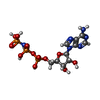 ChemComp-ANP: |
-Experimental details
-Structure determination
| Method | cryo EM |
|---|---|
 Processing Processing | single particle reconstruction |
| Aggregation state | particle |
-Sample preparation
| Concentration | 0.7 mg/mL | ||||||||||||
|---|---|---|---|---|---|---|---|---|---|---|---|---|---|
| Buffer | pH: 8 Component:
| ||||||||||||
| Grid | Model: UltrAuFoil R1.2/1.3 / Material: GOLD / Mesh: 300 | ||||||||||||
| Vitrification | Cryogen name: ETHANE / Chamber humidity: 100 % / Chamber temperature: 295 K / Instrument: FEI VITROBOT MARK IV |
- Electron microscopy
| Microscope | TFS KRIOS |
|---|---|
| Software | Name: SerialEM |
| Image recording | Film or detector model: GATAN K3 (6k x 4k) / Average electron dose: 53.0 e/Å2 |
| Electron beam | Acceleration voltage: 300 kV / Electron source:  FIELD EMISSION GUN FIELD EMISSION GUN |
| Electron optics | Illumination mode: FLOOD BEAM / Imaging mode: BRIGHT FIELD / Nominal defocus max: 1.8 µm / Nominal defocus min: 0.7000000000000001 µm |
| Experimental equipment |  Model: Titan Krios / Image courtesy: FEI Company |
