 Movie
Movie Controller


+ Open data

- Basic information
| Entry |  | |||||||||||||||||||||
|---|---|---|---|---|---|---|---|---|---|---|---|---|---|---|---|---|---|---|---|---|---|---|
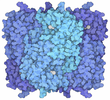
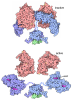
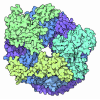
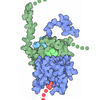
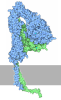
| Title | mTORC2 in complex with Akt1 | |||||||||||||||||||||
 Map data Map data | Consensus Map, C2-symmetric | |||||||||||||||||||||
 Sample Sample |
| |||||||||||||||||||||
 Keywords Keywords | cellular growth control / TRANSFERASE / Torin | |||||||||||||||||||||
| Function / homology |  Function and homology information Function and homology informationpositive regulation of endodeoxyribonuclease activity / regulation of tRNA methylation / negative regulation of protein maturation / negative regulation of fatty acid beta-oxidation / positive regulation of protein localization to endoplasmic reticulum / regulation of glycogen biosynthetic process / negative regulation of lymphocyte migration / negative regulation of protein localization to lysosome / cellular response to rapamycin / maintenance of protein location in mitochondrion ...positive regulation of endodeoxyribonuclease activity / regulation of tRNA methylation / negative regulation of protein maturation / negative regulation of fatty acid beta-oxidation / positive regulation of protein localization to endoplasmic reticulum / regulation of glycogen biosynthetic process / negative regulation of lymphocyte migration / negative regulation of protein localization to lysosome / cellular response to rapamycin / maintenance of protein location in mitochondrion / AKT-mediated inactivation of FOXO1A / negative regulation of long-chain fatty acid import across plasma membrane / Negative regulation of the PI3K/AKT network / regulation of type B pancreatic cell development / activation-induced cell death of T cells / positive regulation of anaphase-promoting complex-dependent catabolic process / : / potassium channel activator activity / fibroblast migration / mammary gland epithelial cell differentiation / AKT phosphorylates targets in the nucleus / cardiac cell development / positive regulation of SCF-dependent proteasomal ubiquitin-dependent catabolic process / RNA polymerase III type 2 promoter sequence-specific DNA binding / T-helper 1 cell lineage commitment / RNA polymerase III type 1 promoter sequence-specific DNA binding / positive regulation of cytoplasmic translational initiation / regulation of locomotor rhythm / positive regulation of pentose-phosphate shunt / positive regulation of wound healing, spreading of epidermal cells / cellular response to oxidised low-density lipoprotein particle stimulus / negative regulation of cilium assembly / regulation of phosphatidylinositol 3-kinase/protein kinase B signal transduction / negative regulation of hydrogen peroxide-induced neuron intrinsic apoptotic signaling pathway / Butyrate Response Factor 1 (BRF1) binds and destabilizes mRNA / TORC2 complex / cellular response to leucine starvation / TFIIIC-class transcription factor complex binding / positive regulation of TORC2 signaling / positive regulation of glucose metabolic process / regulation of lysosome organization / regulation of cellular response to oxidative stress / RUNX2 regulates genes involved in cell migration / TORC1 complex / beta-arrestin-dependent dopamine receptor signaling pathway / negative regulation of lysosome organization / regulation of osteoclast differentiation / RNA polymerase III type 3 promoter sequence-specific DNA binding / positive regulation of keratinocyte migration / positive regulation of transcription of nucleolar large rRNA by RNA polymerase I / positive regulation of protein localization to cell surface / interleukin-18-mediated signaling pathway / response to fluid shear stress / negative regulation of Ras protein signal transduction / MTOR signalling / response to growth factor / cellular response to L-leucine / Energy dependent regulation of mTOR by LKB1-AMPK / cellular response to nutrient / regulation of autophagosome assembly / cell migration involved in sprouting angiogenesis / phosphatidic acid binding / Amino acids regulate mTORC1 / embryo development ending in birth or egg hatching / negative regulation of leukocyte cell-cell adhesion / RAB GEFs exchange GTP for GDP on RABs / glycogen biosynthetic process / Dengue virus modulates apoptosis / cellular response to methionine / phosphatidylinositol-3,4-bisphosphate binding / TORC2 signaling / complement receptor mediated signaling pathway / sphingosine-1-phosphate receptor signaling pathway / response to growth hormone / cellular response to osmotic stress / TORC1 signaling / phosphatidylinositol-3,5-bisphosphate binding / AKT phosphorylates targets in the cytosol / anoikis / regulation of postsynapse organization / inositol hexakisphosphate binding / regulation of neuron projection development / negative regulation of protein localization to nucleus / positive regulation of ubiquitin-dependent protein catabolic process / KSRP (KHSRP) binds and destabilizes mRNA / response to UV-A / Regulation of TP53 Activity through Association with Co-factors / cellular response to stress / negative regulation of Notch signaling pathway / TORC2 complex binding / Mechanical load activates signaling by PIEZO1 and integrins in osteocytes / Co-inhibition by CTLA4 / regulation of cell size / lipid biosynthetic process / negative regulation of macroautophagy / negative regulation of release of cytochrome c from mitochondria / negative regulation of cGAS/STING signaling pathway / peptidyl-threonine phosphorylation / Macroautophagy / negative regulation of PERK-mediated unfolded protein response Similarity search - Function | |||||||||||||||||||||
| Biological species |  Homo sapiens (human) Homo sapiens (human) | |||||||||||||||||||||
| Method | single particle reconstruction / cryo EM / Resolution: 2.6 Å | |||||||||||||||||||||
 Authors Authors | Wranik M / Lee JM / Rogala KB | |||||||||||||||||||||
| Funding support |  United States, United States,  Germany, 6 items Germany, 6 items
| |||||||||||||||||||||
 Citation Citation | Journal: Science / Year: 2026 Title: Structural basis for the recruitment and selective phosphorylation of Akt by mTORC2. Authors: Martin S Taylor / Maggie Chen / Matthew Hancock / Maximilian Wranik / Bryant D Miller / Timothy R O'Meara / Brad A Palanski / Scott B Ficarro / Brian J Groendyke / Yufei Xiang / Kazuma T ...Authors: Martin S Taylor / Maggie Chen / Matthew Hancock / Maximilian Wranik / Bryant D Miller / Timothy R O'Meara / Brad A Palanski / Scott B Ficarro / Brian J Groendyke / Yufei Xiang / Kazuma T Kondo / Karen Y Linde-Garelli / Michelle J Lee / Dibyendu Mondal / Daniel Freund / Samantha Congreve / Kaay Matas / Maximiliaan Hennink / Kera Xibinaku / Max L Valenstein / Trevor van Eeuwen / Jarrod A Marto / Andrej Sali / Yi Shi / Nathanael S Gray / David M Sabatini / Nam Chu / Kacper B Rogala / Philip A Cole /  Abstract: The mechanistic target of rapamycin (mTOR) protein kinase forms two multiprotein complexes, mTORC1 and mTORC2, that function in distinct signaling pathways. mTORC1 is regulated by nutrients, and ...The mechanistic target of rapamycin (mTOR) protein kinase forms two multiprotein complexes, mTORC1 and mTORC2, that function in distinct signaling pathways. mTORC1 is regulated by nutrients, and mTORC2 is a central node in phosphoinositide-3 kinase (PI3K) and small guanosine triphosphate Ras signaling networks commonly deregulated in cancer and diabetes. Although mTOR phosphorylates many substrates in vitro, in cells, mTORC1 and mTORC2 have high specificity: mTORC2 phosphorylates the protein kinases Akt and PKC, but not closely related kinases that are mTORC1 substrates. To understand how mTORC2 recognizes substrates, we created semisynthetic probes to trap the mTORC2 :: Akt complex and determine its structure. Whereas most protein kinases recognize amino acids adjacent to the phosphorylation site, local sequence contributes little to substrate recognition by mTORC2. Instead, the specificity determinants were secondary and tertiary structural elements of Akt that bound the mTORC2 component mSin1 distal to the mTOR active site and were conserved among at least 18 related substrates. These results reveal how mTORC2 recognizes its canonical substrates and may enable the design of mTORC2-specific inhibitors. | |||||||||||||||||||||
| History |
|
- Structure visualization
| Supplemental images |
|---|

- Downloads & links
-EMDB archive
 emd_73992.png
-Related structure data
| Related structure data |  9zbkMC  9zbjC C: citing same article ( M: atomic model generated by this map |
|---|---|
| Similar structure data |

- Links
Links
| EMDB pages | EMDB (EBI/PDBe) / EMDataResource |
|---|---|
| Related items in Molecule of the Month |



-Map
| File | Download / File: emd_73992.map.gz / Format: CCP4 / Size: 216 MB / Type: IMAGE STORED AS FLOATING POINT NUMBER (4 BYTES) | ||||||||||||||||||||||||||||||||||||
|---|---|---|---|---|---|---|---|---|---|---|---|---|---|---|---|---|---|---|---|---|---|---|---|---|---|---|---|---|---|---|---|---|---|---|---|---|---|
| Annotation | Consensus Map, C2-symmetric | ||||||||||||||||||||||||||||||||||||
| Projections & slices | Image control
Images are generated by Spider. | ||||||||||||||||||||||||||||||||||||
| Voxel size | X=Y=Z: 0.8697 Å | ||||||||||||||||||||||||||||||||||||
| Density |
| ||||||||||||||||||||||||||||||||||||
| Symmetry | Space group: 1 | ||||||||||||||||||||||||||||||||||||
| Details | EMDB XML:
|
 Z (Sec.)
 Y (Row.)
 X (Col.)


-Supplemental data
+Mask #1


+Mask #2


+Mask #3


+Mask #4


+Mask #5


+Mask #6


+Mask #7


+Additional map: Local Map Unsharpened #3


+Additional map: Local Map Sharpened #6


+Additional map: Local Map Sharpened #4


+Additional map: Local Map Unsharpened Akt C-tail


+Additional map: Local Map Sharpened #2


+Additional map: Local Map Sharpened Akt C-tail


+Additional map: Local Map Sharpened #1


+Additional map: Composite Map Sharpened. C2-symmetric


+Additional map: Local Map #1 Half Map B


+Additional map: Local Map #6 Half Map B


+Additional map: Consensus Map Unsharpened Half Map A. C2-symmetric


+Additional map: Local Map Unsharpened #5


+Additional map: Local Map #6 Half Map A


+Additional map: Consensus Map Unsharpened Half Map B/ C2-symmetric


+Additional map: Local Map #4 Half Map B


+Additional map: Local Map #5 Half Map A


+Additional map: Local Map #5 Half Map B


+Additional map: Local Map #2 Half Map B


+Additional map: Local Map #1 Half Map A


+Additional map: Local Map #3 Half Map A


+Additional map: Local Map #4 Half Map A


+Additional map: Local Map #3 Half Map B


+Additional map: Local Map Unsharpened #2


+Additional map: Local Map #2 Half Map A


+Additional map: Local Map Unsharpened #1


+Additional map: Local Map Unsharpened #6


+Additional map: Local Map Unsharpened #4


+Additional map: Local Map Sharpened #3


+Additional map: Local Map Sharpened #5


+Additional map: Composite Map Unsharpened. C2-symmetric


+Half map: Consensus Map Half Map A. C2-symmetric


+Half map: Consensus Map Half Map B. C2-symmetric


- Sample components
-Entire : mTORC2 in complex with Akt1
| Entire | Name: mTORC2 in complex with Akt1 |
|---|---|
| Components |
|
-Supramolecule #1: mTORC2 in complex with Akt1
| Supramolecule | Name: mTORC2 in complex with Akt1 / type: complex / ID: 1 / Parent: 0 / Macromolecule list: #1, #3-#4, #2, #5 |
|---|---|
| Source (natural) | Organism: Homo sapiens (human) |
-Macromolecule #1: Serine/threonine-protein kinase mTOR
| Macromolecule | Name: Serine/threonine-protein kinase mTOR / type: protein_or_peptide / ID: 1 / Number of copies: 1 / Enantiomer: LEVO / EC number: non-specific serine/threonine protein kinase |
|---|---|
| Source (natural) | Organism: Homo sapiens (human) |
| Molecular weight | Theoretical: 280.530062 KDa |
| Recombinant expression | Organism:   Spodoptera frugiperda (fall armyworm) Spodoptera frugiperda (fall armyworm) |
| Sequence | String: ANERKGGILA IASLIGVEGG NATRIGRFAN YLRNLLPSND PVVMEMASKA IGRLAMAGDT FTAEYVEFEV KRALEWLGAD RNEGRRHAA VLVLRELAIS VPTFFFQQVQ PFFDNIFVAV WDPKQAIREG AVAALRACLI LTTQREPKEM QKPQWYRHTF E EAEKGFDE ...String: ANERKGGILA IASLIGVEGG NATRIGRFAN YLRNLLPSND PVVMEMASKA IGRLAMAGDT FTAEYVEFEV KRALEWLGAD RNEGRRHAA VLVLRELAIS VPTFFFQQVQ PFFDNIFVAV WDPKQAIREG AVAALRACLI LTTQREPKEM QKPQWYRHTF E EAEKGFDE TLAKEKGMNR DDRIHGALLI LNELVRISSM EGERLREEME EITQQQLVHD KYCKDLMGFG TKPRHITPFT SF QAVQPQQ SNALVGLLGY SSHQGLMGFG TSPSPAKSTL VESRCCRDLM EEKFDQVCQW VLKCRNSKNS LIQMTILNLL PRL AAFRPS AFTDTQYLQD TMNHVLSCVK KEKERTAAFQ ALGLLSVAVR SEFKVYLPRV LDIIRAALPP KDFAHKRQKA MQVD ATVFT CISMLARAMG PGIQQDIKEL LEPMLAVGLS PALTAVLYDL SRQIPQLKKD IQDGLLKMLS LVLMHKPLRH PGMPK GLAH QLASPGLTTL PEASDVGSIT LALRTLGSFE FEGHSLTQFV RHCADHFLNS EHKEIRMEAA RTCSRLLTPS IHLISG HAH VVSQTAVQVV ADVLSKLLVV GITDPDPDIR YCVLASLDER FDAHLAQAEN LQALFVALND QVFEIRELAI CTVGRLS SM NPAFVMPFLR KMLIQILTEL EHSGIGRIKE QSARMLGHLV SNAPRLIRPY MEPILKALIL KLKDPDPDPN PGVINNVL A TIGELAQVSG LEMRKWVDEL FIIIMDMLQD SSLLAKRQVA LWTLGQLVAS TGYVVEPYRK YPTLLEVLLN FLKTEQNQG TRREAIRVLG LLGALDPYKH KVNIGMIDQS RDASAVSLSE SKSSQDSSDY STSEMLVNMG NLPLDEFYPA VSMVALMRIF RDQSLSHHH TMVVQAITFI FKSLGLKCVQ FLPQVMPTFL NVIRVCDGAI REFLFQQLGM LVSFVKSHIR PYMDEIVTLM R EFWVMNTS IQSTIILLIE QIVVALGGEF KLYLPQLIPH MLRVFMHDNS PGRIVSIKLL AAIQLFGANL DDYLHLLLPP IV KLFDAPE APLPSRKAAL ETVDRLTESL DFTDYASRII HPIVRTLDQS PELRSTAMDT LSSLVFQLGK KYQIFIPMVN KVL VRHRIN HQRYDVLICR IVKGYTLADE EEDPLIYQHR MLRSGQGDAL ASGPVETGPM KKLHVSTINL QKAWGAARRV SKDD WLEWL RRLSLELLKD SSSPSLRSCW ALAQAYNPMA RDLFNAAFVS CWSELNEDQQ DELIRSIELA LTSQDIAEVT QTLLN LAEF MEHSDKGPLP LRDDNGIVLL GERAAKCRAY AKALHYKELE FQKGPTPAIL ESLISINNKL QQPEAAAGVL EYAMKH FGE LEIQATWYEK LHEWEDALVA YDKKMDTNKD DPELMLGRMR CLEALGEWGQ LHQQCCEKWT LVNDETQAKM ARMAAAA AW GLGQWDSMEE YTCMIPRDTH DGAFYRAVLA LHQDLFSLAQ QCIDKARDLL DAELTAMAGE SYSRAYGAMV SCHMLSEL E EVIQYKLVPE RREIIRQIWW ERLQGCQRIV EDWQKILMVR SLVVSPHEDM RTWLKYASLC GKSGRLALAH KTLVLLLGV DPSRQLDHPL PTVHPQVTYA YMKNMWKSAR KIDAFQHMQH FVQTMQQQAQ HAIATEDQQH KQELHKLMAR CFLKLGEWQL NLQGINEST IPKVLQYYSA ATEHDRSWYK AWHAWAVMNF EAVLHYKHQN QARDEKKKLR HASGANITNA TTAATTAATA T TTASTEGS NSESEAESTE NSPTPSPLQK KVTEDLSKTL LMYTVPAVQG FFRSISLSRG NNLQDTLRVL TLWFDYGHWP DV NEALVEG VKAIQIDTWL QVIPQLIARI DTPRPLVGRL IHQLLTDIGR YHPQALIYPL TVASKSTTTA RHNAANKILK NMC EHSNTL VQQAMMVSEE LIRVAILWHE MWHEGLEEAS RLYFGERNVK GMFEVLEPLH AMMERGPQTL KETSFNQAYG RDLM EAQEW CRKYMKSGNV KDLTQAWDLY YHVFRRISKQ LPQLTSLELQ YVSPKLLMCR DLELAVPGTY DPNQPIIRIQ SIAPS LQVI TSKQRPRKLT LMGSNGHEFV FLLKGHEDLR QDERVMQLFG LVNTLLANDP TSLRKNLSIQ RYAVIPLSTN SGLIGW VPH CDTLHALIRD YREKKKILLN IEHRIMLRMA PDYDHLTLMQ KVEVFEHAVN NTAGDDLAKL LWLKSPSSEV WFDRRTN YT RSLAVMSMVG YILGLGDRHP SNLMLDRLSG KILHIDFGDC FEVAMTREKF PEKIPFRLTR MLTNAMEVTG LDGNYRIT C HTVMEVLREH KDSVMAVLEA FVYDPLLNWR LMDTNTKGNK RSRTRTDSYS AGQSVEILDG VELGEPAHKK TGTTVPESI HSFIGDGLVK PEALNKKAIQ IINRVRDKLT GRDFSHDDTL DVPTQVELLI KQATSHENLC QCYIGWCPFW UniProtKB: Serine/threonine-protein kinase mTOR |
-Macromolecule #2: Target of rapamycin complex subunit LST8
| Macromolecule | Name: Target of rapamycin complex subunit LST8 / type: protein_or_peptide / ID: 2 / Number of copies: 1 / Enantiomer: LEVO |
|---|---|
| Source (natural) | Organism: Homo sapiens (human) |
| Molecular weight | Theoretical: 35.152238 KDa |
| Recombinant expression | Organism: Spodoptera frugiperda (fall armyworm) |
| Sequence | String: TVGSDPVILA TAGYDHTVRF WQAHSGICTR TVQHQDSQVN ALEVTPDRSM IAAAGYQHIR MYDLNSNNPN PIISYDGVNK NIASVGFHE DGRWMYTGGE DCTARIWDLR SRNLQCQRIF QVNAPINCVC LHPNQAELIV GDQSGAIHIW DLKTDHNEQL I PEPEVSIT ...String: TVGSDPVILA TAGYDHTVRF WQAHSGICTR TVQHQDSQVN ALEVTPDRSM IAAAGYQHIR MYDLNSNNPN PIISYDGVNK NIASVGFHE DGRWMYTGGE DCTARIWDLR SRNLQCQRIF QVNAPINCVC LHPNQAELIV GDQSGAIHIW DLKTDHNEQL I PEPEVSIT SAHIDPDASY MAAVNSTGNC YVWNLTGGIG DEVTQLIPKT KIPAHTRYAL QCRFSPDSTL LATCSADQTC KI WRTSNFS LMTELSIKSG NPGESSRGWM WGCAFSGDSQ YIVTASSDNL ARLWCVETGE IKREYGGHQK AVVCLAFNDS V UniProtKB: Target of rapamycin complex subunit LST8 |
-Macromolecule #3: Rapamycin-insensitive companion of mTOR
| Macromolecule | Name: Rapamycin-insensitive companion of mTOR / type: protein_or_peptide / ID: 3 / Number of copies: 1 / Enantiomer: LEVO |
|---|---|
| Source (natural) | Organism: Homo sapiens (human) |
| Molecular weight | Theoretical: 188.389453 KDa |
| Recombinant expression | Organism: Spodoptera frugiperda (fall armyworm) |
| Sequence | String: NVPLDLTREP SDNLREILQN VARLQGVSNM RKLGHLNNFT KLLCDIGHSE EKLGFHYEDI IICLRLALLN EAKEVRAAGL RALRYLIQD SSILQKVLKL KVDYLIARCI DIQQSNEVER TQALRLVRKM ITVNASLFPS SVTNSLIAVG NDGLQERDRM V RACIAIIC ...String: NVPLDLTREP SDNLREILQN VARLQGVSNM RKLGHLNNFT KLLCDIGHSE EKLGFHYEDI IICLRLALLN EAKEVRAAGL RALRYLIQD SSILQKVLKL KVDYLIARCI DIQQSNEVER TQALRLVRKM ITVNASLFPS SVTNSLIAVG NDGLQERDRM V RACIAIIC ELALQNPEVV ALRGGLNTIL KNVIDCQLSR INEALITTIL HLLNHPKTRQ YVRADVELER ILAPYTDFHY RH SPDTAEG QLKEDREARF LASKMGIIAT FRSWAGIINL CKPGNSGIQS LIGVLCIPNM EIRRGLLEVL YDIFRLPLPV VTE EFIEAL LSVDPGRFQD SWRLSDGFVA AEAKTILPHR ARSRPDLMDN YLALILSAFI RNGLLEGLVE VITNSDDHIS VRAT ILLGE LLHMANTILP HSHSHHLHCL PTLMNMAASF DIPKEKRLRA SAALNCLKRF HEMKKRGPKP YSLHLDHIIQ KAIAT HQKR DQYLRVQKDI FILKDTEEAL LINLRDSQVL QHKENLEWNW NLIGTILKWP NVNLRNYKDE QLHRFVRRLL YFYKPS SKL YANLDLDFAK AKQLTVVGCQ FTEFLLESEE DGQGYLEDLV KDIVQWLNAS SGMKPERSLQ NNGLLTTLSQ HYFLFIG TL SCHPHGVKML EKCSVFQCLL NLCSLKNQDH LLKLTVSSLD YSRDGLARVI LSKILTAATD ACRLYATKHL RVLLRANV E FFNNWGIELL VTQLHDKNKT ISSEALDILD EACEDKANLH ALIQMKPALS HLGDKGLLLL LRFLSIPKGF SYLNERGYV AKQLEKWHRE YNSKYVDLIE EQLNEALTTY RKPVDGDNYV RRSNQRLQRP HVYLPIHLYG QLVHHKTGCH LLEVQNIITE LCRNVRTPD LDKWEEIKKL KASLWALGNI GSSNWGLNLL QEENVIPDIL KLAKQCEVLS IRGTCVYVLG LIAKTKQGCD I LKCHNWDA VRHSRKHLWP VVPDDVEQLC NELSSIPSTL SLNSESTSSR HNSESESVPS SMFILEDDRF GSSSTSTFFL DI NEDTEPT FYDRSGPIKD KNSFPFFASS KLVKNRILNS LTLPNKKHRS SSDPKGGKLS SESKTSNRRI RTLTEPSVDF NHS DDFTPI STVQKTLQLE TSFMGNKHIE DTGSTPSIGE NDLKFTKNFG TENHRENTSR ERLVVESSTS SHMKIRSQSF NTDT TTSGI SSMSSSPSRE TVGVDATTMD TDCGSMSTVV STKTIKTSHY LTPQSNHLSL SKSNSVSLVP PGSSHTLPRR AQSLK APSI ATIKSLADCN FSYTSSRDAF GYATLKRLQQ QRMHPSLSHS EALASPAKDV LFTDTITMKA NSFESRLTPS RFMKAL SYA SLDKEDLLSP INQNTLQRSS SVRSMVSSAT YGGSDDYIGL ALPVDINDIF QVKDIPYFQT KNIPPHDDRG ARAFAHD AG GLPSGTGGLV KNSFHLLRQQ MSLTEIMNSI HSDASLFLES TEDTGLQEHT DDNCLYCVCI EILGFQPSNQ LSAICSHS D FQDIPYSDWC EQTIHNPLEV VPSKFSGISG CSDGVSQEGS ASSTKSTELL LGVKTIPDDT PMCRILLRKE VLRLVINLS SSVSTKCHET GLLTIKEKYP QTFDDICLYS EVSHLLSHCT FRLPCRRFIQ ELFQDVQFLQ MHEEAEAVLA UniProtKB: Rapamycin-insensitive companion of mTOR |
-Macromolecule #4: Target of rapamycin complex 2 subunit MAPKAP1
| Macromolecule | Name: Target of rapamycin complex 2 subunit MAPKAP1 / type: protein_or_peptide / ID: 4 / Number of copies: 1 / Enantiomer: LEVO |
|---|---|
| Source (natural) | Organism: Homo sapiens (human) |
| Molecular weight | Theoretical: 30.466355 KDa |
| Recombinant expression | Organism: Spodoptera frugiperda (fall armyworm) |
| Sequence | String: MAFLDNPTII LAHIRQSHVT SDDTGMCEMV LIDHDVDLEK IHPPSMPGDS GSEIQGSNGE TQGYVYAQSV DITTSWDFGI RRRSNTAQR LERLRKERQN QIKCKNIQWK ERNSKQSAQE LKSLFEKKSL KEKPPSSGKQ SILSVRLEQC PLQLNNPFNE Y SKFDGKGH ...String: MAFLDNPTII LAHIRQSHVT SDDTGMCEMV LIDHDVDLEK IHPPSMPGDS GSEIQGSNGE TQGYVYAQSV DITTSWDFGI RRRSNTAQR LERLRKERQN QIKCKNIQWK ERNSKQSAQE LKSLFEKKSL KEKPPSSGKQ SILSVRLEQC PLQLNNPFNE Y SKFDGKGH VGTTATKKID VYLPLHSSQD RLLPMTVVTM ASARVQDLIG LICWQYTSEG REPKLNDNVS AYCLHIAEDD GE VDTDFPP LDSNEPIHKF GFSTLALVEK KY UniProtKB: Target of rapamycin complex 2 subunit MAPKAP1 |
-Macromolecule #5: RAC-alpha serine/threonine-protein kinase
| Macromolecule | Name: RAC-alpha serine/threonine-protein kinase / type: protein_or_peptide / ID: 5 Details: Sequence position 333 contains the chemically modification T1C (C-T1C) Number of copies: 1 / Enantiomer: LEVO / EC number: non-specific serine/threonine protein kinase |
|---|---|
| Source (natural) | Organism: Homo sapiens (human) |
| Molecular weight | Theoretical: 39.206875 KDa |
| Recombinant expression | Organism: Spodoptera frugiperda (fall armyworm) |
| Sequence | String: PKHRVTMNEF EYLKLLGKGT FGKVILVKEK ATGRYYAMKI LKKEVIVAKD EVAHTLTENR VLQNSRHPFL TALKYSFQTH DRLCFVMEY ANGGELFFHL SRERVFSEDR ARFYGAEIVS ALDYLHSEKN VVYRDLKLEN LMLDKDGHIK ITDFGLCKEG I KDGATMKT ...String: PKHRVTMNEF EYLKLLGKGT FGKVILVKEK ATGRYYAMKI LKKEVIVAKD EVAHTLTENR VLQNSRHPFL TALKYSFQTH DRLCFVMEY ANGGELFFHL SRERVFSEDR ARFYGAEIVS ALDYLHSEKN VVYRDLKLEN LMLDKDGHIK ITDFGLCKEG I KDGATMKT FCGTPEYLAP EVLEDNDYGR AVDWWGLGVV MYEMMCGRLP FYNQDHEKLF ELILMEEIRF PRTLGPEAKS LL SGLLKKD PKQRLGGGSE DAKEIMQHRF FAGIVWQHVY EKKLSPPFKP QVTSETDTRY FDEEFTAQMI TITPPDQDDS MEC VDSERR PHFPQFCYSA SG UniProtKB: RAC-alpha serine/threonine-protein kinase |
-Macromolecule #6: ZINC ION
| Macromolecule | Name: ZINC ION / type: ligand / ID: 6 / Number of copies: 1 / Formula: ZN |
|---|---|
| Molecular weight | Theoretical: 65.409 Da |
-Macromolecule #7: (1M,9M)-1-{4-[4-(prop-2-enoyl)piperazin-1-yl]-3-(trifluoromethyl)...
| Macromolecule | Name: (1M,9M)-1-{4-[4-(prop-2-enoyl)piperazin-1-yl]-3-(trifluoromethyl)phenyl}-9-(quinolin-3-yl)benzo[h][1,6]naphthyridin-2(1H)-one type: ligand / ID: 7 Details: Sequence position 333 contains the chemically modification T1C (C-T1C) Number of copies: 1 / Formula: A1AID |
|---|---|
| Source (natural) | Organism: Homo sapiens (human) |
| Molecular weight | Theoretical: 605.608 Da |
-Experimental details
-Structure determination
| Method | cryo EM |
|---|---|
 Processing Processing | single particle reconstruction |
| Aggregation state | particle |
-Sample preparation
| Buffer | pH: 7.5 |
|---|---|
| Vitrification | Cryogen name: ETHANE |
- Electron microscopy
| Microscope | TFS KRIOS |
|---|---|
| Image recording | Film or detector model: GATAN K3 BIOQUANTUM (6k x 4k) / Average electron dose: 69.72 e/Å2 |
| Electron beam | Acceleration voltage: 300 kV / Electron source:  FIELD EMISSION GUN FIELD EMISSION GUN |
| Electron optics | Illumination mode: FLOOD BEAM / Imaging mode: 4D-STEM / Cs: 2.7 mm / Nominal defocus max: 2.1 µm / Nominal defocus min: 0.7000000000000001 µm |
| Experimental equipment |  Model: Titan Krios / Image courtesy: FEI Company |
