National Institutes of Health/National Cancer Institute (NIH/NCI)
R01 CA251910
United States
Citation
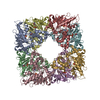
Journal: bioRxiv / Year: 2026 Title: Uncompetitive Allosteric Inhibitor of Mitochondrial Creatine Kinase Prevents Binding and Release of Creatine by Stabilization of Loop Closure. Abstract: Mitochondrial creatine kinase (MtCK) is a key enzyme in energy buffering and homeostasis in cells. It catalyzes transfer of phosphoryl group from ATP to creatine. Overexpression of MtCK occurs in ...Mitochondrial creatine kinase (MtCK) is a key enzyme in energy buffering and homeostasis in cells. It catalyzes transfer of phosphoryl group from ATP to creatine. Overexpression of MtCK occurs in many cancer cells to meet elevated energy demands, which is associated with poor prognosis. This suggests that MtCK may be a promising target for cancer therapeutics. We sought to discover first-in-class selective inhibitors of MtCK with diverse mechanisms of action using high-throughput screening, biochemical characterization and cryo-EM studies. Through these studies, we identified diverse types of compounds that modulate activity of MtCK , including fast-equilibrium and time-dependent orthosteric and allosteric inhibitors. Select hits were subjected to enzymatic and binding assays to assess MtCK inhibition and binding. A subset of inhibitors was advanced into structural studies using cryo-EM resulting in the molecular structure of MtCK with and without bound substrates in complex with an allosteric uncompetitive inhibitor that we discovered. These studies identified compound's unique binding pocket on MtCK and established the molecular steps manifesting in the apparent uncompetitive mode of inhibition. We demonstrate that the compound stabilizes an active site loop in a closed conformation restricting access of the creatine substrate to and the release of phosphocreatine product from its binding pocket. These findings establish chemical tools suitable for validation of MtCK as a promising breast cancer target with high therapeutic potential and build a foundation for future structure-guided optimization of the hit compounds of MtCK we identified and de novo rational design of novel MtCK inhibitors.
In the structure databanks used in Yorodumi, some data are registered as the other names, "COVID-19 virus" and "2019-nCoV". Here are the details of the virus and the list of structure data.
Jan 31, 2019. EMDB accession codes are about to change! (news from PDBe EMDB page)
EMDB accession codes are about to change! (news from PDBe EMDB page)
The allocation of 4 digits for EMDB accession codes will soon come to an end. Whilst these codes will remain in use, new EMDB accession codes will include an additional digit and will expand incrementally as the available range of codes is exhausted. The current 4-digit format prefixed with “EMD-” (i.e. EMD-XXXX) will advance to a 5-digit format (i.e. EMD-XXXXX), and so on. It is currently estimated that the 4-digit codes will be depleted around Spring 2019, at which point the 5-digit format will come into force.
The EM Navigator/Yorodumi systems omit the EMD- prefix.
Related info.:Q: What is EMD? / ID/Accession-code notation in Yorodumi/EM Navigator
Yorodumi is a browser for structure data from EMDB, PDB, SASBDB, etc.
This page is also the successor to EM Navigator detail page, and also detail information page/front-end page for Omokage search.
The word "yorodu" (or yorozu) is an old Japanese word meaning "ten thousand". "mi" (miru) is to see.
Related info.:EMDB / PDB / SASBDB / Comparison of 3 databanks / Yorodumi Search / Aug 31, 2016. New EM Navigator & Yorodumi / Yorodumi Papers / Jmol/JSmol / Function and homology information / Changes in new EM Navigator and Yorodumi
 Movie
Movie Controller

 Yorodumi
 Open data
 Basic information
 Map data
 Sample
 Keywords
 Function and homology information
 Homo sapiens (human)
 Authors
 United States, 1 items
  Citation
 Structure visualization
 Downloads & links
 emd_73767.png
 https://data.pdbj.org/pub/emdb/structures/EMD-73767


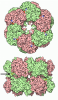
 Z (Sec.)
 Y (Row.)
 X (Col.)


 Sample components
 Escherichia coli BL21(DE3) (bacteria)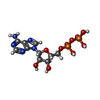
 Processing
 Electron microscopy
 FIELD EMISSION GUN